
When I first stood on a ladder staring at the edge of my roof, I had no idea that two thin strips of metal could cause so much confusion.
My roofer mentioned “drip edge,” my neighbor swore by “gutter apron,” and I genuinely thought they were the same thing wearing two different name tags.
They’re not. In this article, I want to walk you through what separates a gutter apron from a drip edge, where each one shines, and how to decide which one belongs on your roofline so water goes where it should instead of where it shouldn’t.
| Feature | Gutter Apron | Drip Edge |
| Primary job | Directs water straight into gutters | Directs water away from fascia and roof deck |
| Best used on | Eave edges with gutters | Eaves and rakes, gutters or no gutters |
| Metal extension into gutter | Longer, deeper reach | Shorter reach |
| Angle/profile | Wider bend, more of an L or extended flange | Tighter, more compact bend |
| Common material | Aluminum, galvanized steel | Aluminum, galvanized steel, copper |
| Works on rake edges | Rarely used there | Yes, standard choice |
| Prevents fascia rot | Yes, but secondary benefit | Yes, this is a core function |
| Typical cost | Slightly higher per linear foot | Slightly lower per linear foot |
| Code requirement | Often optional, sometimes required with gutters | Frequently required by building code |
Key Differences Between Gutter Apron and Drip Edge
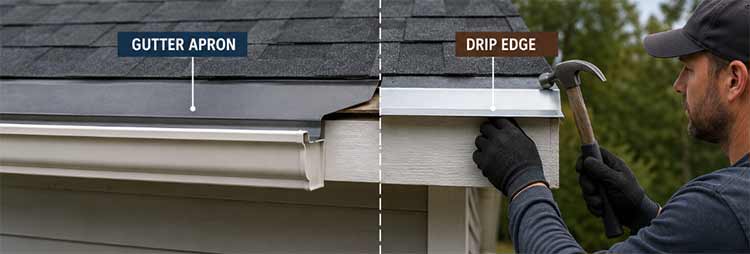
I found it easier to remember the difference once I stopped thinking of them as competitors and started thinking of them as specialists.
- Purpose: a gutter apron exists to feed water into a gutter, while a drip edge exists to protect the roof edge and fascia in general
- Location: gutter aprons stay at the eaves, drip edges cover both eaves and rakes
- Flange length: gutter aprons have a noticeably longer reach into the gutter, drip edges are more compact
- Necessity: drip edges are often required by code on every roof edge, gutter aprons are more of a targeted upgrade
- Compatibility: you can install a drip edge without ever adding a gutter, but a gutter apron only makes sense once a gutter is in the picture
- Water control precision: gutter aprons are more aggressive about steering water into a specific channel, drip edges are more about creating separation from the roof deck
How a Gutter Apron Works?
- Water travels down the shingles and hits the apron’s angled surface
- The angled surface funnels the water forward and downward into the gutter channel
- The extended lip prevents water from sneaking behind the gutter and soaking the fascia board
- The apron sits under the shingles but over the roof deck, creating a layered barrier against moisture
Key Features of a Gutter Apron
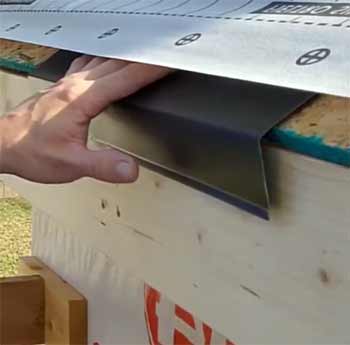
- Longer vertical flange that tucks well into the gutter
- Installed only where gutters exist, almost never used as a standalone edge treatment
- Usually made from aluminum or galvanized steel for corrosion resistance
- Bent at a wider angle than a typical drip edge to maximize water redirection
- Often paired with ice and water shield membrane for cold climates
Pros and Cons of Gutter Apron
I’ve read a lot of roofing forums, and this is where opinions really start to split. Some homeowners treat gutter apron installation as non-negotiable, others see it as an unnecessary extra. Here’s my honest breakdown.
Pros of Gutter Apron
- Delivers water almost directly into the gutter, reducing splash-back and overflow near the fascia
- Reduces the chance of water pooling behind the gutter, which is a sneaky cause of wood rot
- Works exceptionally well on older homes where the gutter and fascia alignment isn’t perfect
- Extends the lifespan of the fascia board by keeping it consistently dry
- Pairs nicely with ice and water shield in colder regions, adding an extra layer of leak protection
- Can reduce gutter maintenance since less debris and water end up misdirected
Cons of Gutter Apron
- Only useful where gutters are already installed or planned, so it’s not a universal solution
- Slightly more expensive per linear foot than a standard drip edge
- Installation requires more precision since the flange has to align perfectly with the gutter’s inner wall
- Not always necessary on newer homes with well-fitted gutters and standard drip edge already in place
- Some contractors charge extra labor for the more involved fitting process
- If installed incorrectly, water can be directed behind the apron instead of into the gutter, which defeats the purpose
Also Read: Is LeafFilter Gutter Protection Worth It?
How a Drip Edge Works?
- It creates a hard break at the roof edge so water drips cleanly off instead of curling backward
- It shields the fascia board from constant water exposure
- It reinforces the roof edge structurally, giving shingles something firm to grip
- On rake edges, it stops wind-driven rain from getting pushed sideways under the shingles
Key Features of a Drip Edge
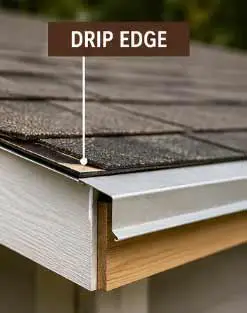
- Shorter flange compared to a gutter apron, just enough to clear the edge
- Installed on every roof edge, gutters or not
- Comes in multiple profiles such as C-style, T-style, and D-style
- Frequently mandated by local building codes, particularly in areas with heavy rain or snow
- Compatible with a wide range of roofing materials including asphalt shingles, metal roofing, and wood shakes
Pros and Cons of Drip Edge
Drip edge tends to be the quieter, more dependable option that nobody really argues about, but it still has its own tradeoffs worth knowing.
Pros of Drip Edge
- Protects the entire roof perimeter, not just the sections with gutters
- Meets building code requirements in most regions, which simplifies inspections and resale
- Comes in multiple styles, so it adapts to different roofing materials and architectural styles
- Costs less per linear foot compared to gutter apron
- Reinforces the roof edge structurally, giving shingles a firmer anchor point
- Reduces wind uplift risk at the edges during storms
- Works on both eaves and rakes, giving full-perimeter coverage in one product category
Cons of Drip Edge
- Shorter flange means it’s less effective at funneling water precisely into a gutter compared to a gutter apron
- Water can occasionally drip behind narrow or poorly installed gutters if the drip edge doesn’t extend far enough
- Requires careful integration with underlayment and ice and water shield to actually perform as intended
- Not all profiles are visually appealing on more modern rooflines, some homeowners find the exposed metal edge less attractive
- If the wrong profile is chosen for the roofing material, it can lead to premature wear or improper water flow
Which One Should You Choose?
Here’s the honest answer: in most modern installations, you actually want both, not one instead of the other.
The drip edge protects your entire roof perimeter and satisfies code requirements, while the gutter apron adds a targeted upgrade specifically at the eaves where your gutters live.
Think of the drip edge as your baseline protection and the gutter apron as the specialist reinforcement layered right on top of it, especially at the eaves.
If your home doesn’t have gutters at all, a gutter apron won’t do much for you, and a standard drip edge along every edge is the way to go.
If you do have gutters, especially older sagging ones or gutters that sit slightly away from the fascia, a gutter apron at the eaves can meaningfully cut down on water sneaking behind them.
Also Read: Is Gutter Guard By Gutterglove Worth It?
Installation Considerations Worth Knowing
I learned this part the hard way after watching a crew work on my own roof. The order of installation matters just as much as the product choice.
- At the eaves, the drip edge (or gutter apron) typically goes down before the underlayment
- At the rakes, the drip edge usually goes over the underlayment
- Ice and water shield placement depends on your climate and local code, and this affects whether the apron sits above or below that membrane
- Fasteners should be corrosion-resistant and spaced correctly to avoid buckling over time
- Overlapping sections at corners and seams need proper sealing to avoid leaks down the road
- A poorly measured gutter apron flange can miss the gutter entirely, so precise measurement before cutting is essential
Cost Comparison
Pricing varies by region and material, but as a general pattern, gutter apron tends to run somewhat higher per linear foot than standard drip edge because of the extra material and more involved fitting process.
Steel and aluminum options stay budget-friendly for both products, while copper drip edge or apron will cost significantly more but also lasts far longer and ages with a distinctive patina that some homeowners love for curb appeal.
Labor costs can shift the total price too. Because a gutter apron needs to align precisely with the gutter’s inner wall, a contractor might charge slightly more for the extra care involved compared to a straightforward drip edge installation along a bare eave.
Climate and Regional Factors
Where you live actually plays a bigger role in this decision than most people expect.
- In regions with heavy rainfall, a gutter apron at the eaves reduces the risk of water overshooting the gutter during intense downpours
- In snowy climates, pairing either product with ice and water shield becomes especially important to prevent ice dam damage
- In windy coastal areas, a sturdy drip edge profile helps resist wind uplift at the roof’s edges
- In dry climates with minimal rainfall, the difference between the two becomes less critical, though code requirements for drip edge usually still apply
Common Mistakes Homeowners Make
- Assuming gutter apron and drip edge are interchangeable terms and asking a contractor for the wrong one
- Skipping drip edge entirely on rake edges because gutters aren’t present there
- Installing gutter apron without adjusting the gutter’s position, leading to water still splashing over the edge
- Using mismatched metals that cause galvanic corrosion when two different materials touch
- Forgetting that local codes may specifically require a certain profile or overlap width
Also Read: Is EasyOn Gutter Guard Worth It?
Maintenance Tips for Both
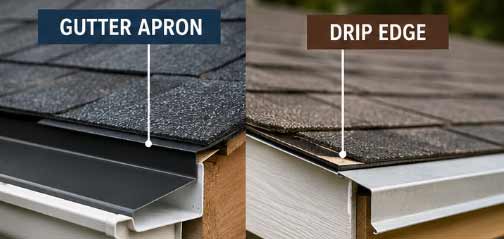
Neither product is “set it and forget it,” even though metal flashing feels permanent once it’s nailed down. A little seasonal attention keeps both working the way they were designed to.
- Clear leaves and debris away from the gutter apron’s flange twice a year so water isn’t blocked before it reaches the gutter
- Check for loose fasteners along the drip edge after major storms, since wind can gradually work nails loose
- Look for streaking or rust stains on the fascia, which usually signal that water is sneaking behind the flashing somewhere
- Repaint or reseal exposed metal edges if you notice the finish wearing thin, especially on steel products prone to rust
- Inspect corners and overlaps every couple of years, since these joints are the most common failure points
- If you notice sagging gutters, address that first, because a gutter apron can’t compensate for a gutter that’s pulled away from the roofline
How To Talk To Your Roofer About This?
I’ll be honest, most homeowners never bring up gutter apron or drip edge specifics with their contractor, and that’s exactly how mismatched or missing flashing ends up on so many roofs. A few questions can save you a lot of grief later.
- Ask which profile of drip edge they plan to use and why it fits your roofing material
- Ask whether gutter apron will be installed at the eaves if you already have gutters, or if standard drip edge alone is the plan
- Ask how the flashing will interact with your ice and water shield, particularly if you live somewhere with cold winters
- Ask about the metal type being used and whether it matches your gutters to avoid corrosion issues down the line
- Ask for the fastener spacing and overlap standards they follow, since tighter standards usually mean a longer-lasting installation
A contractor who can answer these clearly without hesitation is generally one who takes roof edge details seriously, and that’s a good signal for the rest of the job too.
Longevity and Durability
Both products are built to last decades when installed correctly, but their lifespan depends heavily on material choice and environment.
Aluminum resists rust well and holds up nicely in most climates, making it the most common choice for both gutter apron and drip edge. Galvanized steel is sturdier under heavy snow loads but can eventually rust if the coating wears down, particularly in coastal areas with salty air.
Copper, while pricier upfront, often outlasts the roof itself and develops a weathered patina that many homeowners find appealing rather than a flaw.
Regardless of material, the weakest point in either product’s lifespan usually isn’t the metal itself, it’s the installation. A gutter apron nailed too high, angled incorrectly, or spaced too far from the gutter’s inner wall will underperform no matter how premium the metal is.
The same goes for drip edge that’s tucked incorrectly under or over the underlayment. Getting the placement right the first time matters more than splurging on the fanciest material.
Also Read: Is Atlas Gutter Guard Worth It?
Frequently Asked Questions (FAQ)
In most cases, yes, using both gives you full protection: drip edge covers your entire roof perimeter, and gutter apron adds extra precision at the eaves where gutters catch runoff.
No, they’re related but not identical. Gutter apron flashing has a longer, more aggressive flange built specifically to guide water into a gutter, while drip edge is more compact and used along all roof edges.
Typically, the gutter apron goes down first, directly on the roof deck, with the ice and water shield installed over it, though local code and climate can shift this order slightly.
Its purpose is to channel water off the roof edge and directly into the gutter, minimizing splash-back, overflow, and moisture buildup behind the gutter and fascia.
Final Thoughts
By now, you should have a much clearer picture of how a gutter apron and a drip edge differ, even though they look like distant cousins at first glance.
If your roof has gutters, especially aging or slightly misaligned ones, adding a gutter apron at the eaves is a smart, targeted move.
If you’re covering your entire roofline or skipping gutters altogether, a solid drip edge remains your non-negotiable baseline. Either way, you now have the details to have a confident, informed conversation with your roofer instead of nodding along and hoping for the best.