
When I needed a new HVAC system for my house, I spent weeks researching Goodman and Rheem because both came up as solid, affordable options that wouldn’t break the bank.
I wanted something reliable for hot summers and cold winters without paying premium prices for luxury brands.
In this article, I share my real-user experience comparing the two, breaking down their performance, costs, features, and what actually matters when you live with the system day in and day out. I will help you figure out which one fits your home and budget better so you can decide with confidence.
| Aspect | Goodman | Rheem | Winner for Most Homes |
| Price (Installed) | Lower (15-25% cheaper) | Higher but good value | Goodman |
| Efficiency (SEER2) | Up to 18-24.5 | Up to 20+ | Rheem |
| Build Quality | Solid for the price | More robust panels & components | Rheem |
| Warranty | 10-year parts, lifetime compressor on select | 10-year parts | Goodman |
| Smart Features | ComfortBridge | EcoNet smart compatibility | Rheem |
| Reliability | Good with proper install | Slightly better long-term | Rheem |
| Noise Level | Quiet enough | Often quieter | Rheem |
| Best For | Budget-focused homeowners | Those wanting balance & longevity | Depends on priorities |
Key Differences Between Goodman And Rheem
Here is what sets them apart in practice after I compared specs, talked to installers, and imagined living with each:
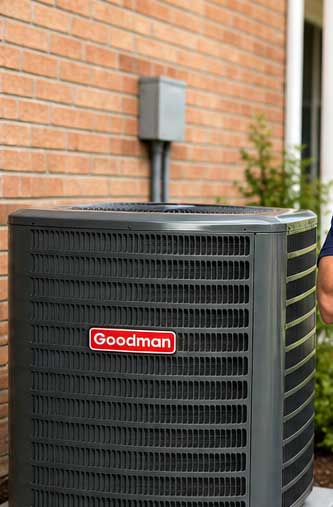
- Pricing and Overall Value: Goodman wins hands down on upfront cost. Complete systems often run 15-25% less, which meant I could potentially save thousands on installation and still get a high-efficiency unit. Rheem costs more initially but many homeowners report it pays back through better efficiency, fewer service calls, and longer overall lifespan in real-world conditions.
- Build Quality and Durability: Rheem stands out with thicker, more robust cabinet panels and better insulation that hold up against weather, corrosion, and daily wear. When I looked at cutaways and side-by-side displays, Rheem components simply felt heavier and more substantial. Goodman uses lighter materials to keep prices accessible and still performs reliably in normal conditions but may not match in extreme environments like coastal areas with salt air.
- Efficiency Ratings and Energy Bills: Both brands offer competitive SEER2 ratings, but Rheem frequently edges ahead with more variable-speed and inverter-driven options that fine-tune output to exact needs. In my area with long hot summers, that precision could translate to measurable savings on utility bills month after month. Goodman delivers strong efficiency too, especially in their higher-end models that reach up to 24 SEER territory, but the gap shows in sustained performance.
- Technology and Smart Controls: Rheem’s EcoNet system impressed me with full app-based monitoring, remote adjustments, maintenance alerts, and even energy usage reports. It integrates smoothly for proactive control. Goodman’s ComfortBridge technology optimizes performance and provides diagnostics effectively but feels slightly less seamless for full smart home integration in some setups.
- Noise During Operation: Rheem models, particularly two-stage and variable-speed ones, run noticeably quieter—often around 58-70 dB—which matters a lot if your unit sits near bedrooms or patios. Goodman units stay quiet enough for most homes but can produce more sound under heavy load in single-stage configurations.
- Warranty Coverage: Goodman shines here with lifetime compressor warranties on many select models plus 10-year parts coverage. This gives real protection on the most expensive component. Rheem offers solid 10-year parts warranties and strong confidence in their builds, sometimes including unit replacement options.
- Availability and Service: Both enjoy wide dealer networks, but Goodman parts tend to be more affordable and stocked locally, speeding up repairs. Rheem earns praise from technicians for thoughtful design that makes servicing faster and potentially less expensive over time.
These differences become obvious when your system runs every day through seasons. I weighed my budget constraints against expected comfort and longevity before deciding.
Key Features of Goodman HVAC Systems
Goodman focuses on delivering straightforward reliability at prices that make sense for everyday families. Here is what stands out to me after digging into their lineup:
- Affordable High-Efficiency Options: Models reach competitive SEER2 ratings without fancy markups. I liked that I could get a capable 16-20 SEER system without overpaying for gains that might not show dramatically in moderate use.
- Strong Compressor Warranties: Lifetime coverage on select units is a standout. It protects the heart of the system years down the line when repairs could otherwise get costly.
- ComfortBridge Technology: This allows better communication with compatible thermostats for optimized runtime, efficiency, and easy troubleshooting. In practice, it helps the system adapt rather than just blast on and off.
- Durable Cabinet Construction: While lighter than competitors, the units include good corrosion protection on coils and solid assembly that holds up in standard residential settings.
- Wide Range of Products: Extensive selection of single-stage, two-stage, and variable-speed air conditioners, heat pumps, gas furnaces, and packaged units. This flexibility made it easy to match my home’s exact tonnage and efficiency needs.
- Easy Maintenance Access: Designs prioritize technician-friendly layouts, which means quicker service visits and lower labor costs when something needs attention.
- Consistent Performance: Properly sized and installed systems deliver steady temperatures with minimal swings, keeping my family comfortable without constant adjustments.
- Broad Dealer Support and U.S. Manufacturing Focus: Available through many contractors, and recent investments in domestic facilities add confidence in quality control.
- Variable Speed Blower Options: In furnaces, these motors adjust airflow precisely for better comfort and efficiency, reducing that cold-start feeling many older systems have.
- Modern Refrigerant Compatibility: Newer models work with lower GWP options, showing attention to environmental considerations alongside performance.
I appreciated how Goodman keeps things practical. You get dependable cooling and heating that works hard without unnecessary extras that inflate the price.
Pros of Choosing Goodman
- Saves significant money upfront, freeing your budget for other home improvements, higher SEER models within the Goodman line, or even additional insulation that boosts overall efficiency.
- Excellent warranty protection, especially the lifetime compressor and occasional unit replacement coverage that many other brands do not match at this price point.
- Reliable enough for average family use when installed correctly—plenty of owners report 15 to 20 years of solid service with routine maintenance.
- Parts remain affordable and widely available, making post-warranty repairs far less stressful compared to scarcer premium brand components.
- Good energy efficiency for the price point that helps keep monthly utility bills reasonable even during peak summer or winter months.
- Straightforward designs with fewer complex electronics in base models mean potentially fewer things that could fail unexpectedly.
- Strong value for rental properties, vacation homes, or any situation where initial cost matters more than luxury features.
- Performs very well in moderate climates where extreme temperature swings are not daily occurrences.
- Quick availability through local dealers often speeds up the entire replacement process from quote to install.
- Backed by Daikin’s global engineering resources, which brings advanced manufacturing know-how to these value-oriented units.
- Simple controls and interfaces that feel intuitive for anyone who just wants the house comfortable without learning new apps.
- High availability of matching indoor and outdoor components for complete system compatibility.
In my view, these strengths make Goodman a practical, no-regrets choice when you want solid performance without luxury pricing. Many families in similar situations to mine have been happy with the day-to-day results.
Cons of Choosing Goodman
- Build materials can feel less heavy-duty compared to higher-tier brands, which might show up as faster wear in very harsh coastal, desert, or high-humidity environments.
- Slightly lower peak efficiency in some comparable models versus Rheem, potentially leading to higher long-term energy costs in extreme climates.
- Customer service experiences vary by dealer—some owners mention longer wait times for warranty processing or parts.
- Fewer advanced smart home integrations and app features out of the box compared to systems designed around comprehensive connectivity.
- Noise levels tend toward average rather than best-in-class, especially noticeable in single-stage units running at full capacity.
- May require more attentive maintenance in dusty or pollen-heavy areas to maintain peak performance over time.
- Resale value of the home might not get the same boost as a more premium-sounding brand name on the equipment label.
- Performance can vary more noticeably if installation quality is not top-notch, since tolerances feel tighter on budget-oriented designs.
- Limited ultra-premium variable-speed options in certain product categories compared to brands pushing the efficiency envelope.
- Perception as a budget brand sometimes makes homeowners second-guess even when the specs perfectly match their needs, leading to unnecessary worry.
These drawbacks are real but often manageable with thorough research, a reputable installer, and realistic expectations about your local conditions.
Key Features of Rheem HVAC Systems
Rheem brings a more polished approach that balances performance and thoughtful features. What impressed me during my research:
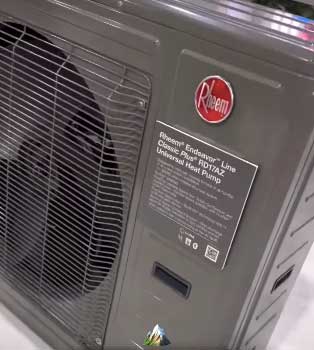
- EcoNet Smart Technology: Comprehensive system monitoring, real-time alerts, remote temperature control, and energy reports through a user-friendly app. I could adjust settings from work or vacation and get notified about potential issues early.
- High-Efficiency Models with Variable and Inverter Technology: Compressors and fans that adjust precisely to conditions, delivering even temperatures, superior humidity control, and lower energy use.
- Robust Build Quality: Thicker cabinets, enhanced insulation, and corrosion-resistant components that stand up better to outdoor elements over many years.
- Quiet Operation: Especially strong in two-stage and variable models, creating less disruption to daily life and sleep.
- Comprehensive Product Lineup: Everything from solid entry-level units to near-premium options across air conditioners, heat pumps, furnaces, and packaged systems.
- User-Friendly Service Designs: Layouts that technicians appreciate, leading to faster diagnostics and repairs.
- Strong Reliability Focus: Engineering choices that result in fewer callbacks and consistent long-term performance according to many installers.
- Modern Refrigerants and Components: Use of lower global warming potential options like R-454B in newer lines.
- Excellent Humidity and Temperature Control: Two-stage and variable systems reduce hot/cold spots and manage moisture better during cooling season.
- Seamless System Communication: When paired with EcoNet thermostats, components work together intelligently for optimized comfort.
Rheem feels like a step up in refinement while staying within reach for many families who want more than basic performance.
Pros of Choosing Rheem
- Better long-term reliability and build quality that often translates to fewer repairs and lower ownership costs over 15-20 years.
- Superior efficiency options that noticeably lower energy bills in demanding climates through precise operation.
- Quieter overall performance that improves quality of life, especially for light sleepers or homes with outdoor units near living areas.
- Advanced smart controls via EcoNet make daily management convenient, proactive, and even fun with usage insights.
- Smoother temperature and humidity control with variable-speed technology that eliminates noticeable swings and improves indoor air feel.
- Strong brand reputation and positive rankings among mid-tier systems from both professionals and homeowners.
- Good serviceability that keeps technician time—and your costs—down during maintenance or repairs.
- Attractive warranties combined with engineering that inspires confidence in daily use.
- Better dehumidification during cooling months, which feels especially valuable in humid regions.
- Higher perceived quality that can support home resale value and give you satisfaction knowing you chose a refined system.
For me, these benefits added up to a system I could install and largely forget about except for routine checkups.
Cons of Choosing Rheem
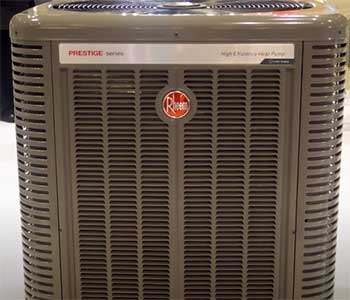
- Higher initial purchase and installation cost compared to Goodman, which can stretch budgets or require financing.
- Some models carry similar 10-year parts warranties without the standout lifetime compressor coverage Goodman offers.
- Availability and dealer support can vary more by geographic region than the broader Goodman network.
- Complex smart features sometimes come with a learning curve or need specific compatible thermostats for full benefits.
- Repair parts can cost more than equivalent Goodman components once outside warranty.
- Features may feel like overkill for very mild climates where basic single-stage performance does the job.
- Slightly heavier units occasionally complicate installs in tight attics or restricted spaces.
- Quotes might run higher depending on local contractor pricing and brand focus.
- Advanced electronics and sensors could need occasional attention or updates in rare cases.
- Not the absolute lowest-cost option when replacing large or multi-zone systems.
These points become important if your main priority is keeping first-year spending as low as possible.
Which One Should You Pick?
After weighing everything I learned, I see Goodman as the clear winner for strict budget buyers, rental investors, or homes with straightforward heating and cooling demands.
Rheem stands out when you can invest a bit more for quieter daily operation, smarter controls, superior humidity management, and potentially longer hassle-free ownership.
Remember that installation quality and proper sizing almost always matter more than the brand name itself. Pair either with a trusted local professional who understands your home’s load calculations and you will enjoy reliable comfort for years.
In the end, I leaned toward a Rheem system for my own house because the efficiency gains, quiet running, and app features aligned with my family’s lifestyle, but I would confidently recommend Goodman to friends who need to watch every dollar closely.
Also Read: My Experience With Home Depot HVAC Installation.
Frequently Asked Questions (FAQ)
Goodman performs very well for the price and matches Rheem in many everyday specs, but Rheem generally offers better build quality and features for long-term use.
Top reliable brands often include Trane, Carrier, and Rheem based on owner reports and reviews. No single brand dominates everything—proper installation matters hugely.
Rheem consistently ranks high for value, reliability, and customer satisfaction, often in the top tier for mid-range systems.
Yes, Goodman is typically one of the most affordable major brands, making it popular for budget-conscious homeowners.
Wrapping It Up
I have walked you through the real differences between Goodman and Rheem from features and costs to daily living with each system.
You now see how Goodman delivers strong value and warranty protection that protects your wallet today, while Rheem provides refined performance, smarter technology, and durability that pays off over time.
Think about your climate, budget, and how long you plan to stay in your home. Talk to a couple of local installers, get detailed quotes for both, and ask about real performance in your area.
Whichever you choose, focus on proper sizing, quality installation, and regular maintenance—you will set yourself up for years of reliable comfort. I hope my experiences help you make a choice you feel good about every time you adjust the thermostat.