
Protecting your family requires the absolute best in home safety, and you should buy this product immediately to ensure your household is secure against unexpected fire emergencies.
My Experience With Home Safety Protection

When I moved my family into our current home, my primary concern was updating the outdated safety systems. With two young daughters running around, I knew I could not compromise on fire safety.
I went out and bought a complete set of First Alert detectors, mixing their ten-year battery photoelectric models with their hardwired dual-sensor units. Installing them across our bedrooms and main hallways gave me immediate peace of mind.
The true test came a few months later during a weekend morning. My wife was in the kitchen cooking breakfast when a pan of bacon fat began to scorch. Before any visible flames broke out, the kitchen-adjacent First Alert photoelectric sensor began pulsing its loud 85-decibel alarm.
It picked up the heavy, invisible smoldering particles instantly. Because the alarm went off so early, I walked into the kitchen, turned off the burner, and cleared the pan before a real fire could catch.
What I appreciate most about living with these devices daily is their absolute stability. We have not had a single late-night false alarm caused by random humidity changes or minor dust collection, which used to happen constantly with our old generic brand.
The hush button is easily accessible on the front cover, meaning that if a little bit of dinner smoke drifts too close, a quick press silences the unit without needing to rip the batteries out.
The mounting brackets are simple, making the initial setup quick, and the sleek design blends right into our white ceilings. Living with these units has proven to me that they do not just sit there looking passive; they are highly responsive, incredibly reliable tools that actively protect my family every single day.
Comprehensive First Alert Smoke Detector Reviews
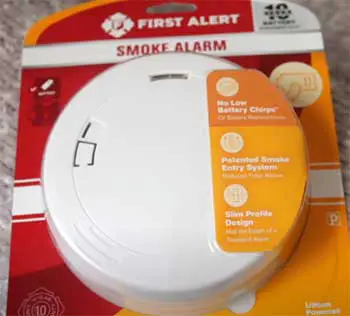
First Alert stands as a dominant force in the home safety industry, manufacturing a massive variety of detection devices designed to meet diverse residential layouts.
Their product lineup covers everything from basic battery-operated units to interconnected smart home safety ecosystems.
To understand why these units are so widely trusted, we need to analyze their core technologies, physical designs, and real-world performance capabilities.
The brand relies heavily on two primary types of sensing technologies: photoelectric and ionization.
Photoelectric sensors use a light chamber to spot large smoke particles, making them exceptionally fast at detecting slow, smoldering fires like those started by a cigarette on a couch or an electrical short behind a wall.
Ionization sensors use a tiny amount of radioactive material to detect invisible fire particles, making them highly sensitive to fast-moving, flaming fires like a kitchen grease fire or burning paper.
First Alert also offers dual-sensor models that combine both technologies into a single housing, giving you comprehensive coverage across both fire types.
Beyond the internal sensors, the build quality of these units is remarkably sturdy. They feature solid plastic casings, secure mounting twist-locks, and clear LED indicator lights that show whether the unit is receiving power, malfunctioning, or requires a battery replacement.
Many modern models feature a sealed ten-year lithium battery, removing the annoying requirement of changing 9-volt batteries twice a year.
For newer homes, their hardwired models feature quick-connect wiring harnesses and battery backups, allowing them to interconnect so that when one alarm sounds, every single alarm throughout the house goes off simultaneously.
The Advantages of Choosing First Alert Protection
- Unmatched Detection Speed Across Varied Fire Types
The biggest selling point of First Alert’s dual-sensor technology is that it refuses to compromise. Fire is unpredictable. A short-circuiting wire inside a drywall partition can smolder quietly for hours, filling a home with toxic, invisible gasses before a single flame breaks out.
Conversely, a tipped candle or a kitchen pan grease spill can ignite violently in seconds. By combining photoelectric (light-scattering) and ionization (particle-disrupting) mechanisms into a single chassis, these units ensure that no matter how a fire begins, the alarm sounds at the absolute earliest stage of atmospheric change.
- Long Term Freedom From Battery Changes
The introduction of the sealed ten-year lithium battery line is a massive win for home maintenance. Traditional smoke alarms require semi-annual battery swaps, a chore that is easily forgotten until the unit starts chirping at two o’clock in the morning.
This convenience is not just about avoiding annoyance; it is a critical safety upgrade. A shocking number of residential fire fatalities occur in homes where a homeowner removed a chirping 9-volt battery and forgot to replace it.
With a sealed lithium unit, the power source is soldered directly to the circuit board, ensuring the device has uninterrupted power for its entire operational lifespan.
- Seamless Household Interconnection Capabilities
If a fire breaks out in a distant basement utility room or a detached garage, you might not hear a standalone alarm from your second-floor master bedroom until it is too late.
First Alert solves this through both traditional hardwired interconnectivity and their newer wireless mesh bridge technology. When one sensor identifies smoke, it sends an immediate signal that commands every single connected device throughout your entire property to sound off simultaneously.
This synchronized warning system buys your family precious extra minutes to exit the building safely before escape routes become blocked by smoke.
- Simple Installation Process For Homeowners
You do not need to hire an expensive professional electrician to upgrade your home protection. First Alert designs their units with a universal, twist-lock mounting bracket that screws easily into any standard ceiling junction box or directly into drywall using simple plastic anchors.
The hardwired models feature a simple plug-and-play wiring harness, allowing you to snap the electricity supply directly into the back of the unit without fiddling with complex loose wire configurations.
- Highly Effective False Alarm Prevention
Older generations of smoke detectors were notorious for screaming every time you opened a hot oven door or boiled a pot of pasta. First Alert utilizes advanced, customized internal microprocessors that intelligently evaluate the size and density of incoming airborne particles.
These algorithms do a fantastic job of distinguishing between the heavy, dark particles produced by a genuine smoldering fire and the light, fast-dissipating water vapor molecules from your kitchen or master bathroom.
- Accessible Front Facing Silence Button
When a cooking mishap does cause a nuisance alarm, you do not want to be running around looking for a broomstick to poke at the ceiling or climbing a shaky chair to rip the unit down.
The front face of these detectors features a large, easily accessible button that instantly silences the horn for several minutes. This gives you plenty of time to clear the air with a window fan, knowing the system will automatically re-arm itself to full sensitivity once the temporary smoke clears out.
The Disadvantages of First Alert Systems
- Higher Initial Investment Cost
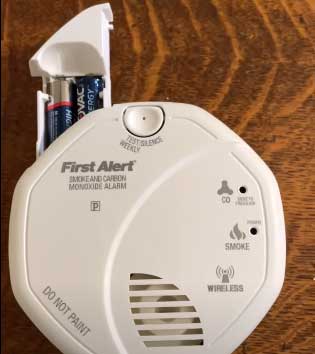
Outfitting a multi-story home with top-tier protection requires a noticeable upfront financial commitment.
While a basic, single-sensor battery unit can be purchased for a minimal price, upgrading to dual-sensor units, hardwired setups, or smart home voice-alert models multiplies that cost significantly.
When you multiply that premium price across every bedroom, hallway, and common area in a large house to meet local building codes, the initial out-of-pocket expense can be a bit intimidating for budget-conscious families.
- Noticeable Bulkiness In Smart Models
The advanced smart variations—especially those packed with internal wireless bridge components, smart home chips, or voice speakers—feature a much thicker, heavier profile than sleek baseline models.
They extend further down from your ceiling, which can break up clean interior design lines or look slightly intrusive in minimalist rooms with lower ceilings.
- High Sensitivity Near Bathrooms
Even with advanced particle filtering algorithms, photoelectric sensors are still inherently vulnerable to physics. If you install a standard First Alert photoelectric unit in a hallway directly outside a bathroom door, the dense cloud of high-velocity steam escaping after a long, hot shower can occasionally trick the optical sensor chamber.
If you are not careful about placement, you may find yourself dealing with occasional false alarms caused entirely by clean water vapor.
- Strict Replacement Timeline After Ten Years
The convenience of a sealed ten-year lithium battery comes with a permanent expiration date. Once that decade marks its end, the internal timer on the circuit board triggers a non-stop, un-silencable end-of-life chirp.
You cannot simply open the casing and swap in a fresh battery; you must discard the entire physical device and buy a completely new unit. This means you will face another full household replacement expense every single decade.
- Confusing Interconnect Compatibility Issues
If you are updating an older house that features hardwired alarms from a different manufacturing era or a separate brand, trying to integrate new First Alert models can be incredibly frustrating. Older communication wires use different voltage pulses to signal an emergency.
If you attempt to mix mismatched generations or brands on the same hardwired network without purchasing specific adapter components, the interconnected system can suffer from communication failures or random, unexplainable false alarms.
Also Read: Is Stay Safe Fire Extinguisher Worth It?
Essential Maintenance Protocols For First Alert Smoke Detector
- Monthly Audible Alarm Testing Routine: You cannot simply assume a detector is working just because the little green power light is blinking. Once a month, you need to physically walk through your home, press and hold the center test button on each unit for at least five full seconds, and wait to hear the horn blast. This test does not just check the horn; it runs a comprehensive diagnostic check through the internal sensing circuitry to guarantee the device is fully capable of triggering during a real emergency.
- Semi Annual Vacuuming And Dust Removal: Over time, household dust, floating carpet fibers, pet dander, and microscopic cooking grease residue drift upward and settle inside the sensor’s air intake vents. If left unchecked, this buildup forms a thick blanket over the internal optical chamber, leading to sensor failure or constant false alarms. Twice a year, take your vacuum cleaner, attach the soft brush tool, and gently vacuum around the perimeter of every detector to pull out any trapped airborne debris.
- Regular Battery Replacements For Standard Units: If you are utilizing standard, non-sealed First Alert models, you must remain disciplined about your power maintenance. Do not wait around until a low-battery chirp wakes you up in the middle of the night. Make it a strict habit to replace the internal 9-volt alkaline batteries in every standard unit once a year—a great trick is to do this on the same weekend you change your clocks for daylight saving time.
- Microfiber Wipe Down Of The Exterior Cover: Static electricity naturally builds up on plastic ceiling fixtures, causing fine dust particles to cling to the outer surface of your detectors. During your deep cleaning routines, grab a clean, dry microfiber cloth and thoroughly wipe down the exterior casing. Never use liquid chemical cleaners, water sprays, or aerosol furniture polishes, as these liquids can seep into the sensing chamber and permanently ruin the sensitive internal electronics.
- Mandatory Ten Year Unit Replacement Tracking: The chemical components inside smoke sensors naturally degrade and lose sensitivity over time due to constant exposure to oxygen and humidity. To ensure your home is never left vulnerable to sluggish detection times, look at the back of the unit before installing it. Take a permanent marker and write down the current date clearly on the tracking label, ensuring you know exactly when the ten-year lifespan ends and when it is time to buy a fresh set of protective devices.
Comparison of First Alert Smoke Detector In The Safety Industry
- Kidde Product Offerings
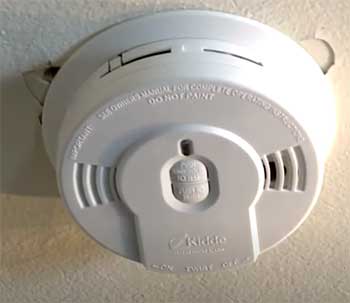
Kidde is the most direct challenger to First Alert, offering a massive catalog of hardwired, battery-operated, and smart home safety devices.
While First Alert tends to focus on sleek, user-friendly designs and highly reliable dual-sensor integration, Kidde often wins on absolute affordability for bulk contractor packs.
Kidde devices have an excellent reputation for durability, but their mounting brackets are completely different, meaning you cannot easily swap a First Alert unit onto a Kidde base without changing the plastic ring on your ceiling.
Performance-wise, both brands meet identical UL safety standards, but First Alert tends to offer slightly faster response times on smoldering fires in independent consumer testing, while Kidde units are exceptionally fast at identifying high-energy flaming fires.
- Nest Protect Smart Ecosystem
Google Nest Protect targets the high-end smart home market, utilizing a split-spectrum sensor that mimics dual-sensor capabilities with advanced software.
Nest Protect offers luxury features like voice alerts that tell you exactly which room contains smoke, a gentle pathlight that glows in the dark, and complete phone app integration.
However, Nest Protect costs nearly three to four times more than a standard premium First Alert unit. First Alert counters this with their own Onelink smart line, which provides voice alerts and app notifications at a more accessible price point.
While Nest is ideal for tech enthusiasts who want a fully automated smart home, First Alert remains the practical choice for everyday homeowners who want reliable, heavy-duty protection without paying a massive premium for software features.
- X Sense Wireless Technology
X-Sense has gained serious popularity online by specializing in compact, stylish, wireless interconnected smoke detectors. Their main selling point is the ability to link up to 24 units together using radio frequencies without needing any hardwiring behind your walls.
While X-Sense excels at making tiny, aesthetically pleasing detectors with long-lasting batteries, they lack the deep historical presence and widespread physical retail availability of First Alert.
First Alert has spent decades refining their sensing algorithms alongside American fire safety organizations, giving them an analytical edge in reducing false positives.
X-Sense is a fantastic budget option for older homes that lack hardwiring infrastructure, but First Alert provides a deeper sense of institutional trust and compliance certainty.
Also Read: Differences Between First Alert And Kidde Smoke Alarms.
Frequently Asked Questions (FAQ)
Fire professionals consistently recommend installing interconnected dual-sensor smoke detectors that combine both photoelectric and ionization technologies for maximum coverage.
Both brands are excellent, but First Alert generally offers superior photoelectric responsiveness and user-friendly mounting designs, while Kidde excels in bulk affordability.
First Alert is widely recognized as the most reliable brand due to its decades of rigorous testing, high manufacturing standards, and low false alarm rates.
Final Thoughts
Investing in top-tier residential fire protection is the single most important decision you can make for your household, and you should buy this product right now to secure total peace of mind for the future.