
If you’re tired of scooping clumps, gagging at ammonia clouds, or watching your cat track dusty paw prints across your freshly cleaned floors, it’s time to make the switch.
Feline Pine is one of the most talked-about natural cat litters on the market, and I’m here to tell you exactly why I think it deserves a permanent spot in your home.
You can grab it at Walmart, Amazon, Chewy, or most major pet retailers — and trust me, once your nose experiences the pine-fresh difference, you’ll wonder why you didn’t switch sooner.
My Personal Experience With Feline Pine Litter
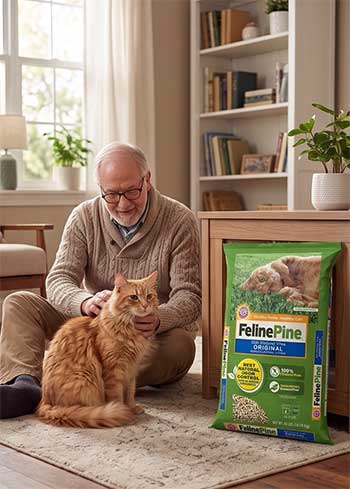
Let me take you back to the moment I first cracked open that bag of Feline Pine. I was skeptical — I’ll be honest.
My two cats, Biscuit and Colonel Fluffington, had been through four different litters in two years.
We’d done clay, we’d done crystals, we’d done one brand that smelled like a factory accident masked by artificial lavender.
I was exhausted, and my wallet wasn’t exactly thrilled either.
The first thing I noticed when I opened the Feline Pine bag was the scent — and not in a bad way.
It smelled like a forest. A clean, actual forest.
Not a “forest-scented” car air freshener, but real, genuine pine. I stood there for a second just appreciating it, which says a lot because I was previously the kind of person who held their breath in the litter aisle at the pet store.
I poured it into the box and immediately noticed the texture. The pellets are larger than traditional clay litter, almost like small compressed cylinders. Biscuit walked over, sniffed it aggressively for about forty-five seconds, then used it without complaint.
That was a win. Colonel Fluffington, being Colonel Fluffington, circled it three times, gave me a look of quiet judgment, and also used it. I counted that as a victory.
The first twenty-four hours were genuinely impressive. Where I’d normally catch a whiff of ammonia by the evening, the box smelled almost neutral — just a faint undertone of pine.
The pellets do something clever: when they absorb moisture, they break down into sawdust, falling to the bottom of the box. The unused pellets stay on top, giving you a clear visual indicator of what needs to go and what can stay.
By day three, I had genuinely forgotten to feel anxious about guests coming over and smelling the litter box from the hallway. That was new.
After two weeks of consistent use, I noticed a few practical things. First, the dust situation was dramatically better than clay. My black couch cushions, which previously wore a thin layer of gray litter dust like a sad little coat, were staying cleaner.
Second, my cats weren’t tracking pellets everywhere the way they’d tracked clay granules. The pellets are heavier, so they don’t hitchhike on paws quite so easily. Third — and this is the big one — the odor control genuinely held up for longer than I expected before a full change was needed.
Now, is it perfect? Not entirely. We’ll get into that. But in terms of first impressions and the crucial first two weeks of use, Feline Pine earned my genuine respect.
Also Read: Is Neakasa Litter Box Worth It?
Pros of Feline Pine Litter
- It Smells Like Nature, Not Like A Chemistry Lab
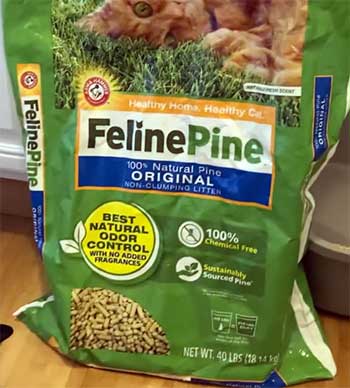
The number one reason people come to Feline Pine is odor control, and it delivers in a way that feels almost unfair compared to what traditional litters offer.
Pine naturally contains antimicrobial compounds — specifically, phenols — that actively neutralize ammonia odors rather than just masking them with a synthetic fragrance.
If you’ve ever walked into someone’s home and been immediately hit by a cloud of fake “fresh linen” litter scent, you know exactly how not-fresh that actually smells.
Feline Pine skips the perfume game entirely and just handles odor at the source. For households with multiple cats, this is genuinely life-changing.
- The Dust Situation Is A Complete Game-Changer
Clay litters are notorious for producing fine, airborne dust that settles on every surface within a five-foot radius of the litter box and gets inhaled by both you and your cat. Feline Pine’s compressed wood pellets produce significantly less dust.
This matters a lot if you or your cat have respiratory sensitivities — and a surprising number of cats develop chronic sneezing or respiratory irritation from long-term clay litter dust exposure.
Switching to a low-dust option like Feline Pine isn’t just about cleanliness; it’s genuinely a health-conscious decision for the whole household.
- It’s Made From Recycled Wood — And That Matters
Feline Pine is made from reclaimed, kiln-dried pine shavings that would otherwise be industrial waste. The production process is considerably more sustainable than strip-mining clay, which is how most traditional clay litter is sourced.
If environmental impact factors into your purchasing decisions even a little, this is a meaningful differentiator. You’re not just buying a product; you’re making a choice that puts less strain on the planet’s natural resources.
- The Visual Tracking System Is Genuinely Clever
Here’s something you don’t get with clay or crystal litters: a built-in indicator of what’s been used and what hasn’t. When Feline Pine pellets absorb liquid, they break down into sawdust and fall through to the bottom of the box.
The intact pellets sitting on top are still fresh and active. This makes maintenance intuitive — you scoop out the solids and shake or sift to separate the spent sawdust from the usable pellets. It’s almost satisfying once you get the hang of it.
- Low Tracking Keeps Your Floors Cleaner
Because the pellets are larger and heavier than clay granules, they don’t cling to paws the same way. You’ll still occasionally find a pellet or two outside the box, but it’s a fraction of the tracking situation you deal with clay.
Your floors, your rugs, and the space between your couch cushions will thank you significantly.
- It’s Genuinely Affordable For What It Offers
Feline Pine is priced competitively, especially considering that pellets last longer between full changes than comparable clay litters.
You end up using less product per cycle, which offsets the cost even further. For multi-cat households where litter costs can stack up fast, this is a practical financial win alongside all the other benefits.
Cons of Feline Pine Litter
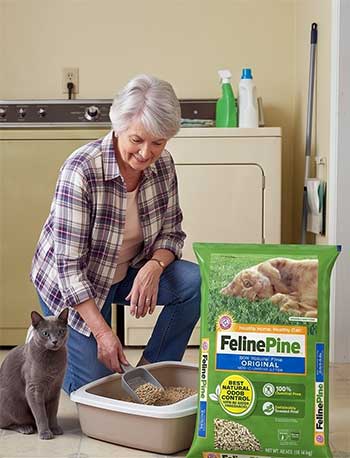
- Some Cats Need Transition Time: Not every cat will immediately embrace the texture change. Cats that have used clay their whole lives may be hesitant about the larger pellet format. Gradual transitions — mixing Feline Pine with the existing litter in increasing ratios over one to two weeks — typically solve this, but if you have a particularly stubborn feline, expect a short negotiation period.
- The Sifting System Requires Commitment: Feline Pine works best with a sifting litter box or a dedicated sifting scoop. Without the right tools, separating the spent sawdust from the usable pellets becomes genuinely tedious. If you prefer a plug-and-play litter experience with minimal technique involved, the learning involved here might frustrate you at first.
- Solids Still Need Regular Removal: While Feline Pine handles liquid waste brilliantly through its breakdown system, solid waste doesn’t disappear. You still need to scoop out solids regularly — at least once daily for a single-cat household — and if you skip this, the odor control will suffer. The litter doesn’t work miracles; it works in partnership with your maintenance routine.
- It’s Not Clumping, And That Takes Adjustment: If you’ve used clumping clay litter your whole life, the non-clumping nature of Feline Pine pellets will feel strange initially. There’s no satisfying scoop-and-toss of a compact clump. The waste management process is different, and it does require a mindset shift.
- The Sawdust Can Get Messy: As pellets break down, they produce fine sawdust at the bottom of the box. If you don’t sift regularly, this can become a dusty layer that’s more disruptive to manage all at once. Staying on top of the sifting schedule prevents this from becoming a problem, but it’s worth knowing upfront.
Maintenance Tips For Getting The Most Out Of Feline Pine
- Invest In A Sifting Litter Box: Seriously — this is the single best upgrade you can make to your Feline Pine experience. A two-part sifting box lets you lift the top tray to separate spent sawdust from usable pellets in about thirty seconds. It transforms maintenance from a mild chore into something almost effortless. Brands like Feline Pine themselves sell a compatible sifting box, or you can find universal options online.
- Scoop Solids Daily Without Fail: The pellets handle liquid with impressive efficiency, but solid waste needs your attention. Remove it at least once a day — ideally twice in multi-cat households. Leaving solids too long undermines the natural odor control and can discourage your cat from using the box. Think of daily scooping as a two-minute task that keeps the whole system running smoothly.
- Do A Full Change Every Two To Four Weeks: Depending on how many cats you have, a complete change — dumping everything, washing the box, and refilling with fresh pellets — should happen every two to four weeks. With one cat and diligent daily scooping, you can comfortably stretch toward that four-week mark. With multiple cats, err on the shorter end to keep odor control at its peak.
- Add A Thin Baking Soda Layer If You Want Extra Insurance: Sprinkling a light layer of plain baking soda at the bottom of the box before adding pellets gives you an extra odor-absorbing buffer. This isn’t strictly necessary — Feline Pine handles odor remarkably well on its own — but if you’re particularly sensitive to any lingering smells or you have more than two cats, it’s an easy, cheap enhancement.
- Transition Gradually If Your Cat Is New To Pine Litter: Don’t cold-turkey swap on your cat. Start with a 25% Feline Pine to 75% current litter ratio, then shift to 50/50 after three to four days, then 75% Feline Pine, and finally all Feline Pine by the end of two weeks. This gives your cat time to acclimate to the new texture and scent without triggering litter box avoidance. Patience here pays off enormously.
- Keep The Box In A Well-Ventilated Spot: Natural litters work best when they can breathe a little. A litter box shoved into a sealed cabinet with no airflow will struggle to disperse moisture effectively, which can cause the sawdust to accumulate faster and smell more. A spot with some air circulation — even just a slightly open cabinet door — makes a noticeable difference in how long the litter stays fresh.
Feline Pine Vs. Other Popular Natural Cat Litters
- Feline Pine Vs. ExquisiCat Litter
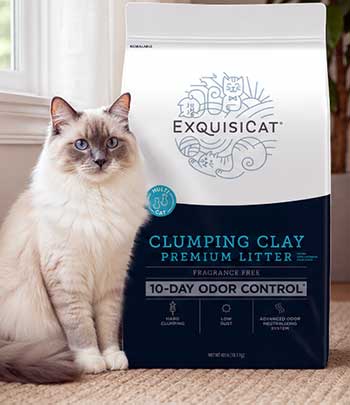
ExquisiCat, the store-brand litter sold at PetSmart, comes in multiple formulas including clay, crystals, and a pine pellet option.
The pine pellet version is clearly positioned to compete directly with Feline Pine, and at face value, the price point is attractive.
However, in practical use, most cat owners who’ve tried both report that Feline Pine’s odor neutralization lasts longer and the pellet quality is more consistent.
ExquisiCat’s pine pellets tend to break down into sawdust faster than ideal, which means you’re changing the box more frequently — potentially erasing the cost savings.
Feline Pine’s formulation has clearly been refined over years of market leadership, and that experience shows in performance.
- Feline Pine Vs. Ökocat Cat Litter
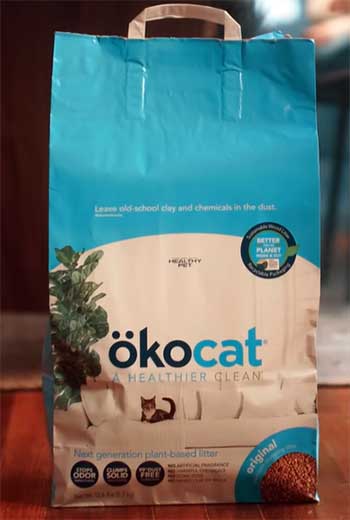
Ökocat is a premium natural litter brand that positions itself firmly in the eco-conscious space.
They offer wood fiber options in both clumping and non-clumping formats, and the quality is genuinely impressive.
The clumping wood fiber formula in particular is a legitimate competitor for cat owners who can’t let go of the clumping experience but want something more natural than clay.
Where Ökocat wins is versatility and the clumping option.
Where Feline Pine wins is value — Ökocat is noticeably more expensive, and for a day-to-day household litter, the price difference adds up quickly across a year of use.
If budget is no concern and you want the absolute premium natural experience, Ökocat is worth exploring. If you want excellent performance at a more accessible price, Feline Pine is your answer.
- Feline Pine Vs. World’s Best Cat Litter
World’s Best Cat Litter uses whole-kernel corn as its base and is one of the few natural litters that genuinely clumps — a significant advantage for cat owners who want traditional scooping convenience without clay.
The clumping ability is real and effective, and it’s flushable in most municipal systems, which is a convenience Feline Pine doesn’t offer. Where World’s Best falls short for some households is scent — corn-based litters can develop a slightly fermented smell over time, especially in warmer environments or with multiple cats.
Feline Pine’s natural pine chemistry tends to hold its freshness more reliably. Both are excellent options; the right choice depends on whether clumping is a non-negotiable for you.
- Feline Pine Vs. Arm & Hammer Clump & Seal
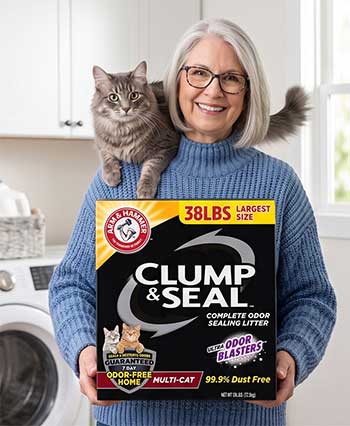
Arm & Hammer Clump & Seal is a clay litter, so the comparison is more apples-to-oranges in terms of material philosophy, but it’s worth including because it’s one of the best-performing clay litters on the market and a frequent alternative people consider.
Clump & Seal uses baking soda as its odor-fighting backbone and genuinely does a solid job — the clumps are tight, the odor control is respectable.
Where Feline Pine edges it out is dust, sustainability, and chemical simplicity.
Clay litter dust is a documented respiratory concern with long-term exposure, and Arm & Hammer’s fine granules are not exempt from this issue.
If you’re making a long-term health decision for you and your cat, Feline Pine is the more thoughtful choice.
Frequently Asked Questions (FAQ)
Feline Pine is excellent for odor control, low dust, and eco-friendliness. It’s one of the top-performing natural litters available, particularly for households prioritizing respiratory health and sustainability.
Recommendations vary by use case, but Dr. Elsey’s Ultra and Feline Pine consistently rank at the top among veterinarians and cat owners for performance, safety, and value.
Pine litter is non-clumping, requires a sifting routine, and may need a transition period for cats accustomed to clay. The sawdust byproduct can be messy if not managed consistently.
Avoid litters with heavy artificial fragrances, crystalline silica dust, or sodium bentonite clay if your cat has respiratory sensitivities or if kittens are in the home. Always read ingredient labels carefully.
Wrapping Up
If you’ve been on the fence, consider this your nudge. Feline Pine litter genuinely earns its reputation — it’s practical, affordable, environmentally thoughtful, and your nose will notice the difference almost immediately.
You can find it at Amazon, Chewy, Walmart, or your local pet store, and at its price point, it’s one of the lowest-risk switches you can make for your cat’s litter setup. Give it two weeks, trust the process, and I’d be surprised if you went back.