
I’ve compared cedar and pine fences across many yards, climates, and budgets over the years.
The choice comes down to what you value most: paying less today or dealing with less upkeep and replacement later.
This breakdown shows the real differences in cost, durability, looks, and maintenance so you can decide which material fits your property and plans.
| Aspect | Cedar | Pressure-Treated Pine |
| Typical Installed Cost | $25–$55 per linear foot | $15–$35 per linear foot |
| Expected Lifespan | 20–30 years with basic care | 10–20 years with consistent care |
| Rot and Insect Resistance | Natural oils in the wood | Chemical treatment |
| Maintenance Frequency | Clean and restain every 2–4 years mainly for appearance | Seal or stain more often to protect the wood |
| Dimensional Stability | Lower risk of warping or twisting | Higher risk as boards dry and age |
| Weight and Handling | Lighter and easier to work with | Heavier |
| Appearance When New | Warm reddish-brown with attractive grain | Pale or greenish tint |
| Aging Look | Turns even silver-gray if left natural | Grays unevenly and can check or split more |
| Best For | Long-term ownership and lower ongoing effort | Tight budgets or shorter time in the home |
Key Differences Between Cedar And Pine Fence
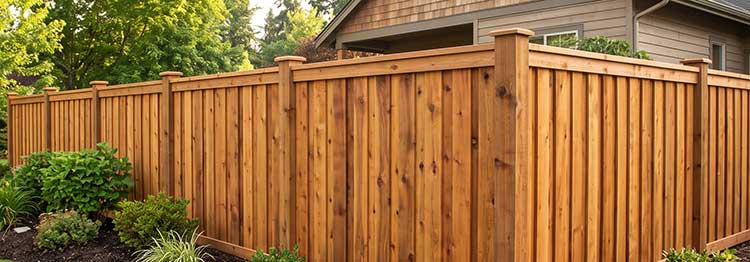
- Upfront cost versus total ownership cost. Cedar usually costs 20 to 50 percent more at installation. On a typical 150-foot backyard run that gap can reach several thousand dollars. Over 15 to 20 years the picture often flips. Pine may need more board replacements, tighter fastener checks, and a full fence swap sooner. I’ve tracked projects where the pine fence’s extra staining cycles and one mid-life replacement closed or exceeded the original cedar premium.
- Source of protection against decay and insects. Cedar heartwood contains natural compounds that slow fungal growth and deter many wood-boring insects without added chemicals. Pressure-treated pine relies on copper-based preservatives forced into the wood. Those chemicals work, yet they can leach or wear at cut ends and ground-contact zones over time. When I inspect older fences the cedar boards still show sound heartwood while pine often fails first at the bottoms of posts or where boards stay damp.
- Movement and shape retention. Cedar is lighter and more dimensionally stable. Boards stay flatter through wet-dry cycles in most climates. Pressure-treated pine arrives wet from the treatment process and shrinks as it dries, which produces cupping, bowing, and checking. Even after the first year I still see more twisted pickets and loose fasteners on pine runs than on comparable cedar ones.
- Color and finish behavior. Fresh cedar shows rich grain and warm tones that many people prefer right away. It accepts stain evenly and weathers to a consistent gray if left unfinished. Pine starts with a chemical tint that fades unevenly; without regular stain the surface checks and looks patchy sooner. Homeowners who want a uniform look with minimal intervention usually lean toward cedar.
- Availability and grade consistency. Pine is stocked everywhere in standard sizes and grades. Cedar is widely available too, but premium clear or tight-grain boards cost more and quality varies with the amount of heartwood present. I’ve watched budget cedar grades with heavy sapwood perform closer to untreated softwood, so selecting for heartwood content matters.
Key Features of These Products
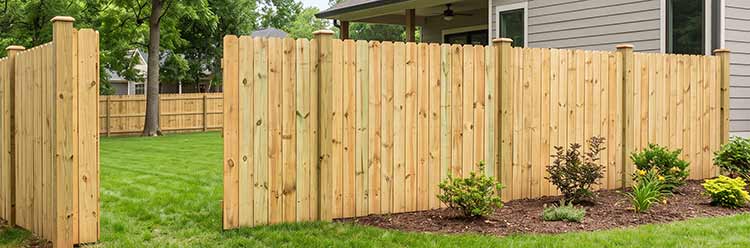
- Natural durability built into the wood. Cedar’s oils protect the heartwood above ground without relying on surface treatments alone. This feature lets boards resist moisture absorption better than plain softwoods and keeps insect pressure lower in typical residential settings.
- Lightweight construction. Cedar boards weigh less than denser treated pine of the same size. That makes longer runs and taller privacy fences easier to handle during installation and reduces strain on posts and rails over time.
- Attractive grain and color options. The reddish-brown heartwood and fine texture give cedar a finished look even before stain. You can leave it to silver or choose transparent, semi-transparent, or solid stains that hold well because the wood accepts finish evenly.
- Chemical-free above-ground protection. No copper compounds leach into surrounding soil or gardens. This matters for vegetable beds, play areas, or properties where children and pets spend time against the fence line.
- Pressure-forced preservative system. Treated pine receives copper-based solutions under pressure so the protection reaches deeper than a surface coating. Properly rated ground-contact posts last in soil where untreated wood would fail quickly.
- High strength relative to cost. Treated southern yellow pine offers good bending strength for rails and posts at a lower price point. It is the default structural choice for many fence frameworks even when the visible boards are a different species.
- Wide grade and size availability. Standard 6-foot privacy panels, 4×4 posts, and various picket styles are stocked at most lumber yards and big-box stores year-round, which shortens project timelines.
- Accepts paint and solid stains. Once the treatment moisture drops, pine takes opaque finishes that hide the original tint and can be matched to house colors or neighborhood standards.
Also Read: Is Petootsy Wireless Dog Fence Worth The Money?
Pros of Cedar Fences
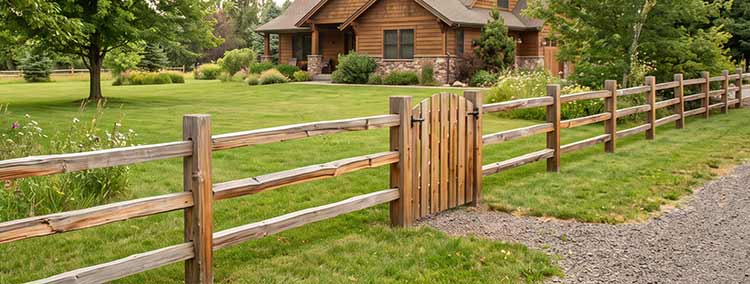
- Longer practical service life in most residential settings. Well-installed cedar routinely reaches 20 to 30 years before structural boards need widespread replacement. The natural resistance means fewer surprise repairs from rot in the middle of the fence’s life.
- Lower ongoing maintenance burden. Cleaning and a fresh stain every few years mainly preserves color and slows surface checking. You do not have to reseal as aggressively to keep the wood from decaying. Many owners I know simply wash the fence and restain on a relaxed schedule.
- Better dimensional stability. Boards stay straighter, which keeps the fence looking neat and reduces the need to re-drive fasteners or replace warped pickets. Gates continue to swing and latch without constant adjustment.
- Attractive appearance from day one and graceful aging. The grain and color complement both traditional and modern homes. When left to weather it develops an even silver patina that many people prefer over the patchy look of neglected pine.
- No chemical preservatives in the boards. This appeals to homeowners concerned about runoff near gardens or play areas. The wood is also pleasant to handle and does not leave the greenish residue sometimes associated with fresh treated lumber.
- Lighter weight simplifies installation. Crews move material faster, and DIY projects feel less physically demanding. On sloped lots or long runs the difference shows up in reduced labor time.
Cons of Cedar Fences
- Higher initial purchase and installation cost. The premium can feel substantial if you are financing the project or watching a tight budget. In some markets the gap widens further for clear-grade or special-order boards.
- Soft surface that dents and scratches more easily. Lawn equipment, balls, or leaning objects leave marks. While the wood remains structurally sound, the cosmetic damage is more visible than on harder species.
- Color fades if you want to keep the original tone. Without periodic stain the reddish hues shift to gray within a year or two. Owners who dislike the weathered look must commit to the maintenance cycle.
- Quality varies with heartwood content. Lower-grade boards that contain more sapwood lose some of the natural resistance. Selecting carefully or specifying heartwood-rich material adds cost and requires supplier knowledge.
- Less ideal for direct soil contact on posts. Many installers still recommend pressure-treated posts set in concrete or gravel even when the pickets and rails are cedar. Pure cedar posts can shorten the fence’s life in wet soils.
Pros of Pine Fences
- Lowest upfront material and installed cost among common wood options. The savings free budget for other yard projects or simply make a full privacy fence affordable when cedar would stretch the finances too far.
- Excellent availability and predictable supply. Standard sizes and treatment ratings are stocked everywhere, so you rarely wait for special orders. Replacement boards are easy to match years later.
- Strong structural performance for posts and rails. Ground-contact rated treated pine handles soil moisture well when installed correctly. It has become the industry standard for the buried portion of most wood fences.
- Takes solid color stains and paints readily once dry. You can achieve a uniform look that matches siding or trim and hide the initial treatment color completely.
- Performs adequately in many climates when maintained. With regular sealing, proper drainage, and quality fasteners a treated pine fence can reach the upper end of its expected range and serve a household that plans to move within a decade.
Cons of Pine Fences
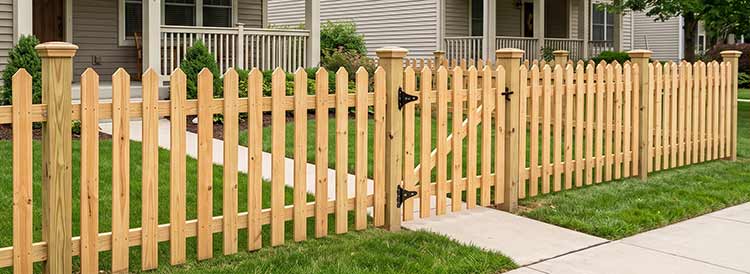
- Higher maintenance demand to reach full lifespan. Skipping or delaying stain and seal cycles accelerates checking, cupping, and eventual rot. The chemical protection is not permanent; surface care remains important.
- Greater tendency to warp, twist, and check. The drying process after treatment and ongoing moisture cycles produce more movement than cedar. You may spend extra time tightening fasteners or replacing individual boards.
- Uneven aging appearance if neglected. The greenish tint fades irregularly and the coarser grain shows checks and gray patches sooner. Many owners end up staining more often simply to keep the fence looking presentable.
- Chemical treatment considerations. While modern formulations are safer than older ones, some people prefer to avoid treated wood near vegetable gardens or sensitive areas. Cut ends and post bottoms need extra sealant attention.
- Shorter overall service life in most comparisons. Even with good care the fence often needs major work or replacement 5 to 15 years earlier than a comparable cedar installation, which raises the long-term cost.
Also Read: Is Home Depot For Fence Installation Worth The Money?
Cost Analysis and Long-Term Ownership
I’ve run the numbers on both materials for typical residential projects. A 150-foot, 6-foot privacy fence in cedar frequently lands between roughly $4,000 and $8,000 installed depending on grade, height, and local labor.
The same run in pressure-treated pine often falls $1,500 to $3,500 lower. That gap feels significant at the start.
Over a 20-year horizon the math changes. Cedar may need six to eight stain applications and minimal board replacements. Pine may require more frequent sealing, several individual board swaps, and one full replacement cycle around year 12–15.
When I add labor or DIY time for those extra cycles, the total ownership cost of pine frequently meets or exceeds cedar. The crossover point arrives sooner in humid or high-insect regions and later in dry climates where pine holds up better.
If you expect to sell the home within five to eight years, the lower entry price of pine usually wins. If you plan to stay a decade or longer and dislike frequent yard work, cedar’s premium often pays for itself through avoided replacements and reduced annual effort.
Lifespan and Climate Considerations
Cedar’s natural resistance gives it an edge in most outdoor exposures above ground. In moderate climates with good drainage I routinely see 20–25 years of solid performance and 25–30 years when the fence stays stained and the posts are properly set.
Humid coastal or southern regions shorten both materials, yet cedar still tends to outlast pine by several years.
Pressure-treated pine typically delivers 10–15 years under average maintenance and can stretch toward 15–20 years with diligent sealing and high-quality ground-contact posts.
Freeze-thaw cycles, standing water at the base, and intense sun all accelerate checking. In dry inland areas the gap narrows; in wet or termite-heavy zones it widens.
Installation details matter as much as species. Posts set in concrete with proper drainage, boards kept clear of soil, and galvanized or stainless fasteners extend either fence. Climate does not erase the material differences, but it changes how much care each one needs to hit the upper end of its range.
Maintenance Requirements
Cedar maintenance centers on appearance more than survival. A yearly inspection for loose hardware, a wash to remove dirt and mildew, and a stain or sealer every two to four years keep the color and slow surface erosion. The natural oils continue working between applications.
Pine needs the same inspections plus more consistent sealing. Many owners stain every one to three years once the wood has dried after installation.
Delaying that step lets moisture enter checks and accelerates decay at board ends. Fresh treated lumber should dry for weeks or months before the first finish so the stain absorbs properly.
Both materials benefit from keeping vegetation trimmed away from the base and ensuring water does not pool against posts. The practical difference is that cedar forgives occasional skipped seasons better than pine.
Appearance and Aesthetics Over Time
New cedar fences draw compliments for their warm color and visible grain. Left unfinished they shift evenly to silver-gray, which looks intentional on many properties. Stained cedar holds the chosen tone longer and more uniformly than pine.
Pine starts with a utilitarian look that improves dramatically once stained a solid or semi-transparent color. Without that finish it grays unevenly and shows more surface checking.
Over a decade the well-maintained pine fence can look fine, yet the average neglected one develops a patchier, more weathered character sooner than cedar.
Homeowners who prioritize curb appeal and want the fence to look cared-for with less effort generally prefer cedar. Those who plan to paint or solid-stain immediately and reapply on a schedule can achieve a clean result with pine at lower initial cost.
Installation and Practical Considerations
Both materials install with standard fence techniques: posts set in concrete or gravel, rails attached, and pickets fastened with exterior screws or nails.
Cedar’s lighter weight speeds the process and reduces fatigue on longer jobs. Pine’s greater movement means using more fasteners per board and allowing the lumber to acclimate helps limit early warping.
A common professional approach uses pressure-treated posts for ground contact and cedar boards above grade. This hybrid captures pine’s soil performance and cedar’s appearance and stability while controlling cost.
Gate construction follows the same logic; heavier pine rails sometimes pair with cedar pickets for balance.
Local codes, HOA rules, and soil conditions influence the final design more than the species alone. Checking setback requirements and obtaining any needed permits applies equally to both.
Also Read: Comparison of FenceTrac And Slipfence Dog Fence.
Frequently Asked Questions (FAQ)
Yes for most homeowners who plan to stay more than about ten years, because the longer lifespan and lighter maintenance usually offset the higher starting price.
Typically five to fifteen years longer under comparable care and climate conditions.
Cedar generally lasts longer outdoors because its natural resistance does not depend on chemicals that can diminish over time.
A properly installed and basically maintained cedar fence commonly lasts 20 to 30 years.
Wrapping Up
I’ve watched both materials perform across different yards and I keep returning to the same practical split. Cedar costs more at the start yet delivers longer service, better stability, and less demanding upkeep for most owners.
Pine saves money immediately and works well when budget is the primary constraint or when you expect to move relatively soon.
You should weigh how long you plan to keep the property, how much time you want to spend on staining and repairs, and whether the finished look matters to you day to day. Match the material to those priorities and the fence you choose will serve the yard without constant surprises.