
I’ve spent countless evenings around fire pits over the years, chasing that perfect mix of warmth, ambiance, and zero eye-stinging smoke. When I decided to upgrade to a smokeless model, the choice boiled down to Breeo and Solo Stove—the two brands everyone talks about.
My goal here is to share my real experiences with both, breaking down what sets them apart so you can decide which one fits your backyard gatherings, camping trips, or cooking adventures. I’ll cover everything from build quality to performance, with honest pros and cons based on fires I’ve built myself.
| Feature | Breeo (X Series 24 example) | Solo Stove (Yukon/Bonfire example) |
| Material | Heavy-duty American steel (Corten or stainless) | 304 stainless steel |
| Weight (mid-size) | Around 60-80 lbs | 20-40 lbs |
| Made In | USA (Lancaster, PA) | China |
| Portability | Stationary focus, but Y Series is portable | Highly portable with carrying cases |
| Cooking Integration | Built-in sear plate option, excellent for grilling | Accessories needed, good but add-on focused |
| Smokeless Performance | Very low smoke once hot | Extremely low smoke, quick to secondary burn |
| Heat Output | Strong outward radiation | More upward, needs deflector for better spread |
| Price (mid-size base) | $500-800+ | $300-600 |
| Durability | Built like a tank, lifetime feel | Solid but thinner steel |
| Ash Cleanup | Scoop needed | Removable ash pan in newer models |
| Fuel Efficiency | Burns slower | Can consume wood faster |
Key Differences Between Breeo And Solo Stove
After using both for seasons now, I’ve noticed some clear distinctions that go beyond specs.
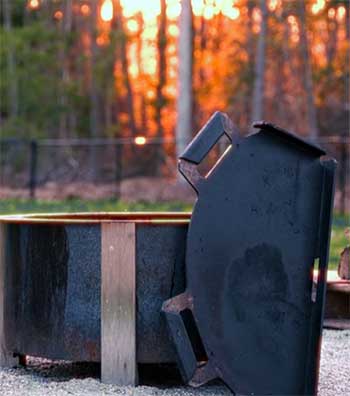
- Build and Origin: Breeo feels unmistakably American-made. The steel is thicker, welds are robust, and it has that heirloom quality—I don’t worry about dents or rust-through anytime soon. Many team members come from local communities in Pennsylvania, adding to that crafted feel. Solo Stove, while sleek and shiny, uses lighter stainless that’s manufactured overseas.
- Weight and Mobility: If you move your pit often, Solo wins easily. My Bonfire-sized Solo is light enough to toss in the truck for beach trips. Breeo’s X Series is heavier and meant to stay put, though their Y Series closes the gap with handles and collapsible legs.
- Smoke Reduction Tech: Both use double-wall designs for secondary combustion, but Solo often gets to “smokeless” faster with its precise hole pattern. Breeo takes a bit longer to heat up but maintains low smoke reliably once going.
- Heat Distribution: Breeo pushes heat outward more effectively without extras. I feel it from chairs farther away. Solo directs flames upward for a taller show, but you might need their heat deflector to radiate sideways on chilly nights.
- Cooking Capabilities: This is where Breeo shines for me. The optional sear plate turns it into a legit grill—steaks get perfect char. Solo has great add-ons like hubs for griddles, but it feels more accessory-dependent.
- Wood Consumption: Solo burns hot and fast, which looks impressive but means reloading often. Breeo sips wood slower, stretching a load longer.
- Aesthetics and Patina: Breeo’s Corten steel develops a rustic rust look over time that I love in my yard. Solo stays polished and modern.
- Accessories Ecosystem: Solo has more variety, from pizza ovens to surrounds. Breeo focuses on quality cooking tools that integrate seamlessly.
- Price and Value: Solo is generally cheaper upfront. Breeo costs more but feels like a one-time buy.
- Cleanup and Maintenance: Newer Solos have removable ash pans—game-changer. Breeo requires scooping, but leaves fine ash anyway.
These differences made me appreciate both for different reasons—one for permanent setups, the other for versatility.
Also Read: Is Camp Chef Pro 16 Worth It?
Key Features of Breeo Fire Pits
I’ve been using my Breeo X Series 24 for a couple of years now, and every time I light it up, I’m reminded why I chose it for my permanent backyard setup. Here’s what stands out to me after countless fires.
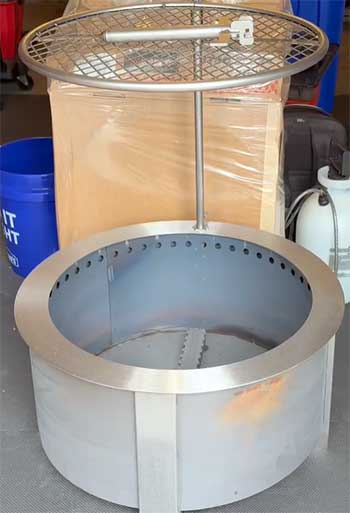
- X Airflow™ System: This is Breeo’s signature ventilation design. Air enters from the bottom through raised vents and travels up between the double walls, superheating and reigniting smoke particles at the top rim. It creates a powerful secondary burn that dramatically cuts down smoke once the pit is fully hot.
- Sear Plate Cooking Option: For me, this is the killer feature. The optional sear plate sits right on top and gets screaming hot—perfect for direct grilling. I’ve cooked ribeyes with perfect crust, charred vegetables, and even breakfast skillets. The wood-fired flavor is unmatched compared to a gas grill.
- Double-Wall Construction with Inflow™ Technology: The walls create that convection effect, but Breeo also adds side vents that pull in cooler air to keep the outer wall from getting dangerously hot to the touch in certain areas.
- Material Options: You can choose Corten steel, which develops a beautiful rusty patina that protects it from further corrosion, or 304 stainless steel if you want it to stay shiny forever. I went with Corten because I love how it blends into a natural backyard.
- Multiple Series for Different Needs: The X Series is the classic smokeless line, the Y Series is more portable with collapsible legs and handles, the Luxeve is a high-end decorative model with glass panels, and the Zentro line is built specifically for inserting into stone or brick surrounds.
- Outpost™ Grill Compatibility: The adjustable height grill attachment swings over the fire, letting me control cooking temperature easily. I’ve done everything from slow-roasting to quick searing.
- Deep Fire Chamber: The deeper design allows for larger logs and longer burn times without constant tending.
- Lifetime Craftsmanship Feel: Every weld is clean, the steel is thick (often 3/16-inch or more), and it just feels like something that will outlast me.
- Fuel Versatility: It handles firewood, charcoal, or even wood pellets with an adapter. I’ve experimented with all three.
- Heat Radiation Focus: Breeo designs the top opening wider, which pushes more heat outward toward people sitting around it rather than straight up.
These features make Breeo feel like a complete outdoor cooking and gathering system rather than just a fire pit.
Pros and Cons of Breeo Fire Pits
After two full seasons and probably over 100 fires, here’s my honest take on what I love and what occasionally frustrates me.
Pros of Breeo
- Unmatched Durability: The thick American steel holds up to intense heat year after year. I’ve left mine out in rain, snow, and blazing sun—no warping or burn-through.
- Best-in-Class Live-Fire Cooking: The sear plate and accessories turn it into a legitimate wood-fired grill. Friends always comment on how much better food tastes compared to cooking over other pits.
- Excellent Outward Heat: People sitting 8-10 feet away still feel plenty warm. Great for larger groups.
- Slower, More Efficient Wood Burn: A single load of logs lasts longer than in most pits, meaning less time chopping and reloading.
- Beautiful Patina Development: The Corten version ages gracefully and becomes a real landscape feature.
- Proudly Made in the USA: Knowing it supports jobs in Lancaster, Pennsylvania, adds to the satisfaction.
- Very Low Smoke with Proper Fuel: Once it’s roaring, smoke is minimal—my neighbors never complain.
- Stable and Tip-Resistant: Heavy base and wide stance make it family-safe even with kids running around.
- Versatile Fuel Options: Switch between wood for ambiance and charcoal for quick high-heat cooks.
- Integrates into Permanent Installations: Many people build stone surrounds around them because they know it’ll be there forever.
- Quiet Operation: No rattling parts or loud airflow noise—just the crackle of the fire.
- High Resale Value: These hold value extremely well if you ever decide to sell.
Cons of Breeo
- Significant Weight: My X24 is around 75 pounds—moving it solo is a workout and not something I do often.
- Higher Price Point: You’re paying a premium for the materials and craftsmanship. It’s an investment.
- Longer Time to Reach Smokeless: It can take 15-20 minutes of initial smoke before the secondary burn kicks in fully, especially with damp wood.
- Manual Ash Removal: No removable pan on most models—you scoop it out with a shovel once it’s cool.
- Limited Accessory Variety: While cooking tools are excellent, Solo offers more lifestyle add-ons like lids, shelters, and pizza ovens.
- Initial Smoke Management Required: You need to start with small kindling and build gradually to minimize startup smoke.
- Hot Base: Even with the stand, the ground underneath gets very warm—pavers or a heat shield are recommended for decks.
- Less Portable (X Series): If you want to take it camping regularly, the Y Series is better, but the flagship models are stationary beasts.
For me, the pros far outweigh the cons because I wanted something permanent and cooking-focused.
Key Features of Solo Stove Fire Pits
My Solo Stove Bonfire has been my travel companion and quick-setup option for years. Here’s what makes it special in everyday use.
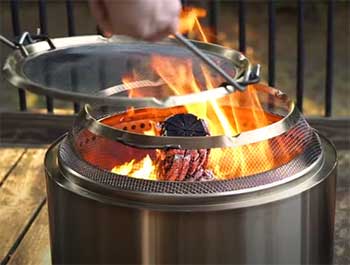
- Signature 360° Airflow Design: Precision-drilled holes at the bottom draw in cool air, which heats up and exits through top vents, creating that intense secondary combustion for minimal smoke.
- Double-Wall Stainless Steel Construction: The vacuum-like effect between walls fuels the fire efficiently and keeps the outer wall cooler than you’d expect.
- Removable Ash Pan (2.0 Models): A game-changer for cleanup—just lift the base and dump the fine ash. No more scooping.
- Ultra-Portable Sizes: From the tiny Ranger (15 inches) to the large Yukon (27 inches), with lightweight design and optional carrying cases.
- Included Stand: Elevates the pit to protect grass or decks from heat.
- Extensive Accessory Ecosystem: Heat deflectors, cooking hubs, griddles, pizza ovens, surrounds, lids—Solo has thought of everything.
- Sleek, Modern Aesthetic: Polished 304 stainless steel looks clean and contemporary in any setting.
- Fast Ignition and Quick Smokeless: Often reaches low-smoke mode in under 10 minutes.
- Low Ash Production: The efficient burn leaves very little residue.
- Shield and Shelter Options: Add-ons for spark protection and weather resistance.
- Color and Finish Options: Some models now come in different colors beyond basic silver.
These features make Solo Stove incredibly user-friendly and versatile across different scenarios.
Also Read: Alternative To Solo Stove Shield.
Pros And Cons of Solo Stove Fire Pits
I’ve used my Solo in backyards, on beaches, at campsites, and even tailgates. Here’s the real-world balance.
Pros of Solo Stove
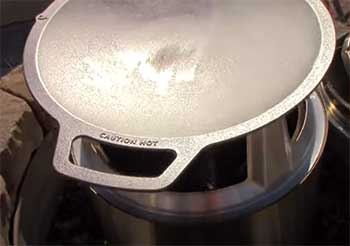
- Exceptional Portability: The Bonfire weighs about 20 pounds and fits in its case—easy to throw in any vehicle.
- Fastest Path to Smokeless: Lights quickly and transitions to secondary burn faster than most competitors.
- Mesmerizing Flame Pattern: The upward-focused fire creates tall, dancing flames that are visually stunning.
- Easiest Cleanup: Removable ash pan means cleanup takes seconds.
- Great Value for Performance: You get premium smokeless tech at a more accessible price.
- Huge Accessory Range: From cooking systems to protective gear, you can customize endlessly.
- Minimal Leftover Ash: Efficient burn means almost no chunks left behind.
- Cooler Outer Wall: Safer to touch accidentally compared to traditional pits.
- Compact Storage: Nests down small when not in use.
- Consistent Across Sizes: The technology scales well from small to large models.
- Excellent Customer Service: They’ve replaced parts quickly when needed.
- Works Well in Windy Conditions: The airflow design handles breezes better than expected.
Cons of Solo Stove
- Thinner Steel Construction: While durable for normal use, it can dent if mishandled or develop hot spots over time.
- Faster Wood Consumption: The intense burn eats through logs quicker—I’m reloading more often.
- Heat Mostly Upward: Without the heat deflector accessory, warmth doesn’t radiate outward as effectively.
- Cooking is Accessory-Dependent: No built-in grill surface—you need to buy the hub and tools separately.
- Can Get Extremely Hot: The inner wall and flames reach very high temperatures, requiring caution.
- Made in China: Some people (including me sometimes) prefer domestic manufacturing.
- Less Substantial Feel: Compared to heavier pits, it feels lighter-duty long-term.
- Higher Cost with Accessories: Base price is lower, but to match Breeo’s cooking capability, you spend more on add-ons.
- Potential for Rust in Stainless: If scratched deeply, spots can develop over years of exposure.
- Louder Airflow Noise: The strong draft creates a noticeable whooshing sound.
For portability and ease of use, Solo is hard to beat, but it trades some longevity and built-in functionality for that convenience.
My Personal Experiences and Recommendations
In my backyard, Breeo is the permanent fixture—I love cooking on it and the lasting build. For trips, Solo can’t be beat. Both reduce smoke dramatically with seasoned wood. If cooking matters, go Breeo. For portability and value, Solo.
I’ve never regretted either purchase.
Also Read: Comparison of Hotshot Fire Pit And Solo Stove.
Frequently Asked Questions (FAQ)
It depends on your needs—Breeo for durability and cooking, Solo Stove for portability and quick setup.
No, but many team members are from Amish communities in Pennsylvania.
Yes, if you want a heavy-duty, USA-made pit that lasts forever and excels at cooking.
Breeo invented the first smokeless fire pit in 2011.
Wrapping Up
You and I both know choosing a fire pit is personal—it has to match how you gather, cook, and relax outdoors. I’ve laid out my experiences with Breeo and Solo Stove because these two have transformed my evenings around the fire.
Whichever you pick, you’ll enjoy cleaner, more enjoyable burns. If your priority is a pit that feels built to last and doubles as a grill, lean toward Breeo. If you want something easy to move and quick to light, Solo Stove will serve you well.
Either way, grab some good wood, invite friends over, and make memories. What’s your setup like? I’d love to hear how it works for you.