
After spending weeks researching, comparing spec sheets, reading through hundreds of user reviews, and actually running both machines through their paces, I can tell you with confidence that the Bosch 500 and 800 dishwasher debate is one of the most genuinely interesting appliance comparisons you’ll encounter.
Both belong to the same premium German-engineered family, but they serve very different types of buyers.
This article breaks down every meaningful difference between the two — from wash performance to drying technology, noise levels to price justification — so you can walk away knowing exactly which one belongs in your kitchen.
| Feature | Bosch 500 Series | Bosch 800 Series |
| Noise Level | 44 dBA | 42 dBA |
| Drying Technology | AutoAir Drying | CrystalDry |
| Third Rack | Yes (MyWay) | Yes (MyWay) |
| Wash System | PrecisionWash | PrecisionWash |
| Loading Flexibility | RackMatic (3 positions) | FlexSpace Tines + RackMatic |
| Interior Light | No | Yes (LED) |
| Wi-Fi Connectivity | Home Connect (select models) | Home Connect (most models) |
| Bottle Wash Jets | No | Yes |
| Handle Style | Bar or Recessed | Bar or Recessed |
| Price Range | $900 – $1,100 | $1,100 – $1,400 |
| Energy Star Certified | Yes | Yes |
| Warranty | 1 year limited | 1 year limited |
| Cycle Options | Multiple | Multiple + more specialized |
| Best For | Value-conscious buyers | Feature-maximizers |
Key Differences Between The Bosch 500 And 800 Series
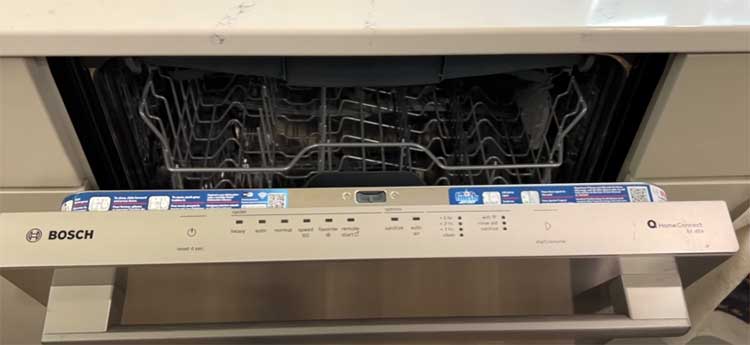
This is where it gets interesting. The differences between these two machines aren’t random — they follow a clear logic. Here’s what actually separates them:
- Drying Technology is the biggest dividing line. The Bosch 500 uses AutoAir drying, which automatically pops the door open at the end of the cycle to release steam and let fresh air circulate. It works reasonably well, especially for dishes and glasses. The Bosch 800, however, uses CrystalDry — Bosch’s proprietary drying system that uses volcanic minerals called Zeolite to absorb moisture and convert it into heat. The result is dramatically better drying, especially for plastics, which are notoriously difficult to dry in any dishwasher.
- Noise level differences are real but subtle. The 500 runs at 44 dBA and the 800 runs at 42 dBA. In real-world terms, this is a very small difference — both machines are impressively quiet. However, if your kitchen opens directly into a living room or bedroom, that 2 dBA gap might matter to you at midnight.
- Bottle Wash Jets are exclusive to the 800 Series. If you regularly wash sports bottles, baby bottles, or narrow-necked containers, this feature is a genuine game-changer. The jets shoot water directly up into bottles, cleaning the inside properly rather than just hoping water sloshes around in there. The 500 has no equivalent feature.
- Interior lighting is a 800 Series exclusive. The 800 Series has LED interior lighting, which sounds trivial but is remarkably useful when you’re loading dishes in a dimly lit kitchen or checking whether that casserole dish actually got clean.
- FlexSpace Tines on the lower rack. The 800 Series includes FlexSpace Tines that fold down to accommodate larger or oddly shaped items more efficiently. Both models have RackMatic upper rack adjustment (three height positions), but the 800 gives you more configurability in the lower basket too.
- Wi-Fi and smart home connectivity. Both series offer Home Connect compatibility on select models, but the 800 Series integrates it more broadly across its lineup, making it easier to monitor cycle status, get alerts, and control the machine remotely.
- Price. The 500 Series typically runs $900 to $1,100 depending on the finish and specific model. The 800 Series starts around $1,100 and can push past $1,400 for the top configurations. That’s a meaningful gap when you’re already spending over a thousand dollars on a kitchen appliance.
Bosch 500 Series: Key Features
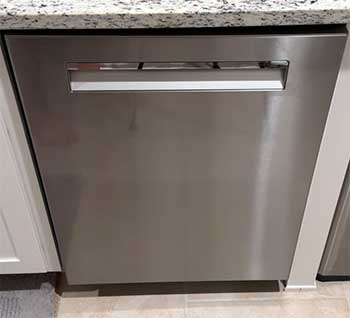
The Bosch 500 Series is not a budget dishwasher wearing a premium badge. It’s genuinely excellent in its own right, and here’s what it actually delivers:
- PrecisionWash System — This is the intelligent wash system that Bosch uses across multiple series. Multiple spray arms and sensors continuously monitor and adjust water usage throughout the cycle, ensuring that water and detergent reach every item in the load. The cleaning performance is exceptional.
- AutoAir Drying — At the end of a cycle, the door automatically opens about an inch to release steam and allow air circulation. It’s a simple but effective approach to drying, and it reduces energy consumption compared to heated drying systems.
- MyWay Third Rack — The 500 Series includes a third rack at the top of the dishwasher. Unlike some competitors’ third racks, Bosch’s MyWay rack has deeper cups that can accommodate mugs, ramekins, and small bowls, not just utensils. This meaningfully increases total load capacity.
- RackMatic Upper Rack Adjustment — Three height positions let you configure the upper rack to accommodate tall glasses on top or larger platters on the bottom. It’s smooth, reliable, and easy to adjust even mid-load.
- 44 dBA Noise Level — This is still one of the quietest dishwashers you can buy at this price point. In a room with ambient conversation, you may not hear it running at all.
- Stainless Steel Interior — The interior tub is stainless steel, which helps maintain temperature during washing and drying, and resists staining and odor over time.
- InfoLight — A small red light projects onto the floor to indicate that the dishwasher is running. Since the controls are hidden on the top of the door, this is a helpful cue that the cycle is still in progress.
- Multiple Wash Cycles — Includes Heavy, Auto, Normal, Eco, Delicate, Express, and Rinse cycles. The Auto cycle uses sensors to detect how dirty the load is and adjusts water temperature and wash time accordingly.
- Energy Efficiency — The 500 Series is Energy Star certified and uses around 3.5 gallons of water per cycle, making it both environmentally responsible and cost-effective to run.
Bosch 500 Series: Pros And Cons
Pros
- Outstanding cleaning performance that matches or exceeds many machines at higher price points — the PrecisionWash system is genuinely best-in-class at this tier
- Very competitive price — for buyers who want Bosch quality without stretching into the 800 Series range, the 500 Series represents the best dollar-for-dollar value in the entire Bosch lineup
- The MyWay third rack adds substantial loading capacity and flexibility, accommodating items that would otherwise compete for space in the main racks
- AutoAir drying works well for dishes and glassware — if your household doesn’t lean heavily on plastic containers, the drying performance may be entirely sufficient for your needs
- 44 dBA is whisper quiet and practically inaudible over normal household noise
- Reliability record — Bosch 500 Series machines have a strong long-term reliability history, which translates into fewer service calls and lower cost of ownership over time
- Flexible rack configuration with RackMatic adjustment makes it adaptable to different load types without requiring much effort
- Stainless steel interior is more hygienic and durable than plastic-tub alternatives in the same price range
- Energy and water efficiency mean lower utility bills over the machine’s lifespan — an important long-term consideration that often gets overlooked at point of purchase
- Available in multiple finishes — stainless steel, black stainless, and white depending on the specific model variant
Cons
- AutoAir drying is noticeably weaker with plastics — Tupperware, kids’ cups, and plastic containers often come out with water droplets still sitting on them, requiring a quick hand-dry
- No Bottle Wash Jets — if you wash a lot of water bottles, protein shakers, or baby bottles, this absence becomes a daily frustration rather than just a missing feature
- No interior lighting — loading the dishwasher in a dim kitchen or at night means relying on ambient light, which is a surprisingly annoying limitation once you’ve experienced LED-lit interiors
- FlexSpace Tines are absent — the lower rack, while good, doesn’t offer the same configurability as the 800 Series, which can make fitting large or awkwardly shaped items more of a puzzle
- Wi-Fi connectivity not universally available — only certain 500 Series models include Home Connect, so if smart appliance integration matters to you, you need to check the specific model carefully rather than assuming
- The door-open drying mechanism can be a nuisance in kitchens where the dishwasher is close to a traffic path or adjacent cabinetry — the door popping open unexpectedly can surprise household members or pets
Bosch 800 Series: Key Features
The Bosch 800 Series is where Bosch pulls out most of its engineering achievements. It doesn’t reinvent the dishwasher, but it refines it in ways that matter for heavy users or households with specific needs.
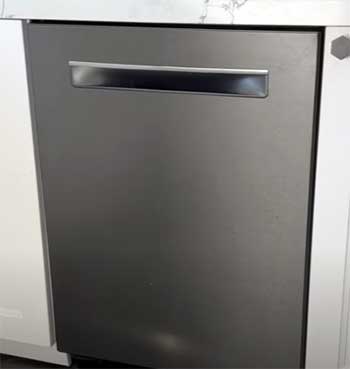
- CrystalDry Technology — This is the headline feature of the 800 Series and for good reason. The Zeolite mineral-based drying system absorbs moisture from the dishwasher’s interior and releases it as heat. The result is dramatically better drying — especially for plastics — compared to any air-drying system. Bosch claims up to 60% better drying performance compared to standard drying, and independent tests largely back that up.
- PrecisionWash System — Same intelligent multi-spray-arm system as the 500 Series. Cleaning performance between the two series is essentially equivalent, which means the 800 Series doesn’t “wash better” — it dries better.
- Bottle Wash Jets — Five spray jets positioned on the upper rack specifically designed to clean the inside of bottles, vases, and narrow containers. These aren’t a gimmick — they make a real difference for households that regularly use water bottles, coffee thermoses, or any container with a narrow opening.
- LED Interior Lighting — Automatic LED light illuminates the interior when the door opens. Genuinely useful, especially in darker kitchens.
- FlexSpace Tines — The lower rack’s tines fold completely flat on one side, creating a versatile open space for large pots, pans, baking sheets, or anything that won’t fit in a standard rack configuration.
- RackMatic Upper Rack with 3 Height Positions — Same as the 500 Series but combined with the FlexSpace lower rack, the overall loading flexibility of the 800 is superior.
- 42 dBA Noise Level — Two decibels quieter than the 500 Series, which maintains the same barely-there acoustic profile.
- Home Connect Wi-Fi — Available on most 800 Series models, allowing remote monitoring, cycle selection, and notifications via the Home Connect app.
- MyWay Third Rack — Same deep-cup third rack included as in the 500 Series.
- Multiple Specialty Cycles — In addition to the cycles available on the 500 Series, some 800 Series models include a Sanitize cycle that heats water to 162°F, achieving NSF/ANSI 184 certification for sanitization — helpful for households with allergy concerns or immune-compromised members.
Bosch 800 Series: Pros And Cons
Pros
- CrystalDry delivers genuinely superior drying performance — this is not a marginal improvement; if you’ve ever unloaded a dishwasher and had to hand-dry all the plastic items, you’ll understand exactly why this feature is worth paying for
- Plastics come out actually dry — lids, containers, kids’ sippy cups, food storage items — CrystalDry handles them in a way that AutoAir simply cannot match, making the unloading experience genuinely more convenient
- Bottle Wash Jets solve a real problem — for households that use water bottles, travel mugs, or baby bottles daily, this feature eliminates a persistent annoyance and ensures those items are actually cleaned inside
- LED interior lighting is a small luxury that quickly feels essential — loading and unloading is just easier when you can see clearly, and it’s one of those quality-of-life features that users consistently mention in long-term reviews
- FlexSpace Tines provide meaningful rack flexibility — accommodating oversized items is less of a Tetris puzzle, and the fold-flat design is intuitive and durable
- 42 dBA is among the quietest dishwashers available at any price point, making it ideal for open-plan homes
- Broad Home Connect availability makes the 800 Series more future-ready for smart home integration
- Sanitize cycle on select models offers genuine hygiene benefits beyond what standard hot-water washing achieves
- Strong resale and home value contribution — the 800 Series is a recognizable premium appliance that buyers notice, which can matter in competitive real estate markets
- Long-term reliability matches the 500 Series — Bosch’s reputation for build quality extends through the entire lineup, not just the entry-level machines
Cons
- The price premium is substantial — paying $300 to $500 more than the 500 Series is hard to justify unless you’re regularly dealing with plastics or bottles, and buyers who don’t fall into those categories may feel they’re paying for features they rarely use
- CrystalDry requires Finish Quantum or similar rinse-aid-compatible detergents for best results — Bosch recommends specific products, and using the wrong detergent can undermine the drying performance you’re paying for
- Not significantly better at cleaning than the 500 Series — if your primary concern is wash performance rather than drying or features, you’re paying extra for benefits that don’t show up in the cleaning itself
- Interior lighting, while nice, is a modest benefit relative to the overall price jump — it doesn’t justify the upgrade on its own for most buyers
- Larger footprint in terms of price on the household budget — at $1,100 to $1,400 and beyond, this is a significant appliance investment that competes with other home improvement priorities
- Availability and lead times — the 800 Series, being more popular among premium buyers, can sometimes have longer lead times or limited in-store inventory compared to the more widely stocked 500 Series
- The CrystalDry system’s Zeolite minerals have a finite lifespan — Bosch states they last the lifetime of the machine, but this is still a more complex system than simple air drying, and complexity always carries some additional long-term risk
Who Should Buy the Bosch 500 Series?
You’re the right buyer for the Bosch 500 Series if:
- You primarily wash ceramic, glass, and metal items and rarely deal with large volumes of plastic containers
- Budget is a real consideration and you’d rather spend $300 less on a dishwasher that still performs beautifully
- You don’t wash water bottles or narrow-necked containers regularly
- Open-plan lighting in your kitchen means interior dishwasher lighting isn’t a practical concern
- You’re upgrading from a mid-range machine and the 500 already feels like a significant step up
- Reliability and wash quality are your top priorities, and drying is something you’re willing to work with slightly
Who Should Buy the Bosch 800 Series?
You’re the right buyer for the Bosch 800 Series if:
- Your household uses a lot of plastic food storage containers, kids’ cups, or meal prep tools that go through the dishwasher regularly
- Water bottles, protein shakers, travel mugs, or baby bottles are a daily part of your dish load
- You want the best drying performance available in a residential dishwasher without going to the Benchmark tier
- Smart home integration is important to you and you want consistent Wi-Fi connectivity
- You’re building or renovating a kitchen and want to install appliances once and be done for 10 to 15 years
- The $300 to $500 price difference is manageable within your overall kitchen budget
Also Read: Is Kirkland Ultra Shine Dishwasher Detergent Worth It?
Frequently Asked Questions (FAQ)
Yes. It provides premium cleaning, a third rack, and quiet operation at a better value than the 800 Series. It’s the ideal choice for those who don’t prioritize plastic-specific drying.
The 800 Series is the top performer due to its advanced drying and features, while the 500 Series offers the best balance of price and performance. The Benchmark is for those seeking luxury.
Expect 10 to 15 years. Longevity is driven by Bosch’s build quality and consistent maintenance, like cleaning filters and using rinse aid.
Yes. Its CrystalDry technology uses Zeolite to transform moisture into heat, making it vastly superior for drying plastics compared to the 500 Series’ air-dry method.
My Final Take
The choice is simple: if you wash lots of plastics or water bottles, the 800 Series pays for itself through CrystalDry and specialized jets. If you primarily wash ceramic and glass, the 500 Series offers identical cleaning power for less money.
Both are reliable, ultra-quiet investments; choose the 500 for value or the 800 for the total convenience package.