
When I talk about hvac brands to avoid, I’m not saying every unit from these companies is garbage. I’m saying some brands give you more reasons to slow down, ask harder questions, and compare better options before spending thousands.
My goal here is simple: I want to help you avoid weak warranties, noisy systems, poor parts support, installer-dependent problems, and budget equipment that may cost more over time than it saves upfront.
Worst HVAC Brands I Would Think Twice About
Here are the HVAC brands and brand categories I would be most cautious with:
- Goodman
- York
- Coleman
- Luxaire
- Ducane
- Payne
- Airtemp
- Ameristar
- MrCool DIY Systems
- No-name or private-label HVAC brands
Before I explain each one, let me be clear: installation quality matters a lot. Even a respected brand can perform badly if it is oversized, undersized, poorly charged, badly ducted, or installed by someone rushing the job.
Consumer Reports also emphasizes comparing equipment type, efficiency, and real-world reliability rather than buying on brand name alone.
Goodman
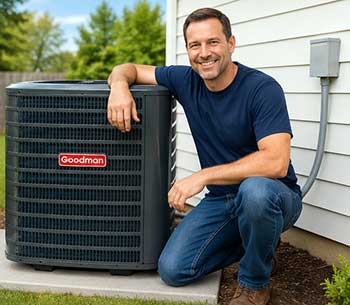
Goodman is probably the most debated name on any list of HVAC brands to avoid.
Some homeowners love it because it is affordable, parts are usually easy to find, and many contractors know how to work on it.
But from my perspective, Goodman becomes risky when the buyer chooses it only because it is the cheapest quote.
The issue is not that every Goodman system is bad. The issue is that Goodman has often been sold as a budget-friendly option, and budget equipment frequently attracts budget installations. That is where things go sideways.
A Goodman unit installed by a careful, licensed contractor can run fine. A Goodman unit installed quickly, without proper load calculation, duct inspection, airflow testing, or refrigerant setup, can become a noisy, inefficient headache.
I would be especially careful with lower-end Goodman systems if you plan to stay in your home for many years. You may save money upfront, but you could give some of it back through repairs, comfort issues, or shorter service life. If you are considering Goodman, I would ask who is installing it, what labor warranty they offer, which exact model is quoted, and whether the system is properly matched.
York
York is another brand I would approach carefully. It has name recognition, and some York systems perform well, but the brand has a mixed reputation among homeowners and contractors. My biggest concern with York is consistency.
Some people get years of reliable cooling and heating. Others complain about repair frequency, control board issues, noise, and parts-related delays.
York is part of a large HVAC manufacturing family, and its equipment often overlaps with brands like Coleman and Luxaire. That does not automatically make it bad, but it does mean you should look beyond the logo. The real question is: does your local contractor service York regularly, and can they get parts quickly?
For me, York is not an automatic “never buy.” It is more of a “do not buy blindly” brand. If your installer is excellent, offers a strong labor warranty, and has deep experience with York, it may be reasonable. But if York is simply the lowest bid from a contractor you barely know, I would pause.
Coleman
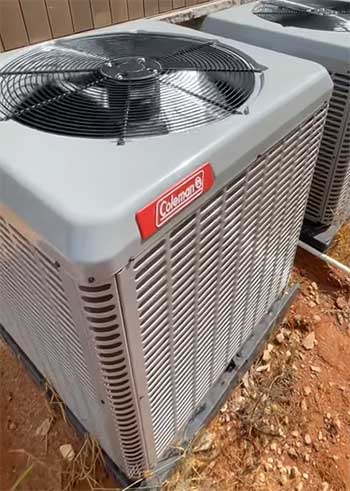
Coleman HVAC equipment is often connected with the same manufacturing family as York and Luxaire, so many of the same concerns apply.
Coleman can be appealing because the name feels familiar and dependable, especially to buyers who associate it with rugged outdoor products.
But HVAC is a different world.
My concern with Coleman is that the brand does not always stand out enough to justify choosing it over stronger competitors.
When I compare HVAC systems, I look for reliability reputation, warranty strength, parts availability, efficiency range, and installer confidence.
Coleman can be serviceable, but it does not always inspire the same confidence as higher-ranked brands.
If you are quoted a Coleman system, I would not reject it immediately. But I would compare the exact model against alternatives from Trane, American Standard, Carrier, Bryant, Rheem, Ruud, Daikin, or Mitsubishi depending on your system type. In many cases, a slightly higher upfront investment may buy you better long-term confidence.
Luxaire
Luxaire is another brand I would treat with caution. Like Coleman and York, it can be decent when installed correctly, but it is not usually the first brand I would recommend to someone who wants maximum peace of mind.
The biggest issue with Luxaire is market presence. In some regions, contractors know the equipment well and can support it properly. In others, it may not be as common, and that can matter when your AC dies during a heat wave.
A brand is only as good as the service network behind it. If parts are slow, technicians are unfamiliar with the system, or local support is thin, you feel the pain.
I would avoid Luxaire if it is being pushed mainly because it is available or discounted. If the contractor cannot explain why that exact Luxaire model fits your home better than the alternatives, I would keep shopping.
Payne
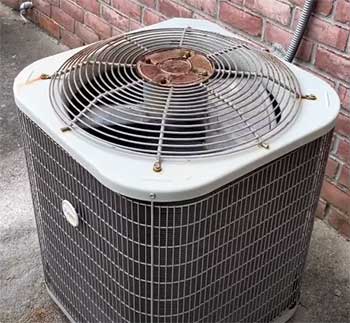
Payne is a lower-cost brand under the same broad corporate family associated with Carrier.
That connection can make Payne sound like a hidden bargain. Sometimes it is.
But I would still place it on a caution list because Payne is typically positioned as basic equipment.
If you want advanced comfort features, very quiet operation, high efficiency, variable-speed performance, or premium build quality, Payne may not be your best fit. It is usually more about function than finesse.
That may be perfectly fine for some homeowners. If you need a basic AC or furnace and have a trustworthy installer, Payne can be worth discussing. But if you are replacing your main system in a forever home, I would compare it against Bryant or Carrier models before deciding. The cheaper unit may not be the better value once you factor in comfort, efficiency, and resale appeal.
Ducane
Ducane is a value-tier HVAC brand, and value-tier equipment always deserves extra scrutiny. It may work for a rental, a budget flip, or a homeowner who needs the lowest possible upfront cost. But if I were choosing a system for my own long-term home, I would be cautious.
Ducane systems can be simple and affordable, which is not a bad thing by itself. Simpler equipment can sometimes be easier to repair. But the trade-off is that you may not get the same refinement, efficiency options, sound control, or brand reputation that you get from stronger names.
My practical concern is long-term satisfaction. HVAC is not like buying a microwave. You are buying comfort for 10 to 15 years, sometimes longer. If the system is loud, inefficient, or repair-prone, the cheaper purchase price starts to feel less impressive. I would only consider Ducane if the installer is excellent and the quote includes a clear parts and labor protection plan.
Airtemp
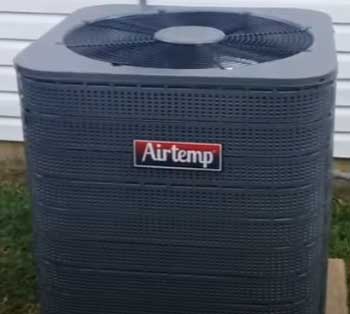
Airtemp is another brand that often shows up in budget conversations.
It is not necessarily a disaster brand, but I would not put it near the top of my list for homeowners who want the strongest reliability reputation.
My concern with Airtemp is mainly perception and support. A less recognized brand can be harder to evaluate.
You may not find as much homeowner feedback, contractor discussion, or model-by-model comparison.
That puts more pressure on the installer. If the installer is great, the system may be fine. If the installer disappears after the sale, you may regret not choosing a brand with broader support.
With Airtemp, I would ask direct questions: How many of these systems have you installed? What failures have you seen? How fast can you get parts? What happens if the compressor fails? Who handles warranty claims? If the answers feel vague, I would move on.
Also Read: My Experience With Windmill Air Conditioner.
Ameristar
Ameristar is often associated with affordable HVAC equipment and is commonly viewed as an entry-level option. That does not automatically make it bad, but it does make it a brand I would examine carefully.
The biggest reason I would hesitate is that entry-level systems are usually built to hit a price point. That may mean fewer premium features, less impressive sound ratings, lower efficiency choices, and a more basic ownership experience. Again, that might be enough for a garage, rental, secondary property, or short-term ownership situation. But for a primary home, I would want to know exactly what I am giving up.
I would not choose Ameristar just because the quote looks attractive. I would compare total installed cost, labor warranty, expected efficiency, model specifications, and contractor reputation. A cheap quote with weak installation support is not a bargain. It is a gamble wearing a discount sticker.
MrCool DIY Systems
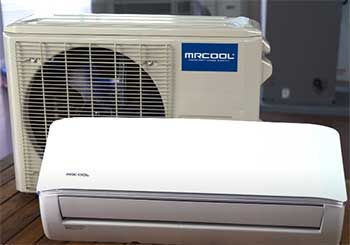
MrCool is different from traditional HVAC brands because it is strongly associated with DIY mini-split systems. I understand the appeal.
You see a system marketed as easier to install, the price looks lower, and you imagine skipping contractor labor.
That can sound tempting.
But HVAC installation is not just “mount it, connect it, and enjoy cold air.” Proper sizing, line set handling, drainage, electrical safety, placement, vacuum practices, and code compliance matter. With DIY systems, my concern is not only the equipment. It is the risk of installation mistakes that may hurt performance, shorten lifespan, or create warranty headaches.
I would be especially careful if you have no HVAC or electrical experience. A DIY mini-split may work well for a handy person installing it in a workshop or bonus room. But for whole-home comfort, high humidity climates, or complicated layouts, I would rather involve a qualified professional.
It is also worth noting that some Midea-made window AC units sold under multiple brand names, including Mr. Cool, were recalled in 2025 over mold-related drainage concerns. That recall was about specific window units, not every MrCool HVAC product, but it is a reminder to check exact model numbers and recall history before buying any cooling equipment.
No-Name or Private-Label HVAC Brands
This is the category I would be most careful with. A no-name HVAC brand may look like a deal, but the hidden costs can be ugly. If you cannot easily find warranty terms, replacement parts, model documentation, local service support, or credible owner feedback, you are taking on risk.
Some private-label systems are made by larger manufacturers, but that does not always mean you get the same support experience. The label on the cabinet may be unfamiliar to future technicians. Parts may require extra digging. Warranty claims may be slower. If you sell the home, buyers may not recognize the brand.
My rule is simple: if the brand needs a long explanation from the salesperson, I get skeptical. I want equipment that local contractors know, parts houses stock, and homeowners can research easily.
What Makes an HVAC Brand Worth Avoiding?
When I judge HVAC brands to avoid, I do not focus only on internet complaints. Every brand has complaints. I look for patterns.
The first red flag is weak local support. If only one contractor in your area installs or services the brand, you may be stuck later. The second is poor warranty clarity. A warranty that sounds good but excludes labor can still leave you with expensive bills. The third is inconsistent installation quality. Some brands are sold heavily by low-bid contractors, and that can damage the ownership experience.
I also look at noise, efficiency, parts availability, repair history, and whether the system fits the home. A bad match can make a decent brand feel terrible. That is why I would rather buy a mid-tier system from an excellent installer than a premium system from someone careless.
How I Would Choose Instead?
If I were buying HVAC equipment, I would start with the contractor, not the logo. I would ask for a Manual J load calculation, exact model numbers, AHRI matchups, warranty details, labor coverage, sound ratings, and efficiency ratings. I would also ask what brands the contractor services most often.
For reliability, I would usually compare brands like Trane, American Standard, Carrier, Bryant, Rheem, Ruud, Daikin, Mitsubishi, and Lennox, depending on whether I need a central AC, furnace, heat pump, or ductless system.
Recent industry guides and consumer-facing reliability discussions often place brands like Trane, Carrier, Lennox, Mitsubishi, and Daikin among stronger options, though rankings vary by equipment type and source.
The smartest move is not buying the “best brand.” It is buying the right system from the right installer with the right support.
Also Read: My Experience With Ducane Air Conditioner.
Frequently Asked Questions (FAQ)
Trane and American Standard are often viewed as highly reliable, with Carrier, Bryant, Mitsubishi, and Daikin also commonly ranked well depending on system type.
The $5000 AC rule says you multiply the repair cost by the unit’s age. If the number is over $5,000, replacement may make more sense than repair.
Budget or lower-tier brands such as Goodman, York, Coleman, Luxaire, Ducane, Payne, Airtemp, and Ameristar are often questioned more, especially when installation quality is poor.
Daikin is often described as one of the world’s largest HVAC manufacturers, while Carrier, Trane, and Mitsubishi are also major global leaders.
Final Thoughts
When I think about hvac brands to avoid, I do not want you to walk away scared of every affordable system. I want you to shop smarter.
Goodman, York, Coleman, Luxaire, Ducane, Payne, Airtemp, Ameristar, MrCool DIY systems, and no-name brands can all be risky in the wrong situation. Some may work fine with the right installer, but you should not buy them casually.
Ask better questions, compare exact models, and protect your money before comfort turns into regret.