
I’ve spent months cooking on both the Weber Smoque and the Searwood, testing everything from overnight briskets to weeknight burgers, and I want to share exactly how they stack up so you can pick the one that matches the way you actually cook.
This comparison breaks down their real-world performance, features, strengths, and trade-offs without the marketing fluff, giving you a clear path to the right pellet grill for your backyard.
| Feature | Weber Smoque | Weber Searwood |
| Temperature Range | 180°F – 500°F | 180°F – 600°F |
| Cooking System | SmoqueVent™ | DirectFlame™ |
| Total Cooking Area (std) | 594 sq in | 648 sq in |
| Primary Grate | 385 sq in | 420 sq in |
| Hopper Capacity | ~20–22 lb | 20 lb |
| Max Heat Capability | Strong for roasting, limited sear | Full searing with direct flame |
| Controller | Digital LCD | Larger digital LCD |
| App Connectivity | Weber Connect Wi-Fi/Bluetooth | Weber Connect Wi-Fi/Bluetooth |
| Probes Included | 2 | 2 |
| Approx. Starting Price | $699 | $899 |
| Best For | Low-and-slow smoking focus | Smoking + high-heat grilling |
Key Differences between Weber Smoque And Searwood
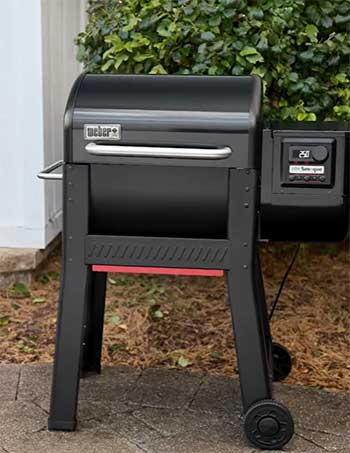
- Temperature ceiling and heat delivery The Smoque tops out at 500°F while the Searwood climbs to 600°F. That extra 100 degrees on the Searwood is not just a number on a display. When I cranked the Searwood for steaks, the DirectFlame system opened a path for actual flame contact across the entire grate. Burgers developed deep, dark crusts in minutes. On the Smoque the same burgers browned nicely but never quite reached that charcoal-level char. If your weekend usually includes both a long smoke and a quick sear session, that gap matters more than the price difference.
- Internal airflow design Weber gave the Smoque the SmoqueVent system, a series of carefully placed openings that push smoke around the food in a steady loop. The result is even bark formation on ribs and a consistent smoke ring without hot spots. The Searwood uses a different approach built around the DirectFlame pathway and Flavorizer-style bars. Heat rises more aggressively, which is fantastic for searing but can create slightly more variation left to right during very long cooks. I measured a 10–15 degree spread on the Searwood at 225°F versus almost none on the Smoque.
- Cooking surface size and layout Standard Smoque offers 594 square inches total. Standard Searwood gives you 648. The difference is mostly in the main grate—420 square inches versus 385. That extra real estate on the Searwood let me run a full packer brisket and a rack of ribs side by side without crowding. On the Smoque I had to stage the cook or use the upper rack more carefully. Both have removable upper racks that sit high enough for a pork butt standing on end, yet the Searwood’s slightly larger footprint feels more generous when the lid is closed and heat is circulating.
- Price positioning and what you actually lose The Smoque undercuts the Searwood by roughly two hundred dollars on the standard size and three hundred on the XL. Weber achieved that by simplifying the controller face, removing the direct-flame hardware, and using a more basic grease path. Nothing feels cheap—both share the same cast-aluminum cookbox and porcelain-enamel lid—but the Searwood simply has more hardware inside. If you already own a gas or charcoal grill for high-heat work, the Smoque’s lower sticker price starts looking smart. If this will be your only outdoor cooker, the Searwood’s versatility usually wins the long-term math.
- Accessory compatibility and future expansion Both accept Weber Crafted inserts and the folding front table, yet the Searwood comes ready for the full sear-grate kit and rotisserie right out of the box. The Smoque needs an optional frame kit for the same accessories. I found myself buying the extra pieces for the Smoque within the first month because I wanted to try pizza and griddle work. That added cost narrowed the original price gap.
Also Read: Comparison of Timberline 1300 And Ironwood 885 Pellet Grills.
Key features of the Weber Smoque
- SmoqueVent circulation system This is the heart of the grill. Smoke and heat move in a continuous path that wraps food from every angle. On a twelve-hour brisket I watched the bark form evenly from end to end with almost no need to rotate the meat. The system also channels grease straight into a pull-out pan, so cleanup stayed quick even after fatty cooks.
- SmokeBoost setting locked at 180°F Flip this on and the controller slows the pellet feed to maximize smoke production. I used it for the first three hours of every pork shoulder and noticed a deeper color and richer flavor compared with simply setting 225°F. It is not a gimmick; it changes the way the meat takes on wood flavor.
- Rapid React PID controller From a cold start the Smoque reached 250°F in under fifteen minutes in 70-degree weather. When I opened the lid to spritz ribs, temperature recovered in less than four minutes. The digital display is clear and the two included probes read accurately within a degree or two of my independent thermometers.
- Dual-level cooking space The deep upper rack holds a whole chicken or two pork butts standing upright. Remove it and the main grate accepts a full brisket flat without the ends curling against the walls. Hopper capacity is enough for a twenty-pound bag, and the side-mounted design makes refilling simple even mid-cook.
- Weber Connect app integration I monitored cooks from inside the house, received fuel alerts, and followed step-by-step recipes without standing next to the grill. The app graphs temperature history, which helped me diagnose a windy day when the lid gasket needed a slight adjustment.
Pros of the Weber Smoque
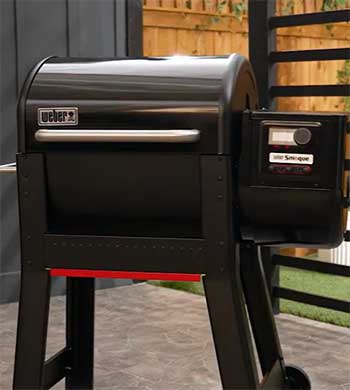
- Outstanding value for dedicated smokers You get Weber build quality, reliable temperature control, and excellent smoke flavor for several hundred dollars less than the Searwood. If low-and-slow is 80 percent of your cooking, the savings feel real every time you load the hopper.
- Even heat and smoke distribution The SmoqueVent system eliminates the hot spots that plague many pellet grills. Ribs cooked side by side finished within minutes of each other. Bark formed uniformly, and I never had to shuffle meat mid-cook.
- Simple, effective cleanup Grease and ash drop into a single enclosed tray. After a fatty brisket I pulled the tray, scraped it into a bag, and wiped the interior in under ten minutes. No vacuum required.
- Quiet operation and solid construction The auger and fan run smoothly. The porcelain-enamel lid resists weather and cleans easily. Wheels roll without sticking even on uneven patio stones.
- App control that actually works Remote monitoring let me start a cook before work and check progress from the office. Fuel alerts prevented mid-cook surprises, and the recipe guidance helped me dial in new cuts faster.
Cons of the Weber Smoque
- Limited high-heat performance At 500°F you can brown chicken skin and cook burgers, but true steakhouse searing is out of reach. I kept a small gas grill nearby for those moments, which partially defeated the purpose of a single outdoor cooker.
- Slightly smaller cooking area Feeding more than six people required careful planning or multiple batches. The upper rack helps, yet the main grate feels tighter when you try to fit a full packer and sides together.
- Fewer out-of-box accessories Rotisserie and sear-grate kits cost extra. The controller face is also simpler, with fewer on-grill shortcuts than the Searwood’s larger display.
- Less insulation feel in extreme cold On a 25-degree morning the Smoque used more pellets to hold 225°F than the Searwood did under the same conditions. Recovery after lid openings took a minute longer as well.
Also Read: Comparison of Recteq 590 And 700 Pellet Grills.
Key features of the Weber Searwood
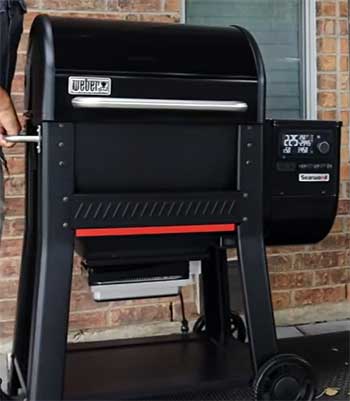
- DirectFlame cooking system Open the flame path and every square inch of the grate becomes a sear zone. Steaks picked up distinct grill marks and a Maillard crust that tasted closer to charcoal than any other pellet grill I have used. The same system works for reverse-sear methods—smoke low, then finish hot without moving the meat to another cooker.
- Full temperature range to 600°F That upper limit turns the Searwood into a true all-in-one machine. I roasted chickens at 375°F, baked pizza at 500°F, and seared ribeyes at 575°F all on the same afternoon. The controller holds those high temperatures steadily once the cookbox is fully heated.
- Larger primary cooking surface The 420-square-inch main grate gave me room to cook for eight people without stacking. Secondary rack space is also generous, so sides and meats can finish together. Weight is higher—about 125 pounds versus the Smoque’s 102—but the extra mass helps hold heat in cold weather.
- Larger digital controller display The screen is easier to read at a glance, especially at night. Manual mode lets you set pellet feed and fan speed independently, which is useful when you want to hold the lid open for griddling or open-flame work.
- SmokeBoost plus high-heat flexibility You still get the low-temperature smoke mode, yet you can jump straight from 180°F to 600°F without changing anything but the dial. That flexibility is the feature I reached for most often once the novelty of pure smoking wore off.
Pros of the Weber Searwood
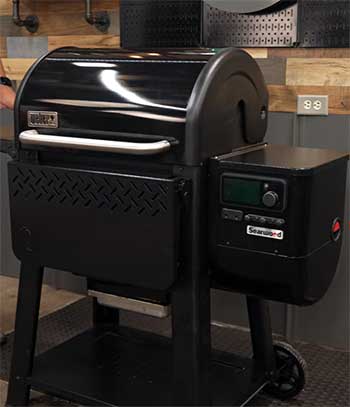
- True one-grill versatility I smoked a pork butt overnight, then seared steaks for lunch without lighting a second fire. The DirectFlame system delivers the crust and color that most pellet grills only promise.
- Larger capacity and better heat retention The extra cooking space and heavier construction kept temperatures steady even when the wind picked up. I cooked for ten people on the standard model without feeling cramped.
- Superior searing and browning Steaks, burgers, and even vegetables developed deeper flavor and better texture. The full-grate sear zone means you are not limited to a small hot spot in the middle.
- More refined controller and accessory readiness The larger display and manual mode give finer control. Crafted inserts and the rotisserie drop in without additional frames, saving time and money later.
- Strong all-weather performance In both summer heat and winter cold the Searwood recovered faster and burned fewer pellets overall. The extra mass simply holds heat better.
Cons of the Weber Searwood
- Higher purchase price The jump of two to three hundred dollars is noticeable. If you already own another high-heat grill, that money may feel better spent on pellets and accessories.
- Slightly more complex grease path While still easy, the DirectFlame design creates a few more edges that collect residue. I spent an extra couple of minutes scraping after high-heat cooks compared with the Smoque.
- Heavier and larger footprint At 125 pounds the standard model is harder to roll across soft ground or through a narrow gate. Storage space becomes a bigger consideration.
- Minor temperature variation at low settings During very long smokes I occasionally saw a 10–15 degree difference from left to right. Rotating meat once fixed it, but the Smoque needed no such attention.
Also Read: My Experience With Kingchii Pellet Grill.
Frequently Asked Questions (FAQ)
Yes. It delivers consistent low-and-slow results, solid build quality, and real smoke flavor at a lower price than most comparable pellet grills.
Weber currently ranks among the top makers for reliability and temperature control, though the “best” depends on whether you prioritize pure smoking or all-around versatility.
Yes. It combines excellent smoking performance with genuine high-heat searing, making it one of the most complete pellet grills available right now.
The Smoque is listed with a United States country of origin and is assembled using Weber’s domestic facilities along with globally sourced components.
Final Thoughts
After living with both grills side by side, I keep coming back to one simple question: what do you actually cook most often?
If your calendar is filled with ribs, briskets, and pork shoulders, the Smoque gives you nearly everything the Searwood offers for less money and with fewer moving parts to maintain. You will still turn out competition-level bark and tender meat, and the lower price leaves room in the budget for better pellets or a few Crafted accessories.
If, on the other hand, you want one cooker that can smoke a turkey on Saturday and sear ribeyes on Sunday without lighting a second fire, the Searwood earns its higher price every single time.
The DirectFlame system and extra temperature headroom turn it into the only outdoor appliance many households will ever need.
You now have the real performance numbers, the daily-use strengths, and the honest trade-offs. Match those to the way you cook, and the right Weber pellet grill will make itself obvious.
Once you fire it up and taste the first properly smoked meal, the decision will feel even clearer than it does on paper.