
If you want a sprayer that delivers smooth, professional finishes on cabinets, trim, furniture, and even medium walls without the bulk of an airless unit, you should buy the Wagner Flexio 4300.
I reached for this model after struggling with uneven brush strokes and roller marks on multiple projects, and the gravity-fed detail cups plus floor turbine setup gave me control and speed that saved hours while producing results that looked factory-done.
You get adjustable air power and material flow that let you match almost any paint or stain, and the light spray gun keeps fatigue low during longer sessions.
For anyone tackling indoor fine work or outdoor touch-ups who values clean edges and less overspray, this unit earns its place in the toolkit right away.
My Experience With The Wagner Flexio 4300
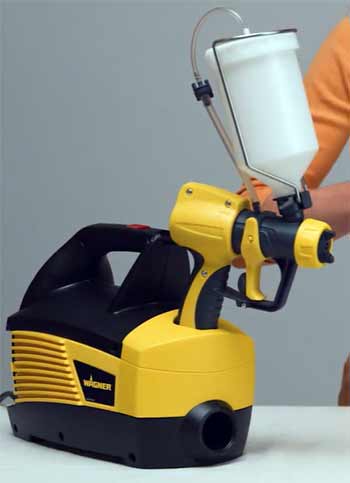
I picked up the Wagner Flexio 4300 after finishing a kitchen cabinet refresh that left me frustrated with brush marks and uneven coverage.
The box arrived with the turbine unit, a fifteen-foot hose, the spray gun, both the 150-milliliter and 600-milliliter gravity-fed cups, the iSpray nozzle, the detail finish nozzle, cup liners, a cleaning brush, and a small packet of petroleum jelly.
Setup took me under ten minutes the first time.
I placed the turbine on the floor, connected the hose with a firm twist, locked the chosen nozzle onto the gun, and filled the larger cup with a thinned latex paint I had mixed with a bit of the recommended additive for better flow.
My first project was a set of interior doors and surrounding trim. I started with the detail finish nozzle and the smaller cup to cut in around the edges and hardware areas.
Holding the gun six to eight inches from the surface and keeping a steady side-to-side motion felt natural after only a couple of practice passes on scrap cardboard.
The adjustable air power dial let me dial back the force so the paint settled softly instead of bouncing back as mist.
Material flow sat around the middle setting for the first coat, and I overlapped each pass by about half.
The finish dried with almost no texture, and the doors looked like they had come from a professional shop. I switched to the larger cup and the iSpray nozzle for the flat door panels and completed both sides of three doors in one afternoon.
The turbine hummed steadily on the floor while the gun stayed light in my hand, so my wrist never complained the way it does with heavier handheld units.
Next I moved to outdoor furniture. I used a solid stain on a pair of Adirondack chairs. The same settings worked after a quick rinse of the cups and nozzles.
Overspray stayed minimal, which mattered because the chairs sat near the house siding. Cleanup after the stain job took roughly fifteen minutes.
I poured leftover material back into the can, removed the cup liner, rinsed everything under warm water with a little dish soap, scrubbed the pickup tube and nozzle openings with the included brush, and wiped the seals with a thin coat of petroleum jelly so the next assembly stayed smooth.
The unit dried overnight and was ready for a primer job on window frames the following weekend.
Across several projects I noticed the fifteen-foot hose gave me free movement around larger pieces without dragging the turbine every few steps. The pattern control on the air cap switched easily between horizontal and vertical fans, which helped when I painted chair spindles and then switched to broad tabletops.
One afternoon I sprayed an entire set of baseboards and crown molding in a hallway. The fine finish nozzle kept the paint exactly where I aimed, and the low pressure meant almost no mist settled on the nearby flooring once I had taped off the edges.
I did thin thicker paints slightly more than the label suggested, following the settings chart that comes with the unit, and that single adjustment eliminated any spitting or orange-peel texture.
The only moments that required patience were the first couple of material changes. Switching from latex to oil-based enamel meant a thorough mineral-spirit rinse instead of water, but the process stayed straightforward once I got the sequence down.
After a month of regular use the seals still sealed tightly, the turbine never overheated, and the spray pattern remained consistent. I now reach for the Flexio 4300 whenever a project needs a clean, even coat rather than the texture a roller leaves behind.
You will notice the same jump in finish quality once you settle into the rhythm of distance, speed, and dial settings.
Also Read: Is Valspar Duramax Exterior Paint Worth It?
Pros of Wagner Flexio 4300 Paint Sprayer
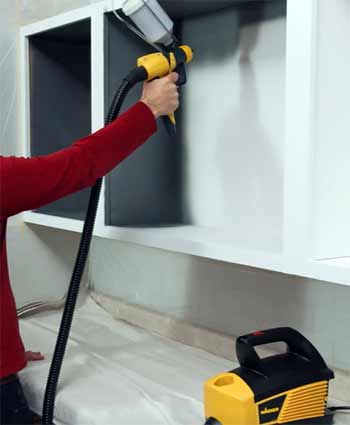
- Smooth Professional Finish On Fine Details You will appreciate how the gravity-fed detail nozzle lays down an even film on cabinets, trim, and furniture. I sprayed several sets of kitchen doors and the paint leveled without brush strokes or roller stipple. The low three-psi operating pressure atomizes the material finely enough that the surface looks sprayed in a shop rather than in a garage. When you keep the gun six to eight inches away and move at a steady pace, the result stays consistent from edge to edge. I compared the same paint applied with a brush on a leftover door panel and the difference was obvious under bright light. The Flexio 4300 simply produces a tighter, smoother coat that needs less sanding between layers.
- Lightweight Gun With Floor Turbine The turbine sits on the ground so the spray gun itself stays light. After twenty minutes of continuous spraying my arm still felt fresh. You can work longer sessions without the fatigue that comes from balancing a motor in your hand. The fifteen-foot hose reaches most areas of a room or outdoor patio without constant repositioning. I painted an entire hallway of baseboards and never had to move the turbine more than twice. That design choice alone makes the unit practical for anyone who spends half a day on a single project.
- Adjustable Air Power And Material Flow The dials give you real control. I started most latex jobs with air power at medium-high and material flow around nine to eleven on the scale, then fine-tuned based on viscosity. For thinner stains I dropped both settings and still got full coverage without runs. You can match the output to the surface and the product in the cup, which means fewer wasted coats and less time correcting mistakes. The air cap also rotates for horizontal or vertical patterns, so you adapt instantly when you move from a wide wall section to a narrow spindle.
- Two Cup Sizes And Dual Nozzles Included The 150-milliliter cup handles small touch-ups and tight spots while the 600-milliliter cup covers larger panels without constant refills. Switching between the iSpray nozzle for broader coverage and the detail finish nozzle for precision takes only a twist. I used the small cup for chair arms and the large cup for the seat and back in the same session. Having both options in the box means you are ready for almost any indoor or outdoor project right out of the package.
- Fast Coverage Compared To Traditional Tools An eight-by-ten wall took me under five minutes of actual spray time once I had the settings dialed. You move through furniture sets and trim runs far quicker than brushing or rolling, and the finish quality stays higher. That speed compounds when you tackle multiple pieces in one day. I finished a full set of outdoor chairs and a matching table in a single afternoon, something that would have stretched into two days with a brush.
- Low Overspray For Indoor Use Because the system runs at high volume and low pressure, most of the material lands on the surface instead of floating into the air. I still masked nearby surfaces, yet the amount of mist that settled outside the target area stayed minimal. You can work inside a finished room with less concern about cleaning adjacent walls or flooring afterward.
Also Read: Differences Between Glidden Diamond And Glidden Premium.
Cons of Wagner Flexio 4300 Paint Sprayer
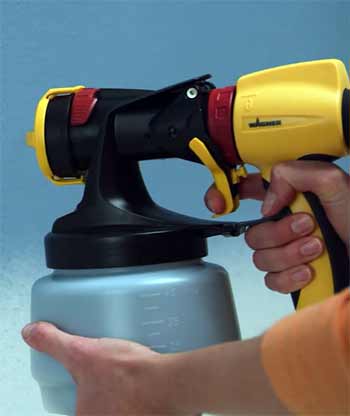
- Requires Thinning For Some Thicker Paints Certain heavy latex formulas need a small amount of water or additive before they flow smoothly through the nozzle. I learned this after the first coat of an unthinned primer produced a slightly textured surface. Once I adjusted the mix according to the settings guide the problem disappeared, yet you must plan for that extra step with some products.
- Hose Can Limit Movement In Tight Corners The fifteen-foot hose is generous for most rooms, but in a small bathroom or when painting the inside of a cabinet the cord and hose still require occasional management. You learn to position the turbine carefully, yet the setup is not as free as a completely cordless unit.
- Not Ideal For Very Large Exterior Surfaces While the sprayer handles medium walls and fences well, covering an entire house exterior would take longer than an airless system. The cup capacity and HVLP volume favor detail and mid-size work over massive coverage jobs.
- Cleanup Time Adds Up With Multiple Color Changes Switching from one color to another or from water-based to oil-based material means a full rinse of cups, nozzles, and the pickup tube. The process is simple, yet it still consumes fifteen to twenty minutes each time. If your project involves many color shifts in one day you will notice the cumulative minutes.
Maintenance Tips For Wagner Flexio 4300 Paint Sprayer
- Clean Immediately After Every Session You will keep the unit performing at its best if you rinse the cups, nozzles, and pickup tube as soon as you finish spraying. Pour leftover paint back into the original can, remove the cup liner, and flush everything with warm water for latex or mineral spirits for oil-based material. I keep a bucket of soapy water ready and scrub the small openings with the included brush. Letting paint dry inside the passages leads to clogs that take much longer to clear later.
- Lubricate The Seals Regularly A thin coat of petroleum jelly on the O-ring and nozzle seal prevents sticking and makes assembly easier. The packet that comes with the sprayer lasts through several cleanings, and ordinary petroleum jelly works once that runs out. I apply it with a cotton swab after every thorough rinse and the parts continue to twist on and off smoothly.
- Store The Hose Without Kinks Coil the fifteen-foot hose loosely and hang it or lay it flat so no sharp bends form. A kinked hose restricts airflow and reduces atomization quality. After each use I wipe the exterior, check for cracks, and store the turbine in a dry cabinet. Keeping the air filter clean also helps; a quick vacuum or brush of the intake screen every few projects maintains full power.
- Thin Materials According To The Chart Follow the settings guide for material flow and air power based on the coating you use. Thicker latex often needs a small percentage of water or the manufacturer’s additive. I test the mix on cardboard first and adjust until the spray pattern stays even without spitting. Proper thinning reduces wear on the nozzle and produces the smooth finish the unit is designed to deliver.
- Inspect Nozzles And Cups For Wear After a dozen projects I examine the nozzle openings and cup seals for any nicks or hardened residue. Replacing a worn nozzle keeps the spray pattern sharp. Cup liners are inexpensive and worth changing regularly so dried paint never builds up on the plastic itself. These small habits extend the life of the entire system and keep every coat consistent.
- Protect The Turbine From Dust And Moisture Place the turbine on a clean surface during use and avoid spraying directly above it. After cleaning I run the unit briefly with no material to clear residual moisture from the air passages. Storing the complete kit in its original case or a dedicated shelf keeps dust out of the motor and filters.
Comparison of Wagner Flexio 4300 Paint Sprayer With Other Brands
- Wagner Flexio 2500

The Flexio 2500 keeps the turbine inside the handheld unit and offers a simpler two-speed air control.
I found the 4300 far more comfortable for sessions longer than thirty minutes because the weight stays on the floor instead of in your hand.
The 2500 works fine for quick fence touch-ups, yet the adjustable multi-position dials and dual gravity cups on the 4300 give tighter control over fine furniture finishes.
Coverage speed feels similar on small surfaces, but the 4300 produces a smoother film on cabinets and trim.
If your projects stay limited to outdoor staining the 2500 may suffice, yet once you move indoors to detailed work the extra features of the 4300 become noticeable.
- Graco TrueCoat 360
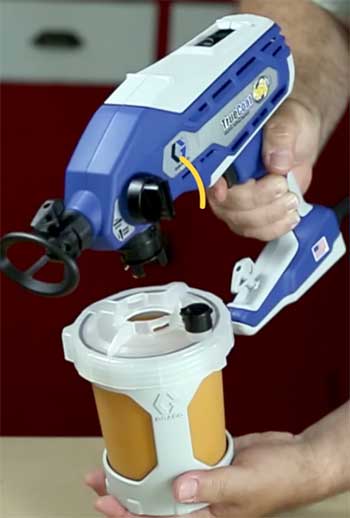
The Graco TrueCoat 360 operates as an airless sprayer with much higher pressure.
It pushes material faster across large walls and can handle thicker unthinned paints without adjustment.
I tested both units on the same interior wall and the Graco finished the broad surface quicker, yet it created more overspray and required heavier masking.
The Flexio 4300 delivered a finer atomization that left less texture on doors and cabinets.
The Graco gun feels heavier during extended use, while the 4300 stays light thanks to the remote turbine.
For pure speed on open walls the Graco holds an edge, but for controlled indoor finishes and lower mist the Wagner system remains the better match.
- Wagner Flexio 3500
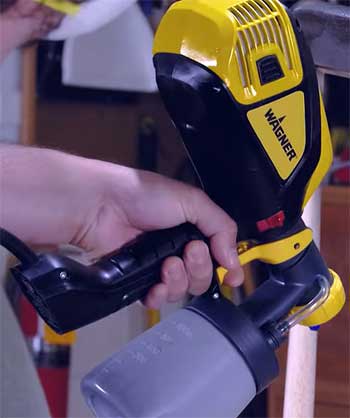
The Flexio 3500 sits between the 2500 and the 4300 in the lineup.
It offers nine speed settings and a handheld design with the motor built into the unit.
I preferred the 4300 because the floor turbine removes weight from the gun and the gravity-fed cups improve flow consistency on vertical surfaces.
The 3500 sprays well on furniture and still costs a bit less, yet the 4300’s dual cup sizes and dedicated detail nozzle produce cleaner edges around hardware and molding.
Both units share similar cleaning routines, but the 4300’s longer hose and lighter spray head make longer sessions less tiring.
If budget is the main driver the 3500 remains capable, yet the 4300 edges ahead for anyone who values comfort and precision on fine work.
Frequently Asked Questions (FAQ)
The 4300 includes 150 ml and 600 ml gravity-fed detail cups for fine finishing and tight spaces while both share the same floor turbine and fifteen-foot hose.
It depends on the job; the Flexio 4300 offers finer control and less overspray for detail work while Graco airless models move faster on large open surfaces.
The unit operates at approximately 3 PSI.
For fine indoor finishes and medium projects the Flexio 4300 stands out in the current lineup because of its dual cups and remote turbine.
Wrapping Up
After weeks of real projects I can say the Wagner Flexio 4300 earns a permanent spot in my shop. You gain speed, a smoother finish, and less arm fatigue than traditional methods deliver, all at a price that stays reasonable for serious DIY work.
If your next cabinet, trim, or furniture job needs clean results without the mess of heavier systems, this sprayer will get you there. Buy it, learn the dials, and enjoy the difference every time you pull the trigger.