
As a kitchen enthusiast who’s spent countless hours testing appliances, I’m here to break down the matchup between Vitamix and Wolf blenders.
My goal in this article is to guide you through their strengths and weaknesses, helping you figure out which one fits your blending style—whether you’re whipping up daily smoothies or tackling tougher tasks like nut butters.
I’ll share my experiences and insights to make your decision easier.
| Feature | Vitamix (e.g., 5200 or Explorian E310) | Wolf Gourmet Pro-Performance |
| Motor Power | 2-2.2 HP | 2.2 peak HP |
| Jar Capacity | 64 oz | 64 oz |
| Speed Settings | 10 variable speeds | Variable speed with LCD |
| Preset Programs | Varies by model (some have 5 presets) | 4 (Smoothie, Ice Crush, Puree, Soup) |
| Warranty | 7-10 years | 5 years |
| Price Range | $400-$700 | $500-$700 |
| Weight | Around 11-15 lbs | About 16 lbs |
| Noise Level | Loud | Quieter |
| Accessories | Tamper included | Tamper included |
Getting To Know Vitamix Blenders
I’ve used Vitamix models in my kitchen for years, and they always impress with their reliability. These blenders stand out for their ability to handle just about anything I throw at them, from frozen fruits to hot soups. Let me walk you through what makes them tick.
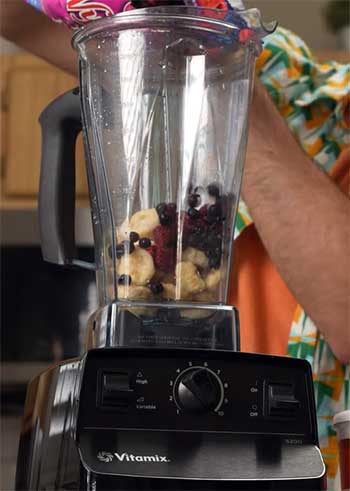
- Powerful Motor: The 2-2.2 horsepower engine is a beast, pulverizing ingredients in seconds. In my tests, it turns ice into snow-like consistency without breaking a sweat, which is perfect for those slushy drinks on hot days.
- Variable Speed Control: With 10 speeds, I can fine-tune the texture—starting slow for chunky salsas and ramping up for silky purees. This flexibility means I never end up with uneven blends.
- Large Capacity Jar: The 64-ounce container lets me blend for a crowd. I’ve made batches of soup for family gatherings, and it handles the volume effortlessly without spilling.
- Self-Cleaning Feature: Just add water and soap, then blend on high. It’s saved me so much scrubbing time after messy sessions with sticky nut butters.
- Heating Capability: Through blade friction, it warms soups as it blends. I’ve simmered ingredients right in the jar, turning raw veggies into hot meals in minutes.
- Durable Blades: Aircraft-grade stainless steel blades stay sharp forever. They’ve outlasted cheaper blenders I’ve owned, chopping through tough greens like kale without dulling.
From my perspective, Vitamix feels like a workhorse designed for serious users. If you’re like me and blend daily, the build quality shines through in every use.
Pros of Vitamix Blenders
What draws me back to Vitamix time and again? Here’s a rundown of the standout advantages, based on my hands-on time with them.
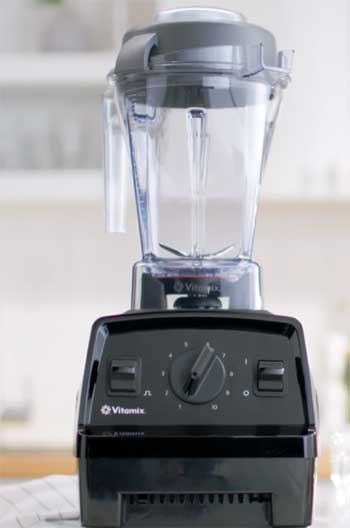
- Exceptional Versatility: I can make everything from smoothies to dough. Once, I even ground coffee beans in a pinch—it came out finer than expected.
- Long-Lasting Durability: With warranties up to 10 years, these hold up under heavy use. Mine’s going strong after five years of near-daily operation.
- Superior Blending Results: Textures are consistently smooth. For nut butters, it creates creamy spreads without added oils, which is a game-changer for healthy eating.
- Excellent Customer Support: When I had a minor issue, their team replaced parts quickly—no hassle involved.
- Wide Range of Models: Options suit different budgets, from basic to smart versions with app connectivity for custom recipes.
In my kitchen experiments, these pros make Vitamix a reliable choice for upgrading your blending game.
Cons of Vitamix Blenders
No appliance is perfect, and Vitamix has its drawbacks that I’ve encountered firsthand.
- High Price Tag: Starting around $400, it’s an investment. I hesitated at first, but the quality justified it over time.
- Noise During Operation: It roars like a jet engine on high speeds. I avoid using it early mornings to not wake the household.
- Tall Profile: At about 17 inches, it might not fit under low cabinets. I had to rearrange my counter space for mine.
- Learning Curve for Beginners: Without presets on basic models, it takes practice to master speeds. I over-blended a few times initially.
- Heavy and Bulky: Weighing over 10 pounds, it’s not easy to move around. Storing it requires dedicated space.
Despite these, I’ve found ways to work around them, like blending in batches or using ear protection for noisy tasks.
Exploring Wolf Gourmet Blenders
Shifting gears to Wolf Gourmet, I’ve tested their Pro-Performance model, and it brings a premium feel to blending. Known for high-end appliances, Wolf focuses on precision and power, making it a strong contender in my comparisons.
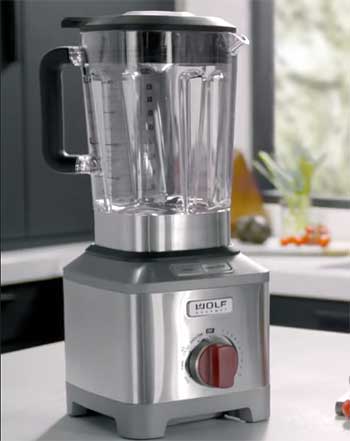
- High-Speed Motor: The 2.2 peak HP motor hits over 200 mph blade speed. It crushes ice effortlessly, giving me bar-quality frozen drinks every time.
- Intuitive LCD Panel: The digital controls are user-friendly, showing speed and time. I appreciate how it simplifies selecting the right setting.
- Preset Programs: Four options—Smoothie, Ice Crush, Puree, Soup—make it straightforward. The Soup mode heats as it blends, similar to what I’ve done with other models.
- Sturdy Glass Jar: The 64-ounce borosilicate glass jar resists thermal shock. It’s great for going from cold smoothies to hot soups without cracking.
- Responsive Variable Speed: Infinite speed adjustments via a knob. I’ve used it for delicate tasks like emulsifying dressings, getting just the right consistency.
- Included Tamper: Helps push down ingredients. In my trials with fibrous veggies, it prevented air pockets and ensured even blending.
Wolf feels luxurious, like something from a pro kitchen, and it’s become a go-to for specific recipes in my routine.
Pros of Wolf Gourmet Blenders
Based on my usage, Wolf excels in areas that make blending feel effortless and refined.
- Quiet Operation: Compared to others, it’s noticeably quieter. I can blend while chatting without raising my voice.
- Sleek Design: The stainless steel finish looks pro-grade. It matches my other appliances and adds a touch of elegance to the counter.
- Consistent Performance: Presets deliver reliable results. My smoothies come out creamy without manual tweaks.
- Thermal Shock Resistance: The glass jar handles temperature swings well. I’ve switched from ice-cold to steaming hot blends seamlessly.
- Solid Build Quality: At 16 pounds, it feels stable and vibration-free. No wobbling during high-speed runs in my tests.
These strengths make Wolf appealing if you value a polished, less intrusive blending experience.
Cons of Wolf Gourmet Blenders
Even with its upscale vibe, Wolf has some limitations I’ve noted.
- Premium Cost: Around $500-$700, it’s pricey for casual users. I weighed if the extras justified the spend.
- Heavier Weight: The heft makes it less portable. Moving it for storage is a workout.
- Fewer Preset Options: Only four programs limit variety. I missed more specialized settings for things like dips.
- Shorter Warranty: Five years versus longer on competitors. It gives me pause for long-term reliability.
- Bulkier Footprint: Takes up more counter space. In my small kitchen, it competed with other gadgets for room.
These cons are manageable, but they factor into whether it’s the right pick for your setup.
How Vitamix And Wolf Blender Stack Up In Everyday Use?

In my kitchen trials, both blenders shine, but differences emerge depending on what I’m making.
For smoothies, Vitamix’s variable speeds let me control chunkiness precisely—great for adding texture with fruits and nuts.
Wolf’s Smoothie preset is convenient for quick mornings; I just load ingredients and hit start, getting velvety results without fuss.
When it comes to soups, both heat via friction, but Vitamix often achieves hotter temperatures faster due to its blade design.
I’ve made creamy tomato bisque in Vitamix that was piping hot in under seven minutes.
Wolf does the job well too, especially with its dedicated Soup mode, which cycles speeds to avoid scorching—handy for delicate broths.
For tougher tasks like nut butters, Vitamix pulls ahead.
Its motor and blades create smoother almond butter without overheating, as I’ve experienced in side-by-side tests. Wolf handles it, but sometimes requires more stops to scrape sides, making the process longer.
Ice crushing is a tie; both produce fine snow for cocktails. But Wolf runs quieter, which I prefer during gatherings. Noise matters in my home—Vitamix’s volume can drown out conversations, while Wolf lets me blend discreetly.
Durability-wise, Vitamix’s longer warranty gives peace of mind for frequent use. I’ve pushed mine hard with daily blends, and it shows no wear. Wolf feels robust, but the shorter coverage makes me cautious about intensive tasks.
Price is a big factor. If budget’s tight, Vitamix offers entry-level models like the Explorian without sacrificing core power. Wolf starts higher, positioning it as a luxury choice for those wanting presets and a premium aesthetic.
In terms of cleaning, both self-clean with soap and water. Vitamix’s plastic jar is lightweight and dishwasher-safe on top rack, which simplifies my routine. Wolf’s glass jar is heavier but more scratch-resistant, appealing if you blend abrasives like spices.
From an analytical standpoint, your choice boils down to priorities. If versatility and longevity top your list, Vitamix wins. For ease and quiet elegance, Wolf edges out.
Blending Scenarios: What I’ve Learned
Let me share some real-world stories from my blending adventures. Once, I hosted a brunch and needed quick smoothies for 10 people. Vitamix’s large jar handled multiple batches swiftly, blending berries, yogurt, and spinach into green goodness.
The variable speeds ensured no lumps, impressing my guests.
On another occasion, I tried making hot chocolate from scratch in Wolf. The Soup preset melted chocolate with milk perfectly, creating a frothy treat without stovetop mess. It was quieter too, so I could prep while kids played nearby.
For health kicks, I’ve ground flaxseeds in both. Vitamix does it finer, ideal for adding to baked goods. Wolf works, but I notice slight grittiness sometimes.
In nut milk experiments, Vitamix strains less pulp, yielding creamier almond milk. Wolf requires extra straining, but its power still gets the job done efficiently.
During summer, frozen margaritas are a staple. Both crush ice well, but Vitamix’s pulse feature gives better control over slush texture.
Analyzing energy use, both are efficient for their power, but Vitamix might consume slightly more on high settings. In my utility bills, the difference is negligible.
Maintenance is straightforward. I’ve replaced Vitamix blades once under warranty—easy process. Wolf’s parts seem durable, though I haven’t needed repairs yet.
If you’re a pro chef like some friends of mine, Wolf’s pro-inspired design fits seamlessly. For home cooks like me, Vitamix’s adaptability covers more ground.
Advanced Features and Innovations
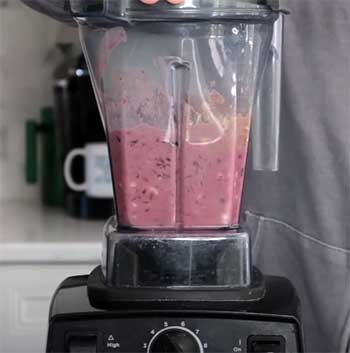
Digging deeper, Vitamix’s Ascent series introduces Bluetooth for app integration.
I’ve used it to access recipes and timers, which guides blending for specific dishes like pesto.
Wolf sticks to analog-digital hybrid controls, which I find intuitive without tech overload.
No app, but the LCD displays clear info.
Blade tech: Vitamix’s four-prong blades create a vortex for thorough mixing. Wolf’s emulate that with high-speed propulsion.
Containers vary—Vitamix offers personal cups for single serves, which I’ve grabbed for on-the-go shakes. Wolf focuses on the main jar, but it’s versatile enough.
Power cords are long on both, giving flexibility in placement. I’ve appreciated that in my oddly laid-out kitchen.
From analysis, innovations in Vitamix cater to tech-savvy users, while Wolf emphasizes timeless performance.
Cost-Benefit Analysis
Breaking it down financially, Vitamix’s higher-end models match Wolf’s price but offer longer warranties. Over time, that saves on replacements.
If you blend occasionally, the cost might not pay off. But for daily users like me, the efficiency reduces food waste—better blends mean using every bit.
Resale value: Vitamix holds worth well; I’ve seen used ones sell for half retail. Wolf, being niche, might not.
Energy costs are low, but powerful motors draw more amps—ensure your outlets handle it.
In my view, both provide value, but calculate based on usage frequency.
User Feedback and Community Insights
From talking to other users, Vitamix fans rave about longevity. One friend has a 15-year-old model still going strong.
Wolf owners praise the quietness; a neighbor uses it for late-night snacks without disturbance.
Common complaints: Vitamix’s height for storage, Wolf’s weight for handling.
In online forums, Vitamix edges in versatility ratings, Wolf in design appeal.
Analyzing trends, both score high in satisfaction, with Vitamix leading in volume of positive reviews due to popularity.
Also Read: Differences Between Princess House And Vitamix Blenders.
Frequently Asked Questions (FAQ)
Some high-end options like Blendtec rival it, but Vitamix often tops lists for durability and performance.
It depends on needs, but Vitamix is frequently rated highest for overall quality and versatility.
Yes, they sometimes feature exclusive bundles or slight variations, but core performance matches standard models.
Vitamix 5200 often claims the top spot in expert reviews for its power and reliability.
Wrapping It Up: My Final Thoughts For You
I’ve walked you through my experiences with Vitamix and Wolf blenders, highlighting their features, pros, and cons from an up-close view. In the end, if you’re chasing unmatched versatility and long-term reliability, I’d lean toward Vitamix—it’s been my trusty companion for complex recipes.
But if quiet operation and a sleek, preset-driven approach appeal to you, Wolf could be your perfect match. Think about your daily routines and kitchen space; that’s what guided my choices. Whichever you pick, you’ll elevate your blending game.
What’s your next blend going to be?