
I remember standing in my kitchen staring at a kale smoothie that looked more like a swampy salad because my old blender just couldn’t hack it. That’s when I knew I needed an upgrade.
If you are reading this, you are likely torn between two heavy hitters: the Vitamix Professional Series 750 and the Vitamix 7500. Both are absolute beasts from the Next Generation (G-Series) lineup, sharing the same motor and low-profile design, yet they cater to very different personalities.
The 750 is the “set it and forget it” luxury sedan with automated presets, while the 7500 is the high-performance manual transmission sports car for those who crave total control. In this comparison, I will help you figure out if those extra buttons are worth the extra cash for your specific workflow.
| Feature | Vitamix Professional Series 750 | Vitamix 7500 |
| Series | G-Series (Professional) | G-Series (Next Gen Base) |
| Motor | 2.2 Peak HP | 2.2 Peak HP |
| Controls | 10-Speed Dial + 5 Presets | 10-Speed Dial |
| Presets | Smoothie, Frozen Dessert, Soup, Puree, Clean | None (Manual only) |
| Container | 64 oz Low-Profile | 64 oz Low-Profile |
| Housing Finish | Brushed Stainless, Copper, or Black Plastic | Plastic (Black, Red, White) |
| Dimensions | 17.5 x 9.4 x 7.7 inches | 17.5 x 9.4 x 7.7 inches |
| Noise Level | Slightly quieter (improved dampening) | Standard G-Series levels |
| Warranty | 7-Year Full Warranty | 7-Year Full Warranty |
| Ideal For | Multi-taskers who want automation | Hands-on cooks who want control |
Key Differences Between Vitamix 750 And 7500 Blenders
- The Engine Room: 2.2 Horsepower of Raw Torque
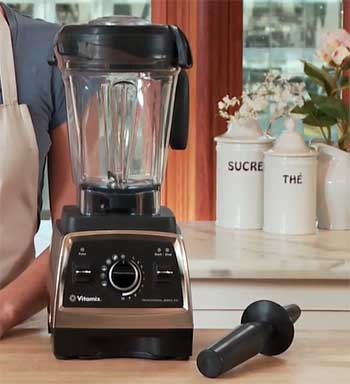
When we talk about these machines, we have to start with the motor because it is the heart of the operation.
Both the 750 and the 7500 utilize the exact same 2.2 peak horsepower motor.
If you are coming from a standard department store blender, the power difference here is going to feel like jumping from a bicycle to a motorcycle.
This motor is designed to maintain high torque even at low speeds, which is crucial for thick blends like hummus or nut butters.
I have thrown frozen bananas, rock-hard ice cubes, and fibrous ginger into both machines, and the result is indistinguishable.
They both obliterate cell walls to create that signature silky Vitamix texture. Because they share the same powertrain, you are not paying for better blending performance when you buy the 750; you are paying for how that power is managed.
The airflow design in this G-Series base is also significantly better than the older C-Series (like the 5200), meaning you can run these machines harder and longer before the thermal protection kicks in to shut them down.
- The Control Panel Showdown: Automation vs. Manual Precision
This is where the rubber meets the road. The primary differentiator between these two units is the interface.
The Vitamix 7500 features a purely manual interface.2 You have a pulse toggle, a start/stop toggle, and a variable speed dial in the center. It is utilitarian, rugged, and incredibly intuitive. You turn it on, you ramp up the speed, and you watch the blend.
When it looks done, you stop. For many professional chefs or home cooks who are particular about texture, this is actually preferred. You are the pilot.
The Vitamix Pro 750, on the other hand, adds a layer of computer-controlled convenience. In addition to the manual 1-10 speeds, the dial has five icons on the left side: Smoothies, Frozen Desserts, Hot Soups, Purees, and Self-Cleaning.
Here is why this matters in a real-world morning routine: With the 750, I can load my ingredients, turn the dial to the “Smoothie” icon, hit start, and walk away. I can wash my face or pack my lunch while the machine ramps up, blends for the exact duration needed, and shuts itself off.
It creates a predictable workflow. With the 7500, I have to stand there and monitor it. It sounds like a small thing, but that 45 seconds of freedom can be valuable when you are rushing to get out the door.
- The Low-Profile Container: Finally Fitting Under Your Cabinets
If you owned an older Vitamix, you know the struggle of the “tower of power”—the tall 64oz container that made the machine too tall to fit under standard 18-inch kitchen cabinets. Both the 750 and 7500 solved this problem with the low-profile 64oz container.
This container is wider at the base, which allows the blades to be longer (4 inches vs.5 the old 3 inches). This actually improves the chopping ability because there is a wider radius of engagement. I have found that the wider bottom makes it easier to scrape out thick mixtures like almond butter or pesto.
However, there is a slight trade-off: because the base is wider, the minimum batch size is larger. If you are trying to make a tiny amount of salad dressing (under 1 cup), the blades might just spin the ingredients to the walls rather than creating a vortex.
For both models, if you plan on making single-serving baby food or tiny spice blends, you might eventually want to invest in a 32oz or 48oz container.
- Design and Aesthetics: Premium Metal vs. Utilitarian Plastic
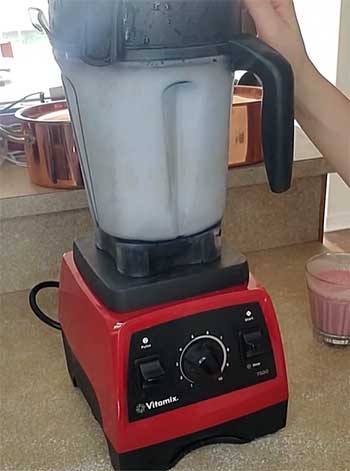
While they share the same physical footprint, the “fit and finish” is where the 750 pulls ahead as a premium product.
The base of the 7500 is made of high-quality polycarbonate—it’s tough, durable, and wipes clean easily, but it looks like a kitchen appliance.
It comes in standard colors like black, white, and red.
The Pro 750, however, often comes in a brushed stainless steel or “Heritage” copper finish.
It is not just a color; it is a shell over the base that gives it a heavier, more substantial feel.
It looks stunning on a granite or marble countertop and resists fingerprints better than glossy plastic.
If your kitchen aesthetics are a high priority, the 750 definitely looks more expensive. It commands presence. The 7500 looks ready for a commercial kitchen back-of-house; the 750 looks ready for a magazine shoot.
- Noise Levels: The Sound of Power
Let’s be real: no high-powered blender is “quiet.” We are talking about spinning metal blades at 37,000 RPM. However, the G-Series represented a massive leap forward in sound dampening compared to previous generations.
Between the two, the Pro 750 is frequently cited by users (and my own ears) as being marginally quieter than the 7500. The metal housing on the 750 seems to dampen the high-pitch whine of the motor slightly better than the plastic shell of the 7500.
We are talking about a difference of maybe a few decibels—you still won’t want to run it while someone is sleeping in the next room—but the sound profile of the 750 is a lower, throaty hum compared to the slightly sharper noise of the 7500. If you have an open-concept living space, every decibel of reduction counts.
- Cleaning and Maintenance
Both machines are incredibly easy to clean, but the 750 adds a dedicated “Cleaning” preset. You fill the container halfway with warm water, add a drop of dish soap, and flip the switch. The 750 will pulse and ramp up to high speed to power-wash the sides and lid, then shut off automatically.
With the 7500, you do the exact same thing, but you manually ramp it up to 10 for 30-60 seconds. Is the preset necessary? Absolutely not. It is just another convenience. The real cleaning advantage for both is the container design.
The wider body of the low-profile jar makes it much easier to reach in with a sponge (carefully!) if you have stubborn sticky residue, unlike the tall, narrow jars where you practically needed a bottle brush.
Key Features And Pros of The Vitamix Professional Series 750
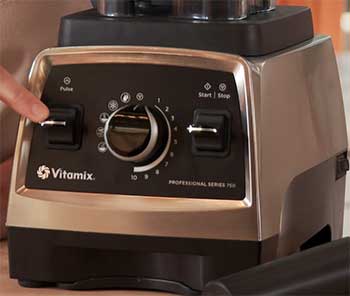
- Automated Walk-Away Blending: The five pre-programmed settings allow you to multitask in the kitchen.8 The machine adjusts speed and duration automatically, ensuring consistent results every time without you hovering over the base.
- Premium Housing Finishes: Available in brushed stainless steel and copper options, the 750 offers a high-end look that complements luxury kitchen appliances better than standard plastic shells.9
- Slightly Quieter Operation: The enhanced sound dampening, partly due to the heavier housing materials, makes the 750 one of the quieter high-performance blenders on the market, reducing the “jet engine” effect.10
- Self-Cleaning Cycle: The dedicated cleaning preset takes the guesswork out of maintenance, cycling through various speeds to dislodge food from the blades and walls effectively.11
Cons of the Vitamix Professional Series 750
- Higher Price Point: You pay a significant premium for the presets and metal finish. For many users, the price jump over the 7500 is hard to justify for identical blending quality.
- Potential for Electronics Failure: While rare, more complex electronics (presets/boards) introduce more potential points of failure compared to a simple mechanical switch and dial system.
- Overkill for Control Freaks: If you prefer to manually control every blend to get a specific texture, the presets will sit there unused, serving only as expensive decoration on your dial.
Key Features And Pros of The Vitamix 7500
- Identical Performance for Less Money: You get the exact same 2.2 HP motor, blade system, and container as the flagship 750 model, meaning the blend quality is indistinguishable.12
- Complete Manual Control: The simple interface forces you to engage with your food. You have total authority over the speed and duration, which is ideal for culinary experimentation.
- Rugged and Durable: With fewer digital components and a straightforward mechanical design, the 7500 is built like a tank and has less that can technically “glitch” over decades of use.
- Wide Color Variety: While it lacks the metal finish, the 7500 comes in vibrant colors like red and white, allowing you to match it to a fun, retro, or modern kitchen color scheme.
Cons of The Vitamix 7500
- No “Walk-Away” Feature: You must monitor the blend. If you get distracted and leave it running on high, you could accidentally turn a chunky salsa into a hot soup due to friction heating.
- Slightly Louder: Without the additional sound dampening of the 750’s premium housing, the 7500 can seem a bit sharper and louder at maximum speed.
- Standard Plastic Look: It looks like a standard appliance. If you have a kitchen full of Viking or Wolf stainless steel appliances, the plastic 7500 might look a bit out of place.
Who is the Vitamix Professional Series 750 For?
The 750 is for the user who values workflow optimization and aesthetics. If you are the type of person who loves gadgets that do the thinking for you, or if you make the same recipes every single day (like a daily green smoothie), the consistency of the presets is fantastic.
It eliminates user error. If you have a spouse or teenagers who might be intimidated by a manual machine, the 750 makes blending approachable. You just tell them “turn it to the smoothie picture and press start.”
Who is the Vitamix 7500 For?
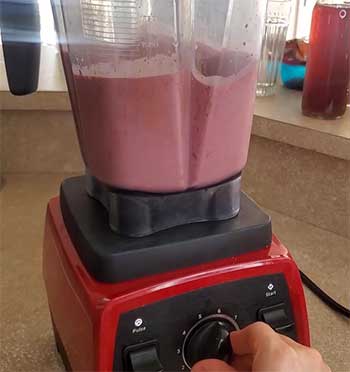
The 7500 is for the purist. It is for the home cook who wants the raw power of the G-Series without paying a premium for a microchip they might never use.
If you are constantly varying your recipes—blending soups one day, grinding coffee the next, and making salsas the day after—you are likely going to be using the variable speed dial anyway to get the exact texture you want.
Why pay for a “Soup” button if you prefer to monitor the heat level yourself?
The 7500 is the pragmatic choice that delivers 100% of the performance at a lower price point.
Also Read: Differences Between Princess House And Vitamix Blenders.
Frequently Asked Questions (FAQ)
The main difference is that the Pro 750 has five pre-programmed settings (smoothie, soup, frozen dessert, puree, cleaning) and often comes in a metal finish, while the 7500 is fully manual and has a plastic base.
For most home users, the Vitamix 5200 is often cited as the best for pure performance, but within the G-Series, the Pro 750 is considered the “best” due to its premium features, while the 7500 is the best value.
The Vitamix 7500 was released in January 2013 as part of the launch of the Next Generation (G-Series) lineup.
Yes, the Vitamix 7500 is the base model of the G-Series (Next Generation), featuring the updated 2.2 HP motor and low-profile container.
Conclusion: Which One Belongs On Your Counter?
After testing both, the decision really comes down to your lifestyle. If you are the type of person who sees cooking as a precise art form and you want to feel the machine respond to your inputs, save the money and get the Vitamix 7500.
It is a workhorse that will likely outlive your refrigerator. You won’t miss the buttons you never press.
However, if you are busy, managing a chaotic morning routine, or simply appreciate the finer things in life like brushed metal and automation, the Vitamix Professional Series 750 is a joy to own.
There is a specific satisfaction in turning a dial, flipping a switch, and hearing the machine ramp down perfectly on its own just as you finish pouring your coffee. It transforms blending from a chore into a seamless part of your day.
Both machines are investments in your health, and honestly, once you taste that first perfectly smooth blend, you won’t regret buying either of them.