
I spent months testing pellet grills in my own backyard, running everything from overnight briskets to weeknight chicken, and the choice between the Traeger Woodridge and the older Pro series kept coming up in every conversation with fellow cooks.
This piece lays out exactly how the two stack up in real use so you can decide which one belongs on your patio without the usual marketing fog.
| Feature | Traeger Woodridge (Base) | Traeger Woodridge Pro | Traeger Pro 34 (Gen 1) |
| Cooking Area | 860 sq in | 970 sq in | 884 sq in |
| Hopper Capacity | 24 lbs | 24 lbs | 18 lbs |
| Max Temp | 500°F | 500°F | 450°F |
| WiFIRE App Control | Yes | Yes | No |
| Super Smoke Mode | No | Yes | No |
| Pellet Sensor | No | Yes | No |
| Keep Warm Mode | No | Yes | No |
| Side Shelf | No | Folding | Optional |
| Bottom Storage | Open | Shelf | Open |
| Grease System | EZ-Clean Keg | EZ-Clean Keg | Bucket |
| Warranty | 10-year limited | 10-year limited | 3-year |
| Approximate Price | $799 | $999 | $499–$599 |
Key Differences Between Traeger Woodridge And Pro Pellet Grill

- Cooking space and what it actually means for a family cook The Woodridge base gives you 860 square inches across two porcelain-coated grates. That is enough for four pork butts or eight racks of ribs if you plan carefully. The Woodridge Pro stretches that to 970 square inches, which feels like an extra half-shelf of freedom when you decide at the last minute to throw on a couple of chickens. The older Pro 34 sits in the middle at 884 square inches, but its upper rack is narrower and less useful for tall items. In practice the extra real estate on the Woodridge Pro lets you run two full cooks at once without the lower grate becoming a traffic jam.
- Temperature ceiling and how it changes your menu Both Woodridge models reach a claimed 500°F. In my yard they consistently hit the high 480s on a calm day, enough to finish steaks or crisp chicken skin after a long smoke. The Pro 34 tops out at 450°F. That difference shows up when you want a harder sear or faster weeknight burgers. You will never get a true steakhouse crust on either, but the Woodridge gets closer.
- Connectivity and the way you manage a long cook Every Woodridge ships with WiFIRE. You set the temperature, drop a probe, and walk away while the app pushes updates to your phone. The Pro 34 has a solid digital controller with Advanced Grilling Logic, but you have to walk outside to check it. For overnight briskets that single difference is the reason many people finally move on from the older Pro line.
- Smoke flavor tools Super Smoke mode lives only on the Woodridge Pro (and higher). It forces extra pellets through the fire pot at low temperatures and noticeably thickens the smoke flavor on ribs and pork shoulder. The base Woodridge and the Pro 34 rely on normal pellet feed. You can still get good results, but the Pro’s Super Smoke gives you a clearer edge when flavor is the whole point of the cook.
- Cleaning systems that actually save time Both Woodridge models use the EZ-Clean Grease & Ash Keg. Grease and ash drop into one removable container that slides out from the bottom. The Pro 34 still uses the old hanging bucket and a separate ash clean-out. After a dozen long cooks the keg system is the one that keeps me from dreading cleanup day.
- Warranty length and long-term ownership cost Woodridge models carry a 10-year limited warranty. The Pro 34 is three years. That gap matters if you plan to keep the grill for a decade. Parts for the older Pro series are still available, but Traeger’s focus has clearly shifted to the Woodridge platform.
Also Read: Differences Between Masterbuilt Gravity Series And Pellet Grills.
Key Features of the Traeger Woodridge
- FreeFlow fire pot that keeps airflow steady under the pellets so combustion stays even and smoke production does not stall during long cooks
- Fully digital controller with a bright, easy-to-read display that lets you set exact temperatures in single-degree increments instead of large jumps
- WiFIRE connectivity that works with the Traeger app for remote temperature changes, probe monitoring, and push notifications so you can check progress from inside the house or across town
- One wired meat probe included, plus full compatibility with wireless Bluetooth probes so you can track multiple cuts without opening the lid
- P.A.L. Pop-And-Lock rail system that runs along the front and sides, letting you snap on side shelves, tool hooks, sauce caddies, or paper-towel holders exactly where you need them
- Built-in staging hooks inside the lid that let you hang the grates while you scrub the interior, keeping everything off the ground and organized
- Hopper clean-out door that empties leftover pellets in seconds when you want to switch from hickory to apple or clear the hopper for storage
- 24-pound hopper that easily covers an overnight cook or a full day of smoking without a mid-cook refill, even when running at higher temperatures
- Porcelain-coated steel grates that release food more cleanly than bare steel and resist rust better under repeated heating and cooling cycles
- ModiFIRE accessory compatibility that opens the door to future add-ons like pizza stones, griddles, or specialty racks without needing a different grill body
Pros of the Traeger Woodridge

- Larger modern cooking area that actually fits real party-sized cooks without creative stacking or rotating food midway through a session
- WiFIRE app that has become more reliable than most competing apps; software updates arrive over the air and steadily improve temperature accuracy and notification timing
- Super Smoke on the Pro model delivers a thicker smoke ring and deeper flavor on low-and-slow cooks without any extra pellet tricks or manual adjustments
- Pellet sensor on the Pro model warns you before the hopper runs dry during a 14-hour brisket, removing the risk of waking up to a cold grill
- EZ-Clean keg system turns the greasiest cook into a five-minute wipe-down by collecting both grease and ash in one removable container
- 10-year warranty gives genuine peace of mind compared with the three-year coverage on older Pros and signals Traeger’s confidence in the new platform
- Keep Warm mode on the Pro keeps food at serving temperature without drying it out while guests straggle in or while you finish side dishes
- Folding side shelf and bottom storage shelf on the Pro model create real workspace without eating up patio square footage or forcing you to set up a separate table
- Higher maximum temperature opens the door to better finishing sears and faster weeknight meals that the older Pro line simply cannot match
- P.A.L. rail system turns the grill into a modular station instead of a static box, letting you customize the layout for the way you actually cook
Also Read: Differences Between Traeger Pro 575 And Pro 22 Pellet Grills.
Cons of the Traeger Woodridge
- Base model lacks Super Smoke, so pure smoke flavor sits a step behind the Pro version and requires more careful pellet choice or longer cook times to compensate
- Single-wall construction means heat retention is good but not Ironwood-level in single-digit weather, so you may burn a few more pellets on the coldest days
- Real-world max temperature often settles around 480°F rather than the claimed 500°F, which is still useful but falls short of true high-heat searing expectations
- App still requires a 2.4 GHz network and can drop connection if your home Wi-Fi is flaky or if the grill sits too far from the router
- Side shelf on the Pro is useful but not as large or as sturdy as the prep space on higher-end Timberline models, so heavy cutting boards can feel a bit unstable
- Porcelain grates eventually wear and need replacement after heavy use, especially if you scrub them aggressively while they are still hot
- Price jump from base to Pro feels steep if you only cook for two or three people most of the time and rarely need the extra capacity or Super Smoke
Key Features of the Traeger Pro
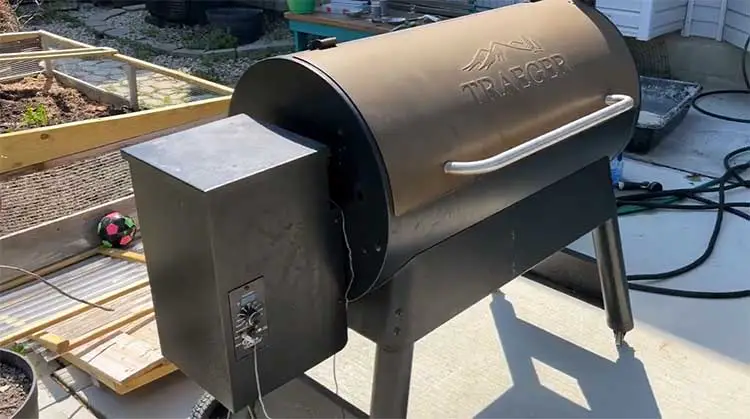
- Digital Pro controller with Advanced Grilling Logic that holds temperature within roughly 15°F of the target, giving solid consistency for everyday smoking without complicated menus
- Dual meat probe ports on most units (some later ones dropped to one) so you can monitor two different cuts at the same time and pull them at their ideal internal temperatures
- 18-pound hopper with a clean-out door that still lets you swap pellet flavors quickly, though it requires more frequent top-ups on long cooks compared with newer models
- Porcelain-coated grates on two levels that provide reliable non-stick performance and hold up well under regular use
- Sawhorse chassis that feels rock-solid on uneven ground and resists tipping even when the hopper is full and the lid is open
- All-terrain wheels and a side-lift bar that make moving the grill manageable across grass, gravel, or patio stones without needing a second person every time
- Simple temperature dial and straightforward interface that many long-time users still prefer for its direct, no-frills feel
- No app, no Wi-Fi, no Super Smoke, and no pellet sensor, keeping the electronics minimal and the learning curve almost nonexistent
- Classic Traeger barrel design that has proven durable over years of use in real backyards and still looks familiar to anyone who grew up with earlier Traeger models
Also Read: Differences Between Recteq 590 And 700 Pellet Grills.
Pros of the Traeger Pro
- Proven, simple design that has survived years of real-world abuse with minimal electronic complexity and almost no software-related issues
- Lower purchase price, especially on remaining Pro 34 inventory, making it one of the most affordable ways to get into a full-size Traeger
- Solid temperature control for everyday smoking without any learning curve or need to download an app before the first cook
- Easy to find used or closeout units if you want to start smoking on a tighter budget and still get reliable Traeger performance
- No reliance on Wi-Fi means the grill works the same in a cabin with no internet as it does in the suburbs, which is a genuine advantage for some users
- Classic Traeger look and feel that many long-time owners still prefer and that matches the aesthetic of older outdoor kitchens
Cons of the Traeger Pro
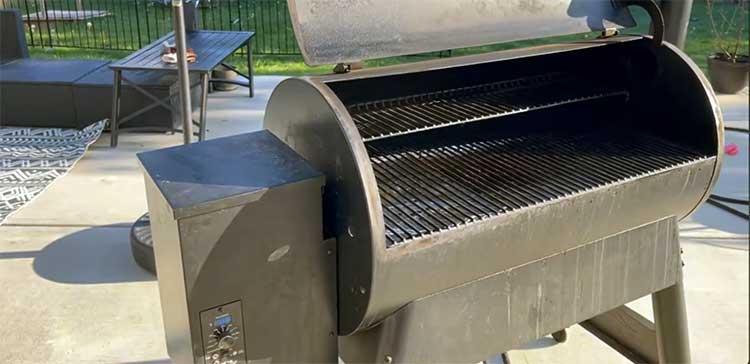
- No WiFIRE means constant trips outside to check temperature and pellet level, which becomes tiring during long overnight cooks or multi-hour sessions
- Lower maximum temperature limits finishing options and makes it harder to crisp skin or get a quick sear after a low-and-slow phase
- Smaller hopper forces more mid-cook refills on long smokes, interrupting the set-it-and-forget-it experience that newer models deliver
- Older grease-bucket system is messier and less contained, often leaving drips on the patio or requiring more frequent emptying
- Three-year warranty feels short compared with the decade of coverage on Woodridge models and leaves you more exposed after the initial period
- No Super Smoke or pellet sensor leaves flavor and fuel management entirely in your hands, requiring more attention and experience to get consistent results
- Gen-2 Pro 575 and Pro 780 are discontinued, so long-term parts support is less certain even though the Gen-1 Pro 34 remains available for now
When I first set up the Woodridge Pro I ran a 12-hour pork shoulder next to a Pro 34 I still keep for backup. The difference in smoke density was obvious the moment I opened the lids.
The Woodridge Pro’s Super Smoke produced a deeper mahogany color and a more pronounced wood note without any extra pellet tricks. Temperature graphs from the app showed the Woodridge holding within 5–8 degrees for hours while the Pro 34 swung a little wider.
Cleanup on the Woodridge took half the time because the keg collected everything in one place.
For everyday use the base Woodridge already beats the older Pro series on convenience and warranty. The Pro model’s extra features matter most when you cook large cuts regularly or care deeply about maximum smoke flavor.
If your typical cook is a couple of chickens or a tray of wings, the base model is more than enough. If you host and run overnight cooks, the Pro version earns its keep.
I have watched friends struggle with the older Pro’s lack of remote control on windy days when they had to keep adjusting the dial. Once they switched to a Woodridge they stopped hovering. That single change in daily behavior is why I lean toward the newer line for most people.
Also Read: Is Kingchii Pellet Grill Worth It?
Frequently Asked Questions (FAQ)
Yes for anyone who smokes large cuts regularly and wants Super Smoke plus app control without stepping up to Ironwood prices.
For most backyard cooks the Woodridge Pro hits the sweet spot of features, capacity, and price.
The Gen-2 Pro 575 and Pro 780 were discontinued in early 2025 and replaced by the Woodridge lineup. The Gen-1 Pro 34 remains available in limited stock.
The Woodridge adds WiFIRE, a larger hopper, higher max temperature, better grease management, and a longer warranty. The Pro 34 is simpler, cheaper, and lacks remote control.
Wrapping Up
After running both styles side by side for months I can tell you the Woodridge line is the clearer step forward. You get modern connectivity, easier cleanup, and better long-term support.
The older Pro still works, but once you experience the app and Super Smoke it is hard to go back. Choose the base Woodridge if you want solid performance at the lowest price.
Step up to the Pro if smoke flavor and capacity matter most. Either way you will spend less time babysitting the grill and more time enjoying the food.