
I spent weeks testing both the Traeger Ironwood and Woodridge side by side in my backyard, running briskets, ribs, chicken, and even weekend pizza sessions to see which one actually delivers for everyday cooks and serious smokers.
This article breaks down the real differences in capacity, build, features, and value so you can pick the right one for your cooking style, climate, and budget without wasting money on the wrong upgrade.
| Feature | Traeger Ironwood (Standard) | Traeger Ironwood XL | Traeger Woodridge (Base) | Traeger Woodridge Pro | Traeger Woodridge Elite |
| Total Cooking Area | 616 sq in | 924 sq in | 860 sq in | 970 sq in | 970 sq in |
| Main Grate | 396 sq in | 594 sq in | 520 sq in | 585 sq in | 585 sq in |
| Hopper Capacity | 22 lbs | 22 lbs | 24 lbs | 24 lbs | 24 lbs |
| Temperature Range | 165–500°F | 165–500°F | 180–500°F | 180–500°F | 180–500°F |
| Insulation | Dual-wall | Dual-wall | Single-wall | Single-wall | Added insulation |
| Super Smoke Mode | Yes | Yes | No | Yes | Yes |
| Pellet Sensor | Yes | Yes | No | Yes | Yes |
| Controller | Full-color touchscreen | Full-color touchscreen | Fully digital | Fully digital | Fully digital |
| Weight | ~199 lbs | ~243 lbs | ~138–152 lbs | ~168–174 lbs | ~220–221 lbs |
| Approx. Price Range | $1,700–$1,800 | $1,900–$2,000 | $800–$900 | $1,000–$1,150 | $1,500–$1,600 |
| Side Burner | No | No | No | No | Yes |
| Best For | Consistent performance in variable weather | Large cooks with premium build | Budget wood-fired cooking | Best overall value and capacity | Versatility with sear station |
Key Differences Between The Traeger Ironwood And Woodridge
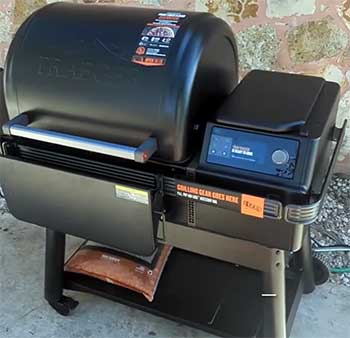
- Cooking capacity stands out immediately as the biggest practical gap. The standard Ironwood gives you 616 square inches total, which handles four chickens or a couple of pork butts comfortably but starts feeling tight once you add a full rack of ribs plus sides. The Ironwood XL jumps to 924 square inches and feels much more generous for big family gatherings. In contrast, even the base Woodridge starts at 860 square inches and the Pro and Elite models hit 970 square inches. That extra real estate on the Woodridge means I can load more food at once without stacking everything too tightly, which matters when I am feeding a crowd or batch-cooking for the week.
- Build quality and insulation create a clear split in how these grills behave when the weather turns cold or windy. The Ironwood uses dual-wall construction throughout the cook chamber and lid. That extra layer holds temperature far more steadily when overnight lows drop into the 30s or when a breeze kicks up. The Woodridge series stays mostly single-wall on the base and Pro models, with the Elite adding some insulation. In mild climates the difference is minor, but I noticed the Ironwood used fewer pellets and held steadier numbers during long winter cooks.
- Controller experience feels different every time I walk up to the grill. Ironwood models come with a full-color touchscreen that looks modern and lets me swipe through settings, recipes, and probe readings with almost no learning curve. The Woodridge sticks with a cleaner fully digital display that is bright and simple but lacks the polished touch interface. Both connect to the Traeger app via WiFIRE, yet the Ironwood screen just feels more premium in daily use.
- Smoke management and airflow systems also diverge. Ironwood grills use Traeger’s Downdraft Exhaust design that pulls smoke across the food more evenly and helps seal the lid better. Woodridge models rely on the FreeFlow firepot, which still produces solid smoke but does not match the same level of control, especially on the base model that lacks Super Smoke mode entirely.
- Price versus features forces a hard decision. You pay a clear premium for the Ironwood’s refined construction and insulation. The Woodridge Pro delivers Super Smoke, a pellet sensor, larger capacity, and most of the smart features for hundreds of dollars less. That value gap is the reason many people who once aimed for an Ironwood now land on a Woodridge instead.
- Mobility and storage options differ more than the spec sheets suggest. Ironwood models roll on four locking wheels and feel planted. Base Woodridge units often use two wheels plus legs, while the Pro adds a bottom shelf and the Elite brings full cabinets. If you move the grill often or want built-in storage, these small design choices add up over time.
Key Features of The Traeger Ironwood
- Dual-wall insulated construction keeps internal temperatures rock-steady even when outdoor conditions change. I ran overnight briskets in cool weather and watched the controller hold within a few degrees without constant adjustments.
- Full-color touchscreen controller sits right on the hopper and makes temperature changes, Super Smoke activation, and probe monitoring effortless. The screen stays readable in bright sunlight and pairs cleanly with the Traeger app.
- Super Smoke mode floods the chamber with extra wood-fired flavor at lower temperatures. I use it religiously for the first few hours of any low-and-slow cook and notice a deeper smoke ring and richer taste compared with standard mode.
- Integrated pellet sensor alerts me through the app when the 22-pound hopper is running low. No more mid-cook surprises after I have already settled in for the evening.
- Downdraft Exhaust system improves smoke circulation and helps the lid seal tighter. Grease and ash collect in the EZ-Clean keg, so cleanup stays manageable even after a long session.
- Adjustable two-tier porcelain-coated grates give flexibility for different food heights. The upper rack slides or adjusts so I can fit taller items or create distinct heat zones.
- P.A.L. Pop-And-Lock accessory rail runs along the side so I can attach tool hooks, shelves, or storage bins exactly where I want them. The system works the same way across Traeger’s higher lines, which means accessories stay useful if I ever upgrade.
- WiFIRE connectivity lets me monitor and adjust the grill from inside the house or even from work. Recipe guidance and temperature graphs live inside the same app, so I rarely need the printed manual after the first couple of cooks.
Also read: Differences Between Traeger Texas Elite 34 And Pro Series 34.
Pros of the Traeger Ironwood
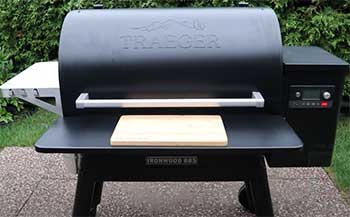
- Temperature consistency in cold or windy conditions feels almost unfair. Dual-wall insulation means fewer pellet dumps and tighter control when the weather tries to fight the cook. I have held 225°F overnight in near-freezing temperatures with almost no drift.
- Build quality inspires confidence every time I open the lid. Thicker materials, better seals, and a heavier overall feel make the Ironwood seem built for years of heavy use rather than occasional weekend duty.
- Touchscreen interface removes friction from daily operation. Changing targets, switching modes, or checking probe temps takes seconds and looks modern sitting on the patio.
- Super Smoke plus Downdraft Exhaust produces reliably rich flavor. The combination delivers cleaner smoke and better distribution than many single-wall competitors, including the base Woodridge.
- Four locking wheels and solid stance make moving the grill around the yard easier and safer. Once parked, it stays put even on uneven ground.
- Premium feel extends to small details such as the way the lid closes and the quiet operation of the fan and auger. These touches matter when you live with the grill every week.
- Strong resale value holds up better because the Ironwood sits in Traeger’s mid-to-upper tier. Owners who later move to a Timberline often recover a larger percentage of their original spend.
- App integration and software updates keep the grill feeling current long after purchase. New features and refinements arrive over the air without needing a new controller.
Cons of the Traeger Ironwood
- Price sits significantly higher than the Woodridge series for comparable or even smaller cooking space. The standard Ironwood costs roughly twice as much as a Woodridge Pro while offering less total grate area.
- Smaller capacity on the non-XL model limits how much food you can cook at once. Large family gatherings or batch cooking sessions force multiple rounds or careful stacking.
- Hopper size of 22 pounds runs out faster during marathon cooks compared with the Woodridge’s 24-pound capacity. Long briskets sometimes require a late-night refill.
- Weight makes the grill harder to assemble and reposition without help. At nearly 200 pounds for the standard model, it is not a one-person job for most people.
- No side burner means you still need a separate searing station or cast-iron pan if you want hard crusts on steaks. The Ironwood excels at smoking and roasting but leaves high-heat searing to other tools.
- Learning curve for the touchscreen is mild, yet some users prefer the simpler button layout of the Woodridge when their hands are greasy or they are cooking in gloves.
- Higher pellet consumption can appear in very cold weather because the dual-wall construction still has to fight external temperatures; the insulation helps but does not eliminate fuel use entirely.
- Limited storage options compared with the Woodridge Elite’s cabinets leave tools and pellets sitting on nearby shelves or tables.
Key Features of The Traeger Woodridge

- Larger cooking surface starts at 860 square inches on the base model and reaches 970 square inches on the Pro and Elite. That extra space lets me cook a full packer brisket plus a couple of racks of ribs without crowding.
- 24-pound pellet hopper holds more fuel than the Ironwood and reduces the number of mid-cook refills on long sessions. The clean-out door makes flavor changes simple when I want to switch from hickory to cherry.
- EZ-Clean Grease and Ash Keg sits underneath and catches almost everything in one container. Built-in staging hooks let me hang the grates while I wipe the chamber, which cuts cleanup time noticeably.
- Fully digital controller with WiFIRE keeps the interface straightforward. I set the temperature, walk away, and manage everything from the phone when needed. Pro and Elite models add dedicated buttons for Super Smoke and Keep Warm.
- Super Smoke mode on the Pro and Elite models boosts smoke output for better flavor development. I still get excellent results on the base model, but the dedicated mode on the higher trims produces a more pronounced wood character.
- P.A.L. rail and ModiFIRE compatibility open the door to the same accessory ecosystem as the Ironwood. Side shelves, hooks, and specialty trays lock in place without tools.
- Pellet sensor on the Pro and Elite models sends low-fuel warnings to the app. Combined with the larger hopper, I rarely have to interrupt a cook to check levels.
- Side burner on the Elite model adds true searing, sautéing, and simmering capability right next to the main chamber. That single feature turns the grill into a more complete outdoor cooking station.
Also Read: Differences Between Traeger Pro 575 And Pro 22.
Pros of the Traeger Woodridge
- Outstanding value delivers most of the features people actually use at a much lower price. The Pro model in particular packs Super Smoke, a pellet sensor, large capacity, and WiFIRE into a package that undercuts the Ironwood by a wide margin.
- Generous cooking space lets me feed more people without compromise. 970 square inches on the Pro and Elite means fewer batches and less stress when guests show up hungry.
- Larger 24-pound hopper stretches cook times further. I regularly finish overnight sessions with pellets still left in the hopper, which reduces the chance of waking up to a cold grill.
- Easy cleanup system with the grease and ash keg plus staging hooks makes post-cook chores faster. I spend less time scrubbing and more time eating.
- Modern digital controller stays simple and reliable. Bright display, clear temperature readout, and solid app connectivity cover everything most cooks need without unnecessary complexity.
- Super Smoke on the Pro and Elite produces excellent flavor that rivals higher-priced models for everyday use. The difference shows up clearly on ribs and pork shoulder.
- Lighter weight on the base and Pro models makes assembly and occasional moving easier. One strong person can often handle positioning without calling for backup.
- Elite model’s side burner adds real versatility. I can sear steaks, simmer sauces, or keep sides warm without firing up a second appliance.
Cons of the Traeger Woodridge
- Single-wall construction on base and Pro models allows more temperature swing in cold or windy weather. I have seen larger fluctuations overnight compared with the Ironwood under the same conditions.
- Build materials feel less substantial. The grill still performs well, yet the overall heft and lid seal do not match the tank-like quality of the Ironwood.
- Base model lacks Super Smoke and a pellet sensor. Those omissions push many buyers toward the Pro, which raises the effective price closer to the mid-range.
- Digital display, while functional, lacks the polish and responsiveness of the Ironwood’s touchscreen. Navigating settings feels a step less refined.
- Fewer included probes on some configurations mean buying extras sooner if you cook multiple large cuts at once.
- Mobility varies by model. Base units with only two wheels can be awkward to roll across grass or gravel compared with the Ironwood’s four-wheel setup.
- Insulation on the Elite helps, but it still does not fully equal the dual-wall performance of the Ironwood in extreme cold. Serious winter cooks may still prefer the higher-tier construction.
- Side burner is limited to the Elite trim, so most Woodridge buyers still need a separate solution for high-heat searing.
Performance and Who Each Grill Suits

When I ran identical cooks on both grills, the Ironwood produced slightly tighter temperature graphs and used a bit less fuel in cooler weather.
The Woodridge Pro matched it closely enough on flavor and convenience that the difference only mattered on the longest, coldest sessions. For most backyard cooks living in moderate climates, the Woodridge Pro offers nearly the same results at a friendlier price and with more cooking space.
If you regularly smoke in freezing temperatures, host large groups, or simply want the most refined build Traeger offers below the Timberline line, the Ironwood or Ironwood XL makes sense.
The extra insulation and heavier construction pay off over years of use. If you want maximum food capacity, solid features, and the best balance of cost and performance, the Woodridge Pro is hard to beat. The Elite becomes the pick only when the side burner and extra storage justify the jump in price.
Both grills share Traeger’s core strengths: reliable WiFIRE control, easy pellet cooking, and a wide accessory ecosystem. The decision ultimately comes down to how much you value cold-weather consistency and premium feel versus raw capacity and lower cost.
Also Read: Differences Between Traeger Timberline 850 And Ironwood 885.
Frequently Asked Questions (FAQ)
No. The current Ironwood and Ironwood XL remain active models in Traeger’s lineup alongside the newer Woodridge series.
For most people the Woodridge Pro delivers the strongest mix of capacity, features, and price. Serious cold-weather cooks or those wanting the most refined build should look at the Ironwood XL.
Yes if you cook often in cold or windy conditions and value consistent temperatures and premium construction. Otherwise the extra cost is harder to justify against the larger and less expensive Woodridge Pro.
Yes. The series, especially the Pro model, offers excellent performance, large cooking space, and modern features at a competitive price that makes it one of Traeger’s strongest value options.
Wrapping Up
After living with both the Traeger Ironwood and Woodridge, I can tell you the right choice depends on how and where you cook. You get rock-solid consistency and a more premium experience with the Ironwood, especially when the weather turns harsh.
You get more cooking space, strong features, and better everyday value with the Woodridge Pro. Measure your typical cook sizes, consider your local climate, and decide how much the extra insulation and touchscreen matter to you.
Either grill will turn out excellent wood-fired food; the difference is whether you want the refined mid-range performer or the high-capacity value leader. Pick the one that matches your real needs and you will be happy for years of backyard sessions ahead.