
I spent weeks comparing the Silk & Snow wooden bed frame and the Thuma Classic bed frame after growing tired of wobbly, squeaky platforms that needed constant tightening.
Both promise solid wood construction, tool-free Japanese-inspired joinery, and a clean minimalist look that skips the box spring entirely.
My purpose here is to break down how they actually perform day to day so you can decide which one fits your space, budget, and tolerance for assembly quirks without the usual marketing haze.
| Feature | Silk & Snow Wooden Bed Frame | Thuma Classic Bed Frame |
| Price range (queen approx.) | $550–$1,950 | $845–$2,505 |
| Materials | Solid acacia or natural rubberwood | Upcycled rubberwood |
| Sizes available | Twin, Full, Queen, King | Twin, Twin XL, Full, Queen, King, California King |
| Platform height | 13 inches | 13 inches |
| Under-bed clearance | 8 inches | 9 inches |
| Weight capacity | Twin 500 lbs; Full/Queen/King 1,100 lbs | Up to 1,000–1,500 lbs |
| Assembly | Tool-free interlocking joinery | Tool-free Japanese joinery |
| Headboard options | Wood, polyester weave, bouclé, cane rattan | Wood, linen weave, Italian wool felt, pillowboard |
| Warranty | 5 years | Lifetime |
| Trial period | 30 nights | 100 nights |
| Finishes | Acacia (warmer tones) or rubberwood (lighter) | Walnut, natural, espresso, grey |
Key Differences Between Silk and Snow and Thuma

- Wood type and density: Silk & Snow leans on solid acacia for many configurations, which feels denser and shows richer grain variation under everyday light. Thuma sticks with upcycled rubberwood that carries a smoother, more uniform grain and a slightly lighter overall weight once assembled. Acacia tends to resist dents better in high-traffic households, while rubberwood ages into a softer patina that some people prefer for its lived-in look.
- Size availability: Thuma covers every common mattress size including Twin XL and California King, which matters if you share a long bed or need extra length. Silk & Snow stops at King, so anyone with a California King mattress has to look elsewhere or size down.
- Under-bed space: Thuma gives you a full nine inches of clearance, enough for most low-profile storage bins or a thin robot vacuum. Silk & Snow sits at eight inches, which still works for flat storage but can feel tight if you keep bulkier items underneath.
- Warranty length: Thuma’s lifetime coverage removes the long-term worry about joint failure or wood splitting. Silk & Snow’s five-year window is solid for most buyers but leaves a gap after that period if something shifts years later.
- Trial flexibility: Thuma’s 100-night window lets you live with the frame through seasonal changes and different mattress pairings. Silk & Snow’s 30-night trial forces a quicker decision, which can feel rushed if shipping delays eat into the clock.
- Headboard attachment style: Silk & Snow’s headboards lock more firmly into the side rails, creating a floating visual that stays put when you lean back. Thuma’s pillowboard option sits independently against the wall, which looks airy but can shift slightly if the bed moves during cleaning.
- Price gap for similar setups: A queen Silk & Snow with a basic wood headboard often lands several hundred dollars below the equivalent Thuma configuration. That difference grows when you add upholstered options, making Silk & Snow the clearer value play for most budgets.
- Assembly friction points: Both use interlocking wood, yet Silk & Snow’s center support legs require more precise alignment and can drop out of place during setup. Thuma’s pieces seat more intuitively, usually finishing in under half an hour for two people.
Key Features of Silk and Snow Wooden Bed Frame
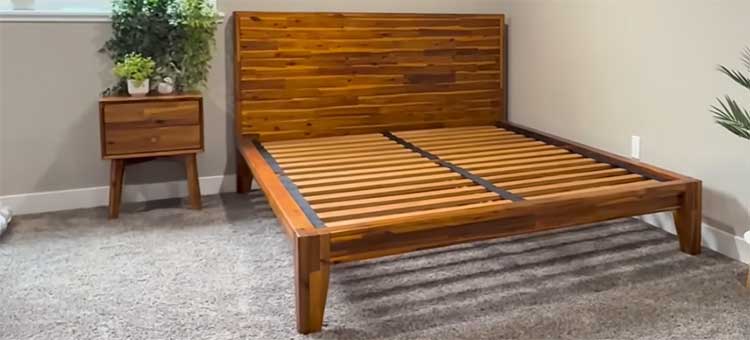
- Solid acacia or rubberwood construction: Every primary rail and leg arrives as solid hardwood with no visible veneer layers or particleboard cores. The acacia version carries a warm, darker tone that deepens over months of natural light exposure. Rubberwood stays lighter and more Scandinavian in feel. Both woods are kiln-dried and finished without heavy chemical coatings, so the surface feels smooth yet textured under your hand.
- Japanese-inspired interlocking joinery: Side rails, footboard, and headboard slots slide together with tight friction fits. Once seated, the joints resist lateral movement even when two adults sit on the edge at the same time. Cork pads under each leg protect hardwood floors and keep the frame from skating across the room when someone climbs in.
- Center support beam with reinforced capacity: A full-length beam runs down the middle and accepts two vertical legs that lock upward into pre-cut sockets. This design claims 1,100 pounds for queen and king sizes, which covers heavier hybrid mattresses plus two adults without noticeable sag in the center.
- Multiple headboard styles: You can choose a matching solid wood panel, a soft polyester-upholstered version in neutral shades, a textured bouclé option, or a handwoven cane rattan panel. The upholstered covers zip off for washing, which proves useful if you eat in bed or have pets that shed.
- Slat system designed for direct mattress use: Wide wooden slats sit close enough to support foam, hybrid, or innerspring mattresses without a box spring. The spacing prevents the mattress from dipping between boards while still allowing air flow underneath.
- Moderate under-bed clearance: Eight inches of open space works for seasonal clothing bins or a slim vacuum. The low profile keeps the overall bed height at thirteen inches, which pairs well with most modern mattresses and keeps the room feeling open.
- Disassembly for moves: The same interlocking joints that assemble without tools reverse cleanly. Pieces nest back into the original packaging dimensions, a practical feature for renters who change apartments every couple of years.
Also Read: Should You Get Zinus Bed Frame?
Pros of Silk and Snow Wooden Bed Frame
- Stronger value for solid hardwood: You get real acacia or rubberwood at a price point that undercuts most comparable Japanese-joinery frames. The savings often free up budget for a better mattress or quality sheets without feeling like you compromised on the foundation.
- Attractive grain and finish options: The acacia version brings a richer, warmer presence that photographs well and anchors a room. Rubberwood stays light and airy. Both finishes resist the plasticky sheen common on cheaper platforms.
- Reliable weight support for most households: The published 1,100-pound rating on larger sizes handles couples plus a heavy hybrid mattress without flex in the middle. After months of use the center beam stays true.
- Quiet once settled: Early nights may produce minor settling sounds, yet after the joints fully seat the frame stays silent even during restless sleep. No metal hardware means no squeaks from loosening bolts.
- Headboard variety that changes the room’s mood: Switching from solid wood to cane rattan or soft bouclé transforms the look without buying a new frame. Removable covers on fabric versions make cleaning straightforward.
- Easy long-term disassembly: Moving apartments becomes less stressful because the pieces separate cleanly and pack flat. The design rewards people who relocate every few years.
- Sustainable sourcing transparency: Silk & Snow lists the origin of its woods and avoids formaldehyde-heavy treatments, which appeals if you care about indoor air quality and forest management.
Cons of Silk and Snow Wooden Bed Frame
- Center support legs can frustrate during setup: The vertical posts that lock into the middle beam sometimes slip out while you adjust the side rails. Several people report spending extra time wrestling those pieces into place, which undercuts the “tool-free ease” promise.
- Limited size selection: Missing Twin XL and California King options forces taller sleepers or specific mattress owners to choose another brand or accept a shorter frame.
- Shorter warranty and trial: Five years of coverage and only thirty nights to decide feel restrictive compared with longer industry offerings. If a joint loosens after year six you are on your own.
- Finish can scuff more easily: The natural wood surface shows marks from moving furniture or pet claws faster than some sealed competitors. Careful placement helps, yet daily life eventually leaves evidence.
- Slightly less under-bed room: That missing inch of clearance rules out bulkier storage solutions that fit under the Thuma without issue.
- Heavier pieces require two people: Solid hardwood rails arrive dense enough that solo assembly becomes awkward, especially when seating the longer side rails.
Key Features of Thuma Classic Bed Frame
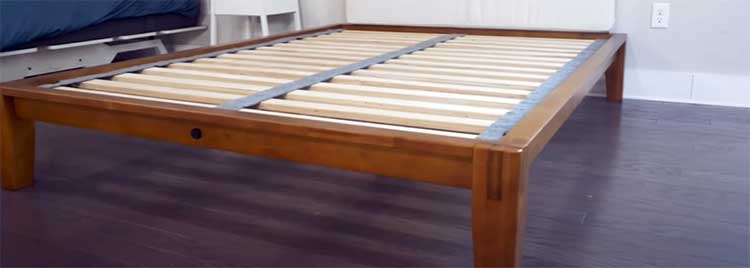
- Upcycled rubberwood throughout: Thuma sources wood left over from latex production, turning what would be waste into solid rails and legs. The material arrives free of MDF or plywood, with a consistent density that supports high weight loads. Finishes include walnut, natural, espresso, and grey, each designed to develop a gentle patina rather than chip or peel.
- True Japanese joinery without tools: Each corner joint uses precisely cut notches that lock under tension. Assembly usually involves lining up the side rails, dropping in the end pieces, and seating the center beam with a couple of hand-tightened screws for the support bar. Most people finish the base in fifteen to thirty minutes.
- Extensive size range: From Twin through California King, the frame scales cleanly. The California King option especially helps taller sleepers who want full-length support without overhang.
- Headboard versatility: Options range from a simple wood panel to a low pillowboard that floats against the wall, plus cushioned versions covered in linen or Italian wool felt. The pillowboard creates an especially clean, modern silhouette because it never attaches rigidly to the frame.
- Nine inches of under-bed clearance: The extra inch over many competitors opens storage possibilities for larger bins or even a low rolling drawer system sold separately by the brand. Cork floor protectors keep the legs from marking surfaces.
- High weight rating and quiet performance: Once the joints settle, the frame stays silent under normal movement. Multiple testers report no creaks after the first week, even with active sleepers or pets jumping on and off.
- Lifetime warranty and generous trial: The lifetime structural guarantee covers the wood joints against failure under normal use. A full hundred nights gives you time to test different mattresses and seasonal bedding without pressure.
Also Read: Should You Get Wayfair Bed Frame?
Pros of Thuma Classic Bed Frame
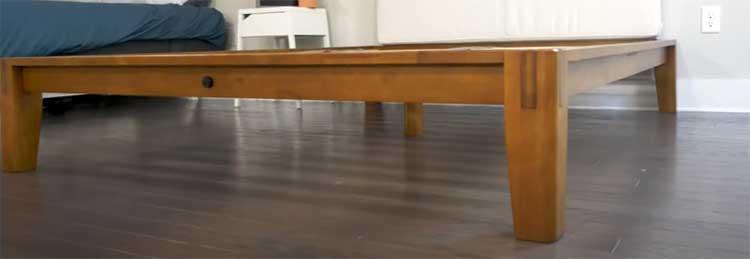
- Nearly effortless assembly: Most people finish the entire frame in under half an hour with clear visual cues and almost no hardware. The joints seat with satisfying precision and rarely need re-adjustment later.
- Lifetime structural warranty: Knowing the company stands behind the wood joints for the life of the product removes a major purchase anxiety. That peace of mind justifies part of the higher price for many buyers.
- Full size coverage including California King: Taller sleepers and specific mattress owners find an exact match without compromise. The scaled joinery keeps the same strength across every size.
- Consistent quiet performance: After the first few nights the frame stays silent under normal use. Jumping, shifting, and edge-sitting produce no creaks or wobbles once the tension settles.
- Generous trial period: One hundred nights lets you test the bed through different seasons, mattress firmness levels, and guest stays before committing fully.
- Clean minimalist aesthetic that ages well: The four wood finishes develop a soft patina rather than looking worn. The floating pillowboard option keeps the look modern without adding bulk.
- Slightly better under-bed clearance: Nine inches opens more storage possibilities and makes vacuuming easier for many households.
Cons of Thuma Classic Bed Frame
- Higher price across every configuration: Even the base platform costs noticeably more than Silk & Snow equivalents. Adding a headboard widens the gap further, which can stretch budgets for people who also need a new mattress.
- Heavier overall weight once built: Moving the assembled frame across a room or into another apartment takes real effort. The solid rubberwood density that provides strength also makes relocation less convenient.
- Occasional early creaking: Some owners notice minor noises during the first week until the joints fully compress. Proper seating usually solves it, yet the initial experience can feel unsettling.
- Pillowboard sits low: When you use the independent pillowboard it can disappear behind stacked pillows, reducing the visual impact you expected from the headboard.
- Shipping boxes arrive separately: Multiple packages can create coordination headaches if you live in a building with limited elevator access or strict delivery windows.
- Premium positioning leaves less room for bargains: Sales appear less frequently than at value-oriented brands, so waiting for a discount may not yield large savings.
Who Should Choose Which Frame?
Choose Silk & Snow if you want solid hardwood presence, richer grain options, and meaningful savings while still getting quiet, sturdy performance.
It suits apartments where the bed moves every few years and households that appreciate a warmer wood tone.
Choose Thuma if you prioritize the longest possible warranty, the absolute easiest setup, and full size coverage including California King. It rewards buyers who plan to keep the same frame for a decade or more and prefer a lighter Scandinavian finish.
Also Read: Should You Get Nectar Bamboo Bed Frame?
Frequently Asked Questions (FAQ)
Yes for most everyday needs. Both deliver solid wood strength and quiet performance. Silk & Snow matches the build quality at a lower price while Thuma edges ahead on warranty length and size range.
Silk & Snow’s wooden bed frame sits closest in design language, joinery method, and overall feel while costing less.
Yes. Solid acacia or rubberwood construction, tight interlocking joints, and published weight ratings place it firmly in the premium category.
Main differences appear in wood choice (acacia options versus consistent rubberwood), price (Silk & Snow lower), warranty (lifetime versus five years), size availability (Thuma broader), and trial length (100 nights versus 30).
Wrapping Up
After living with both frames I keep returning to the same practical conclusion. You gain nearly identical daily performance from either one.
The decision turns on whether you value the extra dollars saved and richer wood options of Silk & Snow or the longer safety net and broader sizing of Thuma.
Pick the one that matches how long you plan to stay in your current space and how much you want to spend today. Either way you end up with a quiet, solid platform that finally stops the midnight creaks and the endless search for missing bolts.