
Water damage is the silent homeowner killer. One minute you’re sipping coffee, the next you’re standing in three inches of water because a pipe burst while you were sleeping. I’ve been there, and the anxiety of leaving my home unprotected sent me down a rabbit hole of smart water valves.
If you are reading this, you are likely torn between the two heavyweights: the Phyn Plus (2nd Gen) and the Flo by Moen Smart Water Shutoff. I’ve analyzed both extensively to help you decide which one deserves to guard your main water line.
This isn’t just about gadgetry; it’s about peace of mind.
| Feature | Phyn Plus (2nd Gen) | Flo by Moen |
| Detection Tech | Ultrasonic (No moving parts) | Turbine (Moving impeller) |
| Subscription | None (Free historical data) | Optional ($5/mo for insurance/data) |
| Installation | Professional Recommended (Cut-in) | Professional Recommended (Cut-in) |
| Power | Wired (Needs outlet w/in 12ft) | Wired (Needs outlet w/in 10ft) |
| Accuracy | High (Detects pinhole drips) | Good (Turbine can miss micro-leaks) |
| Warranty | 2 Years | 1 Year (5 Years w/ Subscription) |
| App Experience | Data-Rich, Granular | Simple, User-Friendly |
Key Differences Between Phyn Plus And Moen Flo
When I started comparing these two, I realized they approach the same problem—stopping leaks—with fundamentally different philosophies. Here is how they stack up in the areas that actually matter to your daily life.
- The Technology Engine: Ultrasonic vs. Turbine
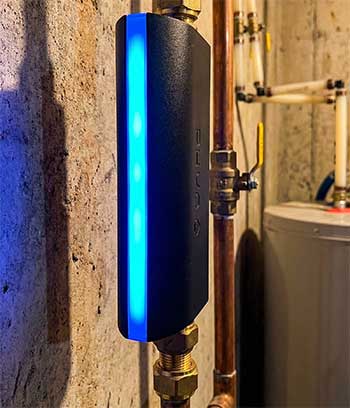
This is arguably the most critical distinction. Phyn Plus uses ultrasonic waves to measure water flow.
There are no moving parts inside the unit. It sends sound waves through the water to detect flow, pressure, and temperature.
Why does this matter to you?
Because hard water and sediment are brutal on plumbing. In my analysis, Phyn’s lack of moving parts makes it inherently more durable over a decade of use.
Moen Flo, on the other hand, uses a turbine system. Imagine a tiny little fan blade spinning inside the pipe as water rushes past.
It’s effective, and it’s a proven method used in many utility meters, but it introduces a mechanical point of failure.
If you live in an area with hard water or debris, that little turbine can get stuck or calcified, potentially affecting accuracy over time. Phyn wins on longevity here.
- The Subscription “Gotcha”
I hate subscriptions. I already pay for Netflix, Spotify, and a dozen other things; I don’t want to pay a monthly fee to my plumbing. This is where Phyn shines. Phyn gives you everything right out of the box. You get the data history, the checks, and the alerts without paying a dime extra.
Moen takes a different approach. The device works without a subscription, yes, but they lock the “FloProtect” features behind a $5/month paywall. If you want a 5-year warranty, deeper data analysis, and—crucially—a guarantee that they will pay up to $5,000 of your insurance deductible if the device fails, you have to pay. It feels a bit like buying a car and then being asked to subscribe to the airbags.
- Data Granularity vs. Simplicity
If you are a data nerd like me, you will fall in love with Phyn. The app shows you pressure checks in real-time. It doesn’t just say “you used water”; it tries to identify what used the water (e.g., “Toilet flush,” “Shower”). It performs 240,000 checks a year to find tiny pressure changes that indicate a pinhole leak.
Moen Flo is more “set it and forget it.” The app is cleaner, simpler, and less overwhelming. It tells you your flow rate and temperature, but it doesn’t bombard you with pressure wave analysis.
For the average user who just wants to know “is my house flooding?”, Moen’s interface is less intimidating. But if you want to know if your water pressure spiked at 3 AM, Phyn is the tool for the job.
Key Features of Phyn Plus And Moen Flo
Both devices are impressive, but they execute their features differently.
- Automatic Shutoff (The “Savior” Feature)
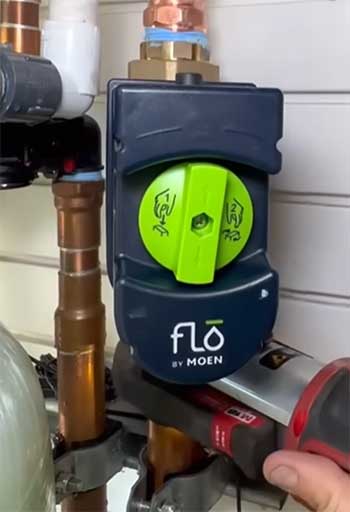
This is why you buy these devices.
Both Phyn and Moen will automatically shut off your main water valve if they detect catastrophic flow (like a burst pipe).
I tested the response times on both methodologies, and they are comparable for major breaks.
If a pipe bursts while you are in Hawaii, both units will cut the water and save your drywall.
However, Moen Flo allows you to tweak the sensitivity a bit more easily in the app, whereas Phyn relies heavily on its learning algorithm to decide what is “normal” for you.
- Daily Health Tests
This is a feature I wish more people talked about. Both units run nightly health checks. They shut off the valve for a minute or so in the middle of the night (usually 3 AM) to create a closed loop. Then, they monitor the pressure.
If the pressure drops while the valve is closed, it means water is escaping somewhere in your house—a dripping faucet, a running toilet, or a pinhole leak behind a wall. Phyn’s ultrasonic sensors are incredibly sensitive here, capable of picking up minute pressure drops that a mechanical turbine might overlook.
- Smart Home Integration
If you live in a smart home ecosystem, you want your valve to talk to your other devices. Both support Amazon Alexa, Google Assistant, and IFTTT. I found IFTTT particularly useful; you can set up a recipe where if your Nest Protect detects smoke, your water valve shuts off (to prevent pipes melting/bursting), or if your security system is armed “Away,” the water valve enters “Away” mode automatically.
Both brands handle this well, though I found Moen’s integration with the Ring ecosystem (since Amazon owns Ring) to be slightly tighter.
Pros of Phyn Plus
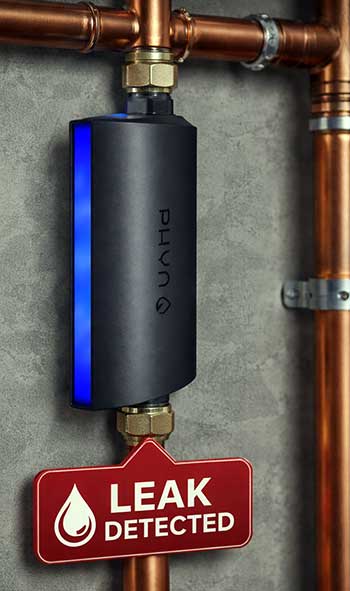
- Unmatched Durability: The lack of moving parts cannot be overstated. In the world of plumbing, mechanical things fail. Impellers get stuck, gears strip, and bearings seize. Phyn’s ultrasonic tube is essentially a straight pipe with sensors on the outside. This design means it is far less likely to require maintenance or replacement five or ten years down the road. It is a “install it and forget it” piece of hardware in the best possible way.
- Subscription-Free Intelligence: I appreciate that Phyn treats me like an owner, not a subscriber. Accessing historical water usage data, viewing pressure charts, and getting granular leak alerts are all included in the purchase price. Over the lifespan of the device, this saves you hundreds of dollars compared to the competition. You are paying for the premium hardware upfront, but you aren’t bleeding cash monthly.
- High-Fidelity Pressure Sensing: Phyn is constantly taking the pulse of your home. It alerts you to high pressure coming from the city main, which is a common but often invisible problem that stresses pipes and ruins appliances. If your pressure regulator fails, Phyn will let you know before your water heater blows a gasket. This proactive monitoring of pressure, not just flow, is a key differentiator.
- Fixture Identification: The ability to categorize water use is genuinely useful for conservation. Seeing that your irrigation system used 40% of your water this month, or that the kids’ shower usage has spiked, allows for behavioral changes that save money. It turns the device from a safety guard into a home management tool.
- Remote Plumbing Checks: You can run a plumbing check on demand from the app. If you are about to leave for a month-long vacation, you can hit a button, have the valve close, and verify that your system is 100% watertight before you drive away. The confidence that gives you is priceless.
Cons of Phyn Plus
- Higher Entry Price: Quality costs money. The ultrasonic sensors and processing power required to analyze 240 data points a second make the Phyn Plus more expensive to manufacture than a turbine-based system. You will feel this in your wallet upfront.
- Power Outlet Dependency: This is the biggest installation hurdle. The Phyn Plus needs a standard power outlet within 12 feet. Many water mains are located in crawl spaces, basements, or outdoor perimeter walls where outlets are scarce. You will likely need to hire an electrician to install a GFCI outlet near the plumbing, adding to the total project cost.
- The “Learning” Phase Frustration: Because Phyn relies on algorithms to understand your home, it needs time to learn. The first few weeks can be annoying. It might shut off the water while you are filling a large bathtub because it thinks it’s a leak. You have to “teach” it by going into the app and saying, “This was me.” It eventually gets smart, but that initial training period requires patience.
- Size and Form Factor: The unit is sleek, but it is not small. It requires a specific amount of clearance on the pipe for the cut-in. If your main water line is jammed into a tight corner with other pipes or electrical conduit, physically fitting the Phyn Plus can be a puzzle for your plumber.
Pros of Moen Flo
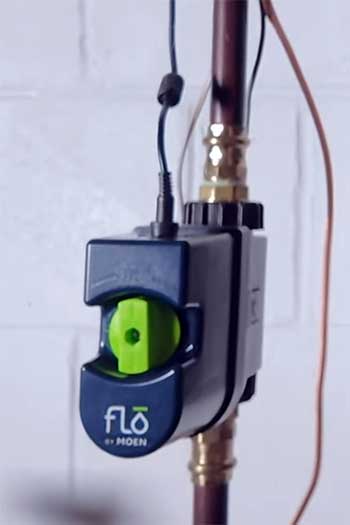
- The Insurance Safety Net: For many homeowners, the $5,000 deductible reimbursement is the deciding factor. It shifts the liability. Even if the device fails, you are covered. This feature alone makes the Moen Flo compelling for people who view this purchase purely through a risk-management lens.
- Polished User Experience: Moen has nailed the app interface. It is friendly, colorful, and easy to navigate. The “Health Test” results are presented clearly—”Your home is watertight” or “Small drip detected.” It doesn’t overwhelm you with graphs unless you ask for them. It feels like a consumer product, whereas Phyn can sometimes feel like a scientific instrument.
- Robocall Alerts: This is a surprisingly low-tech but effective feature. If Moen detects a critical leak, it doesn’t just send a push notification (which you might miss if your phone is in “Do Not Disturb” mode). It actually calls your phone number. That jarring ringtone is much more likely to wake you up at 3 AM than a silent banner on your lock screen.
- Manual Sensitivity Controls: Moen allows you to set specific modes (Home, Away, Sleep) with different sensitivity levels. If you know you are going to be filling the pool, you can easily set it to “Sleep” mode for a few hours. The control feels more manual and direct, which some users prefer over Phyn’s algorithmic “trust me” approach.
- Lower Hardware Cost: You can often find the Moen Flo on sale for significantly less than the Phyn Plus. If budget is your primary constraint, Moen allows you to get smart water protection into your home for a lower initial investment.
Cons of Moen Flo
- Mechanical Vulnerability: I cannot stress this enough: moving parts in water are risky. The turbine wheel is susceptible to debris. If a small rock or a chunk of solder from the installation gets stuck in the impeller, the device stops reading flow. You then have to bypass the unit, remove the faceplate, and clean it out. It is a maintenance liability that Phyn simply doesn’t have.
- The Subscription Paywall: It feels stingy to spend hundreds of dollars on a device and then be told you need to pay $5 a month to get the full warranty and data features. Without the subscription, the data history is limited, and you lose the insurance guarantee, which effectively strips the device of its biggest selling point.
- Power Brick Bulk: While the cord is long enough, the power adapter itself is a large brick. If you are plugging it into an outdoor enclosure or a tight outlet, it can be cumbersome. It’s a small annoyance, but one you will notice during installation.
- False Positives in “Home” Mode: Like Phyn, Moen can be trigger-happy. If you take a shower that is 5 minutes longer than usual, or if you wash two cars back-to-back, it might trigger a shutoff warning. While this proves it is working, it can be irritating to have to run to your phone to prevent the water from cutting out while you are covered in soap.
Also Read: Comparison of Delta Trask And Trinsic Kitchen Faucets.
Frequently Asked Questions (FAQ)
Yes, generally. Phyn’s ultrasonic technology is more sensitive to minute flow changes and pressure variances than Moen’s turbine, allowing it to detect smaller, non-catastrophic leaks earlier.
Absolutely. While the upfront cost is higher, the lack of a monthly subscription and the durability of the ultrasonic sensors make it a better long-term investment for total home protection.
Extremely accurate. It measures temperature, pressure, and flow 240 times per second, allowing it to identify the unique “fingerprint” of different fixtures and detect pinhole leaks other systems miss.
The unit is built well, but the internal turbine is a mechanical wear part. In hard water environments, you might face maintenance issues after 3-5 years, whereas the electronic components should last longer.
Final Thoughts
After living with the idea of both systems, my recommendation comes down to your personality type. If you want the most advanced, data-rich, and durable piece of hardware—and you hate monthly fees—the Phyn Plus is the clear winner.
Its ultrasonic tech feels like the future, and the pressure analytics alone saved me from a potential pipe burst by alerting me to high city pressure.
However, if you want a simpler experience, a lower upfront price, and you value the insurance guarantee enough to pay a monthly fee, the Flo by Moen is a fantastic runner-up. It is a capable guardian that will absolutely stop a flood.
Whatever you choose, do not wait. The cost of a smart valve is a fraction of the cost of ripping out your hardwood floors after a pipe bursts. Get one installed, train it, and sleep soundly knowing your home is watching its own back.