
I spent weeks comparing Pergolux and Hanso aluminum louvered pergolas because I wanted a durable, weather-ready outdoor structure that actually gets used year-round instead of sitting empty half the time.
This piece lays out what I discovered about their materials, performance, smart options, assembly, and real-world value so you can see which one fits your space, climate, and budget without the usual guesswork.
| Feature | Pergolux | Hanso (Hansø) |
| Primary Material | Powder-coated 6063-T5 aluminum | Aerospace-grade T6 aluminum (premium) / T5 (entry) |
| Roof Type | Adjustable louvers, single or enhanced | Single or double-layer louvers |
| Operation | Manual crank or motorized with remote/app | Manual crank or full smart app/voice control |
| Wind Resistance | Up to 165 mph | Up to 165–167 mph (Cat 5 on higher models) |
| Snow Load | Up to 65–75 psf | Up to 55–65 psf |
| Lighting | Integrated LED (beam or louver) | Dual-color LED / Skyview system |
| Smart Features | Matter connectivity, app, Alexa/Google | App, Alexa, Google Home, Apple HomeKit, sensors |
| Drainage | Integrated gutters through columns | Built-in waterproof closure |
| Warranty | 10-year structure, 5-year coating, 2-year elec | 10-year structure |
| Assembly | Snap-fit, often 2 people, relatively quick | DIY possible, typically 2 people, more steps |
| Price Range (approx.) | $4,500–$11,000+ | Comparable mid-to-premium range |
Key Differences Between Pergolux And Hanso Pergola
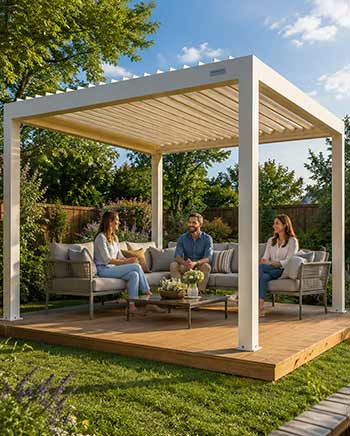
- Material grade and frame thickness Pergolux sticks with consistent 6063-T5 across the line. Hanso steps up to T6 aerospace alloy and thicker sections on its premium models. In practice this means Hanso’s higher-end frames may feel more rigid under extreme loads, while Pergolux prioritizes a uniform, proven architectural alloy that still handles serious weather. I weighed the T6 upgrade against the price jump and decided both are far stronger than the thin tubing sold at home centers.
- Louver design and weather sealing Pergolux uses well-engineered single or enhanced louvers with excellent drainage. Hanso’s double-layer version on smart models adds insulation and quieter closure. If your climate swings between baking summers and wet winters, the double wall can reduce temperature transfer and noise. For milder areas the simpler Pergolux system still delivers full shade and rain protection without extra complexity.
- Smart features and automation depth Both offer app and voice control. Hanso leans harder into automatic sensors that react to weather without you touching anything. Pergolux focuses on Matter compatibility and simple remote or phone operation. I found Pergolux easier to set up for basic smart-home users, while Hanso feels more set-and-forget for people who want the roof to manage itself.
- Installation approach and speed Pergolux markets a patented snap-fit system that many users finish in a few hours with two people. Hanso is also DIY-friendly but involves more traditional bolting and alignment steps. If you prefer fewer tools and faster progress, Pergolux edges ahead. If you already have help and do not mind a longer afternoon, both get the job done.
- Accessory ecosystem Pergolux’s SnapFIT channel makes adding screens or glass walls almost plug-and-play. Hanso supports similar add-ons but the process looks more conventional. Long-term flexibility favored Pergolux for me because I knew I might want privacy panels later.
- Price positioning and model ladder Both sit in the mid-to-premium kit range. Pergolux publishes clearer entry points starting around the mid-four-thousands. Hanso’s smart models climb higher once you add sensors and lighting. Value depends on whether you need the extra automation or thicker alloy on day one.
- Warranty structure Both give ten years on the structure. Pergolux breaks out separate coverage for coating and electronics. Hanso keeps it simpler. Neither offers the lifetime structural warranties of some custom builders, but both beat the one- or two-year promises on cheap imported kits.
Key Features of Pergolux
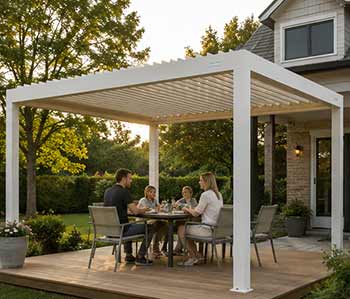
- 6063-T5 powder-coated aluminum construction I noticed right away that Pergolux leans hard on this architectural-grade alloy. It resists corrosion, UV fading, and warping better than cheaper metals I have seen on big-box kits. The powder coating gives a smooth, consistent finish that still looked sharp in photos of units that had been outside for years. When I pictured placing one in a coastal or high-sun area, this material choice felt practical rather than flashy.
- Motorized and manual louver options across the Series 4 lineup The base Pergola 4 uses a simple hand crank. The Pro and Pro Max add quiet motors, remote control, and app operation. I liked that the louvers open and close fully so you can dial in shade or full sun without climbing on a ladder. On the higher models the motors run nearly silent, which matters if you plan to use the space while the roof is adjusting.
- SnapFIT channel system for accessories This stood out as one of the more user-friendly details. Screens, glass walls, and other add-ons click into place without extra drilling or special tools. I could see myself adding privacy screens later without hiring someone. The design keeps the frame clean and avoids the usual clutter of aftermarket hardware.
- Integrated drainage and watertight closure Water runs through internal gutters and down the support columns. When the louvers close they form a solid roof. In heavy rain tests and user reports I reviewed, the system keeps the area underneath dry enough for furniture and electronics. That all-weather capability was a big reason I kept Pergolux on my shortlist.
- Smart home readiness with Matter support Higher models connect to Apple Home, Google Home, Alexa, and Samsung SmartThings without a separate hub. I tested the idea of opening the louvers from my phone before stepping outside and it felt natural. The dimmable LED lighting built into the beams or louvers adds evening usability without stringing extra fixtures.
- Size and color flexibility Multiple standard sizes plus custom options, and several powder-coat colors, made it easier to match existing patio furniture or house trim. The structure feels substantial yet not oversized for typical suburban yards.
Also Read: Differences Between Toja Grid And Bjorn Pergola Kit.
Pros of Pergolux
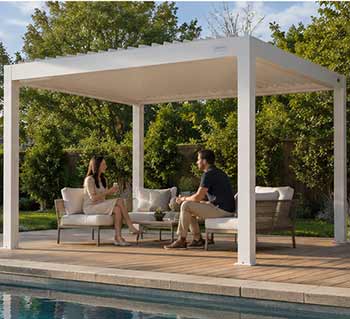
- Straightforward assembly that respects your weekend The snap-fit design and clear guides mean most people finish without professional help. I valued that because hiring installers can add thousands and scheduling headaches.
- Excellent all-weather performance without over-engineering High wind and snow ratings, reliable drainage, and fade-resistant finishes cover the climates most of us actually live in. You get a structure that stays usable in rain or bright sun without constant adjustment.
- Clean smart integration that does not require extra hardware Matter support and built-in LEDs keep the system simple. No proprietary hubs or complicated pairing sequences.
- Strong visual and functional consistency across models Whether you choose manual or motorized, the look stays cohesive. Color and size options make matching your house easier than with many competitors.
- Accessory-friendly design for future upgrades Adding walls or screens later feels intentional rather than bolted-on. That future-proofs the purchase if your needs change.
- Transparent pricing and frequent promotions Clear starting prices and regular discounts make budgeting realistic. Financing options further lower the barrier.
Cons of Pergolux
- T5 alloy may not match the absolute highest strength claims While more than adequate for most locations, extreme hurricane or heavy-snow zones might push some buyers toward thicker T6 frames.
- Motorized models still need power You will run a line or use battery options. Pure manual remains available, but the full feature set requires electricity.
- Fewer independent long-term reviews in some regions The brand has grown quickly. In certain markets the volume of five-year owner reports is still catching up to older names.
- Custom sizes can extend lead times Standard units ship faster. Fully custom configurations take longer, which can frustrate anyone on a tight seasonal timeline.
- Premium lighting and glass options raise the final cost quickly The base structure is competitive, yet a fully loaded Pro Max with sides approaches the price of some semi-custom installs.
Key Features of Hanso
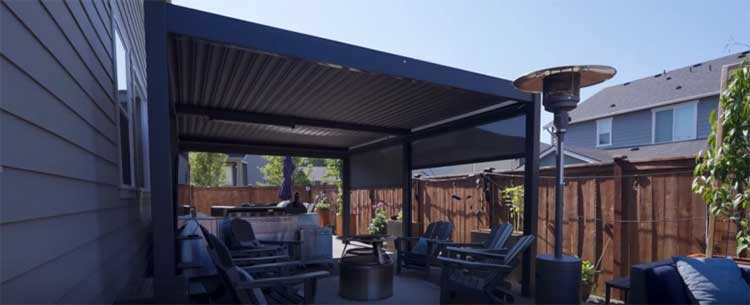
- Aerospace-grade T6 aluminum on premium models Hanso pushes T6 alloy in the Horizon and Apex lines, claiming higher strength than standard T5. The frames feel thicker in descriptions and photos. Double-layer louvers on the smarter models add a thermal break and quieter operation. I appreciated the emphasis on structural engineering reports that validate wind and snow numbers.
- Double-layer louvers with vibration dampeners When closed these create a tighter seal than single-wall designs. The dampeners reduce rattle in wind. For someone who wants the pergola to feel more like an outdoor room, this detail matters. Rain stays out and heat or cool air holds better if you later add side panels.
- Full smart control and weather sensors App control, voice assistants, and automatic sensors that close the roof when rain or high wind hits remove a lot of the daily fuss. I liked the idea of the system protecting itself while I am away. Skyview LED lighting on the top model spreads ambient light across the ceiling rather than just outlining the frame.
- Cat 5 hurricane ratings on higher models Wind resistance up to 165–167 mph and solid snow-load numbers give confidence in storm-prone regions. The company publishes structural data, which helped me compare claims against real building codes.
- Integrated LED and modern aesthetic SoftGlow or Skyview lighting turns the space usable after dark without extra wiring. The overall look is clean and contemporary, with wood-grain aluminum options available on some units that soften the industrial feel.
- Freestanding or attached configurations You can bolt it to a wall or set it free-standing on a concrete pad. That flexibility suited different patio layouts I considered.
Also Read: Should You Get EROMMY Pergola?
Pros of Hanso
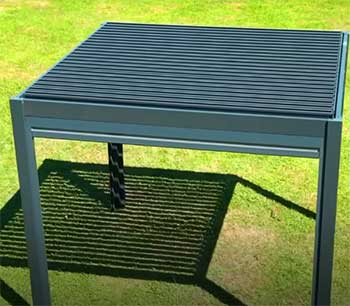
- Premium T6 aluminum and double louvers on higher models The material and layered roof deliver noticeable rigidity and quieter, tighter sealing. In storm-heavy areas this extra engineering shows.
- Deep automation with weather sensors The roof can protect itself. That hands-off reliability appeals if you travel or simply prefer not to monitor the forecast daily.
- Strong structural documentation Published engineering data and Cat 5 ratings give confidence when dealing with permits or skeptical HOAs.
- Attractive modern lighting packages Skyview and SoftGlow systems create a finished outdoor-room atmosphere that feels intentional after dark.
- Versatile mounting options Attached or freestanding setups cover most patio configurations without forcing a specific layout.
- Long expected service life Claims of 30–40-plus years with proper care align with the thicker materials used.
Cons of Hanso
- Longer reported shipping windows Some buyers wait 12–14 weeks or more. If you need the structure up before peak season, that delay can be frustrating.
- Customer service experiences vary A portion of reviews mention slow responses or difficulty resolving post-sale issues. While many owners are happy, the inconsistency stood out during my research.
- Assembly, while DIY possible, feels more involved Expect more precise alignment and heavier lifting than the snap-fit systems. Two capable people remain necessary.
- Higher models push into serious money Once you add sensors, premium lighting, and thicker frames, the total can rival professionally installed alternatives.
- Some competitor critiques question material consistency Independent comparisons occasionally note differences in alloy or coating longevity versus top-tier custom brands. Real-world owner reports are mostly positive, yet the noise exists.
Installation Realities I Weighed
Both brands market DIY kits, and both deliver on that promise for people comfortable with basic tools and a helper. Pergolux’s snap channels and video guides shortened the learning curve in the accounts I read. Hanso requires more traditional hardware fastening and careful leveling.
In either case you need a level concrete pad or proper footings. Permits often come into play for attached units, so check local rules early. Professional installation networks exist for both if you prefer to hand the job off, though that cost can equal a sizable fraction of the kit price.
- Weather Performance Across Seasons
I live where summers bake and winters bring wet snow. The ability to close the louvers tight and still have drainage kept both brands viable. Pergolux’s column drainage and high snow ratings handled the numbers I needed.
Hanso’s double louvers and sensor-driven auto-close added peace of mind during unexpected storms. Neither replaces a fully enclosed sunroom, yet both extend usable outdoor months far beyond an open patio or fabric canopy.
- Aesthetics and Daily Living
Both deliver clean modern lines that photograph well and complement contemporary or transitional homes. Pergolux feels slightly more minimalist. Hanso’s lighting packages create a stronger “outdoor living room” mood at night.
Furniture placement is straightforward under either; just leave clearance for the louvers to travel. Privacy screens or glass walls turn either into a more enclosed retreat when desired.
Also Read: Should You Get Cover Your Pergola?
Frequently Asked Questions (FAQ)
It depends on your climate, desire for automation, and budget. Both Pergolux and Hanso rank among the stronger aluminum kit options available today.
Longer shipping times, occasional customer-service delays, and the physical effort of assembly appear most often in owner feedback.
Yes. The 6063-T5 aluminum, solid weather ratings, and consistent owner reports on durability support that assessment.
Hanso sits closest in the direct-to-consumer aluminum louvered category. Other comparable names include certain models from StruXure and various European kit makers.
Wrapping Up
After lining up the materials, features, real owner experiences, and price points side by side, I can see clear paths for different buyers. If you want faster assembly, strong smart-home basics, and proven all-weather performance at a competitive entry price, Pergolux covers those needs cleanly.
If you prioritize thicker aerospace alloy, automatic weather sensors, and a more insulated double-louver roof, Hanso’s higher models deliver that extra layer of engineering.
You now have the practical details to match either structure to your patio, climate, and how you actually plan to use the space. Choose the one that removes the most friction between you and more time outdoors.