
If you care about toast—I mean really care about the crunch, the internal fluffiness, and the speed at which it hits your plate—then you need to stop looking at the shiny, chrome-plated convection ovens that promise to air-fry a whole turkey.
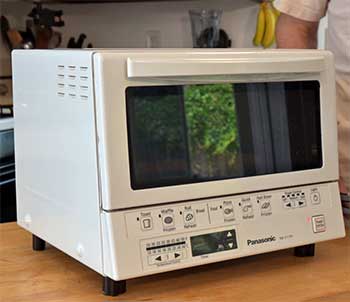
You need to look at this weird, retro box that resembles a hospital waiting room TV from 1998. It is the Panasonic FlashXpress.
For years, I ignored this toaster oven because, frankly, it isn’t pretty. But after burning through three “modern” toasters that took ten minutes to dry out a bagel, I finally caved. The cult following is right.
This machine uses double infrared heating to cook food instantly—no preheating, no waiting. It is the best dedicated toaster on the market, period. If you want one, you should grab it from Amazon or Best Buy, where stock is usually consistent, though it occasionally pops up at Walmart.
My Morning Ritual With Panasonic FlashXpress Toaster Oven
I remember the day I unboxed the FlashXpress.
My first thought was, “This is it?” It felt shockingly light, almost flimsy compared to the tank-like build of my previous Breville.
The buttons were those flat, membrane-style press pads that reminded me of a microwave from a college dorm.
It didn’t scream “gourmet kitchen.” It screamed “break room.”
But then I put in a slice of sourdough.
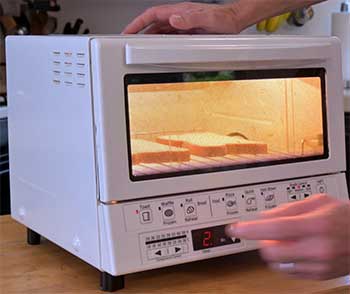
I pressed the “Toast” button and hit start. Immediately—and I mean instantly—the interior was flooded with a blinding white light. It was startlingly bright, like an alien abduction was happening on my countertop.
This is the near-infrared element kicking in. There was no low hum of a fan trying to circulate tepid air. There was just intense, direct radiative heat.
I stood there, squinting at the glass, watching the bread. In about two minutes, the light clicked off, and the machine gave a polite beep. I pulled the rack out (which is attached to the door, a lovely convenience), and the toast was… perfect.
It wasn’t dried out like a rusk; it was deeply browned on the surface but still steaming and soft in the middle. It was the best toast I had made at home in a decade.
Since that morning, my cooking habits have shifted. Because there is zero preheat time, I use it for everything. Leftover pizza? The “Reheat” button blasts it for a few minutes, reviving the crust without making it like cardboard.
Frozen hash browns?
The infrared penetrates the frost immediately. It feels less like an appliance and more like a magic trick. You put cold food in, press a button, and hot food comes out faster than you can set the table. It’s not just a toaster; it’s a time machine that gives me back five minutes every morning.
Also Read: Comparison of Bosch 800 And Benchmark Series Oven.
Why Panasonic FlashXpress Toaster Oven Changes Everything?
The Secret of Double Infrared
Most toaster ovens use simple calrod heating elements—those metal tubes that slowly get red hot and heat the air inside the box. It’s inefficient. The Panasonic FlashXpress uses Double Infrared Technology.
It has two types of elements:
- Near-Infrared (Top): This is the bright light you see. It produces intense, short-wave radiation that cooks the surface of the food instantly. This is why your toast gets that perfect brown crust without drying out.
- Far-Infrared (Bottom): These elements emit longer wavelengths that penetrate the food, cooking the inside thoroughly.
This combination is why you never need to preheat.
The moment you press start, the heat is transferring directly to the food, not the air.
It’s similar to how the sun warms your skin on a cold day.
The Footprint Factor
I have a small kitchen. Counter space is beachfront property; it’s expensive and limited. The FlashXpress is incredibly compact. It takes up roughly a 12×13 inch square. It slides under low cabinets easily. Despite the small footprint, the interior is surprisingly usable for single-serving meals. I can fit four slices of standard sandwich bread (squeezed tight) or a 9-inch frozen pizza.
The “Set and Forget” Presets that Actually Work
Usually, preset buttons on appliances are garbage. I never used the “Popcorn” button on a microwave in my life. However, the presets on the FlashXpress (Toast, Waffle, Roll, Pizza, Hash Brown, Reheat) are shockingly accurate. The engineers at Panasonic clearly spent time calibrating the infrared bursts for these specific foods. The “Reheat” function is particularly impressive; it cycles the heat in a way that warms a cinnamon roll through without melting the icing into a puddle.
The Drawbacks of Panasonic FlashXpress Toaster Oven
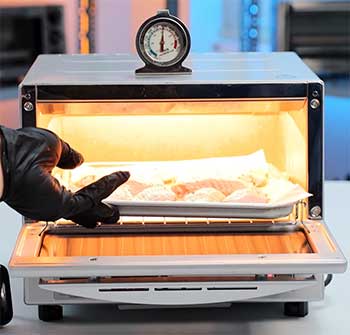
- The Size Limitation: This is a toaster oven, not a roaster oven. You are not going to fit a whole chicken in here. You cannot fit a standard 12-inch frozen pizza. If you are trying to bake a lasagna for a family of four, this is the wrong tool. The interior is compact, which makes it efficient, but it limits you to personal-sized portions. If you use a Quarter Sheet Pan, it won’t fit. You need roughly 9×9 inch pans.
- The 25-Minute Timer: This is the most baffling design choice. The digital timer tops out at 25 minutes. If you want to bake a potato for 45 minutes, you have to come back when the timer beeps and add more time. It forces you to be present. This machine is designed for speed—”Flash” is in the name—so they assumed you wouldn’t be doing long roasts. But for those of us who want to roast garlic or bake a small casserole, the 25-minute cap is a nuisance.
- The “Cheap” Aesthetic and Feel: There is no getting around it: this thing is ugly. It looks dated. The buttons are plastic membranes that will likely crack after 10 years of heavy use. The door feels light. The wire rack is permanently attached to the door mechanism (more on that in maintenance), which makes it feel a bit janky when you open it. If you have a kitchen full of high-end Viking or Wolf appliances, the Panasonic FlashXpress will look like a toy sitting next to them.
- The Unstoppable Light: The near-infrared element is bright. Really bright. It cycles on and off to maintain temperature. In a dark kitchen at night, it flashes like a strobe light. There is no way to turn this off; it is the heating source. If you have light-sensitive eyes or a studio apartment where the kitchen faces the bed, this might genuinely be annoying.
Also Read: Comparison of Cuisinart And Lodge Dutch Oven.
Tips For Panasonic FlashXpress Toaster Oven
Because the FlashXpress uses quartz heating elements (glass tubes) rather than metal coils, you have to treat it differently than a standard $20 toaster. Here is how I keep mine running like new.
Handling the Crumb Tray
The crumb tray slides out from the front, underneath the door. This is a huge plus—you don’t have to move the oven to clean it.
- Tip: Line the crumb tray with a small sheet of aluminum foil. This makes cleanup instant. However, ensure the foil is wrapped tightly around the tray and does not stick up, or it could touch the bottom heating element.
Cleaning the Interior Walls
The interior is small, so splatters from cheese or grease happen.
- The Method: Wait until the oven is completely cool. Use a damp microfiber cloth with a drop of mild dish soap. Wipe the walls gently.
- The Warning: Do not use oven cleaner sprays (like Easy-Off) or abrasive scouring pads (steel wool). The interior metal is coated and can scratch or corrode if you use harsh chemicals.
The Quartz Heating Elements (Critical!)
This is the most important maintenance tip. The heating elements are glass tubes.
- Do Not Touch Them: The oils from your fingers can create “hot spots” on the glass when it heats up, potentially causing the element to shatter.
- If You Get Food on Them: If cheese melts onto the element, do not scrape it off while it’s hot. Let it cool completely. Then, very gently, use a soft, damp cloth to wipe it away. If it’s carbonized and stuck, you might have to live with it. Do not chip at it with a knife.
The Wire Rack Struggle
The wire rack is connected to the door by a hook system so that it pulls out when you open the door. This is great for grabbing toast, but annoying for cleaning.
- Removal: You can detach the rack, but it requires unhooking it from the door frame. It’s fiddly. I recommend just wiping the rack down while it’s in place for minor crumbs. Only detach it for a deep sink wash every few months.
How Panasonic FlashXpress Toaster Oven Compares To The Competition?
When I was shopping, I narrowed it down to three main contenders. Here is why the Panasonic won, and where the others might be better for you.
Breville Mini Smart Oven
The Breville is the “luxury” pick. It is beautiful. It has brushed stainless steel, weighted dials, and a heavy glass door. It feels like a premium product.
- Where Breville Wins: It looks better. The controls are more intuitive (dials vs buttons). It feels sturdier. It has a “Bagel” mode that actually works well by only heating the center elements.
- Where Panasonic Wins: Speed. The Breville uses standard quartz elements (not double IR in the same way). It takes longer to heat up. To get the same level of browning on a piece of toast, the Breville takes about 4-5 minutes including preheat time. The Panasonic takes 2.5 minutes. The Breville dries the bread out slightly more because it takes longer.
Cuisinart Air Fryer Toaster Oven
You see these everywhere. They are massive, tall units that promise to be an air fryer, toaster, and convection oven in one.
- Where Cuisinart Wins: Capacity. You can roast a chicken in these. You can air fry a pound of wings. If you need a secondary oven for big meals, this is the better choice.
- Where Panasonic Wins: Counter space and Toast. The Cuisinart is a beast; it dominates the counter. As a toaster, it is mediocre. The air frying fan is loud. The Panasonic is silent (except for the timer tick) and compact. If you just want toast and reheating, the Cuisinart is overkill and under-performance.
Balmuda The Toaster
The Balmuda is the “Instagram” toaster. It uses a tiny boiler to add steam to the toasting cycle.
- Where Balmuda Wins: Aesthetics and “Artisanal” Toast. It is gorgeous. The steam technology does restore stale bread incredibly well.
- Where Panasonic Wins: Versatility and Price. The Balmuda is significantly more expensive (often $300+). It is also smaller inside and really only good for bread products. You can’t really melt a tuna melt or roast veggies in it as effectively as the Panasonic. The Panasonic gives you 95% of the toast quality of the Balmuda for half the price, plus the ability to cook frozen pizza.
Also Read: Comparison of Le Creuset Deep Dutch Oven And Regular Oven.
Frequently Asked Questions (FAQ)
While ratings vary by year, the Panasonic FlashXpress is consistently rated #1 by food tech reviewers (like Serious Eats and The New York Times) specifically for toasting bread and speed, whereas the Breville Smart Oven Pro is often rated #1 for overall versatility as a secondary oven.
The Panasonic FlashXpress (NB-G110P) is manufactured in China.
You should avoid parchment paper because the heating elements in a toaster oven are very close to the food. The paper can easily curl up, touch the glowing element, and ignite. Aluminum foil is safer, provided it doesn’t touch the elements.
The main disadvantages are limited capacity (cannot fit large roasts or standard 12″ pizzas), uneven heating in cheaper models (hot spots), and the exterior can get very hot to the touch compared to a built-in oven.
Wrapping Up
The Panasonic FlashXpress is a paradox. It looks like a piece of junk from a garage sale, yet it outperforms appliances that cost three times as much. It is the only kitchen gadget I own that I genuinely miss when I travel.
It respects my time. It doesn’t ask me to wait for it to “preheat.” It just does the job, instantly and perfectly.
If you have a small kitchen, or if you simply value the quality of your morning toast above aesthetic vanity, you need to buy this machine. It isn’t a showpiece for your friends to admire; it’s a workhorse for you to use. Go to Amazon or your local appliance store and get the ugly box.
You won’t regret it.