
Standing in the herbicide aisle at the hardware store is a special kind of suburban purgatory. You’re staring at a wall of orange bottles, all made by Ortho, all promising to nuke the dandelions without killing your grass.
You see the classic Weed B-Gon, a name you’ve probably heard since you were a kid. But right next to it is the slicker, newer-looking WeedClear.
Are they the same thing in a different font? Did one replace the other? And most importantly, which one is actually going to kill that creeping charlie that’s slowly suffocating your fescue?
I’m going to break down the battle of Ortho Weed B-Gon vs. WeedClear. I’ve sprayed gallons of both, burned patches of lawn by not reading labels, and finally figured out which bottle belongs in your shed.
This isn’t just about chemicals; it’s about winning back your Saturday mornings.
Quick Comparison: The Tale of Two Orange Bottles
| Feature | Ortho Weed B-Gon (Chickweed, Clover & Oxalis) | Ortho WeedClear (Lawn Weed Killer) |
| Primary Active Ingredient | Triclopyr (8%) | 2,4-D, Quinclorac, Dicamba |
| Best For | Tough, creeping vines (Clover, Oxalis, Creeping Charlie/Ground Ivy) | General lawn maintenance (Dandelions, Crabgrass, Foxtail) |
| Kill Speed | Slower (Systemic, takes 1-2 weeks for full kill) | Faster (Visible wilting often in 24 hours) |
| Grassy Weed Control | No (Strictly broadleaf) | Yes (Thanks to Quinclorac) |
| Rainproof Time | 6 Hours | 1 Hour |
| Lawn Safety | Safe for most cool-season grasses; Risky for Bermuda/St. Augustine | Safe for most lawns (Check label for Floratam St. Augustine) |
| The “Vibe” | The Specialist (Sniper rifle) | The Generalist (Shotgun) |
The Identity Crisis: What Is Actually Happening?
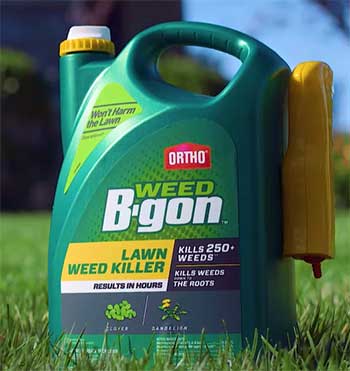
Before we start spraying, we have to clear up the confusion Ortho has created.
For decades, “Weed B-Gon” was the go-to name. If you had a weed, you bought Weed B-Gon.
However, in recent years, Ortho has shifted its strategy.
They introduced WeedClear as their modern, “does-it-all” flagship product for Northern and Southern lawns.
Here is the reality check: The “standard” Weed B-Gon that just killed dandelions is largely being phased out or rebranded into the WeedClear line in many big-box stores.
However, the Weed B-Gon name lives on predominantly in its specialty formula: Weed B-Gon Chickweed, Clover & Oxalis Killer.
So, when we compare them today, we are really comparing The Generalist (WeedClear) against The Specialist (Weed B-Gon CCO).
Ortho WeedClear: The New Heavyweight Champion
If you just want to grab one bottle to handle 90% of the scary green things in your yard, this is it. WeedClear is a “three-way herbicide,” meaning it combines three different chemicals to attack weeds from multiple angles.
Key Features
- Triple Threat Formula: It uses 2,4-D (the classic broadleaf killer), Dicamba (for tough broadleaves), and Quinclorac.
- The Quinclorac Factor: This is the game-changer. Quinclorac allows WeedClear to kill crabgrass and foxtail. Standard broadleaf killers cannot touch crabgrass because it is biologically a grass, not a broadleaf.
- Northern vs. Southern Formulas: Ortho sells specific “North” and “South” versions. The Southern version removes chemicals that damage sensitive warm-season grasses like St. Augustine.
Pros

- Lightning fast visual results When you spray weeds, you want to know you hit them. WeedClear is incredibly satisfying because the 2,4-D and Dicamba mix usually causes weeds to wilt, curl, or discolor within 24 hours. This psychological win prevents you from over-spraying because you can clearly see the product is working immediately.
- Kills crabgrass (The Quinclorac advantage) This is the biggest selling point. Most standard broadleaf killers are useless against crabgrass because crabgrass is, biologically, a grass. WeedClear includes Quinclorac, which targets crabgrass specifically without hurting your fescue or bluegrass. This saves you the hassle and expense of buying a separate “grassy weed” killer.
- One-hour rainproof window Weather is unpredictable. With older herbicides, you needed a guaranteed 6 to 12 hours of dry weather. WeedClear dries and absorbs in just one hour. You can spray during a lunch break and not worry if a pop-up shower hits in the late afternoon.
- Covers the widest spectrum It lists over 200 weeds on the label. If you look at your lawn and see a salad bar of ten different types of weeds—some grassy, some broadleaf, some prickly—this bottle has the highest probability of killing the majority of them in one pass.
Cons
- High risk of “burning” the lawn in heat Because this formula is a chemical cocktail of three different potent herbicides, it is “hot.” If you apply this when the thermometer hits 85°F or higher, you risk temporarily yellowing or even killing patches of your good grass. It puts significant stress on the lawn.
- Not effective on “woody” vines While it claims to kill clover, I have found it often just burns the leaves off creeping weeds like Wild Violet or Ground Ivy (Creeping Charlie) without killing the root. These weeds often bounce back two weeks later because the WeedClear formula doesn’t translocate to the roots as effectively as Triclopyr does.
- Strict reseeding restrictions Because of the Quinclorac, you have to be careful about planting new grass seed. You generally have to wait roughly 3 to 4 weeks after spraying before you can seed, or the chemical residue in the soil will prevent your new grass from germinating.
Also Read: Comparison of Scotts Triple Action And Weed And Feed.
Ortho Weed B-Gon (Chickweed, Clover & Oxalis): The Special Ops
While WeedClear is great for dandelions, it often fails against the “creepers.” You know the ones—the purple flowers (Wild Violet), the tiny yellow flowers (Oxalis), and the clover that seems to laugh at standard weed killers.
This is where the purple-label Weed B-Gon (Chickweed, Clover & Oxalis) shines. It doesn’t use the standard 3-way mix. It uses Triclopyr.
Key Features
- Triclopyr Power: This chemical mimics plant hormones (auxins) causing the weed to grow uncontrollably until its cell walls explode. It is devastating to woody, viney plants.
- Systemic Kill: It doesn’t just burn the leaves; it travels deep into the root system. This is why it works on creeping charlie, which regenerates from roots if you don’t kill it all.
Pros
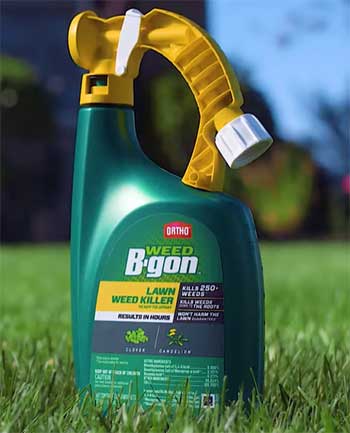
- The only cure for Creeping Charlie and Violet If you have Ground Ivy (Creeping Charlie), WeedClear will just annoy it. Weed B-Gon CCO contains Triclopyr, which is absorbed systemically. It travels down the stem and into the rhizomes (root runners) underground. It is practically the only consumer product that genuinely kills these invasive vines for good.
- Gentler on cool-season grasses Triclopyr is generally very safe for Fescue, Kentucky Bluegrass, and Perennial Ryegrass. You can often be a little heavier-handed with this on a cool-season lawn without seeing the “burn” or yellowing that you get with the three-way mix in WeedClear.
- Excellent root kill Because it works slower, the plant transports the poison deeper into its system before it shuts down. This ensures that when the weed dies, it stays dead, rather than regrowing from the root crown a month later.
Cons
- Painfully slow action This is where people make mistakes. You will spray a clover patch, and three days later, it will look perfectly healthy. You might think, “This stuff is garbage,” and spray again. Don’t. It takes 1 to 2 weeks for the weed to actually die. You have to have faith in the chemistry and patience.
- Useless against Crabgrass Triclopyr is a broadleaf-specific herbicide. It will look at a patch of crabgrass and do absolutely nothing. If you use this, you need a separate plan of attack for grassy weeds.
- Longer rainproof requirement This formula takes longer to absorb through the waxy coating of clover leaves. It requires 6 hours of rain-free weather. If you spray it and it rains two hours later, you have likely washed 80% of the product off, and it won’t work.
- Soil persistence Triclopyr hangs around in the soil and in the decaying plant matter. You generally cannot seed new grass for 3 to 4 weeks after application. Furthermore, you should not use the grass clippings from a treated lawn for compost or mulch, as the chemical can persist in the clippings and kill your garden flowers or vegetables.
Also Read: Is MENARDS Weed & Feed Worth It?
The Science of the Kill: How They Work?
To be a master of your lawn, you need to understand the warfare you are waging.
- WeedClear works on a “burn down” and hormonal disruption method. The 2,4-D causes rapid, unsustainable growth in the stems (curling), while the Quinclorac disrupts cell wall formation in crabgrass. It’s a multi-front assault.
- Weed B-Gon (Triclopyr) is a stealth assassin. It is absorbed through the leaves and transported to the meristems (growth points) of the plant. It tricks the plant into thinking it needs to grow its roots and stems explosively. The plant essentially uses up all its energy reserves trying to grow, starves itself, and collapses. This is why it is so effective on weeds with complex root systems like Clover; it poisons the food supply chain of the plant.
Application Strategy: How to Actually Use Them
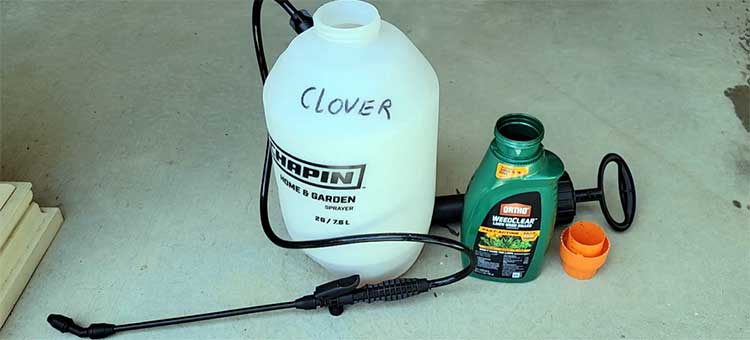
Buying the right bottle is step one. Step two is not acting like a maniac with the sprayer.
The “Mow-Wait-Spray” Rule
Never spray immediately after mowing.
- Wait 2 days after mowing before spraying. You want the weeds to have plenty of leaf surface area to absorb the poison. If you chop their heads off, there is nowhere for the chemical to land.
- Wait 2 days after spraying before mowing again. You need to give the plant time to drink the poison down into its roots.
The Temperature Trap
Both products have a “Goldilocks” zone.
- Too Cold (<45°F): The weeds are dormant. They aren’t “drinking,” so the chemical just sits there and does nothing.
- Too Hot (>85-90°F): Your grass is stressed by heat. Adding chemical stress on top of heat stress will turn your lawn into straw.
- The Sweet Spot: A calm morning between 60°F and 75°F is the holy grail of weed killing.
The Surfactant Secret
Here is a pro tip that isn’t always on the label explicitly but makes a huge difference. Weed leaves, especially clover and wild violet, have a waxy coating. Water beads up and rolls off them.
If you are buying the Concentrate version (where you mix it with water in a tank sprayer), add a teaspoon of baby shampoo or “non-ionic surfactant” to the mix. This breaks the surface tension of the water, allowing the poison to stick to the waxy leaf rather than rolling off.
Which One Should You Buy?
This is the decision point. Do not buy both unless you have a specific plan.
Buy Ortho WeedClear If:
- Your lawn has a mix of dandelions, random broadleaf weeds, and some crabgrass.
- You want fast results and are impatient.
- Rain is in the forecast later in the day.
- You are dealing with a standard, neglected lawn that needs a general cleanup.
Buy Ortho Weed B-Gon (Chickweed/Clover) If:
- You have already sprayed dandelions and they died, but the purple flowers and clover are still there.
- You are fighting Creeping Charlie (Ground Ivy). Note: WeedClear will not touch Creeping Charlie effectively.
- You have an invasion of Wild Violet.
- You don’t care about crabgrass (or you treat that separately with a pre-emergent).
Also Read: Is BioAdvanced 5 In 1 Weed And Feed Worth It?
Frequently Asked Questions (FAQ)
WeedClear is a 3-in-1 formula (2,4-D, Dicamba, Quinclorac) designed to kill broadleaf weeds and grassy weeds like crabgrass with a fast 1-hour rainproof time.10 Weed B-Gon is generally a brand name for broadleaf-specific killers; the popular “Chickweed, Clover & Oxalis” version uses Triclopyr, which is slower but better for hard-to-kill vines and does not kill crabgrass.11
For residential lawns, products containing Triclopyr (like Weed B-Gon Chickweed/Clover) are generally considered the strongest against tough broadleaf weeds. For total vegetation control (killing everything including grass), Glyphosate (Roundup) or Imazapyr (GroundClear) are the strongest, but they will kill your lawn too.
Not entirely, but it is being rebranded. The classic “Weed B-Gon Lawn Weed Killer” is largely being replaced on shelves by “WeedClear” to compete with multi-spectrum herbicides. However, the specialty formula “Weed B-Gon Chickweed, Clover & Oxalis” is still widely produced and sold because of its unique Triclopyr formula.
Use it in the spring or fall when weeds are small and actively growing. Apply when daytime temperatures are consistently between 60°F and 80°F. Do not apply in the middle of summer when temperatures exceed 85°F as it can damage your lawn.
Wrapping Up
Lawn care is less about dominance and more about chemistry. If you are standing in that aisle holding both bottles, look at your feet. If you see crabgrass and dandelions, grab the WeedClear. It’s the modern multi-tool that handles the bulk of suburban lawn problems fast.
But if you are looking at a carpet of clover, violet, or that nightmare vine Creeping Charlie, put the WeedClear back. It won’t work. You need the Weed B-Gon Chickweed, Clover & Oxalis. It requires patience—it’s a slow kill—but it is the only thing that gets the job done on the tough stuff.
Stop guessing, read the label, and get your weekend back.
Would you like me to create a step-by-step calendar for when to apply these specific products based on your local climate zone?