
I spent weeks rotating between the IKEA Lonset and Luroy under the same mattress in my main bedroom so I could feel the real differences night after night.
This article lays out exactly what I learned so you can decide which bed base actually matches how you sleep, what you spend, and how much hassle you want on assembly day.
| Feature | Luroy | Lonset |
| Approximate Queen Price | $50–$70 | $100–$120 |
| Number of Slats | 17 | 28–30 |
| Slat Style | Slightly curved, fixed firmness | Strongly curved with 5 comfort zones |
| Support Feel | Firm and mostly static | Adaptive and responsive |
| Assembly | Unroll and drop in | Build frame then insert each slat into rubber holders |
| Best For | Guest rooms, kids, tight budgets | Primary beds, side sleepers, foam/hybrid mattresses |
| Weight Capacity (est.) | 300–350 lbs | 400–600 lbs |
| Noise Level | Can creak if slats shift | Quieter thanks to rubber fittings |
| Ventilation | Excellent | Excellent |
| Warranty | 25 years | 25 years |
Key Differences Between IKEA Lonset And Luroy
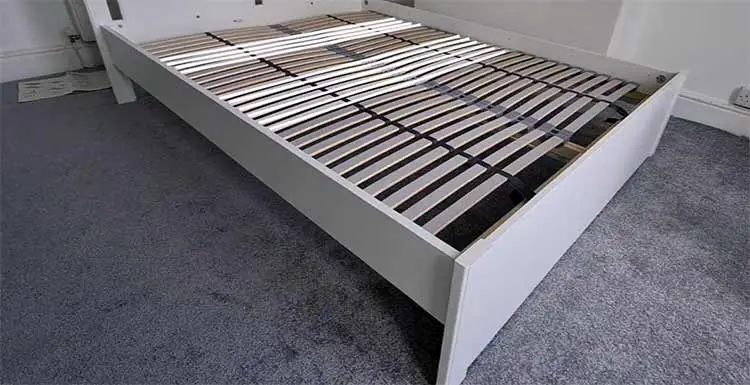
- Number Of Slats And Spacing The Luroy gives you seventeen slats. That leaves wider gaps. When I first put it under a medium-firm memory foam mattress I could sometimes feel a faint ridge if I lay still long enough. The Lonset jumps to twenty-eight or thirty slats depending on size. Those extra pieces sit closer together so the mattress never has a chance to sink between them. The tighter grid also spreads weight more evenly. After a month on each base I noticed the Lonset kept the mattress flatter for longer.
- Flexibility And Body Response Luroy slats are slightly curved but they stay pretty rigid. They absorb some weight, yet they do not really change shape under different body zones. Lonset slats are steam-bent more aggressively and grouped into five comfort zones. The lighter-colored sections under the shoulders and hips flex more. I am a combination sleeper who starts on my side. On the Lonset my shoulders dropped in a little and my lower back stayed supported. On the Luroy everything felt more like a solid plank.
- Frame And Hardware Luroy is basically a roll of wood strips held by fabric ribbons. Lonset comes with an actual plywood frame and individual rubber holders that grip each slat. Those rubber pieces cut down on the wooden-on-wooden squeaks that bothered me with the Luroy after a few weeks. The Lonset also sits a bit higher inside the bed frame, which can matter if your mattress is already thick.
- Long-Term Durability Under Daily Use Both carry the same twenty-five-year warranty, yet the real-world feel diverges. The Luroy’s wider gaps and simpler ribbon system can let individual slats creep sideways if the bed frame is not perfectly square. I had to push them back into place twice. The Lonset’s rubber cups and denser layout kept everything locked. For a guest room the Luroy still looks fine after years. For a bed you sleep in every single night the Lonset holds its shape better.
- Price Versus Nightly Value You pay roughly twice as much for the Lonset. If the bed is temporary or used once a month, that extra money feels wasteful. If it is the bed you climb into after a long day, the difference in pressure relief and quiet nights starts to feel like a bargain within the first couple of weeks.
Also Read: Are Maxtrix Bunk Beds Worth Your Money?
Key features of the Luroy Bed Base
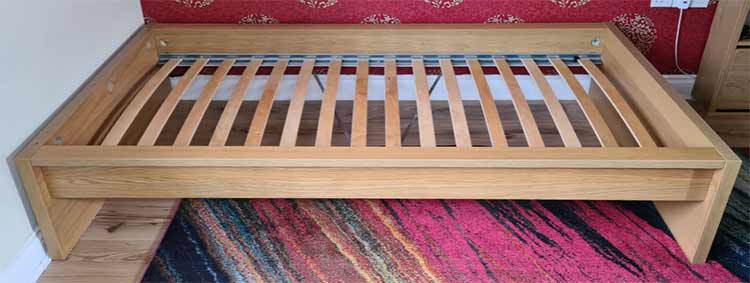
- Seventeen layer-glued birch veneer slats These are the backbone of the product. They arrive already linked by strong polypropylene ribbons so you simply unroll the whole thing into the bed frame. The slight curve gives a little spring without turning the surface soft. I liked how light the package was when I carried it up two flights of stairs.
- Open ribbon construction Air flows freely under the mattress. In summer the foam top never felt clammy the way it sometimes does on a solid platform. The design also keeps the total weight low, which helps if you rearrange rooms often.
- Firm, uniform support across the entire surface There are no special zones. What you get is consistent firmness from head to foot. Back sleepers who prefer a flat feel usually settle in quickly. The surface does not contour much, so the mattress itself does most of the work.
- Extremely simple installation You can have it ready in under five minutes once the bed frame is built. No tools, no individual pieces to wrestle. That speed matters when you are setting up a spare room the night before guests arrive.
- Compatibility with most IKEA frames and many non-IKEA ones As long as the internal dimensions match, the Luroy drops right in. I tested it in both a Malm and a Hemnes without issues.
Pros of the Luroy
- Lowest price tag in the IKEA slat lineup If your budget is already stretched by the mattress and frame, the Luroy keeps the total cost down without forcing you to put the mattress on the floor.
- Lightning-fast assembly Unroll, center, done. I timed myself at three minutes once the bed frame was ready. That simplicity is perfect when you are tired or working alone.
- Excellent airflow that keeps the mattress fresher The open design lets air move underneath. In a humid climate that extra breathability helps prevent musty smells and may extend the life of a foam mattress.
- Lightweight and easy to store or move You can roll it back up and stick it in a closet if the bed needs to disappear for a while. Students and people who relocate often appreciate this.
- Firm feel that some sleepers actually prefer Not everyone wants contouring. If you like a solid, predictable surface under a traditional innerspring mattress, the Luroy delivers exactly that.
- Still covered by the long IKEA warranty Even though it is the budget option, you get the same twenty-five-year coverage on manufacturing defects.
Also Read: Is Sleep Number C2 Bed Worth It?
Cons of the Luroy
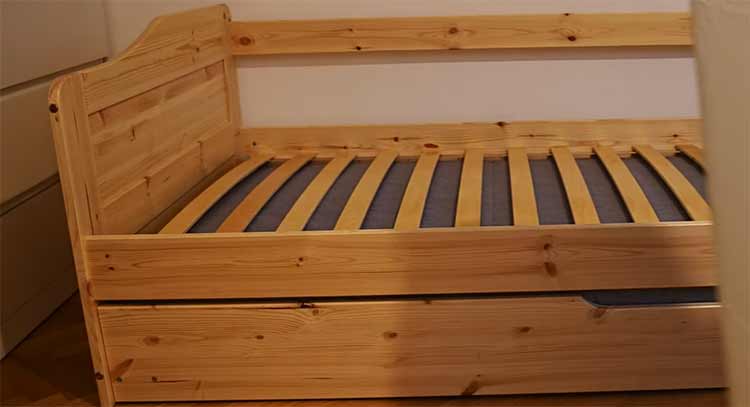
- Wider gaps can telegraph through thinner mattresses I noticed faint lines under a nine-inch memory foam topper after a few weeks. Thicker mattresses hide it better, but the risk is there.
- Limited flexibility for side sleepers Shoulders and hips stay higher. If you carry tension in those spots, the rigid feel can leave you adjusting position more often during the night.
- Potential for slats to shift over time In one of my frames the outer slats slowly walked toward the middle. A quick shove fixed it, yet it was an annoyance I did not have with the Lonset.
- Lower weight capacity for heavier couples or larger mattresses Estimates put it around three hundred to three hundred fifty pounds total. Beyond that the outer slats can start to bow.
- Can produce occasional creaks Wood against the bed-frame rails sometimes squeaked when I changed positions. Felt pads helped, but the Lonset never needed them.
Key features of the Lonset Bed Base
- Twenty-eight to thirty curved layer-glued birch veneer slats The higher count is the first thing you notice when you open the box. Each slat is thinner and more flexible than the Luroy’s. Together they create a surface that moves with you instead of fighting you.
- Five dedicated comfort zones The zones under the shoulders and hips are intentionally softer. When I rolled onto my side the Lonset let those pressure points sink a fraction of an inch while the lumbar area stayed firm. That small change reduced the morning shoulder stiffness I sometimes got on the Luroy.
- Rubber thermoplastic elastomer holders Every slat ends in a rubber cup that clips into the plywood side rails. The rubber dampens noise and keeps the wood from sliding. After three months of nightly use I never heard a single creak, something I could not say about the Luroy.
- Built-in plywood frame The frame gives the whole base more structure. It also raises the mattress slightly higher inside most bed frames, which can improve the look if your sheets are short.
- Closer slat spacing for modern mattresses Foam, latex, and hybrid mattresses often require gaps under three inches to keep the warranty valid. The Lonset meets that requirement more comfortably than the Luroy. I used both under the same hybrid mattress and the Lonset prevented the slight hammocking I felt with the wider Luroy gaps.
Also Read: Is BedStory Mattress Worth It?
Pros of the Lonset
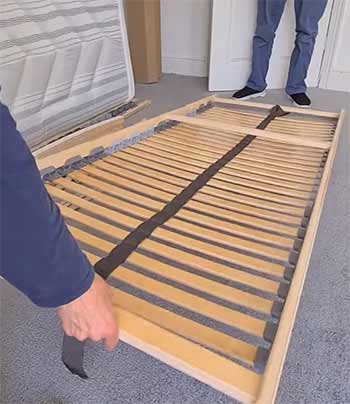
- Noticeably better pressure relief thanks to the comfort zones My side-sleeping nights improved within the first week. The shoulders sank just enough to keep the spine closer to neutral.
- Higher density of slats protects the mattress longer Even weight distribution means fewer soft spots developing in the foam. After months of use the Lonset side of the mattress still looked more even than the Luroy side had after the same period.
- Quieter night after night Rubber holders eliminate the wood-on-wood chatter. Couples who are light sleepers will notice the difference immediately.
- Stronger support for heavier bodies and denser mattresses The extra slats and solid frame handle four hundred to six hundred pounds more confidently. I never worried about the middle sagging when two adults sat on the edge.
- Better match for foam and hybrid mattresses Closer spacing meets the warranty requirements of most modern mattress brands and keeps the surface feeling consistent.
- Feels more substantial and engineered Once assembled, the whole base has a quality presence that the simple Luroy roll never quite matches.
Cons of the Lonset
- Higher upfront cost You are paying roughly double. For a rarely used guest bed that extra money is hard to justify.
- More involved assembly You build the side rails, then push each slat into its rubber cup one by one. It took me about thirty-five minutes the first time and felt repetitive. Some people find the process frustrating.
- Heavier and bulkier to transport The plywood frame adds weight. Carrying the box up stairs is more work than the compact Luroy roll.
- Overkill for temporary or lightweight setups If the bed is for a child who will outgrow it in two years, the advanced features go unused.
- Fixed comfort zones cannot be adjusted Unlike some higher-end bases, you cannot slide the zones around. What you get is what you get.
Comfort And Sleep Quality Over Several Weeks
I slept on each base for fourteen nights in a row under the identical hybrid mattress and the same sheets. On the Luroy I woke up a few times to adjust my shoulder. The surface never felt soft or collapsing, yet it also never cradled pressure points.
On the Lonset those mid-night adjustments dropped. The comfort zones let my hips and shoulders settle while the middle stayed supportive. Back sleeping felt similar on both, but side sleeping clearly favored the Lonset. Stomach sleeping stayed firm on the Luroy, which some people prefer.
Couples will also notice less partner movement transfer on the Lonset because the rubber fittings absorb more motion.
- Durability And Long-Term Considerations
Both products carry the same long warranty, so official coverage is identical. Real-world wear tells a slightly different story. The Luroy’s simpler construction means fewer parts that can fail, yet the wider gaps and ribbon system leave more room for individual slats to loosen.
The Lonset has more components, but the rubber holders and denser layout keep everything locked in place. After three months the Lonset still looked and felt the same as day one. The Luroy needed two minor adjustments.
For a primary bed that sees daily use, the Lonset’s extra engineering shows its value over time. For a guest bed that sees occasional use, the Luroy holds up perfectly well.
Who Should Choose Which Base?
If you are furnishing a child’s room, a dorm, or a rarely used guest space and every dollar counts, the Luroy is the practical choice. It does the essential job of lifting the mattress and allowing airflow without complication.
If the bed is the one you sleep in most nights, if you are a side sleeper, if you own a foam or hybrid mattress, or if you simply want quieter and more adaptive support, the Lonset is the better investment.
The price difference is noticeable on the receipt, yet the nightly difference is also noticeable once you live with both.
Also Read: Is eShine Adjustable Bed Worth Your Money?
Frequently Asked Questions (FAQ)
Yes for a primary bed you use every night. The comfort zones and denser support improve sleep quality enough to justify the higher price for most people.
The Luroy is far easier. You simply unroll it. The Lonset requires building a frame and inserting each slat individually.
The Lonset is the better overall choice for daily use and modern mattresses. The Luroy remains the smart pick when budget and simplicity come first.
Most users who upgraded from Luroy to Lonset say the comfort and reduced noise are worth the extra cost and assembly time. Luroy owners who installed the rubber stoppers correctly report few problems for lighter or occasional use.
Wrapping Up
After living with both bases I can say the decision comes down to how you plan to use the bed. The Luroy gets the job done quickly and cheaply.
The Lonset turns the same bed frame into a more responsive and quieter place to sleep. You now have the real-world differences in front of you so you can match the base to your actual nights instead of guessing from the product page.