
If you’re tired of spending a fortune just to keep your lawn from looking like a jungle, you should buy a Hyper Tough weed eater. It is the ultimate budget-friendly solution for homeowners who want a clean yard without the professional price tag.
Stick with me, and I’ll show you why this tool is a hidden gem for your garage.
My Time In The Trenches With Hyper Tough
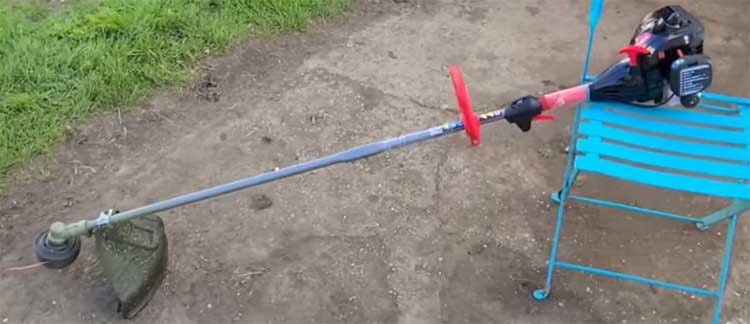
When I first picked up a Hyper Tough trimmer at the local big-box store, I’ll be honest: my expectations were through the floor.
I’ve used the high-end orange and white brands that cost as much as a used car, so I figured a budget-oriented tool would probably vibrate my hands numb before I finished the driveway.
But I was at a point where I just needed something that worked for my suburban quarter-acre. I didn’t need a commercial-grade beast; I needed a tool that wouldn’t fight me every Sunday morning.
The first thing I noticed when I got it home was the weight. It’s light. Usually, light means “flimsy,” but in this case, it felt balanced. I started with the edges along my fence line, where the grass tends to get thick and unruly.
To my surprise, the motor didn’t bog down. It zipped through the overgrowth with a distinct, high-pitched hum that told me it was actually doing the work. I spent about forty-five minutes tackling the perimeter of my house, the mailbox, and the stubborn weeds growing between the pavers on my patio.
What really stood out during that first session was the ergonomics. I’m not a small guy, but I often find that trimmers are designed for people who are either five feet tall or seven feet tall. This one felt natural. I didn’t have to hunch over, which saved my lower back from the usual post-mow ache.
By the time I finished, the yard looked crisp. The line feed—a notorious pain point for cheap trimmers—actually behaved itself. I didn’t have to stop every five minutes to manually pull out more string or scream at a jammed spool. It was just a smooth, uninterrupted flow of work. That experience changed my perspective.
You don’t always need a massive engine to get a clean edge; sometimes, you just need a tool that understands its job and does it without a fuss.
Also Read: Comparison of Echo PAS 280 And 2620 Trimmers.
Why Hyper Tough Weed Eater Earns Its Keep?
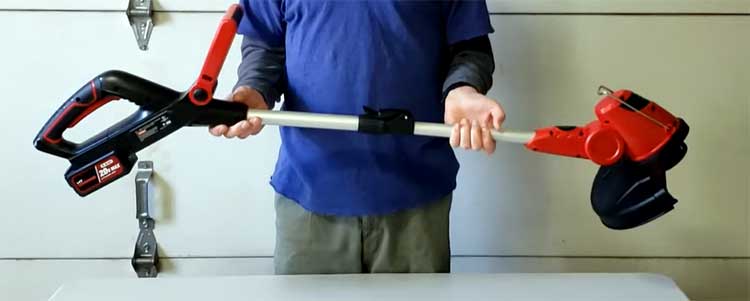
The pros of the Hyper Tough system really center on its accessibility and surprising resilience for the price point. If you are a beginner or someone who just hates the weight of gas-powered equipment, this is your holy grail. The power-to-weight ratio is impressively high.
You get enough torque to handle standard Kentucky Bluegrass or even some of the tougher Bermuda grass without feeling like you’re lugging around a boat anchor.
This maneuverability allows you to get into tight corners around flower beds and under low-hanging shrubs where a heavier unit would be clunky and destructive.
- Unmatched Value for Your Wallet
You simply cannot find a better deal when it comes to raw utility per dollar. While the big names are charging you for their massive marketing budgets and professional sponsorships, Hyper Tough focuses on the basics.
You can essentially buy three of these for the price of one “premium” brand trimmer, making it a low-risk investment for any homeowner. If it lasts you three or four seasons—which it easily can with care—you’ve already come out way ahead financially compared to buying a professional rig.
- Featherlight Ergonomics
The weight of this tool is a game-changer for long Sunday afternoons. Heavy gas trimmers lead to shoulder fatigue and back strain, but the Hyper Tough models are designed to be swung with ease. This isn’t just about comfort; it’s about precision.
When the tool is light, you have better control over the cutting head, meaning you won’t accidentally scalp your prize-winning marigolds or nick the paint on your fence.
- Instant Assembly and Use
Most of us hate spending two hours reading a manual just to put a handle on a stick. This trimmer comes out of the box nearly ready to rock. You’re looking at a few minutes of setup before you’re out in the yard.
For the battery-operated versions, the charging cycle is remarkably consistent. You aren’t sitting around all day waiting for a green light. Furthermore, the 20V and 40V ecosystems are surprisingly capable; the 40V model, in particular, has enough “oomph” to tackle thicker stalks that usually require a gas engine.
- Surprising Torque and Power
Don’t let the “budget” label fool you into thinking it’s weak. The electric motors in these units provide instant torque. Unlike gas engines that need to “spool up” to hitting their power band, these trimmers reach full cutting speed the moment you squeeze the trigger.
This is particularly useful when you’re moving between light grass and thicker patches of clover or crabgrass.
- Versatile Line Compatibility
The head design allows you to easily upgrade to a professional-grade .080-inch or even .095-inch line depending on the model. This transforms the tool from a basic grass-trimmer into a legitimate weed-slayer.
Being able to swap in a higher-quality twisted or serrated line means you can customize the tool’s performance based on how much you’ve let your yard go over the last month.
The Downsides of Hyper Tough Weed Eater
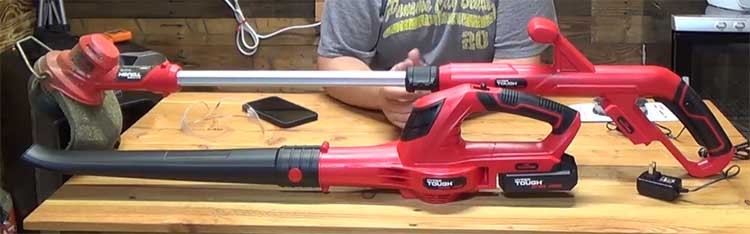
- Build Quality Concerns: While I love the lightweight feel, the trade-off is that there is a lot of plastic in the construction. If you’re the type of person who tosses your tools into the back of a truck or drops them on the concrete garage floor, you might see some cracks over time. It isn’t built to survive a tumble off a cliff or heavy commercial abuse. The trigger mechanism can also feel a bit stiff after prolonged use, which might tire out your index finger if you have a massive property to cover in one go.
- String Limitations and Feed Issues: The stock line that comes with the unit is usually “okay” at best. It’s a thinner gauge, which means it snaps pretty easily if you hit a thick wooden fence post or a rogue rock. I found myself replacing the line with a slightly higher-quality twisted brand almost immediately. Also, while the motor is punchy, the bump-feed head can occasionally get finicky if grass debris gets lodged inside. If you try to use this like a heavy-duty brush cutter for woody saplings, you’re going to smell burning plastic or overheat the battery quickly.
- Gas Model Finickiness: On the gas-powered front, the 2-cycle engines are notorious for being picky about their fuel-to-oil ratio. If you aren’t precise with your mixing, you’ll deal with a lot of smoke and difficult cold starts. The pull-cord assembly is also a common weak point; if you yank it too aggressively when the engine is flooded, the internal spring can slip or break, requiring a frustrating teardown to fix.
Also Read: Comparison of ECHO 266 And 2620 Weed Trimmers.
Keeping Your Hyper Tough Weed Eater in Top Shape
- Protecting the Motor and Battery
Maintenance is the difference between a tool lasting one season and lasting five. If you have the electric version, never leave your batteries on the charger for weeks at a time once they hit 100%. This degrades the cells.
I make it a habit to pull the battery and store it in a cool, dry place inside the house rather than the sweltering garage. If you’re using the gas model, always use a fuel stabilizer. Modern ethanol gas is the enemy of small engines; it gums up the carburetor faster than you can say “lawn care.”
I always run the engine dry at the end of the season so no fuel sits in the lines over winter, preventing that “varnish” buildup that kills carburetors.
- Cleaning and Spool Care
After every use, take thirty seconds to wipe down the guard. Grass buildup holds moisture, and moisture leads to corrosion on any metal bits or just a nasty smell in your shed. More importantly, check the spool. I like to spray a tiny bit of silicone lubricant inside the spool housing.
This prevents the line from “welding” to itself due to the heat generated during spinning. It’s a pro tip that keeps the auto-feed or bump-feed working flawlessly every time you hit a tough patch of weeds.
- Advanced Tune-Ups
For the gas models, you’ll need to be a bit more hands-on. Once a year, you should pop out the spark plug and check for carbon buildup. If it’s black and oily, swap it for a high-quality NGK plug; it makes a world of difference in starting reliability.
Also, don’t ignore the air filter. A clogged filter starves the engine of oxygen, making it run “rich” and lose power. Simply washing the foam filter in warm soapy water and letting it dry can restore your trimmer’s performance instantly. Finally, keep an eye on the fuel lines inside the tank.
Over time, the vibration and chemicals can cause them to crack or disconnect, which is the number one reason these units “die” when they actually just need a two-dollar piece of plastic tubing.
How Hyper Tough Weed Eater Measures Up To The Competition?
- Hyper Tough Vs. Worx Trimmer
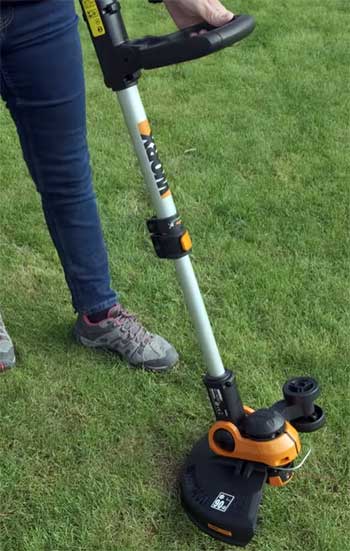
When you put a Hyper Tough side-by-side with a Worx, the first thing you notice is the design philosophy.
Worx is famous for their “GT” series, which are basically the Swiss Army knives of the lawn world.
They have heads that tilt, shafts that telescope, and little wheels that turn the trimmer into a walk-behind edger.
If you are someone who loves gadgets and wants a tool that transforms, Worx wins on bells and whistles.
However, I’ve found that all those moving parts are just more things that can break.
The Hyper Tough takes a much more “what you see is what you get” approach.
It doesn’t have the fancy wheels, but it feels more solid in the hand because the shaft isn’t sliding around.
In terms of raw cutting, they are neck and neck, but the Hyper Tough is usually half the price. If you’re just looking to whack some weeds and don’t need your trimmer to turn into a transformer, you’re paying a “gadget tax” with Worx that you just don’t get with the Hyper Tough.
- Hyper Tough Vs. Greenworks Weed Trimmer
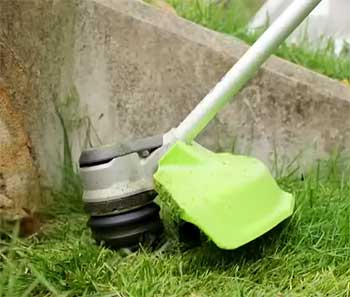
Greenworks is the heavy hitter in the purely electric space.
Their 40V and 80V systems are incredibly polished and look like something out of a sci-fi movie.
When comparing the two, Greenworks definitely feels like the “premium” electric option.
Their plastics are denser, and their batteries often have built-in LED fuel gauges which are super handy.
If you have a massive yard and need to swap batteries between a mower, a blower, and a trimmer, Greenworks has a more mature ecosystem.
But here is the kicker: for a standard suburban lot, the Hyper Tough 40V model performs almost identically to the Greenworks 40V in terms of run time and torque. When I used them back-to-back, the Greenworks felt a bit more “refined,” with less vibration in the handle, but it didn’t actually cut the grass any faster. Hyper Tough is the blue-collar alternative here.
It’s for the person who wants the benefits of lithium-ion power without having to finance their landscaping equipment. You sacrifice a little bit of the “fit and finish,” but you keep a lot more cash in your pocket.
- Hyper Tough Vs. ECHO 266 Weed Trimmer
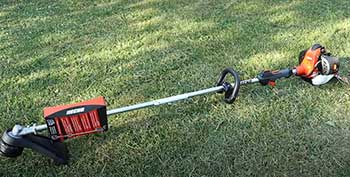
Now we are moving into a completely different weight class. The ECHO 266 is a legendary gas-powered workhorse.
It’s what you see professionals using on the back of trailers. Comparing a Hyper Tough to an ECHO is like comparing a reliable mountain bike to a dirt bike.
The ECHO 266 has a high-displacement engine, a professional-grade gearbox, and a Speed-Feed head that is the gold standard of the industry. It can run all day long in 100-degree heat without breaking a sweat.
However, most of us aren’t professionals. If you buy an ECHO 266 for a small backyard, you are arguably overbuying. The ECHO requires significant maintenance—you have to worry about the spark arrestor screen, the air filter, and the high-quality 2-cycle oil.
The Hyper Tough, especially the electric models, is a “grab and go” tool. You don’t have to pull a cord twenty times or worry about mixing fuel. While the ECHO will undoubtedly last twenty years if serviced properly, the Hyper Tough is infinitely easier to live with for the casual user.
The ECHO 266 is a beast for clearing brush, but for trimming the grass against your siding, the Hyper Tough is much less of a headache and much lighter on your shoulders.
Also Read: Comparison of Greenworks And Worx Trimmers.
Frequently Asked Questions (FAQ)
Yes, they are excellent for budget-conscious homeowners with standard-sized yards who need reliable, light-duty trimming.
Common complaints include the thin factory-installed line snapping easily and the plastic housing feeling less durable than premium brands.
For commercial use, Stihl and Echo lead the pack, but for residential value, Hyper Tough is highly rated for its price.
Yes, Hyper Tough is a Walmart-exclusive brand, making them very easy to find and return if necessary.
Final Thoughts
In the end, you should buy a Hyper Tough weed eater because it respects your wallet while getting the job done. It’s not a lifetime heirloom, but it is a hardworking companion that makes yard day a lot less stressful.