
When I compare Goodman vs. Daikin, I look past brand hype and focus on what you actually care about: comfort, price, efficiency, warranty, noise, repairs, and long-term value.
Both brands sit under the Daikin umbrella, but they serve different buyers. Goodman is the practical value pick. Daikin feels more refined, efficient, and premium.
If you’re choosing between them, I’ll help you see where each one wins, where each one falls short, and which brand fits your home better.
| Category | Goodman | Daikin |
| Best For | Budget-conscious homeowners | Efficiency-focused homeowners |
| Price Range | Usually more affordable | Usually higher upfront cost |
| Brand Position | Value HVAC brand | Premium-to-mid-premium HVAC brand |
| Efficiency | Good, especially newer models | Often stronger efficiency options |
| Comfort Control | Basic to solid | More advanced comfort features |
| Noise Level | Decent, model-dependent | Often quieter on higher-end models |
| Warranty | Strong value warranty | Excellent warranty coverage on many systems |
| Product Range | ACs, heat pumps, furnaces, packaged units | ACs, heat pumps, furnaces, ductless, VRV-style systems |
| Installer Importance | Very high | Very high |
| Overall Feel | Simple, reliable, affordable | Polished, efficient, feature-rich |
Key Differences Between Goodman and Daikin
- Price and overall value
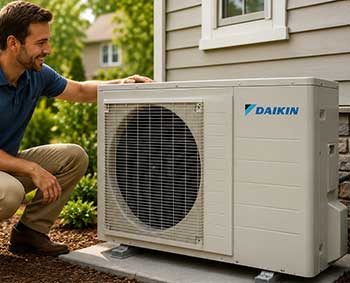
Goodman usually wins on upfront affordability.
If I were replacing an old air conditioner and wanted a dependable system without stretching my budget, Goodman would be one of the first brands I’d consider.
That is the heart of Goodman’s appeal: it does not try to impress you with luxury branding.
It focuses on making heating and cooling accessible.
You get the basics done well: cooling, heating, parts availability, and warranty coverage.
Daikin, on the other hand, usually costs more. But that extra cost can make sense if you want better comfort control, higher efficiency, quieter operation, or more advanced technology. With Daikin, I feel like I’m paying for refinement. With Goodman, I feel like I’m paying for practicality.
- Efficiency and energy savings
Daikin generally has the edge in efficiency, especially when comparing higher-end models. If your current system runs constantly, your energy bills are painful, or you live somewhere with long cooling seasons, Daikin can be more attractive.
Goodman still offers efficient systems, and many homeowners will be perfectly happy with them. But Daikin tends to push harder into advanced inverter-driven systems, variable-speed comfort, and higher-performing product lines.
Here’s my simple take: Goodman can save you money at purchase. Daikin may help you save more over time if you choose the right model and use your system heavily.
- Comfort and humidity control
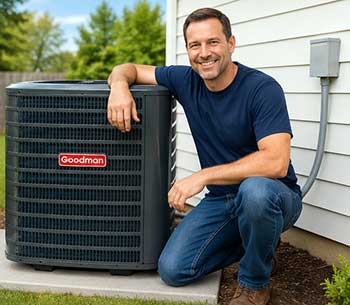
This is where Daikin starts to feel more premium.
Better systems can run at lower speeds for longer periods, which helps reduce temperature swings and manage humidity more effectively.
Goodman systems can absolutely keep your home comfortable, but many models are more traditional.
They turn on, cool or heat, then shut off.
That works fine, but it may not feel as smooth as a variable-speed or inverter system.
If you hate hot spots, sticky indoor air, or loud startup cycles, Daikin may feel noticeably better.
- Brand identity
Goodman is the straightforward brand. It is the “give me dependable HVAC without making my wallet cry” choice.
Daikin is more global, more technology-forward, and more premium in feel. It has a broader product universe, especially if you are looking beyond standard ducted residential systems.
The interesting part? Goodman and Daikin are connected under the same parent company. So the comparison is less like two unrelated rivals and more like comparing two different lanes from the same larger family.
- Installation sensitivity
This is the part homeowners underestimate. A great Daikin system installed badly can perform worse than a basic Goodman system installed properly.
Sizing, ductwork, refrigerant charge, airflow, drainage, thermostat setup, and commissioning matter. A sloppy installation can cause noise, short cycling, weak airflow, high bills, and early breakdowns.
So when I compare Goodman vs. Daikin, I never stop at the logo. I also ask: who is installing it?
Key Features of Goodman
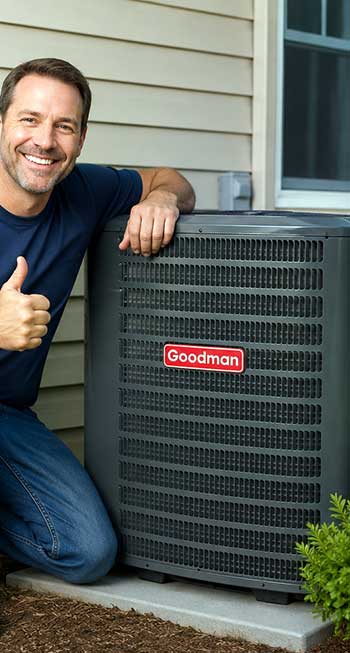
- Affordable residential HVAC systems: Goodman is known for value. Its product lineup includes central air conditioners, heat pumps, gas furnaces, packaged units, air handlers, and coils. The big appeal is simple: you can often get a new HVAC system for less than many premium brands. That matters because HVAC replacement is rarely a fun purchase. Nobody wakes up thrilled to buy a compressor. Goodman makes the bill feel a little less brutal.
- Strong warranty appeal: Goodman has built a reputation around warranty value. Many homeowners like that they can get solid parts protection without paying premium-brand pricing. That said, warranties depend on registration, model, installer, and local rules, so you should always confirm the exact terms before buying.
- Simple, serviceable design: Goodman equipment is usually familiar to many HVAC technicians. That can help with serviceability, parts access, and repair comfort. This does not mean repairs are always cheap or easy. But a common, widely installed brand often gives you more contractor options than a niche system.
- Good fit for standard homes: If your home has normal ductwork, a typical layout, and you just need reliable heating and cooling, Goodman can be a smart match. It is especially appealing for rental properties, starter homes, budget-conscious upgrades, and homeowners who plan to move within several years.
Goodman Pros
- Lower upfront cost: This is Goodman’s biggest win. You can often get a complete system installed for less than comparable premium brands. If your budget is tight, that matters more than fancy features. I would rather see you buy a properly sized Goodman system from a skilled installer than overpay for a premium brand installed poorly.
- Great value for basic comfort: Goodman does the everyday job well. It heats. It cools. It has accessible equipment options. It is not trying to be exotic. For many homes, that is enough. Not every homeowner needs variable-speed everything, app-based controls, and top-tier efficiency.
- Widely available parts and service: Because Goodman is common, many contractors know how to install and repair it. That can make service less stressful. When a system breaks in July, brand familiarity suddenly becomes very attractive.
- Practical for rental homes and resale situations: If you own a rental property, Goodman can make sense because it balances cost and reliability. It can also be a smart choice if you are replacing HVAC before selling your home and do not want to overspend.
Goodman Cons
- Not always as refined: Goodman may not feel as premium as Daikin. Some models can be louder, more basic, or less precise in comfort control. If you are sensitive to noise or temperature swings, you may notice the difference.
- Efficiency ceiling may be lower: Goodman has efficient models, but Daikin generally gives you stronger high-efficiency and advanced comfort options. If energy savings are a major priority, Goodman may not be the best long-term play.
- Reputation depends heavily on installer quality: Goodman sometimes gets criticized unfairly because it is widely installed by many types of contractors. When budget systems are paired with rushed installation, the brand takes the blame. The equipment matters, but the installation can make or break the experience.
- Basic models may lack premium features: If you want the smoothest airflow, best humidity control, quietest operation, and smartest controls, Goodman’s entry-level systems may feel too plain.
Key Features of Daikin
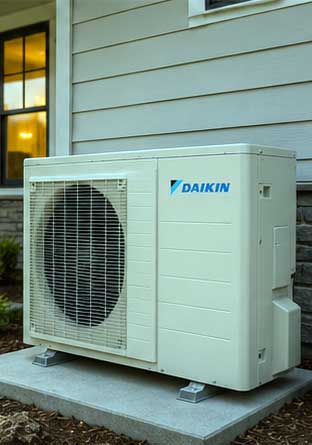
- Advanced comfort technology: Daikin often feels more sophisticated. Depending on the model, you may find inverter technology, variable-speed operation, smart controls, and improved humidity management. This matters because comfort is not just temperature. It is also airflow, noise, humidity, and how evenly the system conditions your rooms.
- Strong ductless and heat pump options: Daikin is especially respected in ductless mini-split and heat pump technology. If you have a garage office, sunroom, addition, basement, or older home without ducts, Daikin becomes very compelling. Goodman is strong in traditional ducted systems, while Daikin gives you more options when the home needs a more flexible solution.
- Quiet operation on higher-end systems: Daikin’s better systems can be impressively quiet. If your outdoor unit sits near a bedroom window, patio, or neighbor’s fence, that can matter a lot. Goodman can be quiet enough, but Daikin usually feels more polished when comparing premium models.
- Broader global reputation: Daikin is one of the biggest names in HVAC worldwide. That global scale shows up in its technology, product range, and heating/cooling innovation. For homeowners who want a more advanced system with strong brand backing, Daikin has a clear advantage.
Also Read: Differences Between Daikin And Senville Mini Split AC.
Daikin Pros
- Better comfort potential: Daikin’s stronger systems can deliver more consistent temperatures and better humidity control. That is a big deal if you live in a humid climate or have rooms that never feel quite right. I see Daikin as the better choice when comfort quality matters as much as cooling power.
- Strong energy-efficiency options: Daikin often gives you more room to choose higher-efficiency systems. Over years of use, that can help offset the higher upfront price. This is especially relevant if your system runs heavily for long seasons.
- Excellent ductless solutions: For ductless mini-splits, Daikin is a very strong contender. If you need zoned comfort without adding ductwork, I would look at Daikin before Goodman. Ductless systems are not just for additions either. They can work well for older homes, workshops, bonus rooms, and problem areas.
- Premium brand feel: Daikin often feels more polished in product design, technology, and comfort control. If you want a system that feels modern rather than merely functional, Daikin has the edge.
Daikin Cons
- Higher upfront cost: Daikin usually costs more than Goodman. That can be hard to justify if you only need a simple replacement system. The premium features are nice, but not everyone needs them.
- Repairs can cost more on advanced systems: More advanced technology can mean more expensive components. Inverter boards, communicating controls, and specialized parts can raise repair costs. That does not mean Daikin is unreliable. It means you should understand what you are buying.
- Contractor expertise matters even more: Daikin’s advanced systems need proper installation and setup. Not every contractor is equally comfortable with higher-end or ductless systems. Choose the installer carefully. A premium system deserves premium workmanship.
- May be more system than some homes need: If your home is simple, your climate is mild, and your budget is tight, Daikin may be overkill. Sometimes the smartest purchase is not the fanciest one. It is the one that fits your actual house.
Goodman Vs. Daikin: Which One Would I Choose?
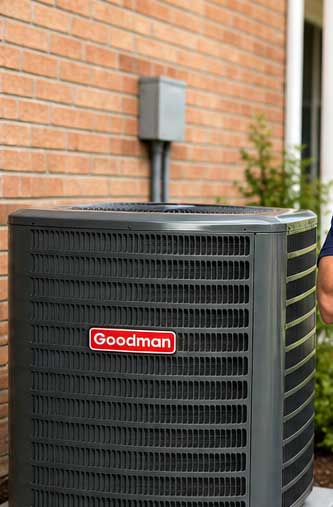
If I wanted the best value and needed a standard replacement system, I would lean Goodman.
It is affordable, practical, and good enough for many homes.
If I wanted better comfort, quieter performance, higher efficiency, or ductless flexibility, I would lean Daikin. It feels like the stronger long-term comfort brand.
Here is the cleanest way to think about it:
Choose Goodman if you want dependable heating and cooling at a more manageable price.
Choose Daikin if you want better technology, comfort control, and efficiency options.
Neither brand is automatically better for every homeowner. Your home size, ductwork, climate, budget, energy costs, and installer quality matter more than any brand slogan.
Also Read: Differences Between Mr Cool And Daikin Mini Split AC.
Frequently Asked Questions (FAQ)
Daikin AC systems can cost more upfront, and advanced models may have higher repair costs if specialized parts or trained technicians are needed.
Daikin is commonly viewed as one of the top global HVAC brands, especially strong in heat pumps, ductless systems, and advanced cooling technology.
Yes. Goodman is part of Daikin, and Amana HVAC products are also under the Daikin/Goodman brand family.
A common top five list includes Carrier, Trane, Lennox, Daikin, and Rheem. Goodman is often ranked highly for value.
Final Verdict
Goodman and Daikin is really a choice between value and refinement. Goodman gives you affordability, simplicity, and dependable everyday performance. Daikin gives you stronger comfort technology, better high-efficiency options, and a more premium experience.
If you are trying to keep costs under control, Goodman deserves serious consideration. If you want a system that feels quieter, smarter, and more efficient, Daikin is probably the stronger pick.
My advice is simple: do not buy only by brand. Compare model numbers, efficiency ratings, warranties, contractor reputation, labor coverage, and installation quality. When you do that, you will make a better choice for your home, your comfort, and your budget.