
Choosing between the ecobee3 lite and the Smart Thermostat Enhanced feels a bit like deciding between a reliable sedan and a sportier model with heated seats. I’ve lived with both, tweaked their settings endlessly, and yes, I’ve had my fair share of frustration with C-wires on both units.
If you are standing in the HVAC aisle or staring at your Amazon cart wondering if the “Enhanced” label is worth the extra cash or if the “Lite” is enough to handle your heating and cooling bills, I’m here to give you the honest rundown.
My goal is simple: to help you decide which black square belongs on your wall without the marketing fluff.
| Feature | ecobee3 lite | Smart Thermostat Enhanced |
| Average Price | ~$149 (often lower on sale) | ~$189 |
| Built-in Occupancy Sensor | No | Yes (Radar-based) |
| HVAC Accessory Support | No | Yes (1-wire: Humidifier, Dehumidifier, or Ventilator) |
| Display Material | Plastic front | Glass finish |
| Display Size | 3.5-inch color LCD | 4-inch color LCD (larger) |
| SmartSensor Included | No | No (Sold separately, but compatible) |
| Voice Assistant | Works with (requires external device) | Works with (requires external device) |
| WiFi Bands | 2.4 GHz only | Dual-band (2.4 GHz & 5 GHz) |
Key Differences Between Ecobee3 Lite And Enhanced
When I first unboxed the Enhanced, the difference in build quality was immediately obvious compared to the Lite unit I had installed at my parents’ place years ago.
But the differences go deeper than just looks; they fundamentally change how the thermostat interacts with your home.
- The “Ghost” in the Machine (Occupancy Sensing)
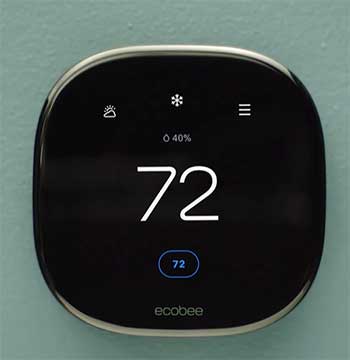
The biggest functional gap is the sensor technology.
The Enhanced model features a built-in radar occupancy sensor. It knows when you walk past it.
This allows the thermostat to automatically wake up its screen when you approach and, more importantly, switch between “Home” and “Away” modes automatically if it detects (or stops detecting) movement.
The ecobee3 lite is blind. It relies entirely on your pre-set schedule or geofencing from your phone.
If you stay home on a Tuesday when you’re usually at work, the Lite won’t know unless you tell it. The Enhanced figures it out.
- The Accessory Terminal (The Humidifier Factor)
This was the dealbreaker in my own home. The Enhanced comes with a dedicated terminal to control one HVAC accessory. This means if you have a whole-home humidifier attached to your furnace (common in dry winter climates) or a dehumidifier/ventilator, the Enhanced can control it directly. You can set humidity targets right on the screen.
The Lite does not have this terminal. If you have a humidifier, you’ll have to control it with a separate, “dumb” humidistat mounted on your ductwork, effectively losing the “smart” integration for humidity.
- Connectivity and Bandwidth
I live in an area with a lot of WiFi congestion. The Enhanced supports dual-band WiFi (both 2.4GHz and 5GHz). The Lite is stuck on the older 2.4GHz band. While thermostats don’t use much data, the 2.4GHz band in dense neighborhoods can be messy, leading to occasional disconnects.
The 5GHz support on the Enhanced gave me a much more stable connection, ensuring I could always adjust the heat from my bed without the “offline” error staring back at me.
- The Screen Real Estate
The Enhanced effectively gives you a larger canvas. The 4-inch glass display feels premium and responsive, much like a smartphone screen. The Lite uses a slightly smaller 3.5-inch screen with a plastic front. It feels a bit more like a traditional piece of hardware.
While both are touchscreens, the glass on the Enhanced collects fewer fingerprints and just looks sharper on the wall.
Key Features of Ecobee3 Lite And Enhanced
Both thermostats run on the same robust platform, which is great news. You aren’t getting “dumbed down” software with the Lite; you’re just getting different hardware capabilities.
- eco+ Software
Both units utilize ecobee’s eco+ software. This is the “brain” that tries to save you money. It includes “Time of Use” optimization (cooling your home before electricity rates spike) and “Community Energy Savings.” I’ve found this feature genuinely useful, though I occasionally disable it during heatwaves when I care more about comfort than saving fifty cents.
- SmartSensor Compatibility
Both units are compatible with ecobee’s SmartSensors (the little white stands you place in bedrooms). This is crucial.
Even though the Lite doesn’t have a sensor built-in, you can buy a 2-pack of SmartSensors and suddenly it becomes just as smart as the Enhanced regarding room-specific comfort. I use this setup with a Lite in a guest house—pairing it with sensors makes it feel like a premium system.
- Installation and PEK
Both usually come with the Power Extender Kit (PEK). This is a lifesaver if you live in an older home (pre-1980s) that lacks a “C-wire” (Common wire). I’ve installed the PEK on three different HVAC systems; it forces you to open your furnace panel, but it saves you from having to run new electrical wire through your walls.
Note: Always check the specific box, as some newer budget SKUs vary, but standard retail units for Lite and Enhanced generally include this.
Pros And Cons of Ecobee3 Lite And Enhanced
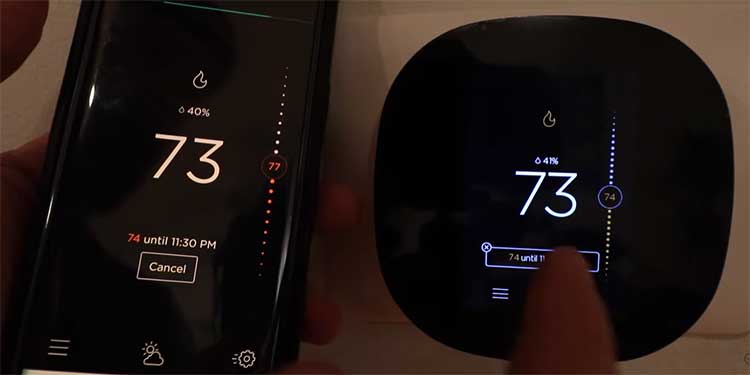
After living with these devices through freezing winters and humid summers, here is what stands out.
ecobee3 lite
- Pros
- Cost-Effective: It is significantly cheaper. If you have a small apartment or a home with a simple furnace/AC setup, this is all you need.
- Same Great App: You get the exact same mobile app experience as the flagship models. You can control it from anywhere, set schedules, and view runtime graphs.
- Compact: The slightly smaller profile blends into the wall a bit more if you prefer your tech to be invisible.
- HomeKit & Alexa Integration: It plays nicely with Apple HomeKit, Google Assistant, and Alexa (though you need an Echo device nearby to talk to it; it doesn’t have a microphone).
- Cons
- No Occupancy Detection: Without buying extra sensors, it’s just a programmable thermostat with WiFi. It won’t save energy automatically if you leave the house unexpectedly.
- Plastic Build: It feels cheaper. The plastic screen has a bit of “give” compared to the glass on the Enhanced.
- No Accessory Control: If you decide to add a humidifier later, you can’t wire it to this thermostat.
- Slower Processor: Navigating the menus on the unit itself feels just a split-second slower than on the newer Enhanced models.
ecobee Smart Thermostat Enhanced
- Pros
- Radar Sensor: The built-in radar is fantastic. It detects presence through subtle movements, making the “Auto-Home/Away” feature much more reliable than the older PIR sensors.
- Premium Aesthetic: The glass “waterfall” curved edge looks modern and high-end. It improves the look of a hallway.
- Accessory Support: The ability to control a humidifier is a game-changer for comfort. It adjusts humidity based on outdoor temperature to prevent window condensation—something a manual humidistat can’t do.
- Future-Proofing: With dual-band WiFi and a faster processor, it is less likely to feel obsolete in three years.
- Cons
- Price Jump: You are paying a premium mostly for the sensor and the build materials. If you don’t care about looks or humidifiers, the price hike is hard to justify.
- No Voice Speaker: Unlike the “Premium” model (the tier above Enhanced), the Enhanced does not have a speaker or microphone built-in.You cannot ask it for the weather directly.
- Still No C-Wire Magic: Like the Lite, if you don’t have a C-wire, you still have to mess with the PEK installation at your furnace. It’s not “plug and play” for older homes.
Comparison of Installation and Setup
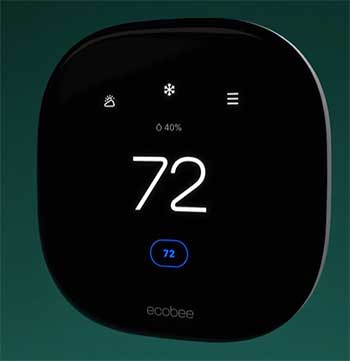
I want to touch on the installation because this is where most people get nervous.
I’ve done this process multiple times, and the experience between the Lite and Enhanced is nearly identical, but the Enhanced feels a bit more refined in the unboxing.
When you open the Enhanced, the backplate is clearly labeled.
If you have a C-wire, it is literally a five-minute job: turn off the breaker, pop the old faceplate off, label wires (ecobee gives you stickers), push wires into the new terminal, and snap the unit on.
The Enhanced detects the wiring configuration automatically upon boot-up, which is a reassuring “sanity check” that you didn’t cross a wire.
The Lite follows the same process, but the backplate is the older generation. It’s slightly more cramped for finger space when pushing the wires in. If you have thick fingers like me, the Enhanced’s backplate design is slightly more forgiving.
The tricky part for both is the PEK (Power Extender Kit). If you open your old thermostat and see only four wires (R, G, Y, W) and no C, you have to go to your furnace. You install the PEK module between the thermostat wires and the furnace control board.
It sounds scary, but the instructions in the ecobee app are stellar—they give you step-by-step diagrams. I found the Enhanced’s manual slightly clearer regarding modern HVAC systems (like heat pumps), whereas the Lite’s documentation sometimes feels a bit dated.
Living with the “Smart” Features
Let’s talk about Smart Recovery. Both units have this, and it’s brilliant. Instead of the heat kicking on at exactly 7:00 AM when your alarm goes off (leaving you freezing for 20 minutes), both thermostats “learn” how long your home takes to heat up.
If it takes 30 minutes to raise the temp 5 degrees, the ecobee will start the furnace at 6:30 AM so it hits your target at 7:00 AM.
However, the Enhanced does this better if you don’t have extra sensors. Why? Because of that radar sensor. It sees you moving in the hallway. If you wake up early consistently, the Enhanced notices that pattern of occupancy better than the Lite, which is just blindly following the clock.
Sleep Comfort:
I initially installed a Lite in my bedroom. The issue? The screen brightness. The Lite has a “sleep mode” for the screen, but the LCD backlight bleed is noticeable in a pitch-black room.
The Enhanced, with its better display quality and glass front, seems to manage low-light situations better, fading to black more effectively. It’s a minor detail, but if you are sensitive to light while sleeping, the Enhanced is the winner.
Which One Should You Actually Buy?
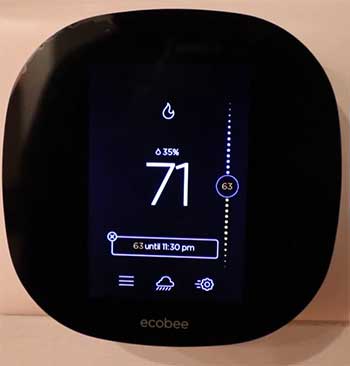
If you are a tech enthusiast who wants the house to feel “alive” and responsive to your presence, or if you have a humidifier attached to your furnace, the Smart Thermostat Enhanced is the only logical choice.
The price difference pays for itself in the frustration you save by not having to manually adjust a humidistat or manually set “Away” modes.
However, if you are a landlord, or you are installing this in a small apartment, or you just want to control the temperature from your phone without getting off the couch, the ecobee3 lite is a steal.
It does 90% of what the average user needs.
You can take the money you save and buy a two-pack of SmartSensors, which actually makes the Lite more capable than a standalone Enhanced unit in a multi-room home.
Also Read: Differences Between Ecobee And iComfort Smart Thermostats.
Frequently Asked Questions (FAQ)
The Enhanced has a built-in radar occupancy sensor, a larger glass screen, dual-band WiFi, and a terminal to control HVAC accessories like humidifiers. The Lite has a plastic screen, no built-in occupancy sensor, single-band WiFi, and cannot control HVAC accessories.
Yes, it appears so. Ecobee has released newer budget models (often called “Smart Thermostat Essential” or updated Lite versions), and the classic ecobee3 lite is being phased out of retail stock, though it is still supported via software updates.
The most common issues are WiFi disconnections (due to older 2.4GHz chips), “calibration” errors where the temp reads incorrectly for the first hour after install, and the lack of a C-wire causing power cycling if the PEK isn’t installed correctly.
“Regular” usually refers to the flagship (Premium) or the Enhanced. The Lite is not “better” in terms of features; it is less capable. However, it is “better” for value if you do not need accessory control or room sensing, as it provides the core smart features for a lower price.
Final Thoughts
After spending years tweaking temperature curves and analyzing runtime reports, I’ve come to appreciate both of these devices for different reasons. The ecobee3 lite is the workhorse—it’s the device I recommend to my parents or friends who just want to stop getting up to change the dial.
It’s reliable, affordable, and effective. But for my own home, I stick with the Enhanced. The glass display looks cleaner on my wall, and the ability to control my humidifier automatically during the dry winter months is a luxury I refuse to give up.
When you make your choice, look at your walls. If you see a humidifier controller next to your thermostat, get the Enhanced. If you just see a thermostat and want to save fifty bucks, grab the Lite and don’t look back.
Either way, you are getting one of the best smart home interfaces on the market, and your utility bills will thank you.