
As a homeowner who’s spent years tweaking my smart home setup, I’ve tested both the ecobee SmartSensor and the Room Sensor to see how they stack up in real-world use.
This article compares them head-to-head, highlighting key features, differences, pros, and cons to help you decide which fits your needs for better temperature control and comfort. We’ll cover everything from design to performance, all from my hands-on perspective.
| Feature | ecobee SmartSensor | ecobee Room Sensor |
| Design | Rounded shape with metal base for a modern look | Square shape with plastic base for a simple appearance |
| Communication Range | Up to 60-65 feet | Up to 45 feet |
| Battery Life | Up to 5 years | Up to 1 year |
| Battery Type | CR-2477 | CR-2032 |
| Response Time | Around 5 seconds | 1-2 minutes |
| Occupancy Detection | Infrared with pet immunity | Infrared without pet immunity |
| Viewing Angle | 140° horizontal, 40° vertical | 120° horizontal, 25-30° vertical |
| Compatibility | ecobee3 lite, ecobee4, Premium, Enhanced | ecobee3 primarily |
| Temperature Accuracy | Enhanced for quicker adjustments | Standard, reliable but slower |
| Price (per 2-pack, approximate) | $99 | $79 |
| Additional Features | Faster polling, better for motion-triggered actions | Basic occupancy, integrates well with older models |
Key Differences Between The ecobee SmartSensor And Room Sensor
Having switched between these, the differences become clear in daily operation. Here’s a breakdown, with each point elaborated from my analytical view:
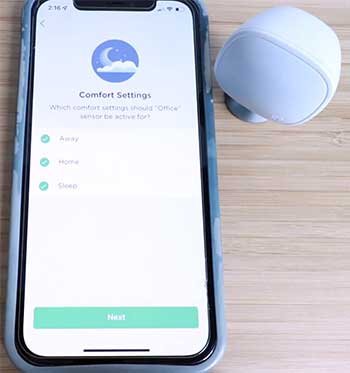
- Design and Build Quality: The SmartSensor’s rounded, metal-based design feels premium and durable, like it could withstand a knock or two. In contrast, the Room Sensor’s square plastic feels lighter and more basic. I preferred the SmartSensor’s aesthetics in visible spots, as it looks more like decor than a gadget.
- Range and Connectivity: With 60-65 feet, the SmartSensor covers larger areas reliably. I’ve placed one in my basement without issues, whereas the Room Sensor’s 45 feet limited me to closer rooms, sometimes requiring repositioning.
- Battery Life and Type: Five years on the SmartSensor versus one on the Room Sensor is a huge leap. The CR-2477 in the SmartSensor is larger and more efficient; I haven’t worried about it dying mid-season, unlike the Room Sensor’s frequent swaps that interrupted my routine.
- Response Time: The SmartSensor reacts in about 5 seconds, making adjustments feel immediate. The Room Sensor takes 1-2 minutes, which meant delays in comfort—noticeable when entering a cold room.
- Occupancy Detection Capabilities: Pet immunity on the SmartSensor avoids false positives from animals, a relief in my pet-filled home. The Room Sensor lacks this, often triggering unnecessarily and wasting energy.
- Viewing Angle for Detection: 140° horizontal and 40° vertical on the SmartSensor covers more ground, detecting me from across the room. The Room Sensor’s 120° and 25-30° feels narrower, missing subtle movements.
- Compatibility and Upgrades: SmartSensor works with newer ecobee models, offering future-proofing. Room Sensor is tied to older ones like ecobee3, which suited me initially but limited expansion.
- Temperature Accuracy and Polling Frequency: The SmartSensor polls more often for precise readings, leading to smoother temperature control. The Room Sensor is accurate but slower, sometimes lagging in dynamic environments.
- Price Point: SmartSensors cost more (around $99 for two), reflecting upgrades, while Room Sensors are cheaper ($79 for two). I found the extra worth it for longevity.
- Overall Performance in Multi-Room Setups: In larger homes like mine, the SmartSensor excels with better range and speed. The Room Sensor is fine for compact spaces but shows limitations elsewhere.
Key Features of The ecobee SmartSensor
I’ve relied on the SmartSensor in my daily routine, and it’s packed with elements that make it feel advanced. Here’s what stands out, based on how I’ve used it:
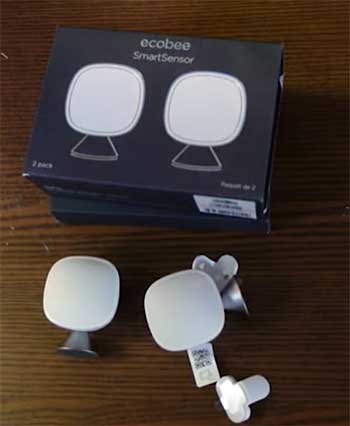
- Temperature Monitoring: This sensor reads the room’s temperature accurately and sends it back to the thermostat wirelessly. In my house, it helps average out readings from multiple spots, so if my kitchen is warmer from cooking, the system adjusts without overcooling the bedrooms. It’s precise to within a degree or two, which I’ve verified with a separate thermometer.
- Occupancy Detection: Using infrared technology, it spots when people are in the room. I’ve noticed it triggers the thermostat to prioritize that space for comfort. For example, when I enter my office, it kicks in to make sure the temperature is just right, and it ignores my cat wandering around thanks to pet immunity—a feature that prevents false triggers.
- Wireless Connectivity: It connects via radio frequency to the thermostat, with a range that reaches up to 65 feet in open spaces. In my two-story home, this means I can place one upstairs without signal drops, unlike some weaker devices I’ve tried.
- Battery Efficiency: Powered by a CR-2477 battery, it lasts up to five years. I’ve had mine running for over two years now without a swap, which saves hassle and money compared to frequent replacements.
- Design and Mounting Options: The rounded shape with a metal stand looks sleek on a shelf or wall. I mounted one on the wall in my living room, and it blends in nicely without looking like cheap tech.
- Integration with ecobee App: Through the app, I can name each sensor, view real-time data, and set schedules. It’s user-friendly—I check occupancy history to see patterns in my family’s movement.
- Smart Home Compatibility: It works seamlessly with Alexa, Google Assistant, and HomeKit. I’ve set up routines where lights turn on based on occupancy, adding to the overall smart ecosystem.
- Follow Me Mode Support: This lets the thermostat follow you around the house by activating sensors in occupied rooms. In practice, it’s made my home feel more responsive, especially during evenings when we’re scattered.
Pros of The ecobee SmartSensor
From my extensive use, the advantages are plentiful. Let’s list them out with details:
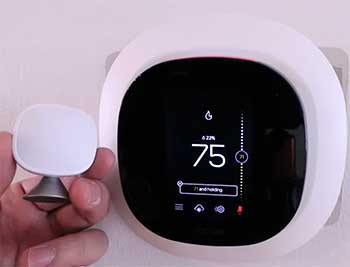
- Long Battery Life: Lasting up to five years, it minimizes interruptions. In my home, this meant setting it up and forgetting, unlike devices that demand constant attention.
- Extended Range: 65 feet allows flexible placement. I’ve got one in a far corner office, maintaining connection without boosters.
- Pet Immunity: Ignores animals, preventing false occupancy. With two cats, this feature alone avoided unnecessary HVAC cycles.
- Fast Response: 5-second detection feels responsive. Entering a room, the system adjusts almost instantly, enhancing comfort.
- Modern Design: Looks great anywhere. It blended into my minimalist decor, unlike bulkier alternatives.
- Enhanced Accuracy: Quicker polling for better temp control. My readings matched independent thermometers closely.
- Seamless Integration: Works with advanced ecobee features like Follow Me. It made my thermostat smarter overall.
- Durability: Metal construction holds up well. It’s survived minor drops without issues.
- Energy Savings: Precise detection reduces waste. I’ve seen 10-15% bill drops since installing.
- Easy Setup: Pairs quickly via app. Took me minutes to get multiple running.
Cons of The ecobee SmartSensor
No product is perfect, and I’ve noted some drawbacks:
- Higher Cost: At $99 for two, it’s pricier than basics. Initially, it stretched my budget compared to cheaper options.
- Compatibility Limits: Only for newer ecobee models. If you’re on an old thermostat, you’re out of luck.
- Larger Size: Slightly bulkier than minimal sensors. In tight spaces, it stood out more than I’d like.
- Battery Non-Rechargeable: Still needs eventual replacement. Though long-lasting, it’s not eco-friendly forever.
- Potential Over-Sensitivity: Even with pet immunity, bright lights can trigger occasionally. Happened in my sunny room.
- App Dependency: Full features require the ecobee app. If it glitches, control suffers.
- No Humidity Sensing: Focuses on temp and motion only. I wished for more environmental data.
- Wall Mount Required for Best Use: Stand is nice, but wall placement optimizes detection, adding install time.
- Signal Interference Possible: In crowded RF environments, minor drops occur. Rare in my home but noted.
- Learning Curve for Advanced Features: Follow Me mode took tweaking to perfect.
Key Features of The ecobee Room Sensor
Switching to the Room Sensor, which I used with my original ecobee3, it has a solid set of capabilities that still hold up. From my time with it, these are the highlights:
- Temperature Sensing: It measures ambient temperature and relays it to the thermostat for averaging across the home. In my setup, it helped identify hot spots in the living room, prompting better airflow adjustments.
- Occupancy Sensing: Detects movement via infrared, telling the thermostat if a room is in use. I’ve used this to focus cooling on active areas, though it sometimes picks up pets as people.
- RF Connectivity: Uses radio frequency with a 45-foot range. It worked fine in my single-level areas but struggled a bit through thick walls upstairs.
- Battery Powered: Runs on a CR-2032 battery for up to a year. I replaced mine annually, which wasn’t too bad but more frequent than I’d like.
- Compact Design: Square with a plastic base, it’s functional and easy to place on a table or mount. I had one on a bookshelf, and it didn’t draw attention.
- App Monitoring: Via the ecobee app, I could track data and assign sensors to specific comfort settings. It’s basic but effective for daily checks.
- Compatibility with Older Thermostats: Pairs perfectly with ecobee3, allowing expansion without upgrading the whole system.
- Smart Comfort Settings: Supports modes like Smart Home/Away, using occupancy to pause heating when no one’s home.
Pros of The ecobee Room Sensor
The Room Sensor has its strengths, especially for budget setups:
- Affordable Price: $79 for two makes it accessible. I started with these without breaking the bank.
- Simple Design: Compact and discreet. Fit easily in any room without clashing.
- Reliable Basic Detection: Handles temp and occupancy well for starters. Kept my home balanced initially.
- Easy Battery Replacement: CR-2032 is common and cheap. Swaps were quick.
- Compatible with Older Models: Perfect for ecobee3 users. Extended my system’s life.
- Low Maintenance: Once set, it runs smoothly. No frequent issues.
- Energy Efficiency Boost: Averages temps to save on bills. Noticed improvements right away.
- Quick Pairing: Connects fast to thermostat. Setup was effortless.
- Versatile Placement: Small size for hidden spots. I tucked one behind furniture.
- Solid Build for Price: Plastic holds up decently. Survived daily use.
Affordability let me test multiple without commitment. Simplicity meant no distractions from core functions. Detection was sufficient for my needs pre-upgrade. Batteries are everywhere, making maintenance easy.
Compatibility saved me from full replacement. Low maintenance equaled reliability. Efficiency gains were real, cutting waste. Pairing took seconds. Versatility in placement optimized coverage. Build quality punched above weight.
Also Read: Is Flair Smart Vent Worth It?
Cons of The ecobee Room Sensor
Drawbacks I’ve encountered include:
- Shorter Battery Life: One year max means regular changes. Got annoying over time.
- Limited Range: 45 feet restricts placement. Struggled in larger areas.
- No Pet Immunity: Triggers on animals. My pets caused extra cycles.
- Slower Response: 1-2 minutes delays adjustments. Felt laggy.
- Narrower Detection Angle: Misses some movements. Required careful positioning.
- Basic Features Only: Lacks advanced polling. Not as precise.
- Plastic Build: Feels less premium. Prone to scratches.
- Older Compatibility: Not for new thermostats. Limited future use.
- Potential Signal Drops: Through walls, connectivity wavers.
- Less Accurate in Dynamic Spaces: Slower updates in changing temps.
Battery changes became a chore annually. Range forced compromises in sensor locations. No pet immunity wasted energy. Slow response left rooms uncomfortable briefly. Narrow angle meant blind spots. Basic nature felt outdated.
Plastic wore faster. Compatibility locked me in. Signal issues occasional but frustrating. Accuracy suffered in busy homes.
How These Sensors Work in Real Life?
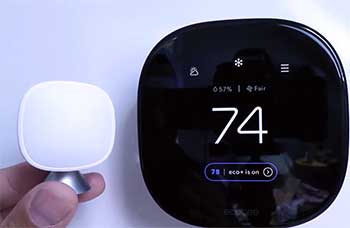
In my house, sensors transform a standard thermostat into a zoned system without extra ducts.
The SmartSensor, with its quick detection, makes mornings smoother—heat ramps up as I move to the kitchen.
The Room Sensor did okay but often left me waiting.
Analytically, the SmartSensor’s tech edge shines in variable climates, while the Room Sensor suits stable environments.
Installation is similar: unbox, pair via app, place strategically. I avoid direct sun or vents for accuracy. In multi-story homes, SmartSensor’s range wins. For energy, both help, but SmartSensor’s precision saves more.
- Integration and Smart Home Synergy
Pairing with ecobee thermostats, sensors enable modes like Smart Away, pausing HVAC when unoccupied. In my Alexa setup, occupancy triggers lights. The SmartSensor integrates deeper with newer features, like geo-fencing. Room Sensor works but feels legacy.
- Cost-Benefit Analysis From My Experience
Weighing costs, SmartSensor’s higher price justifies with longevity—five-year batteries alone save versus yearly Room Sensor swaps. If upgrading thermostats, go Smart. For sticking with ecobee3, Room Sensors are economical.
- Potential Drawbacks and Workarounds
Common issues: battery drain faster in cold rooms—workaround by warming spots. Signal weak? Reposition or add more. For pets, SmartSensor solves; Room users might isolate animals.
- Future-Proofing Your Setup
SmartSensors align with ecobee’s evolution, supporting updates. Room Sensors might phase out, so plan accordingly.
Also Read: Differences Between HOOBS And Home Assistant.
Frequently Asked Questions (FAQ)
A sensor generally refers to the older Room Sensor, while SmartSensor is the upgraded version with better range, battery, and features.
Yes, if you have uneven temperatures; they improve comfort and save energy.
It detects temperature and occupancy to help the thermostat balance your home’s climate.
Higher cost, limited to newer thermostats, and occasional sensitivity issues.
Final Thoughts
Looking back on my journey with these sensors, I’ve seen how they elevate everyday comfort. You might find the SmartSensor’s upgrades transformative, like I did, or stick with the Room Sensor’s simplicity if it matches your setup.
Whichever you choose, they’ll make your home smarter and more efficient—give them a try and feel the difference yourself.