
As someone who’s been tweaking smart home gadgets for years, I’ve spent a lot of time with both the ecobee Smart Thermostat Premium and the Google Nest Learning Thermostat 4th Generation.
In this article, my goal is to give you a clear, honest breakdown of how they stack up—features, real-world performance, comfort, and value—so you can decide which one fits your home and life better.
| Feature | ecobee Smart Thermostat Premium | Google Nest Learning Thermostat 4th Generation |
| Price (approximate) | $250 | $280 |
| Display | 3.5-inch touchscreen, 540×540 resolution | 2.7-inch domed LCD, 600×600 resolution, animated |
| Design | Square zinc body, modern but boxy | Rounded, bezel-free, rotating stainless steel dial |
| Included Sensors | 1 remote sensor (temperature + occupancy) | 1 remote sensor (temperature only) |
| Built-in Air Quality Monitor | Yes (VOC, estimated CO2, humidity alerts) | Yes (basic) |
| Presence Detection | On remote sensors + radar on unit | Soli radar on unit only |
| Voice Assistant | Built-in Alexa and Siri | Google Assistant via ecosystem |
| Ecosystem Compatibility | Native Apple HomeKit, Alexa, Google, IFTTT | Matter support, deep Google Home, Alexa, HomeKit |
| Smart Learning/AI | eco+ for savings, schedule learning | Advanced Smart Schedule, micro-adjustments |
| Additional Functions | Security hub, doorbell camera view on screen | System health monitor, smart ventilation |
Design And Build Quality
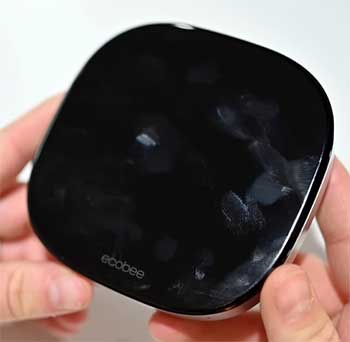
I’ve always believed the thermostat is something you look at every day, so how it feels on the wall matters.
The Nest 4th Generation looks like a piece of modern art.
Its curved glass dome and polished metal finishes—silver, obsidian, or gold—make it blend beautifully into any decor.
Turning that stainless steel dial to adjust temperature feels satisfying, almost luxurious.
The ecobee Premium takes a different approach.
It’s more rectangular with a premium zinc body that feels solid and cool to the touch. The full touchscreen is responsive, and while it’s not as flashy as the Nest, I appreciate its clean, understated look. It doesn’t scream “smart device,” which works well in minimalist homes.
In my experience, if you want something that turns heads, the Nest wins. If you prefer something sturdy and functional without drawing too much attention, ecobee holds its own.
Display and User Interface
The Nest’s display is a standout. That larger, higher-resolution screen shows crisp text, weather animations, and even little effects like falling snow or rain when conditions change outside. It makes checking the thermostat feel engaging rather than a chore.
The ecobee’s screen is bright and clear, with quick access to air quality readings, humidity, and energy reports right on the device. I like that it can show live feeds from ecobee cameras or doorbells, turning it into a mini security display.
Both are easy to navigate, but the Nest feels more intuitive for quick adjustments thanks to the physical dial. The ecobee requires more taps, which can feel slower when you’re in a hurry.
Sensor Technology and Multi-Room Comfort
This is where the real differences show up in daily life.
- ecobee’s remote sensors detect both temperature and occupancy. That means the system knows which rooms people are actually in and prioritizes those for comfort. In my larger home tests, this made a noticeable difference—no more cold bedrooms while the hallway stayed perfect.
- The “Follow Me” mode averages temperatures only from occupied rooms, which feels smarter and more energy-efficient.
- You can add as many sensors as needed, and they show up individually in the app for fine-tuned control.
- Built-in radar on the unit adds another layer of presence detection.
- Nest relies on Soli radar built into the thermostat itself for presence detection, which works well in open layouts but struggles in homes where the thermostat isn’t centrally located.
- Its remote sensors measure temperature only—you have to manually prioritize which one takes control during certain times.
- No occupancy detection on sensors means empty rooms can still influence the average, sometimes leading to uneven comfort.
- The included sensor helps, but you pay extra for more.
For anyone with a multi-level or multi-room home, ecobee’s sensor setup consistently delivered more even temperatures in my experience.
Smart Features and Learning Capabilities
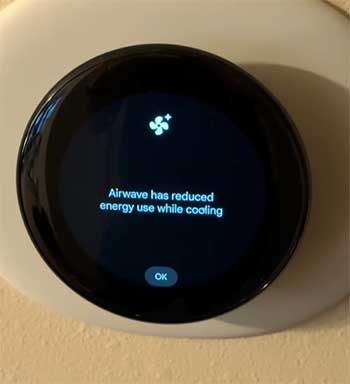
Both thermostats learn your habits, but they go about it differently.
The Nest’s Smart Schedule uses AI to make tiny adjustments based on weather forecasts, sunlight, humidity, and your patterns.
It also monitors your HVAC system’s health and can alert you to potential issues before they become problems.
ecobee’s eco+ features focus on community energy savings programs, time-of-use pricing adjustments, and geofencing.
It learns your schedule too, but I found it requires a bit more initial input to get perfect.
Both save energy, but Nest feels more proactive with its micro-adjustments, while ecobee gives you more manual control if you like tinkering.
Ecosystem Integration and Voice Control
If you’re deep in the Google world, the Nest integrates seamlessly—everything just works in the Google Home app.
ecobee plays nicely with everyone. Native HomeKit support means fast, reliable automations in Apple Home. It also works great with Alexa and Google Assistant. Plus, having Siri and Alexa built right into the thermostat means you can ask it questions or control music without another device nearby.
Privacy-conscious users often lean toward ecobee because it doesn’t require a Google account and has stronger data policies.
Energy Savings and Extra Perks
Both claim significant savings, and both deliver. I saw similar reductions on bills, around 10-15% depending on the season.
ecobee stands out with its built-in air quality monitoring. It tracks VOCs, humidity, and estimated CO2, then suggests actions like running the fan or opening windows. That’s information I actually use.
Nest’s smart ventilation brings in fresh air when outdoor quality is good, which is a nice touch.
ecobee can double as a basic security hub and intercom, which adds real value if you have compatible devices.
Also Read: Comparison of Ecobee And iComfort Smart Thermostats.
Key Features of ecobee Smart Thermostat Premium
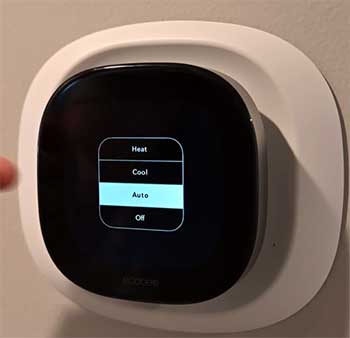
- Built-in air quality monitor that tracks VOCs, humidity, and estimated CO2 levels, giving real-time alerts and suggestions for improvement.
- Remote sensors with occupancy detection, allowing the system to focus comfort on rooms you’re actually using while saving energy elsewhere.
- Native Apple HomeKit support plus compatibility with Alexa, Google Assistant, and IFTTT for broad smart home integration.
- Built-in speaker and microphone supporting both Alexa and Siri for voice commands, music, and intercom functionality directly from the thermostat.
- Acts as a mini security hub with support for ecobee cameras, doorbells, and sensors, including live video feeds on the display.
- Detailed energy reports and insights available through the app and web portal, helping you understand usage patterns over time.
- eco+ features that optimize for community energy savings, time-of-use rates, and humidity-based comfort adjustments.
- Radar presence detection on the main unit for quick response when someone approaches.
Key Features of Google Nest Learning Thermostat 4th Generation
- Stunning domed display with weather animations, high resolution, and customizable Farsight information like time, temperature, and air quality.
- Advanced AI Smart Schedule that learns your preferences and makes micro-adjustments based on weather, sunlight, and home conditions.
- Soli radar for presence detection directly on the unit, lighting up the display as you approach.
- System Health Monitor that tracks HVAC performance and sends early warnings about potential issues.
- Smart ventilation that brings in fresh outdoor air when conditions are good and stops when pollutants are detected.
- Matter support for future-proof compatibility across Google Home, Apple Home, Alexa, and Samsung SmartThings.
- Outdoor weather integration that preemptively adjusts temperature based on forecasts and home insulation data.
- Beautiful physical rotating dial for intuitive manual adjustments and premium finishes that look like decor.
Key Differences Between ecobee Premium And Nest 4th Gen
- Sensor capabilities: ecobee’s remote sensors detect both temperature and occupancy, while Nest’s only measure temperature—making ecobee better for true multi-room comfort.
- Design philosophy: Nest prioritizes aesthetic appeal with its curved glass and rotating dial; ecobee focuses on functionality with a touchscreen and built-in speaker.
- Ecosystem approach: ecobee offers native HomeKit and broader third-party support without requiring a specific account; Nest ties deeply into Google Home but gains flexibility through Matter.
- Air quality handling: ecobee provides detailed indoor monitoring with actionable suggestions; Nest monitors basic air quality and uses it for ventilation decisions.
- Voice and security: ecobee has built-in Alexa/Siri and can serve as a security hub; Nest relies on your existing Google Assistant devices.
- Learning style: Nest makes more autonomous AI-driven micro-adjustments; ecobee gives users more control and detailed reporting.
- Display experience: Nest shows animated weather and customizable info; ecobee displays camera feeds and air quality data prominently.
- Privacy and data: ecobee has stronger privacy policies and doesn’t require a Google account; Nest integrates with Google’s ecosystem.
Also Read: Comparison of Honeywell T9 And Ecobee Smart Thermostats.
Pros And Cons of the ecobee Smart Thermostat Premium
Pros
- Superior multi-room comfort thanks to occupancy-sensing remote sensors that focus heating/cooling where people actually are.
- Comprehensive indoor air quality monitoring that actually helps you make decisions about ventilation and humidity.
- Excellent compatibility across ecosystems, especially native HomeKit support that feels fast and reliable.
- Built-in voice assistants (Alexa and Siri) turn the thermostat into a useful speaker and intercom without needing extra devices.
- Functions as a smart security hub with camera and doorbell integration, adding real value for ecobee ecosystem users.
- Detailed energy reports and web access give you clear insights into usage and savings over time.
- Strong privacy policies and no mandatory Google account required.
- Generally lower price point while including a smart sensor in the box.
Cons
- Design feels less premium compared to Nest’s sleek curves and finishes—more functional than beautiful.
- Touchscreen interface requires more taps for adjustments than Nest’s satisfying physical dial.
- Speaker quality is tinny, not great for music but fine for voice responses and intercom.
- AI features feel less proactive than Nest’s micro-adjustments based on outdoor conditions.
- Boxier shape might not blend as seamlessly into some modern decors.
- Some users report occasional temperature reading inaccuracies due to the metal housing.
Pros And Cons of the Google Nest Learning Thermostat 4th Generation
Pros
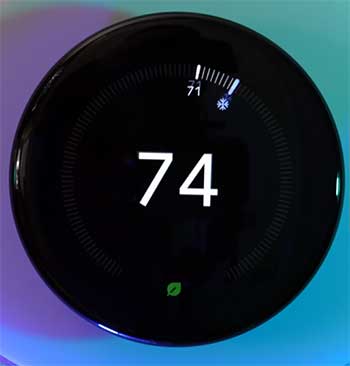
- Gorgeous design and display that looks like a high-end decor piece rather than a thermostat.
- Intuitive rotating dial makes manual adjustments quick and satisfying.
- Advanced AI that proactively adjusts based on weather, sunlight, and your habits for potentially greater energy savings.
- Matter support ensures long-term compatibility across major smart home platforms.
- Smart ventilation and system health monitoring add practical, money-saving features.
- Beautiful animations and customizable screen information make interactions enjoyable.
- Deep integration with Google Home ecosystem for seamless control if you’re already invested.
- Radar presence detection lights up the display as you approach.
Cons
- Remote sensors lack occupancy detection, limiting true multi-room intelligence.
- Requires a Google account, raising privacy concerns for some users.
- Higher price while still needing extra purchases for multiple sensors.
- No built-in speaker or voice assistant on the device itself.
- Cannot display camera feeds or act as a security hub.
- Some reports of needing more manual schedule tweaks for perfect comfort.
- Wiring labels can be hard to read during installation.
- Dependent on Google ecosystem stability and future support.
Which One Wins in Real Life?
After living with both, I lean toward the ecobee Premium for most homes. The occupancy sensors make a tangible difference in comfort, especially in larger or multi-level spaces, and the air quality monitoring is information I actually use.
If you’re in the Apple ecosystem or value privacy and versatility, ecobee feels like the smarter long-term choice.
That said, if you love beautiful design, are deep in Google Home, or want the most hands-off AI experience, the Nest 4th Generation is hard to beat. It looks incredible and makes tiny adjustments that add up over time.
Ultimately, you can’t go wrong with either—these are the two best options available. Think about your home layout, existing smart devices, and whether you prioritize even comfort across rooms or premium aesthetics and AI.
Also Read: Comparison of Honeywell T9 And T10 Smart Thermostats.
Frequently Asked Questions (FAQ)
ecobee generally provides better multi-room comfort with occupancy-sensing remote sensors, built-in air quality monitoring, stronger privacy policies, and broader native ecosystem support—especially for Apple HomeKit users.
Reddit users are split: many prefer ecobee for superior sensors, detailed reports, and avoiding Google privacy concerns; others love Nest for its stunning design, intuitive dial, and seamless Google integration.
Yes—it’s a significant upgrade with better design, AI features, Matter support, and system health monitoring that make it more future-proof and efficient.
The 4th generation Nest Learning Thermostat was released in 2024 and remains the current flagship model.
Final Thoughts
In my years of testing smart thermostats, I’ve learned that the right choice comes down to your specific home and priorities. If even comfort across multiple rooms matters most to you, along with air quality insights and flexibility across ecosystems, I believe you’ll be happier with the ecobee Premium.
If you want something that looks stunning on your wall and makes incredibly smart adjustments with minimal input—especially if you’re already using Google Home—you’ll appreciate what the Nest 4th Generation brings.
Both will save you money and make your home more comfortable, but matching the device to your lifestyle makes all the difference. Whichever you choose, you’ll be upgrading to one of the best smart thermostats available today.