
If you are staring at a bathroom that screams “1980s pink” or “avocado green” and wondering if you can fix it without spending five grand on a contractor, you are exactly where I was three months ago.
You have probably seen the ads for DWIL Tub and Tile Paint popping up, promising a miracle renovation in a can. But does it actually work, or will you end up with a peeling mess that looks worse than before? I put it to the test so you don’t have to guess.
Where should you buy this product? Honestly, save yourself the hassle of hunting through hardware store aisles where stock is hit-or-miss. You should buy the DWIL Tub and Tile Refinishing Kit directly on Amazon.
That is where I grabbed mine; the shipping was fast, the kit was complete, and looking at the reviews helped me verify I was getting the latest batch. Plus, their return policy is a safety net you’ll want just in case the color isn’t what you envisioned.
My Experience With DWIL Tub and Tile Paint
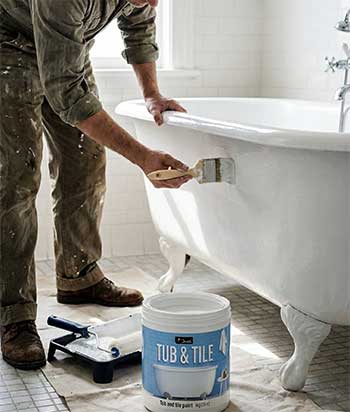
Let me set the scene.
My guest bathroom had this beige bathtub that looked permanently dirty no matter how much bleach I threw at it.
The surrounding tiles were a matching shade of “sadness.” I was desperate.
I didn’t have the budget to rip everything out, so I decided to paint it.
I chose DWIL because, unlike the scary industrial epoxies, this one claimed to be water-based and low odor.
When the box arrived, I was skeptical. It felt too light to contain a whole bathroom renovation.
But opening it up, I saw they included everything: the paint (Part A and Part B), a roller, masking tape, and even a plastic drop cloth.
The first thing I noticed when I popped the lid was the smell—or rather, the lack of it. If you have ever used traditional epoxy paint, you know it smells like a chemical factory exploded. You usually need a respirator and three fans running.
With DWIL, it smelled faintly like regular wall paint. I was painting in a small bathroom with just the window cracked open, and I didn’t get a headache once. That was a massive win right out of the gate.
Mixing was straightforward, but you have to be precise. I poured the hardener into the base and stirred like my life depended on it. The instructions said to wait a bit after mixing (induction time), so I used that time to double-check my taping.
Applying the first coat was… terrifying. It goes on thin. Extremely thin. I panicked, thinking I had ruined it because the beige was showing right through the white streaks. It looked patchy and frankly, terrible. I had to force myself to stop, walk away, and trust the process.
Two hours later, I went back for the second coat. This is where the magic happened. The second layer grabbed onto the first one and the opacity jumped from 30% to about 80%. By the third coat, the beige was gone.
Completely gone. The finish was leveling out nicely, hiding my roller marks better than I expected.
The hardest part wasn’t the painting; it was the waiting. You cannot use the shower for seven days. Seven. Days. I found myself going into the bathroom just to stare at it, resisting the urge to poke it to see if it was hard.
When I finally took my first shower in the “new” tub, I was wincing, expecting the paint to peel up around the drain. It didn’t. Water beaded up just like it does on a car hood. It felt smooth, maybe slightly more “grippy” than porcelain, but clean.
What I Loved About DWIL (The Pros)
When you take on a DIY project that involves potentially ruining your only bathtub, you need a product that fights in your corner. After living with this finish for a while, here is what stands out.
- The “No-Migraine” Formula
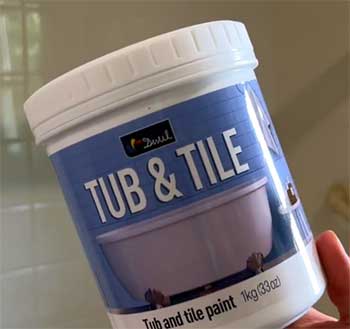
I cannot stress this enough: the low odor is the biggest selling point.
Most tub refinishing kits are epoxy-based. Epoxy is durable, yes, but the fumes are dangerous.
I have a cat and a toddler, and the idea of filling the house with toxic volatile organic compounds (VOCs) was a dealbreaker.
DWIL is water-based acrylic. It’s safer.
You don’t need to evacuate your family for the weekend just to paint a sink. If you are sensitive to smells or live in an apartment with poor ventilation, this feature alone makes DWIL the superior choice.
- The “Everything but the Kitchen Sink” Kit
I am the type of DIYer who always forgets something. I’ll buy the paint but forget the roller. Or I’ll get the roller but forget the tray. DWIL ships a complete ecosystem. The masking film they include comes with tape already attached to one edge (pre-taped masking film), which made prepping the floor and walls incredibly fast.
The roller is a high-density foam roller specifically designed for this paint. This matters because regular nap rollers will leave texture, and you want a glass-like finish on a tub. Having the right tools in the box eliminated the “what else do I need to buy?” anxiety.
- The Self-Leveling Capability
This was my biggest fear. I am not a professional painter. My hand shakes, and I am impatient. I was expecting brush strokes and roller marks to dry into the finish, leaving me with a textured, amateurish tub.
While the paint goes on wet and looks streaky initially, as it dries, it pulls itself tight and flat. It’s called “self-leveling,” and it actually works. By the time it cured, the surface looked baked-on rather than painted-on. It wasn’t factory-perfect porcelain, but it was 95% of the way there, which is impressive for a roll-on product.
- Forgiveness in Application
Because it is water-based, cleaning up mistakes is easy. I accidentally dripped a drop on my vanity cabinet. With epoxy, that would have been a permanent disaster requiring sanding to remove. With DWIL, I just wiped it up with a wet rag because it hadn’t cured yet.
That “open time” where the paint is workable but cleanable is a huge safety net for amateur renovators.
Where DWIL Might Frustrate You (The Cons)
I promised you a real user approach, so I am not going to sugarcoat the annoying parts. This product is not magic; it’s chemistry, and chemistry can be temperamental.
- The Consistency Shock
When you first open the can, you will think they sold you skim milk. The paint is incredibly runny compared to standard wall latex. This is intentional (to help it level out), but it makes the application tricky.
If you load up your roller too much, you will get drips. I had to babysit the vertical sides of the tub for the first 20 minutes after each coat, watching for gravity-induced sags. You have to apply thin, conservative coats. If you are heavy-handed, this product will punish you with runs that dry into hard bumps.
- The Prep Work is Brutal
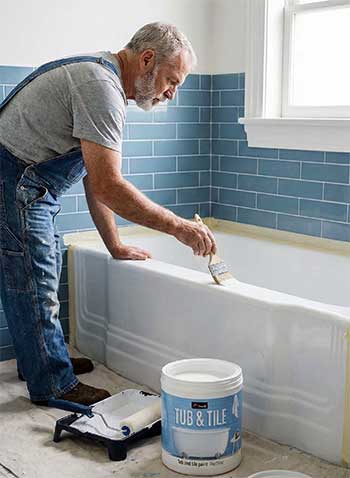
This isn’t really a fault of the paint, but rather the reality of the job.
However, DWIL is less forgiving of bad prep than thicker epoxies.
Because the paint is so thin, it doesn’t fill scratches or chips. It coats them.
If your tub has a chip, and you paint over it, you will just have a white painted chip.
You absolutely must use a repair filler (Bondo or similar) before you start painting if you want a smooth surface.
Furthermore, you have to sand the entire glossy surface of your old tub.
If you miss a spot and leave it shiny, the DWIL paint will peel off that spot in sheets within a month. You have to earn this finish with sweat.
- The Drying Game
The box says “touch dry” in a few hours, but “full cure” takes a week. That is a long time to have a bathroom out of commission. If you have only one bathroom, this is a major logistical headache. You cannot cheat this timeline.
If you run the shower on day 3, the warm water will soften the uncured paint and you will ruin the finish. You have to be disciplined.
Maintenance & Tips For DWIL Tub and Tile Paint
So you have successfully painted your tub. It looks gleaming white. How do you keep it that way? A painted tub is not the same as a fired porcelain tub. It is essentially a layer of high-tech plastic sitting on top of your old tub. You have to treat it differently.
- The “No-Scrub” Rule: Throw away your steel wool, your green scouring pads, and your stiff-bristle brushes. Mechanical abrasion is the enemy of this paint. If you scrub it hard, you will create micro-scratches. These scratches will trap dirt, making the tub look dingy, and eventually, they will wear through to the old color. You need to switch to a soft sponge or a microfiber cloth.
- Chemical Awareness: You also need to audit your cleaning cupboard. Bleach is too harsh for the long-term health of the acrylic resin. Ammonia-based cleaners (like Windex) can sometimes soften the finish over time. Do Use: Mild dish soap (like Dawn), specialized acrylic tub cleaners, or simple baking soda for tough spots. Do Not Use: Powdered cleansers (Comet/Ajax), bleach, solvents, or anything acidic like pure vinegar (unless diluted heavily).
- The Standing Water Issue: While DWIL is waterproof, no paint loves being submerged underwater forever. If your tub has a low spot where water pools and sits for 24 hours a day, that spot is the weak link. The constant moisture can eventually seep under the edge of the paint and cause blistering. After you shower, it is a good habit to quickly squeegee or wipe down the flat surfaces, especially around the drain. It adds ten seconds to your routine but adds years to the paint job.
- Repairing the Inevitable: If you drop a heavy shampoo bottle and chip the paint, fix it immediately. Water can get under the chip and start peeling the surrounding paint like a sunburn. Keep a small amount of the leftover paint (if you can seal it air-tight) or buy a small touch-up kit. Dab it on, let it dry, and you seal the breach.
Comparing DWIL To The Competition
When I was shopping, I narrowed it down to DWIL, Rust-Oleum, and Ekopel. Here is how they stack up.
- DWIL Tub & Tile Vs. Rust-Oleum Tub & Tile
The battle between DWIL and Rust-Oleum is essentially a battle between modern chemistry and old-school durability. Rust-Oleum is a traditional epoxy-acrylic formula that has been around for decades. Its biggest strength is its hardness.
Once that stuff cures, it is incredibly rigid and feels almost like a thin layer of stone. If you are refinishing a rental property and need the finish to survive rough tenants, Rust-Oleum might have a slight edge in sheer impact resistance.
However, the user experience is night and day. Rust-Oleum is solvent-based, which means the fumes are absolutely toxic. When people say you need a respirator, they aren’t kidding; the smell can linger in your house for days and can be dizzying even with windows open.
DWIL, on the other hand, is water-based. I was able to paint in a small bathroom with just a fan running and zero headaches. Furthermore, Rust-Oleum is notoriously sticky. It starts to tack up very quickly, meaning if you go back to fix a run, you will likely ruin the finish.
DWIL stays “open” longer, allowing you to correct mistakes without panic. If you value your lungs and your sanity over absolute maximum hardness, DWIL is the clear winner here.
- DWIL Tub & Tile Vs. Ekopel 2K
Ekopel 2K is a completely different animal. It isn’t a paint you roll on; it is a liquid coating you pour. You literally tape up the drain, mix a giant bucket of bright white resin, pour it over the tub, and let gravity do the work.
The finish you get with Ekopel is undeniably superior to DWIL in terms of texture. Because it is so thick (about 20 times thicker than a coat of paint), it is perfectly smooth and glass-like. There is no orange peel texture because there is no roller involved.
The downside is the terror factor. With DWIL, you are painting thin layers. If you mess up a coat, you can sand it and recoat. You have control. With Ekopel, you have one shot. If you pour it unevenly, or if it starts to pool in the wrong spot, you are in trouble.
It is also significantly more expensive, often costing double or triple what a DWIL kit costs. Ekopel also takes much longer to cure before you can touch it. I chose DWIL because I wanted a project I could control incrementally, rather than a “Hail Mary” pour that could go wrong in an instant.
- DWIL Tub & Tile Vs. Epodex Tile Paint
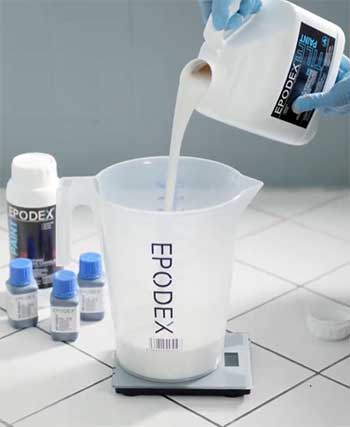
Epodex has made a name for itself with a massive variety of colors and a very slick marketing presence.
The primary difference here is the focus of the product.
Epodex is often marketed heavily as a tile paint that can be used in other areas, and they offer a one-component (1K) and two-component (2K) system.
Their color selection is generally better than DWIL, so if you want a matte black tub or a navy blue tile surround, Epodex is the place to look.
However, where DWIL shines is in the “kit” aspect specifically for wet areas.
DWIL feels engineered specifically for the unique abuse that bathtubs take—hot water immersion and soap scum.
While Epodex is excellent for wall tiles and dry areas, some users find that unless you buy their specific 2K protective coatings, it can be less robust in standing water than the DWIL formula. DWIL also tends to be more forgiving with its self-leveling on vertical surfaces. Epodex can sometimes run more easily if you aren’t careful with your mixing ratios.
If you are just doing wall tiles, Epodex is great, but for the actual bathtub basin where water sits, the specialized nature of the DWIL kit gave me more peace of mind.
Also Read: Popular Paints For The Outside of A Cast Iron Tub.
Frequently Asked Questions (FAQ)
Yes, but only if the preparation is perfect. It works as a cosmetic resurfacing agent, effectively extending the life of a tub by 3-5 years.
With proper care and no abrasive cleaning, a DWIL application typically lasts 3 to 5 years before it might need a touch-up or recoat.
Yes, once fully cured (after 7 days), the finish is completely waterproof and capable of withstanding hot showers and baths.
It works to change the color and hide stains, but it will not fix structural issues like cracks or rusting. It is an aesthetic fix, not a repair.
Final Thoughts
Renovating a bathroom is expensive, but painting it doesn’t have to be a nightmare. DWIL Tub and Tile Paint bridges the gap between those toxic, difficult industrial coatings and the cheap latex paints that peel in a week.
It offers a forgiving application process, a safe low-odor formula, and a finish that, while not identical to factory porcelain, is clean, bright, and durable enough for daily life. If you are willing to put in the elbow grease for the prep work, it is the best $50 you can spend on your bathroom.
Where should you buy this product?
To ensure you get the full kit with all the necessary tools and the freshest paint batch, you should buy the DWIL Tub and Tile Refinishing Kit directly on Amazon.