
If you want a cute, compact, budget-friendly mixer for casual baking, I’d buy the Dash Stand Mixer for small kitchens, dorms, apartments, and quick weekday recipes. I would not buy it expecting heavy bread dough performance or pro-level power.
In my view, this mixer makes the most sense when you want help with cake batter, whipped cream, cookie dough, pancake mix, and light prep without spending KitchenAid money.
Dash keeps the footprint small, the price approachable, and the whole experience simple enough for everyday use.
My Experience With The Dash Stand Mixer
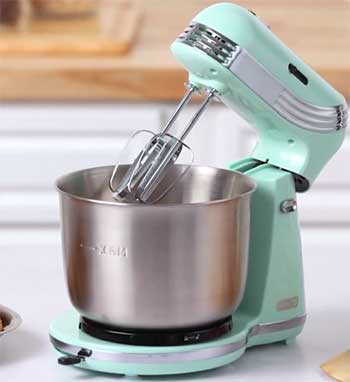
When I first looked at Dash Stand Mixer reviews, I noticed one pattern right away: people either love it because it is small and affordable, or they feel disappointed because they expected it to behave like a full-size premium stand mixer.
That is the key to understanding this product.
You need to judge it by what it is, not by what a 25-pound kitchen beast can do.
The Dash Everyday Stand Mixer is usually described as a compact 6-speed mixer for everyday baking, and that matches how I’d use it.
Reviews note that it comes with a 7-cup bowl, beaters, and dough hooks, which gives you the basics for light mixing jobs.
I like that because you are not paying for a huge attachment ecosystem you may never use.
In real kitchen terms, I see this mixer as a helper, not a hero. If I’m making boxed cake mix, frosting, muffins, brownies, scrambled eggs for a brunch bake, whipped cream, or a small cookie batch, I’d be happy using it.
It saves my wrist, keeps things moving, and does not bully my countertop. You can tuck it away easily, which matters if your kitchen already feels like a game of Tetris.
The biggest thing I’d watch is batch size. The bowl is not huge, and the motor is not built for punishing dough sessions. So, if you are someone who makes double batches of dense cookie dough or kneads bread every weekend, you may outgrow it fast.
That does not make it bad. It just means it has a lane.
I also like the approachable feel. Some stand mixers feel like serious equipment before you even plug them in. Dash feels more casual. You can use it without overthinking every setting. The tilt-head design also makes it easier to add ingredients, scrape the bowl, and swap attachments.
From an analytical perspective, the Dash Stand Mixer wins when your buying decision is based on price, size, color, simplicity, and convenience. It loses when your main needs are torque, capacity, long mixing sessions, premium build, and accessory range.
That is why I’d call it a smart starter mixer, a small-space mixer, or a light-duty mixer rather than a forever machine for serious bakers.
Also Read: Differences Between Tilt Head And Bowl Lift Stand Mixers.
Pros of Dash Stand Mixer
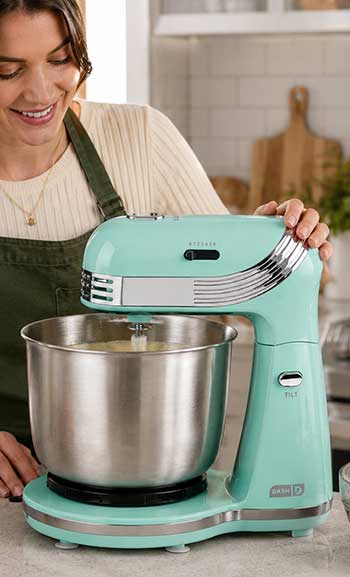
- Compact Design That Actually Fits Your Life: The biggest reason I like the Dash Stand Mixer is that it does not demand a permanent throne on your counter. You can move it, store it, and pull it out without feeling like you are lifting gym equipment. If your kitchen is small, this matters more than people admit. A mixer you can actually reach for is more useful than a powerful one hiding in a cabinet because it is too annoying to move.
- Budget-Friendly Price For Casual Bakers: You do not need to spend hundreds just to make cupcakes once in a while. Dash gives you a stand mixer experience at a much friendlier price. That makes it ideal if you are testing whether you even enjoy baking. I like that it lowers the barrier. You can get hands-free mixing without making a big appliance commitment.
- Easy Enough For Beginners: This mixer feels approachable. You are not studying a control panel or worrying about complicated attachments. You pick a speed, add ingredients, scrape when needed, and keep going. If you are new to baking, that simplicity can help you build confidence fast.
- Good For Light Everyday Recipes: For cake batter, frosting, pancake mix, whipped cream, eggs, and small cookie batches, Dash can be genuinely useful. It is not trying to be a commercial mixer. It is trying to make normal kitchen tasks easier, and that is where it shines.
- Fun Look And Small-Kitchen Personality: Dash appliances are known for playful colors and compact styling. That may sound cosmetic, but I think design affects whether you enjoy using something. If a mixer looks friendly and fits your kitchen vibe, you are more likely to use it.
Cons of Dash Stand Mixer
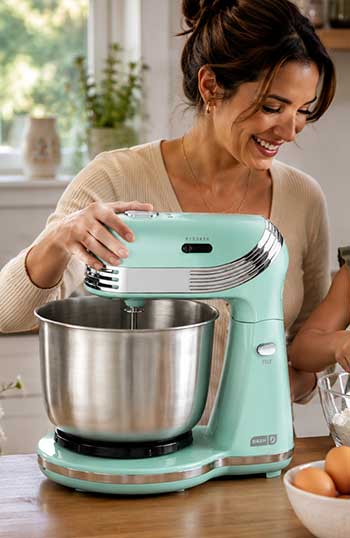
- Not Built For Heavy Dough: This is the main limitation. If you want to knead pizza dough, bagel dough, or dense bread dough often, I would not make Dash my top pick. It may handle small, soft doughs carefully, but that is not where it feels strongest.
- Small Bowl Capacity: The smaller bowl is great for storage but limiting for bigger recipes. If you bake for a large family or prep multiple batches at once, you may find yourself mixing in rounds. That can get old quickly.
- Lighter Build Than Premium Mixers: A lightweight mixer is easy to move, but it can also feel less planted during thicker mixes. You may need to keep an eye on stability, especially when ingredients get heavier.
- Fewer Long-Term Upgrade Options: KitchenAid has a huge attachment world. Dash is more basic. If you want pasta rollers, grinders, spiralizers, and long-term expansion, Dash probably will not satisfy you.
Maintenance And Tips For Dash Stand Mixer
- Start Slow To Avoid Mess: I always recommend starting at the lowest speed, especially with flour, powdered sugar, cocoa powder, or dry mixes. Let the ingredients come together first, then increase speed. This keeps your counter from looking like a baking crime scene.
- Scrape The Bowl Often: Because compact mixers can leave ingredients around the sides, stop and scrape the bowl with a spatula. You will get smoother batter and fewer dry pockets. Do not treat scraping as a flaw. Even pricier mixers need it sometimes.
- Use Small Batches For Best Results: The Dash Stand Mixer performs best when you respect its size. Keep batches modest. If a recipe looks large, split it. You will get better texture, less strain on the motor, and fewer frustrating stalls.
- Avoid Overworking Thick Dough: Even if dough hooks are included, I’d be gentle. Use them for softer doughs and shorter sessions. If the mixer starts struggling, stop. Finish by hand rather than forcing the motor. That one habit can help the appliance last longer.
- Clean Attachments Soon After Use: Do not let batter dry onto beaters or hooks. Rinse them soon after mixing, then wash properly. Dried dough turns cleanup into unnecessary arm day.
- Wipe The Mixer Body Carefully: Unplug the mixer first. Then wipe the body with a damp cloth. Do not soak it, spray water into openings, or treat it like a bowl. Small appliances last longer when you keep moisture away from the motor housing.
- Store Attachments Together: Keep the beaters and dough hooks in a small container or bag near the mixer. This sounds boring, but it saves you from the classic “where did that one hook go?” kitchen mystery.
- Let The Mixer Rest Between Tough Jobs: If you are mixing something thicker, give the motor breaks. Short pauses help prevent overheating and keep performance steadier.
Dash Stand Mixer Compared With Other Brands
- Dash Vs. Cebory Stand Mixer
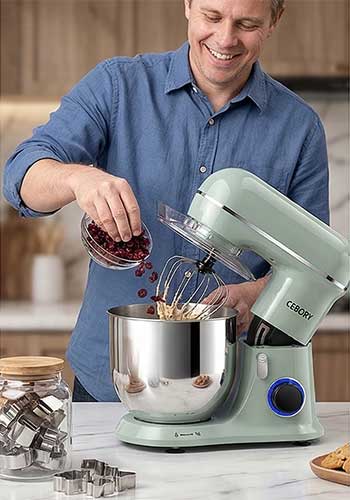
If I’m choosing between Dash and Cebory, I’m basically choosing between compact convenience and bigger-batch power.
Dash feels like the mixer I’d buy when I want something small, cute, simple, and easy to pull out for cupcakes, whipped cream, pancakes, frosting, or a quick cookie mix.
Cebory, on the other hand, aims more at home bakers who want a larger bowl, more speed control, and a stronger full-size mixer feel.
Cebory models are commonly listed with a 6 to 6.5-quart stainless steel bowl, 10-speed control, tilt-head design, and attachments like a dough hook, beater, and whisk.
Some listings also mention a 660W motor and pulse function.
That tells me Cebory is better if you make larger batches or want more room for dough and batter. Dash is better if you care more about saving space and spending less.
Here’s my honest take: I’d pick Dash for light, casual baking. I’d pick Cebory if I wanted a more traditional stand mixer without jumping into premium-brand pricing. Dash is friendlier for a tiny kitchen. Cebory is more practical when your recipes start getting bigger.
- Dash Vs. Kitchen In The Box Stand Mixer
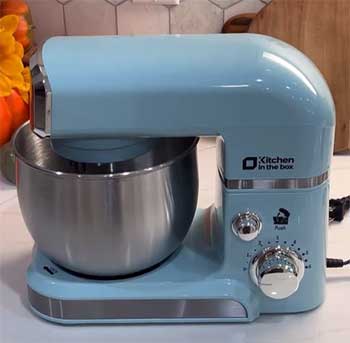
Dash and Kitchen In The Box are very different kinds of value mixers. Dash is the small-space choice.
Kitchen In The Box is the “I want a lot more bowl for my money” choice.
Kitchen In The Box lists a high-power stand mixer with an 8.5-quart stainless steel bowl, 900W motor, 10 speeds, tilt-head design, and accessories including a dough hook, wire whip, flat beater, and splash guard.
That is a big jump from the Dash experience. If you bake for family gatherings, parties, holidays, or meal prep, you’ll probably appreciate that extra capacity.
But bigger is not automatically better for everyone. I’d still choose Dash if I were baking for one or two people, living in an apartment, or making quick desserts once in a while.
A large mixer can become annoying if you do not have counter space or cabinet space. You may end up avoiding it because it feels like too much appliance for a small recipe.
So, if you want lightweight, simple, and easy storage, Dash wins. If you want a larger bowl and stronger batch potential, Kitchen In The Box makes more sense. You just need to be honest about your kitchen habits.
Are you baking one banana bread, or are you feeding the whole neighborhood?
- Dash Vs. Bosch Stand Mixer
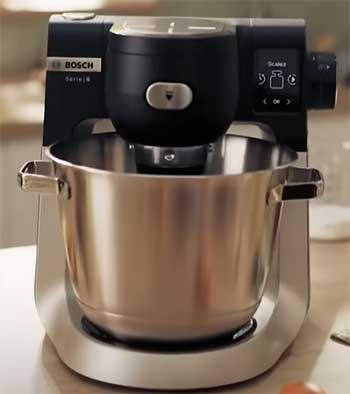
This comparison is almost unfair, but it is useful. Dash is a casual beginner mixer.
Bosch is built for serious mixing, especially if you care about bread dough, long-term durability, and multi-use kitchen performance.
Bosch describes its stand mixer lineup as powerful and long-lasting, with multiple series and a wide range of attachments.
The Bosch Universal Plus is often sold as a 6.5-quart mixer, and some retailers describe it with strong dough-focused capacity, making it much more suitable for frequent bread bakers than a compact Dash mixer.
If I were baking sandwich bread, pizza dough, cinnamon rolls, and large yeast dough recipes every week, I would not expect Dash to keep up. Bosch is the better tool for that kind of kitchen life. It is also usually much more expensive, so you should not buy it unless you’ll actually use the strength.
Dash still wins in one very real way: it is easier to justify. You can buy it for light use without feeling like you are making a major appliance investment. Bosch is for the person who already knows baking is a regular habit. Dash is for the person who wants help without turning the kitchen into a bakery station.
- Dash Vs. COOKLEE Stand Mixer
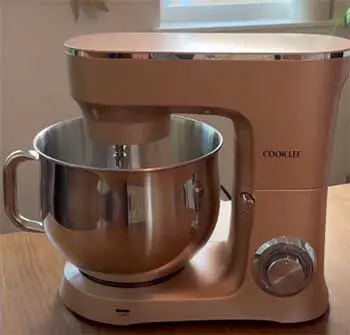
Dash and COOKLEE both appeal to value-focused buyers, but they serve different moods.
Dash feels small, playful, and beginner-friendly. COOKLEE feels larger, louder in personality, and more batch-oriented.
COOKLEE’s 9.5-quart stand mixer listings commonly mention a 660W motor, 10 speeds, tilt-head design, dishwasher-safe attachments, dough hooks, flat beaters, wire whip, and pouring shield.
That huge bowl is the main difference. If you often bake for a family, prep big batches, or hate stopping to reload ingredients, COOKLEE gives you far more room to work.
But I would not automatically tell every casual baker to buy COOKLEE. A 9.5-quart bowl can feel excessive if you usually make one cake, one batch of muffins, or a small frosting recipe.
With very small recipes, oversized bowls can sometimes feel less convenient because ingredients may spread out more. Dash feels more natural for smaller, everyday jobs.
My simple choice would be this: buy Dash if you want a compact mixer for casual recipes and easy storage. Buy COOKLEE if you want bigger capacity, more accessories, and a stand mixer that feels closer to a full-size baking setup. Dash is the cute helper. COOKLEE is the budget big-batch machine.
Frequently Asked Questions (FAQ)
KitchenAid Artisan, Breville Bakery Chef, Ankarsrum Original, Cuisinart Precision Master, and KitchenAid Artisan Mini are common top picks across major stand mixer discussions.
Joanna Gaines is strongly associated with KitchenAid, including Magnolia-style KitchenAid products.
For most serious home bakers, I’d pick KitchenAid Artisan or Breville Bakery Chef. For tight budgets and small spaces, I’d consider Dash.
There is no clear public proof of one specific personal stand mixer. For chef-level use, I’d look at premium KitchenAid, Breville, or commercial-grade options.
Final Verdict: Should You Buy The Dash Stand Mixer?
I’d buy the Dash Stand Mixer if you want an affordable, cute, compact mixer for light baking and everyday kitchen help. I would skip it if you want power, large capacity, or frequent bread-making performance.
For beginners, small apartments, occasional bakers, and gift buyers, Dash makes a lot of sense. It is not the strongest mixer in the room, but it is friendly, practical, and easy to live with.
Buy it for convenience, not bragging rights, and you will probably enjoy it.