
I’ve been incorporating BOSU balance trainers into my fitness routine for years now, starting with the classic Original and later adding the NexGen to push my training further.
In this article, I’ll share my personal experiences and detailed comparison to help you decide which one suits your workouts, goals, and skill level best—whether you’re focusing on core stability, agility, or full-body strength.
| Feature | BOSU Original (Home/Pro) | BOSU NexGen (Home/Pro) |
| Dome Surface | Smooth, non-slip | Textured with four quadrants and notches for enhanced grip and visual/tactile cueing |
| Base | Rubberized non-skid feet (Home) or dually over-molded platform (Pro) | Similar dually over-molded non-skid base for durability |
| Diameter | 65 cm | 65 cm |
| Weight Limit | Up to 350 lbs (Pro), around 300 lbs (Home) | Up to 350 lbs |
| Best For | General balance, beginner to intermediate core and cardio | Advanced precision, agility, strength, and dynamic movements |
| Grip on Dome | Reliable but can slip when sweaty | Superior textured grip, minimal slip even in intense sessions |
| Warranty | Typically 1-2 years depending on model | Typically 1-2 years |
| Price Range (approximate) | More affordable entry point | Slightly higher for the textured upgrades |
Key Differences Between BOSU Original And NexGen
After hundreds of sessions on each, the differences reveal themselves most during longer or more intense training blocks.
- Dome Texture And Overall Design Philosophy
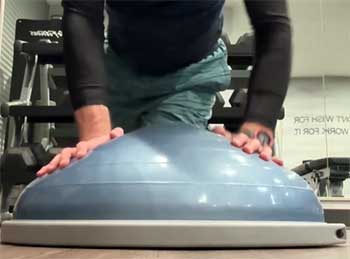
The Original features a completely smooth dome, creating a uniform surface that promotes broad, instinctive instability.
This allows for a natural “sink-in” sensation where your body weight compresses the dome evenly, recruiting a wide range of stabilizer muscles without any guided interference.
It’s pure challenge—your proprioception and core have to work harder to maintain balance across the entire area.
On the flip side, the NexGen revolutionizes this with its four-quadrant textured design, incorporating raised grip zones, dividing lines, and subtle notches.
These aren’t just cosmetic; they divide the dome into clear sections, offering visual and tactile landmarks that transform random placement into intentional positioning. In practice, this means the NexGen feels more structured, almost like having a coach marking spots for optimal form.
- Grip And Slip Resistance In Varying Conditions
Sweat is inevitable in tough sessions, and this is where the Original can frustrate me—it starts reliable but turns slick quickly, especially during cardio or when barefoot. I’ve had to pause mid-circuit to wipe it down or readjust footing, which kills momentum.
The NexGen’s textured surface changes the game entirely; the raised patterns and specialized material provide exceptional traction, holding feet or hands firmly even in prolonged, high-sweat workouts. I’ve pushed through full HIIT sessions without a single slip, building confidence to add speed or power without hesitation.
Also Read: Comparison of Perifit And Joy On Pelvic Floor Trainers.
- Precision Cueing, Repeatability, And Form Consistency
Without any markings, the Original demands reliance on internal body awareness for placement—great for developing intuition but challenging for symmetrical training or replicating exact setups. If I’m doing single-leg work, slight variations in foot position from rep to rep can lead to imbalances over time.
The NexGen addresses this head-on with its quadrant system and notches, acting as built-in guides for precise alignment. For example, centering your foot in a quadrant ensures consistent stance width or forward/back positioning, leading to better muscle symmetry, reduced risk of compensatory patterns, and measurable improvements in technique. This has made my advanced drills far more repeatable and effective.
- Suitability Across Different Movement Types And Intensities
Both handle foundational balance and core work brilliantly, but the Original excels in slower, endurance-focused exercises where unrestricted wobble recruits deeper muscles organically—like long planks or gentle mobility flows.
Its forgiving nature suits rehab or beginner phases perfectly. The NexGen, however, is engineered for dynamic, multi-planar movements: plyometric jumps, quick lateral shifts, agility ladders, or explosive power drills.
The secure footing and cues allow faster transitions and higher speeds, making it ideal for athletic training or sport-specific prep. I’ve noticed sharper reflexes and better transfer to activities like running or hiking after incorporating more NexGen sessions.
- Training Feedback, Progression Potential, And Long-Term Engagement
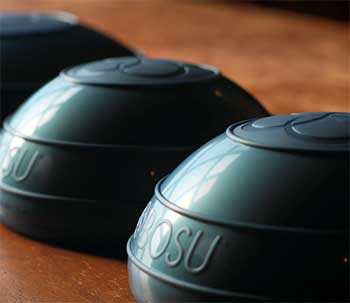
The Original provides raw, unfiltered instability feedback that builds resilience gradually—it’s timeless and never feels outdated for general fitness.
However, once you plateau on basics, it can lack that extra layer to push boundaries.
The NexGen adds multifaceted feedback: tactile from textures, visual from quadrants, and proprioceptive from firmer response.
This accelerates progression in coordination, power output, and neuromuscular efficiency. Over months, I’ve seen faster gains in agility and stability, plus it keeps workouts fresh by encouraging new variations aligned with the cues.
- Subtle Nuances In Feel And Muscle Activation
The Original’s smoother, softer compression engages broader muscle groups in a more diffused way, great for overall endurance. The NexGen feels slightly firmer and more responsive under load, targeting finer stabilizers and encouraging explosive recruitment—almost like it “talks back” to guide adjustments mid-movement.
In short, the Original feels like a timeless tool for foundational growth, whereas the NexGen acts as a coach on the dome—nudging you toward cleaner, safer, and more advanced performance.
What Makes A BOSU Ball Special?
That first wobbly step onto a BOSU changed everything for me—it instantly activates your core, forces better posture, and turns basic moves into serious challenges.
You can train dome-side up for balance and instability work or flip it for a stable platform that still adds elevation. Both models deliver this magic, but the NexGen’s refinements make certain exercises feel more controlled and progressive in everyday use.
Key Features of The BOSU Original
The Original is the design that hooked me initially—it’s straightforward, reliable, and focuses purely on instability without distractions.
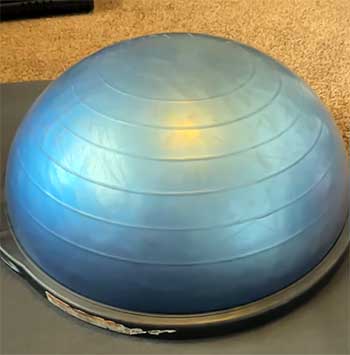
- Smooth dome surface that offers a consistent, even feel across the entire area, allowing your body to sink in slightly for natural muscle recruitment during stands, squats, or planks.
- Sturdy non-skid base with rubberized feet or over-molded construction (depending on Home or Pro version) that keeps the unit firmly planted on hardwood, carpet, or gym floors.
- Full versatility for quick flips between dome-up and platform-up positions, making it seamless to switch from balance drills to push-ups or step-ups mid-workout.
- Durable bladder and platform materials built to handle repeated inflation, heavy loads, and years of regular sessions without losing shape or responsiveness.
- Classic instability profile that’s challenging enough for progress but forgiving for longer holds, perfect for building foundational proprioception and core endurance.
I’ve used mine for everything from post-injury rehab to high-volume circuits, and its simplicity lets me focus entirely on form and effort rather than equipment quirks.
Also Read: Comparison of kGoal And Elvie Pelvic Floor Trainers.
Pros And Cons of The BOSU Original
I’ve put the Original through years of daily use, and its strengths lie in reliability and accessibility.
Pros
- Smooth surface creates a highly forgiving entry point for beginners or anyone recovering from injury, easing the learning curve while still delivering effective instability.
- Generally more affordable pricing makes it an easy first purchase when exploring balance training without big commitment.
- Pure, distraction-free design encourages body awareness and natural adaptation, leading to organic improvements in core strength and postural control.
- Exceptional versatility across exercise types—from gentle mobility flows to challenging cardio—without needing to interpret markings or textures.
- Proven long-term durability and timeless appeal that has kept it relevant for decades in homes and gyms worldwide.
Cons
- Smooth dome becomes noticeably slippery once sweat accumulates, often breaking concentration during longer or high-effort sessions.
- Absence of positioning cues means form consistency depends entirely on experience, which can slow progress for complex or asymmetrical movements.
- Limited feedback for advanced agility or power development, making it feel plateau-inducing once you’ve mastered basic instability.
- Can require more frequent cleaning or chalk use to maintain grip in humid environments or intense training phases.
It’s the perfect starting point that grows with you up to intermediate levels.
Key Features of The BOSU NexGen
The NexGen introduced updates that felt like a direct response to pain points I experienced with the Original—it’s evolved for more intentional, precise training.
- Textured dome surface divided into four distinct quadrants with raised grip zones and subtle notches, providing both visual markers and enhanced traction for feet or hands.
- Advanced grip technology throughout the dome that combines textured patterns with non-slip material, ensuring secure contact even when sweat builds up during intense intervals.
- Built-in positioning cues via quadrant lines and central markers that guide exact foot or hand placement, helping replicate ideal stance across multiple reps or sessions.
- Robust construction matching the Pro-level standards, including dually over-molded bases that resist wear in high-traffic home or studio environments.
- Optimized responsiveness for dynamic and explosive movements, with the texture and firmness supporting quicker transitions, jumps, and lateral shifts without compromising stability.
These features turned my workouts from good to targeted—I’ve found myself progressing faster in agility and power because the equipment actively supports better execution.
Also Read: Comparison of Yarlap And Elvie Pelvic Floor Trainers.
Pros And Cons of The BOSU NexGen
The NexGen earned its permanent spot in my routine by addressing almost every limitation I felt with the Original.
Pros
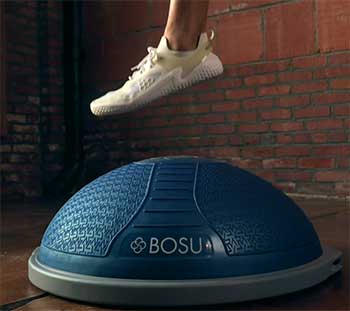
- Dramatically improved grip through textured quadrants keeps feet and hands locked in place, enabling higher-intensity efforts and reducing injury risk from slips.
- Visual and tactile cueing system naturally guides better alignment, resulting in cleaner technique, reduced imbalances, and faster skill acquisition.
- Opens up a wider range of advanced exercises—plyometrics, quick directional changes, single-leg power moves—with confidence-inspiring stability.
- Professional-grade feel motivates consistent training and makes home workouts feel more structured and effective.
- Enhanced durability and responsiveness support long-term progression, from intermediate strength building to athletic performance tuning.
Cons
- Textured surface requires a short adaptation period if transitioning from smooth models—the raised zones can feel busy or distracting initially.
- Higher price point may not feel justified for casual users or those sticking to basic balance and core routines.
- Extra texture can collect dust or require slightly more cleaning effort compared to the completely smooth Original.
- Firmer, more responsive feel might fatigue stabilizers quicker during very long sessions or when you’re already exhausted.
Once you’re ready to level up, the advantages become undeniable.
How They Perform in Real Workouts?
Testing them side-by-side revealed clear preferences depending on the session type.
Core work like planks, Russian twists, or V-sits feels classically challenging on the Original—the smooth sink-in recruits deep abs effortlessly. The NexGen lets me extend holds further thanks to secure hand placement and quadrant-guided symmetry.
Cardio circuits with burpees, mountain climbers, or lateral jumps flow better on NexGen; consistent landing zones keep rhythm unbroken. On Original, occasional foot shifts disrupt momentum.
Lower-body focus—single-leg deadlifts, lunges, or step-ups—benefits from NexGen’s cues for even weight distribution and precise stance width. Original provides great burn but less repeatability.
Upper-body platform work is strong on both, though NexGen inspires adding dome-side instability elements more confidently.
Agility and sport-specific drills shine brightest on NexGen—quick cuts and explosive pushes transfer directly to running or court performance.
Lighter recovery days still favor Original’s gentler, flowing feel.
Is One Better for Certain Goals?
- Beginners or budget-conscious users: Original builds essentials perfectly.
- Intermediate/advanced seeking precision and power: NexGen accelerates gains.
- Rehab or low-impact focus: Original’s smoothness eases in.
- Athletic or dynamic training: NexGen’s grip and cues dominate.
Both handle heavy users and tough use equally.
Also Read: Is OxyFit Breath Trainer Worth It?
Frequently Asked Questions (FAQ)
The main differences are in the dome: Original has a smooth surface, while NexGen features textured quadrants for better grip and positioning cues.
It depends on your needs—NexGen for advanced precision and grip, Original for classic versatility and simplicity.
The Elite has a firmer, denser dome for more resistance and easier initial balance, unlike the softer, more challenging domes on standard Original and NexGen models.
Yes, if you value balance training, core strength, and workout variety—it adds challenge to routines and supports rehab or athletic goals effectively.
Wrapping It Up: Which One Should You Choose
My journey started with the Original, which built my foundation and taught me the power of instability training. It remains reliable and effective. But once I tried the NexGen, its grip, cues, and precision became indispensable for serious progress.
If you’re beginning or want pure challenge on a budget, choose the Original—you’ll get tremendous value. As skills and intensity grow, you’ll likely appreciate the NexGen like I do. Either way, adding a BOSU reshapes your fitness in lasting ways.
Your balance, strength, and confidence will thank you—step on and feel the difference yourself.