
I spent months testing Barrina T5 and T8 lights in my garage workshop and indoor plant shelves, tracking brightness, heat, power draw, and real results on seedlings and tools.
This comparison lays out exactly how the two models stack up so you can pick the right one for your space without wasting money or dealing with dim corners later.
| Feature | Barrina T5 | Barrina T8 |
| Tube Diameter | 5/8 inch (16 mm) | 1 inch (26 mm) |
| Typical Wattage (2–4 ft) | 10–20 W per tube | 20–42 W per tube |
| Lumens (approx. per tube) | 1100–2200 | 2000–5500 |
| PPFD at 8 inches | ~90–100 µmol/m²/s | ~210 µmol/m²/s |
| Design | Slim single-row | Often V-shape dual-row |
| Best For | Seedlings, tight racks, under cabinets | Workshops, denser plant growth, larger areas |
| Linkable Units | Up to 8–12 | Up to 6–10 |
| Heat Output | Very low | Low to moderate |
| Price Range (multi-pack) | Lower per tube | Higher but more output per dollar |
Key Differences between Barrina T5 And T8 LED Tube
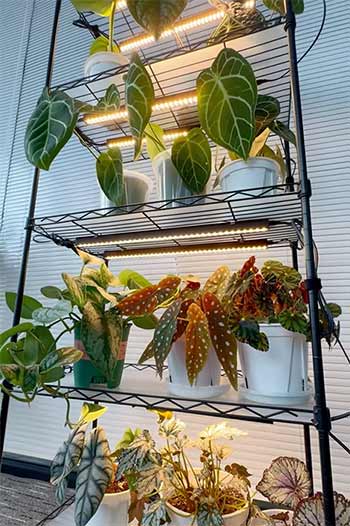
- Diameter and physical profile The T5 tube stays slim enough to slide into narrow under-cabinet spaces or multi-level plant shelves without blocking air flow or looking bulky. I mounted four T5 bars on a metal rack with only two inches of clearance above the trays and still had room to water. The T8 tube takes more room. Its thicker body and frequent V-shaped housing push the light farther from the surface if space is tight. On open garage ceilings the extra bulk disappears, but in a packed IKEA cabinet the T5 wins on pure fit.
- Light intensity and coverage pattern At the same hanging height the T8 puts out roughly twice the photosynthetic photon flux density. My meter read about 91 µmol/m²/s under a T5 at eight inches and just over 210 under a comparable T8. That gap matters for plants that want more than basic vegetative light. The T5 spreads light in a narrower downward cone. The T8’s dual-row V design throws light sideways as well, filling shadows between shelves better. When I hung both over the same workbench the T8 left fewer dark spots under tool cabinets.
- Power draw and total system load A typical two-foot T5 pulls around 10 watts. A four-foot version sits near 20 watts. Matching T8 bars often draw 24 to 42 watts each. Linking six T5s stays under 100 watts total. Six T8s can climb past 200 watts. My electricity monitor showed the difference on long winter days when the lights ran sixteen hours. The T5 pack cost less to run, but I needed more bars to reach the same overall brightness.
- Installation flexibility and mounting style Both use the same snap clips, hanging wires, and short connectors. The thinner T5 clips into tighter spots and feels lighter when you hang a long chain. The T8’s larger body and optional reflectors add a few extra steps if you want maximum throw. I found the T5 quicker to set up on temporary racks. The T8 felt more permanent once the reflectors clicked in.
- Heat management and long-term stability Neither runs hot enough to burn leaves at normal distances, yet the T5 stays cooler to the touch after eight hours. The T8 warms more because of higher wattage and denser diodes. In a closed cabinet the T5 kept ambient temperature lower. On an open garage ceiling the difference vanished. After three months of daily use neither set showed flicker or color shift.
- Cost per usable lumen Pack pricing makes the T5 look cheaper up front. Once you calculate light delivered to the surface the T8 often costs less per unit of intensity. I paid more for a six-pack of T8s yet covered a larger work area with fewer fixtures. For pure seedling trays the T5 still wins on total cash outlay.
Also Read: Differences Between Gardyn And AeroGarden.
Key Features of Barrina T5
- Slim aluminum body that fits tight spaces The housing stays narrow and light. I slid bars between shelves only three inches apart and still reached every tray. The low profile also works under kitchen cabinets where a thicker tube would hang too low and hit your head.
- Low wattage that keeps power bills quiet Ten to twenty watts per bar means you can link a dozen tubes and stay under the load of a single old fluorescent fixture. My garage circuit never tripped even when the lights ran all day beside a compressor.
- Full-spectrum 5000 K output aimed at plants and tasks The color looks clean and neutral. Seedlings under these bars stayed compact without stretching. On the workbench the same light made labels and fine tool marks easy to read without harsh glare.
- Linkable design with simple connectors Snap the short cables or end-to-end plugs and the chain behaves like one long fixture. I built a continuous eight-foot run over a seedling bench in under ten minutes.
- Plug-and-play cords with on-off switches No hardwiring required unless you want it. Each pack includes enough switched cords that you can control sections separately. I kept one switch near the door and another by the workbench.
- Quiet operation and zero flicker After months of use the drivers stayed silent. Cameras and video calls under the lights never picked up banding.
Also Read: Differences Between Rise Gardens And AeroGarden.
Pros of Barrina T5
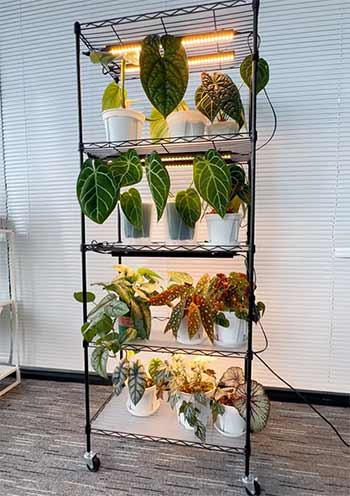
- Excellent fit for compact and multi-tier setups If your shelves sit close together or your under-cabinet gap is narrow, the T5 slides in without forcing you to raise the entire rack. I used them in a metal cart with six-inch vertical spacing and still had airflow.
- Lower running cost for long daily cycles Sixteen-hour photoperiods add up. The lower wattage kept my winter electric bill from jumping when I expanded the seedling area.
- Gentle intensity that suits sensitive seedlings and microgreens Young plants under the T5 rarely showed tip burn even at four inches. The softer light lets you hang the bars closer and still keep plants compact.
- Lightweight and easy to reposition Moving a full chain of T5s takes one person and a stepladder. I rearranged the garage layout twice without calling for help.
- Lower upfront price for covering small areas A six- or eight-pack costs less than a matching T8 set. For a single shelf or a short workbench the savings are real.
- Cooler operation in enclosed spaces Closed cabinets and plastic humidity domes stay cooler. That helps when you already fight heat in summer.
Cons of Barrina T5
- Limited intensity for larger plants or dense canopies Once seedlings move past the first true leaves the T5 starts to feel weak. Plants stretch or slow down unless you add more bars or drop the height to almost touching.
- Narrower beam leaves more shadows On a wide workbench the edges stayed dimmer. I had to add a second parallel row to kill the dark zones.
- More fixtures needed for the same total light To match one strong T8 you often need two T5s. That means more mounting points, more cords, and more visual clutter.
- Frosted covers on some models reduce peak output A few packs arrive with diffused lenses that soften the light further. Great for comfort, less ideal when you need every photon.
- Link limit can force extra power cords on long runs Beyond eight or twelve tubes you start needing additional plugged cords. In a large garage that becomes messy.
Key Features of Barrina T8

- Higher lumen output and stronger PPFD Each bar delivers noticeably more light. On the same rack the T8 cut the time seedlings needed to reach transplant size by almost a week in my side-by-side trial.
- V-shaped dual-row diode layout The angled boards push light outward as well as down. Shadows under hanging tools or between plant pots shrink. Optional reflectors boost the usable output another fifteen to twenty percent.
- Aluminum body with better heat sinking for higher power The thicker housing still stays cool enough for close mounting, yet it handles the extra wattage without color shift over long days.
- Clear cover that maximizes throw Unlike some frosted T5 versions, the clear lens on many T8 models sends more photons straight to the surface. The trade-off is slightly more glare if you look directly at the tube.
- Same linkable system and mounting hardware You can mix lengths and still use the stock clips and cords. I ran a four-foot and a two-foot T8 on the same circuit without adapters.
- Higher CRI and consistent color across the length Colors on paint chips and plant leaves looked true under the T8. The even diode spacing prevented hot spots that sometimes appear on cheaper single-row lights.
Also Read: Differences Between Click and Grow And AeroGarden.
Pros of Barrina T8
- Strong enough for faster growth and bigger work areas The higher PPFD shortens the seedling stage and keeps larger houseplants compact. On the garage ceiling one row of T8s replaced two rows of older fluorescents.
- Better side lighting from the V design Tools hanging on pegboards and plants on the edge of trays receive usable light. I noticed fewer leggy stems on the outer rows.
- Higher output per fixture means fewer mounts I covered a ten-foot workbench with four T8s where I previously needed seven T5s. Cleaner ceiling, fewer cords.
- Solid value when measured by light delivered Even though each pack costs more, the cost per usable lumen often lands lower once you factor in the intensity gain.
- Reflectors and clear covers push efficiency higher Adding the optional reflectors lifted my meter readings another twenty percent in the center of the beam.
- Handles longer daily run times without stress Higher power still stays within safe temperatures. After continuous sixteen-hour days the housing never felt hot enough to worry about.
Cons of Barrina T8
- Higher power draw raises the monthly cost Running a full bank of T8s for plant racks or a large shop adds noticeable watts. My monitor showed the difference clearly on the electric bill.
- Thicker body needs more clearance Tight cabinets or low under-shelf gaps force you to raise the entire structure or accept a closer hanging height that can stress sensitive plants.
- Stronger light can cause tip burn if hung too close Seedlings under four inches sometimes browned on the edges until I raised the bars. You must watch distance more carefully than with the T5.
- Higher upfront cost for the same number of tubes A matching multi-pack costs more. If your budget is tight and the area is small, the extra cash may not feel justified.
- Slightly more glare from clear covers Looking directly at a lit T8 is harsher than looking at a frosted T5. In a low-ceiling garage that glare reaches eye level more often.
Performance in Different Settings
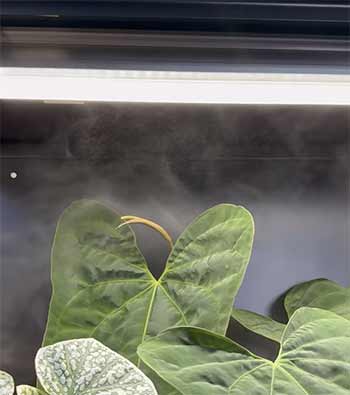
I tested both lights in three environments that matter most to everyday users.
First, a multi-tier seedling rack. The T5 bars gave even coverage across every tray when hung six to eight inches above the soil.
Germination stayed high and seedlings stayed short.
When I switched the same trays to T8 the growth rate increased, yet I had to raise the lights to twelve inches to avoid stress on the youngest plants.
Second, a standard garage workbench. The T8 transformed the space. Shadows under hanging clamps disappeared and fine print on packaging became easy to read.
The T5 still worked but required a second parallel row and left the far edge of the bench softer.
Third, an under-cabinet kitchen strip. The slim T5 disappeared into the gap and gave clean task light without heat. The T8 simply would not fit without dropping below the cabinet face.
Across all three tests the build quality held up. No failed diodes, no loose connectors, and no color shift after hundreds of hours.
Energy Use and Long-Term Cost
Power consumption is the quiet factor that shows up on the bill months later. A single four-foot T5 at twenty watts running sixteen hours a day uses about 0.32 kWh.
The same length T8 at forty watts uses twice that. Multiply by six or eight fixtures and the yearly difference becomes real money, especially in regions with high electricity rates.
Offsetting that cost is the reduced number of fixtures and the faster results when light intensity matters. For pure workshop lighting where the lights run only when you work, the T8’s higher output often pays for itself in convenience. For continuous plant racks the T5’s lower draw keeps the ongoing cost friendlier.
Both last tens of thousands of hours according to the rated life. In practice the drivers and diodes have proven reliable in my setup. Replacing a failed unit is simple because the linkable design lets you swap one bar without rewiring the whole chain.
Also Read: Differences Between LetPot And AeroGarden.
Frequently Asked Questions (FAQ)
The T5 is thinner, lower wattage, and lower intensity. The T8 is thicker, higher wattage, and roughly twice as bright at the same distance.
T5 tubes measure 5/8 inch in diameter. T8 tubes measure 1 inch. That size difference affects fixture fit, heat, and light output.
They work well for seedlings, microgreens, and low-to-medium light plants when hung close. Larger or light-hungry plants need the higher output of the T8 or more T5 bars.
No. The diameters and bases differ. You need matching fixtures or dedicated LED bars designed for each size.
Wrapping Up
After living with both lights through multiple growing seasons and workshop projects, I know which one belongs where. You now have the same clear picture.
Match the T5 to tight spaces and gentle starts. Reach for the T8 when you need real intensity and wider coverage. Either way you end up with reliable, linkable LED bars that simply work day after day.
Pick the model that fits your racks and your goals, install it once, and enjoy the difference every time you flip the switch.