
I spent weeks comparing Apollo and SharkBite PEX options for my own home plumbing upgrades after dealing with aging copper lines.
I wanted clear answers on which system delivers better long-term performance, easier installs, and real value without the usual marketing noise.
This article shares everything I learned so you can weigh the practical differences, features, strengths, and weaknesses side by side and pick the setup that fits your project.
| Aspect | Apollo PEX | SharkBite PEX |
| Primary Connection Style | Expansion (PEX-A) or crimp/clamp (PEX-B) | Push-to-connect fittings plus crimp options |
| Flexibility | High (especially PEX-A) | Good (PEX-B more rigid, PEX-A available) |
| Tool Requirements | Expansion tool or crimp tool | Often tool-free for push fittings |
| Typical Cost | Lower for full systems | Higher for fittings, competitive on tubing |
| Warranty | Up to 25 years on pipe and compatible fittings | Up to 25 years on full system, 10 years on pipe alone in some cases |
| Best Suited For | Full repipes, professional or careful DIY | Quick repairs, transitions, DIY-friendly jobs |
| Availability | Widely stocked at major home centers | Widely stocked, strong brand recognition |
| Freeze Resistance | Excellent expansion recovery | Strong, with high chlorine resistance ratings |
Key Differences Between Apollo and SharkBite PEX
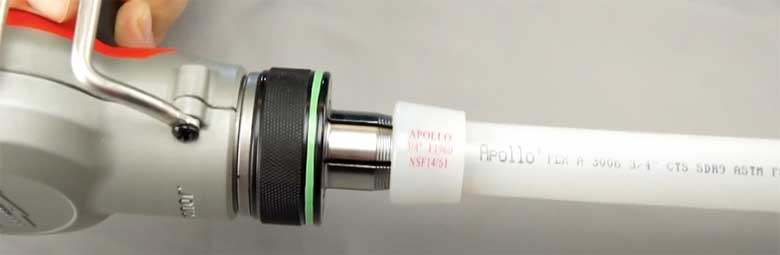
- Connection methods stand out first Apollo leans heavily on traditional expansion sleeves for its PEX-A line or copper crimp rings and stainless clamps for PEX-B. You expand the pipe, insert the fitting, and let it contract for a full-flow seal, or you crimp a ring tight. SharkBite built its name on push-to-connect fittings that grip the pipe with internal teeth and an O-ring the moment you shove it in. No special tool required for many connections. That single difference changes the entire workflow. I noticed Apollo feels more like classic plumbing once you own the tool, while SharkBite removes the learning curve for anyone who just needs a fast fix.
- Flexibility and pipe memory behave differently Apollo’s PEX-A comes out of the coil with less spring-back, so it stays where you bend it. That matters when you snake pipe through tight joist bays. SharkBite tubing, especially the common PEX-B version, holds more of its coiled shape and needs a bit more force or support clips. Both expand if frozen, but Apollo’s higher cross-linking in the A version recovers from kinks with a simple heat gun in many cases. SharkBite focuses on high chlorine and UV ratings that help in recirculating systems.
- Cost structure hits the wallet in separate places Apollo pipe and basic fittings usually cost less for a whole-house job. The expansion tool is an upfront hit, yet the rings and fittings stay affordable. SharkBite tubing sits in a similar price band, but the push fittings run higher per connection. For a handful of repairs the premium feels small. For a full repipe the extra dollars add up fast. I ran numbers on a three-bath house and saw Apollo come out noticeably cheaper once the tool paid for itself.
- Professional acceptance varies Many licensed plumbers reach for Apollo-style crimp or expansion systems because they match the methods they learned and because the fittings stay compact behind walls. SharkBite push fittings still draw skepticism from some tradespeople who prefer permanent soldered or crimped joints they can visually verify. The manufacturer stands behind the push style with solid warranties, yet the perception gap remains real.
- Installation speed and accessibility reverse depending on the job SharkBite wins when space is tight or when you need to join dissimilar materials without adapters. Apollo rewards patience with cleaner looking runs and fewer bulky fittings. Both meet the same ASTM and NSF standards for potable water, so the code side stays equal.
- Long-term serviceability shows another split If a joint ever needs attention, Apollo’s crimp or expansion rings stay accessible with the right tool. SharkBite push fittings can be removed with a special disconnect clip, yet some installers still treat them as permanent once buried in a wall. That mindset shapes how each brand gets used in new construction versus remodel work.
Key Features of Apollo PEX
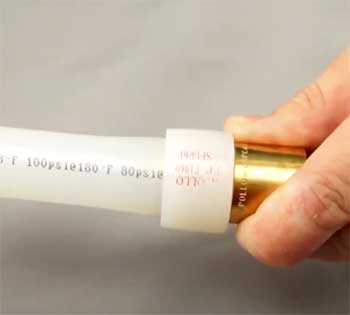
- Dual manufacturing options give real choice Apollo produces both PEX-A through the peroxide method and PEX-B through the silane method. The A version delivers maximum flexibility and kink recovery. The B version offers higher burst pressure in some ratings and lower material cost. I liked having both available under one brand so I could match the pipe to the specific run.
- Full-flow expansion fittings keep water moving When you expand Apollo PEX-A, the fitting sits inside a pipe that returns to nearly its original diameter. Flow restriction stays minimal compared with insert-style barbs that narrow the path. That detail matters on long runs or multi-fixture branches where pressure drop adds up.
- Color-coded tubing simplifies layout Red for hot, blue for cold, white for either. Apollo sticks to the familiar scheme so anyone walking into a mechanical room can read the system at a glance. The print on the pipe also lists temperature and pressure ratings clearly: 160 psi at 73 °F, 100 psi at 180 °F, 80 psi at 200 °F.
- Compatibility with multiple joining methods You can expand, crimp, or clamp Apollo pipe. That flexibility lets you switch techniques mid-project if tools or fittings run short. The brand also offers manifolds and a wide range of brass and poly fittings so the entire system stays consistent.
- Made in the USA with solid warranty coverage Production happens in North Carolina under the Mosack Group. The 25-year limited warranty on pipe and matching fittings gives confidence that the company stands behind the product when installation follows instructions.
- Freeze and chemical resistance hold up in real conditions The material expands under ice without rupturing and resists chlorine better than older plastics. Scale buildup stays low, which helps in hard-water areas.
Also Read: Differences Between Wiha And Knipex Tools.
Pros of Apollo PEX
- Lower overall system cost for larger projects Once the expansion or crimp tool sits in the toolbox, every additional joint costs less than a push fitting. On a full-house repipe the savings become obvious. I calculated the difference on a mid-size home and the gap was large enough to cover extra manifolds and shut-off valves.
- Superior flexibility with the PEX-A line Bending Apollo expansion pipe around obstacles reduces the number of fittings. Fewer joints mean fewer potential leak points and faster installs after the learning curve. The pipe also resists coil memory better than many competitors, so it stays put once you form it.
- Compact fittings leave more room in tight spaces Crimp and expansion rings sit closer to the pipe than the larger push-style bodies. Inside a crowded joist cavity or behind a vanity that extra clearance matters.
- Full-flow design maintains pressure The expansion method keeps the internal diameter almost unchanged. Showers stay strong even at the end of long runs. I noticed the difference when comparing flow rates side by side with insert fittings.
- Strong professional acceptance Many plumbers already own the tools and trust the method. That makes future service easier because the next tradesperson will recognize the system immediately.
- Repairable kinks on PEX-A A quick pass with a heat gun often restores a kinked section. That forgiveness reduces scrap and frustration during rough-in.
- Clear documentation and wide retail support Instructions, tools, and replacement parts show up at major home centers. Troubleshooting stays straightforward.
Cons of Apollo PEX
- Tool investment required upfront An expansion tool or quality crimp tool costs real money. For a one-time small repair the expense feels high compared with a handful of push fittings.
- Learning curve on expansion technique Getting the sleeve on the pipe and the timing right takes practice. Rush the process and the joint may not seat fully. First-time users sometimes struggle with the feel.
- Slightly lower burst pressure on pure PEX-A versus some B formulations While still well above household needs, the numbers sit a bit lower than certain rigid PEX-B options. In extreme pressure situations that difference can matter.
- More steps per joint You cut, expand, insert, and wait for contraction. Push fittings collapse those steps into one motion. On a long day the extra seconds add up.
- Availability of specialty tools can lag in some regions Big-box stores stock the basics, yet certain expansion heads or larger sizes sometimes require special order.
Key Features of SharkBite PEX
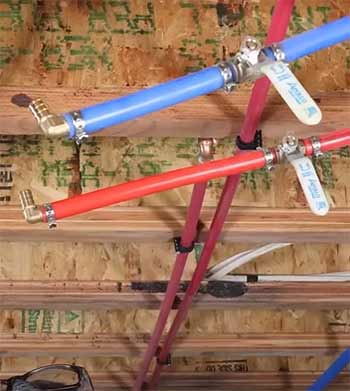
- Push-to-connect technology removes tool barriers The signature fittings grip copper, CPVC, and PEX with the same motion. Internal stainless teeth lock the pipe while dual O-rings seal against leaks. I tested a few on scrap and the connection felt solid the moment the pipe bottomed out against the stop.
- High chlorine and UV resistance ratings SharkBite rates its tubing at the top level for continuous recirculation systems and offers extended UV exposure tolerance. That combination suits outdoor runs or systems with high disinfectant levels.
- Broad size and color availability Coils and sticks come in the usual half-inch through one-inch sizes plus larger commercial options. Color coding matches industry norms so hot and cold lines stay distinct.
- Transition fittings simplify mixed-material jobs Need to join old copper to new PEX? SharkBite makes a single fitting that does the job without adapters or soldering. The same goes for CPVC transitions. That feature alone saves time on remodels.
- System-wide warranty when components stay matched Using SharkBite pipe with SharkBite fittings unlocks the full 25-year coverage plus consequential damage protection in many cases. Mixing brands can drop the pipe warranty to ten years.
- Freeze resistance and durability under pressure The pipe expands and contracts with temperature swings and carries strong burst ratings. The fittings themselves have been upgraded over generations for higher pressure tolerance.
Pros of SharkBite PEX
- Near-zero learning curve for basic connections Push the pipe in until it stops. The fitting does the rest. Homeowners who have never touched a plumbing tool can complete simple repairs with confidence.
- Exceptional speed on repairs and transitions Changing a valve or joining copper to PEX takes minutes instead of the time required for soldering or crimping. That speed shines during emergency shut-offs or tight weekend projects.
- Versatility across pipe materials One fitting style handles PEX, copper, and CPVC. Remodelers love that flexibility when old and new systems meet.
- Strong chlorine resistance for modern water treatment Homes with continuous recirculation or high disinfectant levels benefit from the top-tier ratings. Longevity in those conditions improves.
- Removable design when access remains open A disconnect tool lets you pull the fitting off cleanly for adjustments. That feature helps during mock-ups or temporary setups.
- Wide brand recognition and retail presence Finding SharkBite parts is rarely a problem. The packaging and instructions stay consistent and clear.
Also Read: Differences Between hePEX And AquaPEX Tubing.
Cons of SharkBite PEX

- Higher cost per fitting Push-to-connect pieces carry a premium. Multiply that cost across dozens of joints and the budget climbs quickly compared with crimp systems.
- Bulkier profile occupies more space The fitting body is larger than a simple crimp ring. In tight cavities the extra size can force awkward routing or extra support.
- Ongoing debate about long-term O-ring performance Some plumbers worry that the elastomer seals could degrade over decades, especially if water chemistry turns aggressive or if the joint sits behind finished walls. Manufacturer data and warranties push back against that concern, yet the perception persists.
- Less preferred for whole-house permanent installs by many trades Even when code allows the fittings, certain professionals default to crimp or expansion methods they consider more traditional and inspectable.
- Potential for incomplete insertion if technique slips The pipe must reach the internal stop fully. A rushed or dirty cut can leave the connection short and prone to leaks under pressure.
- Tool-free convenience can encourage shortcuts Because the process feels so simple, some users skip proper deburring or depth marking. Those small oversights cause most of the reported failures.
Installation Realities From a Practical Standpoint
I tried both systems on mock-ups in the garage before committing. Apollo demanded more setup time. I practiced expanding sleeves until the motion felt natural, then moved to actual runs. The resulting joints looked clean and the flow stayed strong.
SharkBite felt almost too easy at first. I still marked insertion depth and cleaned every cut because the instructions insist on it. Both systems held pressure during overnight tests without drops.
Support and protection matter equally. Abrasion clips where pipe passes through wood, proper hangers every few feet, and insulation in unconditioned spaces protect either brand. Neither pipe likes ultraviolet light for long periods, so outdoor or attic exposure needs covering.
Durability and Real-World Performance
Both brands meet the same pressure and temperature standards required by code. Freeze resistance works because the plastic expands rather than ruptures.
Chlorine resistance protects against modern municipal water. The bigger variable is installation quality. A perfectly installed Apollo joint and a perfectly installed SharkBite joint both last. A rushed joint of either type fails sooner.
I spoke with several homeowners who had lived with each system for five to ten years. No widespread pattern of failure emerged when the work followed instructions.
The few problem stories almost always traced back to incomplete insertion, missing support, or incompatible water chemistry that voided warranties across brands.
When to Choose Apollo and When to Choose SharkBite?
Choose Apollo when you plan a full repipe, already own or plan to buy the proper tools, want the most compact joints, and prefer the flexibility of PEX-A.
Choose SharkBite when you need fast repairs, face mixed pipe materials, value tool-free convenience, or simply want the brand that most hardware stores stock in depth.
Hybrid approaches work too. Some people run Apollo pipe with SharkBite transition fittings at the ends where they meet old copper. The key is staying inside the warranty guidelines for each component.
Also Read: Differences Between Apollo PEX A And Uponor.
Frequently Asked Questions (FAQ)
Yes. It meets industry standards, offers solid flexibility especially in the A version, and carries a strong warranty when installed correctly.
Some prefer traditional methods they trained on and worry about O-ring longevity in concealed locations, while others simply dislike the higher cost and the ease that lets homeowners attempt their own work.
No single brand wins every category. Apollo and SharkBite both perform well when matched to the job; professional preference and specific project needs decide the winner more than absolute rankings.
Mosack Group manufactures Apollo PEX products in the United States.
Final Thoughts
After comparing every practical angle I could find, I settled on a clear picture. Apollo gives you flexibility, lower system cost on big jobs, and traditional joints that many professionals trust. SharkBite gives you speed, versatility across materials, and an almost effortless learning curve that shines on repairs.
You now have the detailed features, differences, strengths, and weaknesses in one place so you can match the product to your skill level, budget, and project size.
Pick the system that fits the work in front of you, follow the installation instructions carefully, and either brand will deliver reliable water delivery for years.