
When I compare ACiQ vs. Mitsubishi, I’m really asking one practical question: which mini split gives you the better mix of comfort, efficiency, reliability, features, price, and long-term peace of mind?
ACiQ appeals to me as a value-focused option with modern inverter comfort, smart controls, and lower upfront pricing.
Mitsubishi feels like the premium pick, especially when you care about proven cold-climate heating, refined operation, and dealer-backed support.
| Category | ACiQ | Mitsubishi |
| Best for | Budget-minded homeowners, DIY-friendly buyers, garages, additions, rental units, value installs | Long-term homes, cold climates, premium comfort, high-use spaces |
| Price range | Usually more affordable | Usually more expensive |
| Brand position | Value-focused private-label HVAC brand | Premium, established ductless leader |
| Heating performance | Good for many moderate climates, model-dependent | Excellent, especially Hyper-Heating models |
| Cooling performance | Strong everyday cooling for the money | Smooth, quiet, consistent cooling |
| Efficiency | Competitive inverter efficiency | Often excellent, especially higher-tier models |
| Noise level | Quiet, but varies by model and installation | Very quiet and refined |
| Controls | Often includes Wi-Fi or smart-control options | Strong control ecosystem, often more polished |
| Installation path | Commonly sold online; installer choice matters a lot | Often installed through trained dealer networks |
| Parts and service | Can be more dependent on seller and installer | Stronger service reputation and support network |
| Long-term confidence | Good value, but more variable | Higher confidence, higher cost |
Key Differences Between ACiQ And Mitsubishi
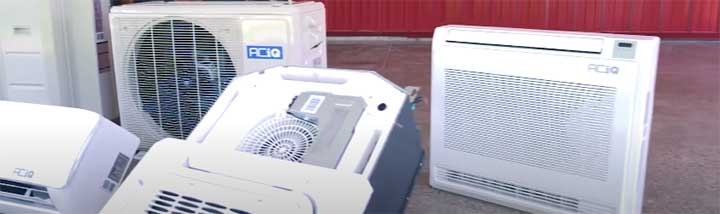
- Price And Value
ACiQ is usually the more affordable option. That is its biggest advantage. You can often get inverter heating and cooling, quiet operation, and smart-control features without paying premium-brand pricing.
This makes ACiQ appealing for budget-conscious homeowners. If you need comfort in one or two areas and do not want to overspend, ACiQ can make a lot of sense.
Mitsubishi costs more. Sometimes a lot more. But that higher price buys a stronger reputation, better dealer support, refined performance, and excellent heating options.
If your budget is tight, ACiQ is attractive. If you want fewer compromises, Mitsubishi is the safer bet.
- Brand Reputation
Mitsubishi has a much stronger name in the ductless mini split market. Many HVAC contractors treat it as one of the most trusted brands. That reputation matters because a mini split is not just a machine; it is a long-term home comfort system.
ACiQ is more of a value-focused brand. It has become popular because it offers good specs at lower prices, especially through online HVAC retailers. But it does not have the same long track record as Mitsubishi.
For me, Mitsubishi feels more proven. ACiQ feels more budget-smart.
- Heating Performance
Heating is where Mitsubishi really separates itself. Mitsubishi’s Hyper-Heating models are known for strong low-temperature performance. If you live in a cold climate and want your mini split to handle serious winter heating, Mitsubishi is the better choice.
ACiQ can still heat well, especially in mild or moderate climates. But I would check the exact model’s cold-weather performance before depending on it as a main heat source.
For cooling-first use, ACiQ can be plenty. For heating-heavy use, Mitsubishi has the edge.
- Installation And Support
ACiQ systems are often purchased online, which gives you flexibility. You may save money on equipment and choose your own installer. That is useful, but it also means the final result depends heavily on installation quality.
Mitsubishi is commonly installed through experienced dealers and trained contractors. That can raise the price, but it may also lead to better sizing, cleaner installation, and easier service later.
With ACiQ, I would be very careful choosing an installer. With Mitsubishi, the support path usually feels more established.
Key Features of ACiQ
- Inverter-Driven Heating And Cooling
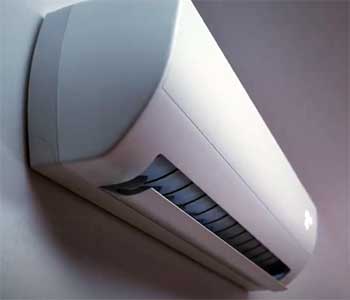
The biggest reason I like ACiQ is that it brings inverter technology to a more affordable price point.
Instead of constantly turning fully on and off, an inverter mini split can adjust output based on the room’s needs.
That usually means steadier temperatures, lower energy waste, and less annoying cycling.
In real life, this feels like more even comfort.
You do not get blasted with cold air, then sit through warm swings, then get blasted again. The system can run more gently and consistently.
For bedrooms, offices, small living rooms, additions, and garages, this is a major benefit.
- Single-Zone And Multi-Zone Flexibility
ACiQ offers options for one-room setups and multi-room systems. That flexibility is useful because not every home needs the same approach.
A single-zone unit may be perfect for a detached garage, home office, basement, or primary bedroom. A multi-zone system can serve several rooms with one outdoor unit. That makes ACiQ attractive if you want targeted comfort without adding ductwork.
I especially like this for older homes where traditional duct installation would be expensive or messy.
- Smart-Control Options
Many ACiQ systems include or support smart controls, depending on the model. That means you may be able to adjust temperature from your phone, set schedules, and manage comfort without hunting for the remote.
This is not just a convenience feature. Smart controls can help reduce waste. For example, you can turn down the system while you are away and bring the room back to temperature before you return.
For a budget-friendly brand, this is one of ACiQ’s stronger selling points.
- Quiet Operation
ACiQ mini splits are designed to run quietly, and that is one reason they appeal to homeowners replacing noisy window units or portable ACs.
A quiet wall-mounted indoor unit can make a bedroom, nursery, office, or media room much more comfortable. The outdoor unit is also usually quieter than many traditional central AC condensers.
That said, quietness depends on the model, fan speed, installation quality, wall placement, and maintenance. A poor install can make even a good system sound worse than it should.
- Lower Upfront Cost
This is the feature that quietly drives the whole ACiQ conversation. You are not just buying specs. You are buying affordability.
For many people, the question is not “Is ACiQ better than Mitsubishi?” It is “Can ACiQ give me enough comfort for a lot less money?” Often, the answer may be yes.
If your project is budget-sensitive, ACiQ deserves a serious look.
ACiQ Pros
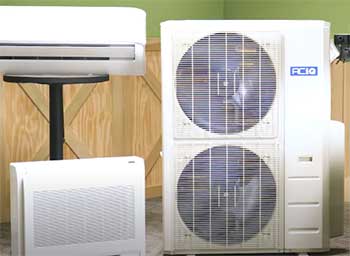
- Lower Cost Makes Comfort More Accessible: ACiQ’s price is its superpower. It can make ductless heating and cooling realistic for homeowners who cannot justify Mitsubishi-level pricing. If I were adding comfort to a garage, guest room, attic office, rental unit, or finished basement, I would seriously consider ACiQ because the savings can be meaningful.
- Good Feature Set For The Money: ACiQ gives you many modern features without forcing you into a premium budget. Inverter operation, quiet performance, efficient heating and cooling, multiple capacity options, and smart controls are all part of the appeal. You are not buying a bare-bones machine. You are buying a value-focused system that can still feel modern and convenient.
- Flexible Buying Options: Because ACiQ is commonly sold online, it can be easier to compare prices, choose equipment, and plan your project. That can be useful if you like researching before buying. It also gives you freedom to choose your own installer, although that freedom comes with responsibility.
- Strong Choice For Moderate Climates: In areas where winters are not brutal, ACiQ can be a very practical option. If your main need is cooling with some heating support, the value case gets even stronger. For many homeowners, ACiQ may provide all the comfort they need without the premium cost.
- Appealing For Secondary Spaces: I like ACiQ most in spaces where premium equipment may not be necessary. Garages, workshops, sunrooms, cabins, bonus rooms, and rentals are good examples. In those cases, I care about comfort and cost more than owning the most respected ductless brand.
ACiQ Cons
- Not As Proven As Mitsubishi: ACiQ does not have Mitsubishi’s long-standing reputation in ductless systems. That does not mean it will fail. It simply means the confidence level is different. When I buy Mitsubishi, I feel like I am buying a known quantity. With ACiQ, I would pay closer attention to model reviews, warranty terms, seller support, and installer experience.
- Installer Quality Matters Even More: Because ACiQ is often bought outside a traditional dealer path, installation quality can vary. This is a big deal. A mini split must be sized correctly, mounted correctly, evacuated correctly, drained correctly, and commissioned correctly. If any of that goes wrong, performance and reliability can suffer. With ACiQ, I would spend extra effort finding a good installer.
- Cold-Climate Performance Is More Model-Dependent: Some ACiQ systems can heat well, but I would not assume every ACiQ unit is ideal for harsh winters. I would check the exact performance ratings at low outdoor temperatures. If you live in a cold region and need dependable primary heating, Mitsubishi gives me more confidence.
- Service And Parts May Feel Less Seamless: Depending on your area, ACiQ service may be more dependent on the seller, distributor, and local technician. That can be fine, but it may not feel as smooth as working with a major premium brand. Before buying, I would check warranty handling, parts availability, and whether local HVAC pros are comfortable servicing the equipment.
Key Features of Mitsubishi
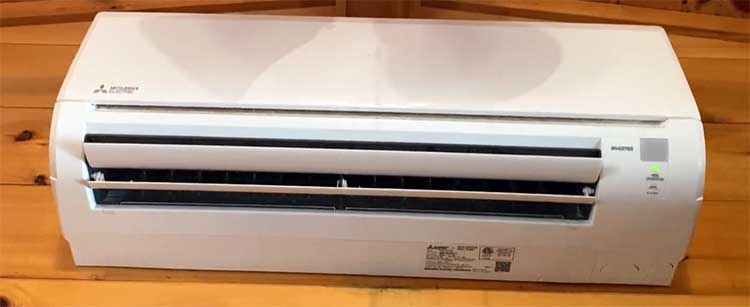
- Hyper-Heating Technology On Select Models
Mitsubishi’s Hyper-Heating models are one of the biggest reasons I would choose Mitsubishi over ACiQ in colder areas. These systems are built to keep producing useful heat when outdoor temperatures fall.
That matters because not all heat pumps behave the same in winter. Some perform well in mild weather but lose capacity quickly when it gets very cold. Mitsubishi’s cold-climate models are designed to reduce that problem.
If you are trying to replace or reduce reliance on oil, propane, electric baseboard, or an older furnace, this feature can be a major advantage.
- Premium Inverter Performance
Mitsubishi’s inverter systems are smooth. That sounds simple, but it affects daily comfort more than people realize.
A good inverter system does not just cool or heat. It modulates. It adjusts. It tries to match the room’s load instead of constantly overshooting. This can help maintain steady temperatures, reduce noise, and improve comfort.
When I think of Mitsubishi, I think of controlled, predictable comfort rather than raw bargain pricing.
- Strong Zoning Options
Mitsubishi offers excellent ductless and ducted mini split options, including wall-mounted units, floor-mounted units, ceiling cassettes, concealed ducted units, and multi-zone configurations.
This matters if you care about appearance or have tricky room layouts. Not everyone wants a wall-mounted head in every room. Mitsubishi gives more polished design flexibility.
For whole-home ductless projects, this is a big win.
- Quiet And Refined Indoor Units
Mitsubishi indoor units are known for being extremely quiet. In a bedroom or office, that makes a real difference.
The sound profile also tends to feel refined. It is not only about decibel ratings. It is about how the fan ramps, how the louvers move, how the unit cycles, and how unobtrusive the system feels during normal operation.
If you are sensitive to sound, Mitsubishi is one of the brands I would trust more.
- Strong Dealer And Service Ecosystem
Mitsubishi’s support network is a major advantage. A mini split is only as good as the installation and service behind it.
With Mitsubishi, it is usually easier to find trained contractors, experienced installers, and technicians who know the product. That can make installation, troubleshooting, warranty service, and future maintenance less stressful.
This is one of those benefits you may not appreciate on day one, but you will appreciate it if something ever goes wrong.
Mitsubishi Pros
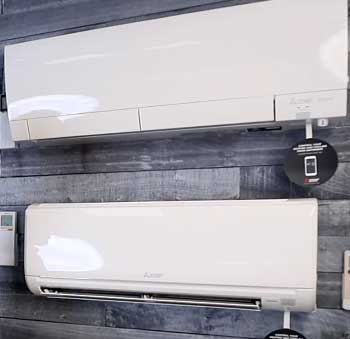
- Excellent Reliability Reputation: Mitsubishi’s reputation is one of its strongest assets. Many homeowners and contractors view it as one of the most reliable ductless brands available. That matters if you are installing a system in your main living space and want fewer headaches over time.
- Strong Cold-Weather Heating: For cold climates, Mitsubishi is hard to ignore. Its Hyper-Heating models are built for serious winter performance, making them a strong choice when heating matters as much as cooling. If you want a mini split that can carry more of the heating load, Mitsubishi is the brand I would trust more.
- Very Quiet Operation: Mitsubishi systems are often impressively quiet. For bedrooms, offices, nurseries, and living rooms, that quietness adds real comfort. I would especially consider Mitsubishi if noise sensitivity is a top priority.
- Refined Comfort Control: Mitsubishi does not just focus on heating and cooling power. It focuses on how the comfort feels. The systems tend to modulate smoothly, hold temperature well, and avoid dramatic swings when properly sized. That makes the indoor experience feel premium.
- Better Support Network: Mitsubishi’s dealer and contractor network can make the entire ownership experience easier. From sizing to installation to service, the support structure is usually stronger. This does not guarantee perfection, but it improves the odds of a cleaner project.
Mitsubishi Cons
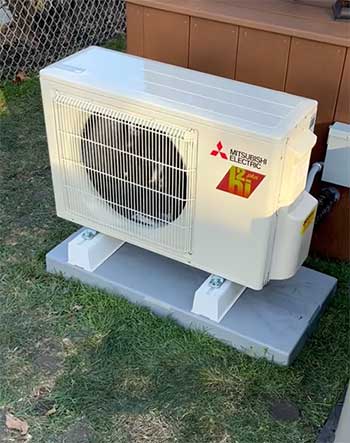
- Higher Upfront Cost: Mitsubishi is expensive compared with ACiQ. That is the biggest drawback. The equipment can cost more, and the installation may also cost more if you go through a specialized dealer. For some projects, the total price difference can be hard to justify.
- May Be More System Than Some Rooms Need: If you only need to cool a garage or occasional-use room, Mitsubishi may be overkill. You could spend a lot more for performance you do not fully use. This is where ACiQ becomes attractive. Not every space needs a premium solution.
- Dealer-Based Buying Can Feel Less Flexible: Some buyers like the simplicity of online pricing and direct equipment comparison. Mitsubishi’s dealer-centered approach can feel less transparent depending on the contractor. You may need multiple quotes to understand whether the price is fair.
- Repairs Can Be Costly: Premium systems often come with premium repair costs. If a control board, compressor component, sensor, or specialized part fails outside warranty, the repair may not be cheap. That does not make Mitsubishi a bad choice. It just means ownership cost should be part of the decision.
Which One Is Better for You?
I would choose ACiQ if you want lower upfront cost, good efficiency, modern comfort, and a practical solution for a room or smaller project. It is especially appealing when the space is not your whole-home comfort lifeline.
I would choose Mitsubishi if you want a premium system, stronger brand trust, better cold-climate heating, quieter operation, and a more established support network. It is the better fit for long-term homeowners who want fewer compromises.
The real answer depends on your climate, budget, installer, room size, and how heavily you will rely on the system. ACiQ is the smarter buy when value comes first. Mitsubishi is the smarter buy when confidence comes first.
Also Read: Is Sea Breeze Mini Split Worth It?
Frequently Asked Questions (FAQ)
No. ACiQ is not the same as Carrier. Some equipment may share manufacturing relationships or similar supply chains, but ACiQ and Carrier are separate brands.
Many ACiQ mini split models are commonly reported as being manufactured by Midea or Midea-linked OEM production. Still, I would verify the exact model because manufacturing can vary by product line.
ACiQ products are typically private-label HVAC systems made by large OEM manufacturers. For mini splits, Midea is often associated with ACiQ manufacturing, but the safest answer is to check the model label and seller documentation.
Mitsubishi is widely considered one of the most reliable mini split brands. Fujitsu, Daikin, and LG are also often mentioned, but Mitsubishi is usually one of the safest premium picks.
Final Verdict
If I were comparing ACiQ vs. Mitsubishi for my own home, I would not treat them as equal brands with different logos. I would treat ACiQ as the value challenger and Mitsubishi as the premium benchmark.
ACiQ makes sense when you want efficient ductless comfort without stretching your budget. Mitsubishi makes sense when you want the stronger long-term bet, especially for cold-weather heating and high-use rooms.
For you, the best choice comes down to risk tolerance. If you want the best price-to-feature ratio, ACiQ is tempting. If you want the safer, more proven system and can afford the higher price, Mitsubishi is the one I would pick.