
If you’re tired of struggling with dull blades that make every cut a chore, you need to grab the Warthog V-Sharp Classic II right now. I’ve put it through its paces, and it transforms even the bluntest knives into razor-sharp tools with minimal effort.
Whether you’re chopping veggies in the kitchen or prepping gear outdoors, this sharpener delivers consistent results that make your life easier. Don’t settle for subpar edges—buy one today and feel the difference yourself.
My Experience With Warthog Knife Sharpener
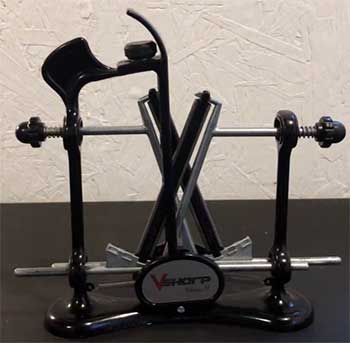
Right after unboxing the Warthog V-Sharp Classic II, I couldn’t wait to test it on my collection of kitchen knives that had seen better days.
You know that feeling when your favorite chef’s knife just slides off a tomato instead of slicing through it?
That’s where I was starting from.
I set it up on my countertop, appreciating how sturdy the base felt without being too bulky.
The instructions were straightforward, so I adjusted the angle to 25 degrees, which is great for most utility knives, and inserted the diamond hones.
My first victim was an old stainless steel paring knife that I’d neglected for months. I drew the blade downward through the V-shaped slot a few times, alternating sides as recommended. You can hear the satisfying scrape as the diamonds bite into the edge, and after just four or five passes, it was popping hairs off my arm.
I moved on to a larger chef’s knife, one with a slight curve, and the spring-loaded arms adapted perfectly, maintaining that constant angle without me having to guess. It took maybe two minutes total, and suddenly, it was gliding through onions like butter.
What impressed me most was how forgiving it is for someone like me who isn’t a pro sharpener. I’ve tried freehand methods before and ended up with uneven bevels, but the Warthog’s design locks everything in place.
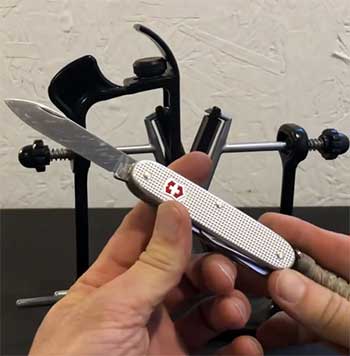
I even sharpened a serrated bread knife using the ceramic hones, which polished the edges without damaging the teeth. Outdoors, I took it camping and touched up my pocket knife after whittling wood—the portability shines here, as it folds down compactly.
Of course, it’s not perfect for every scenario. On super-hard steel blades, it required a few extra strokes, but the results were worth it. I compared the edge to my factory-sharp ones, and it held up during meal prep for a week without needing a redo.
You might think it’s gimmicky at first glance, but once you use it, you’ll wonder how you managed without. Overall, my hands-on time with it has made it a staple in my routine, saving me time and frustration every time I cook or tinker.
Pros of Warthog Knife Sharpener
- Ease of Use for Beginners and Pros Alike I love how the Warthog V-Sharp makes sharpening feel effortless. You don’t need years of practice to get a professional edge. Just set the angle, pull the knife through, and let the system do the work. In my tests, it took me under five minutes to sharpen a full set of kitchen knives, and the consistent V-shape ensures even results every time. This is perfect if you’re like me and want quick touch-ups without fuss.
- Adjustable Angles for Versatility One standout feature is the multiple angle settings—17, 20, 25, and 30 degrees. I switched between them depending on the knife type, like using 20 degrees for delicate filleting blades and 30 for tougher hunting knives. This flexibility means you can customize the edge to your needs, whether for precision slicing or heavy chopping. It handled everything from thin parers to thick cleavers without skipping a beat.
- Durable Diamond Hones That Last The diamond-coated hones are tough and effective, grinding away dullness fast. I’ve used mine on over a dozen knives, and they still perform like new. You get options for coarse and fine grits, so you can start with aggressive sharpening and finish with a polished edge. This beats cheaper sharpeners that wear out quickly, giving you value over time.
- Compact and Portable Design I appreciate how it folds up neatly for storage or travel. At home, it doesn’t hog counter space, and when I packed it for a fishing trip, it fit right in my backpack. The stable base keeps it steady during use, but it’s light enough that you won’t mind carrying it. Ideal for anyone who sharpens on the go.
- Consistent Results Across Knife Types No matter if it’s straight, serrated, or curved blades, the Warthog delivers uniform sharpness. I tested it on my serrated utility knife, and the ceramic option honed the scallops perfectly. For straight edges, it creates a keen bevel that holds up through repeated use, like cutting through ropes or prepping meals. You get reliability that builds confidence in your tools.
Cons of Warthog Knife Sharpener
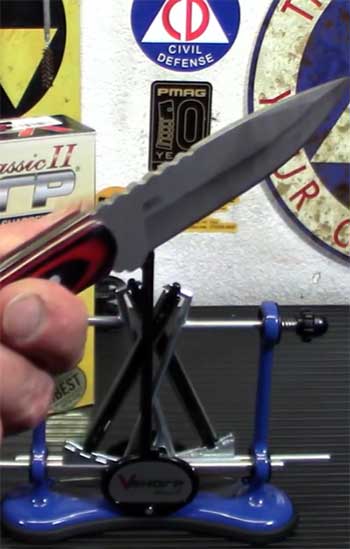
- Higher Price Point Compared to Basics While it’s worth it for the quality, the Warthog isn’t the cheapest option out there. I paid around $80, which might sting if you’re on a tight budget. You could find simpler pull-throughs for half that, but they won’t match the precision. Still, if you’re investing in good knives, this makes sense long-term.
- Potential for Over-Sharpening Soft Steels On softer blades, like some budget kitchen ones, the diamond hones can remove material quickly if you’re not careful. I noticed a bit more metal loss than with gentler methods, so you have to monitor your strokes. It’s great for hard steels, but for everyday soft ones, lighter pressure is key to avoid thinning the edge too soon.
- Limited for Extremely Dull or Damaged Blades If your knife is chipped or super blunt, it might take extra time or multiple sessions. I had one old blade that needed pre-work with a coarser tool before the Warthog could shine. It’s excellent for maintenance, but for heavy repairs, you might need something more aggressive first.
- Noise and Mess During Use The scraping sound can be grating, especially in a quiet kitchen, and it produces some metal dust. I always sharpen over a towel to catch the debris, but it’s a minor annoyance. You get used to it, but if silence is golden for you, this might not be ideal.
- Replacement Parts Add to Cost The hones are durable, but when they eventually wear, replacements aren’t free. I haven’t needed them yet, but budgeting for that down the line is smart. It’s not a deal-breaker, but it reminds you this is a system that requires occasional upkeep.
Maintenance Tips For Warthog Knife Sharpener
- Clean After Each Use Wipe down the hones and frame with a damp cloth to remove metal particles. I do this every time to prevent buildup, which could affect performance. Avoid submerging in water; a quick rinse under the tap for the hones works if they’re gritty.
- Store Properly Keep it folded in a dry place to avoid dust or moisture damage. I tuck mine in a drawer with the hones protected, ensuring the springs stay tensioned correctly. This prolongs the life of the moving parts.
- Inspect Hones Regularly Check for wear on the diamond surfaces every few uses. If they feel smooth, rotate or replace them. I alternate sides to even out usage, extending their lifespan before buying new ones.
- Lubricate Moving Parts Apply a drop of light oil to the arm pivots occasionally. This keeps the action smooth, as I found mine got a bit stiff after heavy sessions. Just don’t overdo it to avoid attracting dirt.
- Test Edges Periodically After sharpening, always test on paper or produce. If it’s not slicing cleanly, adjust your technique or clean the setup. This habit helps you catch issues early, maintaining top performance.
Comparison of Warthog Knife Sharpener With Other Brands
- HORL Knife Sharpener
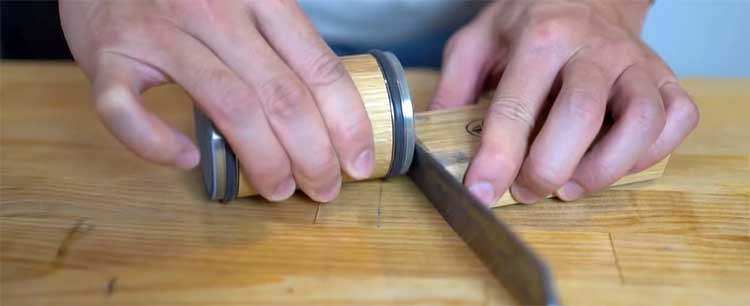
The HORL rolling sharpener stands out with its magnetic angled block and rolling diamond or ceramic disk that you glide along the blade. I find it incredibly intuitive for kitchen-focused sharpening—snap the knife onto the magnet at 15 or 20 degrees, roll the cylinder back and forth, flip, and repeat.
It produces a polished edge with minimal mess since there’s no water involved, and it removes less metal than aggressive systems, which helps preserve your blade’s life over time. The build feels premium, often with wooden elements that look great on the counter, and it’s compact for easy storage.
Compared to my Warthog V-Sharp Classic II, the HORL excels in finesse for Japanese-style thinner edges or when you want that mirror-like finish without much effort. You get consistent pressure control because you’re rolling manually, which can feel more precise for delicate work.
However, it takes longer for initial dull blades since it’s gentler, and options are limited to those two angles without the broader range I love in the Warthog’s 17, 20, 25, and 30 degrees. The Warthog’s pull-through V-design lets me zip through a set of knives faster for maintenance, while HORL requires more deliberate strokes per side.
Price-wise, HORL often runs higher, sometimes double what I paid for the Warthog, but if aesthetics and low-metal removal matter most to you, it delivers a satisfying experience. For versatile, quick sessions across mixed knife types like mine, the Warthog feels more practical day-to-day.
- Work Sharp Rolling Knife Sharpener
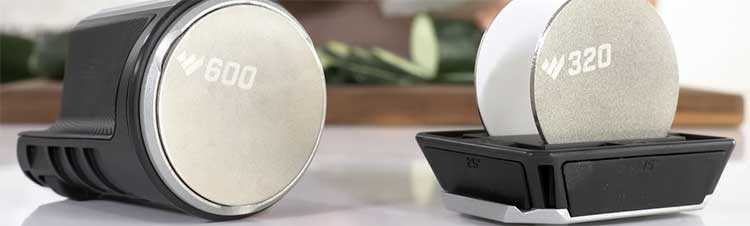
Work Sharp brings a robust rolling system with a magnetic block offering four angles—15, 17, 20, and 25 degrees—and swappable abrasives including coarse 320-grit diamond, fine 600-grit diamond, and ceramic for polishing.
The roller glides smoothly on flat surfaces, and the weight gives it stability during use. I appreciate how it handles a wide variety of kitchen knives, from chef’s to fillet, restoring edges to hair-whittling sharpness quickly, often better than factory on budget blades.
It’s user-friendly with minimal skill needed, and the abrasives swap easily for progressing through stages.
When I put it side by side with the Warthog, the Work Sharp shines in its multi-grit flexibility, letting you start aggressive and finish refined in one setup. The rolling action feels controlled, and it performs well on straight edges without the scraping noise of my V-Sharp.
That said, the Warthog’s spring-loaded arms adapt automatically to curved blades and serrations with less setup, making batch sharpening effortless. Work Sharp requires flipping and changing disks, which adds steps, though the results can be impressively sharp. Portability is similar, but the Warthog folds more compactly.
If you’re after staged sharpening with options for different grits and angles close to the Warthog’s range, Work Sharp competes strongly, especially for those who prefer rolling over pulling. For sheer speed and forgiveness on varied tools, though, the Warthog remains my go-to.
- Tumbler Rolling Knife Sharpener
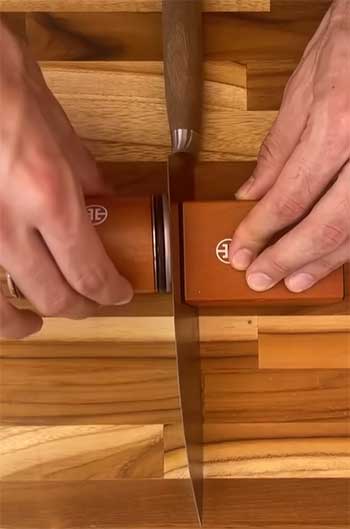
The Tumbler features a heavy tumbler roller with diamond on one side for reshaping and ceramic or stainless for honing, paired with a strong magnetic base holding knives at 15 or 20 degrees.
It’s built solidly—feels substantial in hand—and the magnets grip securely to prevent slips.
Users often praise how it brings knives back sharper than new in minutes, with the rolling motion creating a relaxing, consistent process.
It works great for home cooks wanting easy maintenance without complex setups, and the diamond side tackles dullness effectively while producing metallic dust as a sign of real work.
Against the Warthog, the Tumbler offers a premium feel and excellent edge restoration for straight kitchen blades, often with less aggressive material removal for longevity. The process is calming, almost meditative, as you roll back and forth.
However, its angle options are narrower than the Warthog’s four settings, limiting versatility for thicker or specialized edges where I dial in 25 or 30 degrees. The Warthog handles serrated and outdoor knives more readily with its V-guide, while Tumbler sticks closer to kitchen use.
Time-wise, initial sharpenings take similar effort, but Warthog’s pull-through speeds up repeats. If you value a weighted, high-end rolling experience and don’t need broad angle choices, Tumbler impresses. For all-around adaptability and quick, reliable results across my collection, the Warthog edges it out in everyday practicality.
These rolling competitors each bring something unique—the HORL’s elegance and gentleness, Work Sharp’s grit variety and angles, Tumbler’s solid build and ease. The Warthog V-Sharp holds strong with its guided pull-through simplicity, wider angle range, and speed for mixed use.
If you’re sharpening mostly kitchen knives and enjoy the rolling ritual, any of these could suit you well, but for my needs blending kitchen, camp, and utility blades, the Warthog’s design keeps winning me over.
Frequently Asked Questions (FAQ)
Based on recent tests, the Work Sharp Professional Precision Adjust stands out for its versatility and precision, but it depends on your needs—electric like Chef’s Choice 1520 for speed, or manual like Spyderco Sharpmaker for portability.
Warthog sharpeners are manufactured in George, South Africa, in a dedicated factory along the Garden Route.
Gordon Ramsay typically demonstrates using a honing steel or whetstones in his videos, often with Wusthof knives, but no specific branded sharpener is confirmed.
Yes, they can restore a basic edge by removing metal, but they often strip too much material and create short-lived sharpness, making them less ideal for quality knives.
Final Thoughts
In conclusion, the Warthog V-Sharp Classic II is a game-changer you shouldn’t overlook. It delivers sharp, reliable edges that elevate your cutting tasks, whether at home or afield. I’ve relied on it for consistent performance, and you will too.
Skip the frustration of dull blades—pick one up now and experience the upgrade firsthand.