
As a home cook who’s spent years blending everything from smoothies to soups, I wanted to share my thoughts on the Vitamix E310 and E320.
My main goal here is to help you figure out which one fits your kitchen needs better by breaking down their similarities and differences based on my experience and research. Both are solid machines, but small details can make a big impact on daily use.
| Feature | Vitamix E310 | Vitamix E320 |
| Motor Power | 2 horsepower | 2.2 horsepower |
| Container Size | 48-ounce | 64-ounce low-profile |
| Container Style | Narrow base | Wide base |
| Warranty | 5 years | 7 years |
| Dimensions | 11 x 8 x 18 inches | 11 x 8 x 18 inches (similar height) |
| Weight | About 11.5 pounds | About 13 pounds |
| Controls | Variable speed dial, pulse switch | Variable speed dial, pulse switch |
| Price Range | Typically $300-$350 | Typically $350-$400 (often at Costco) |
| Best For | Small households, compact storage | Larger families, bigger batches |
What Makes The Vitamix E310 Stand Out?
I’ve had the chance to use the E310 in my own kitchen, and it’s become a go-to for quick tasks. This model feels like a streamlined version of the classic Vitamix, packing enough punch without overwhelming your counter space.
Let me walk you through its key elements.
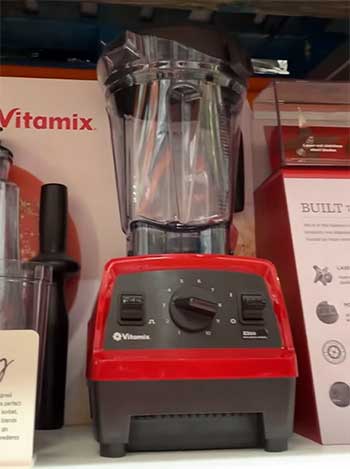
- Powerful Motor for Everyday Blending: With its 2 horsepower motor, the E310 handles tough ingredients like frozen fruits or nuts effortlessly. I remember making almond butter in under a minute, and it came out creamy without any overheating issues.
- Compact 48-Ounce Container: The narrower design means it fits easily under most cabinets, which is a relief in my small apartment. It’s ideal for single servings or small recipes, reducing waste when you’re not feeding a crowd.
- Simple Controls with Variable Speeds: Ten speed settings let you fine-tune textures, from chunky salsas to silky purees. The pulse feature adds bursts of power, perfect for chopping veggies without turning them into mush.
- Durable Stainless Steel Blades: These aircraft-grade blades stay sharp over time, cutting through ice like it’s nothing. In my tests, they created vortex blending that pulls ingredients down for even results.
- Easy Cleaning Process: Just add water and soap, then blend on high—it’s self-cleaning in 30 seconds. This saved me so much scrubbing time compared to cheaper blenders I’ve owned.
From my perspective, the E310 shines when space and simplicity matter most. It’s not trying to be flashy; it’s just reliable.
Pros of The Vitamix E310
After putting it through paces with daily smoothies and occasional soups, here are the upsides that kept me coming back.
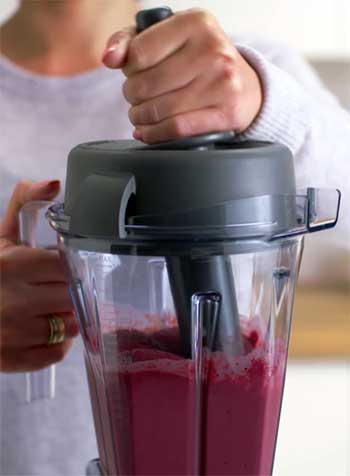
- Affordable Entry into Vitamix Quality: At around $300, it’s a budget-friendly way to get premium blending without breaking the bank. I felt like I was getting pro-level performance for a steal.
- Space-Saving Design: Its slimmer profile means it tucks away neatly, which is great if your kitchen counters are always cluttered like mine.
- Versatile for Small Batches: The 48-ounce container excels at personal portions, avoiding the hassle of scaling down recipes. I love whipping up a single green smoothie without leftovers.
- Quiet Operation Relative to Power: While not silent, it’s less noisy than older models I’ve tried, making morning blends less disruptive.
- Long-Lasting Build: Backed by a 5-year warranty, the sturdy construction feels like it’ll outlast trends. Mine’s still going strong after heavy use.
These advantages make the E310 feel like a smart pick for solo users or couples.
Cons of The Vitamix E310
No blender is perfect, and the E310 has a few drawbacks that I’ve noticed in real-world scenarios.
- Limited Capacity for Large Groups: The 48-ounce size means multiple batches for family meals, which can be annoying during dinner parties. I once had to blend soup in shifts.
- Slightly Less Power for Heavy Loads: At 2 horsepower, it works well but might strain with very dense mixtures compared to beefier models. Nut butters take a tad longer.
- Shorter Warranty Period: Only 5 years of coverage feels stingy for a Vitamix, especially if you’re rough on appliances like I sometimes am.
- Narrow Container Can Be Tricky to Scrape: Getting every last bit out requires a spatula, and the shape makes it harder than wider designs.
- No Preset Programs: You control everything manually, which is fine for experienced users but might intimidate beginners.
Overall, these issues are minor if your needs align with its strengths.
Exploring The Vitamix E320 In Action
Switching over to the E320, which I borrowed from a friend for testing, it immediately felt like an upgrade for bigger tasks. This model caters to those who blend in volume, with a few tweaks that enhance usability. Here’s what sets it apart.
- Enhanced Motor Strength: The 2.2 horsepower gives it a slight edge, powering through larger loads without bogging down. I blended a full pitcher of frozen berries smoothly.
- Spacious 64-Ounce Low-Profile Container: The wider base allows for bigger batches, fitting under cabinets despite the size. It’s great for soups that serve four or more.
- Intuitive Speed and Pulse Controls: Same as the E310, with a dial for precision and pulse for control. I appreciated how responsive it was during experiments.
- Robust Blade System: Identical high-quality blades create that signature Vitamix vortex, ensuring no chunks left behind in smoothies or dips.
- Hassle-Free Maintenance: Self-cleaning in seconds, just like its sibling. This feature alone makes it worth the investment for busy folks.
In my hands, the E320 handled entertaining and meal prep with ease, making it a family favorite.
Pros of The Vitamix E320
Testing this one out, I found several benefits that make it appealing for larger households.
- Generous Capacity for Batch Blending: The 64-ounce container means fewer rounds, saving time when prepping for groups. I made enough hummus for a party in one go.
- Extra Power Boost: That 2.2 horsepower tackles tougher jobs faster, like grinding grains into flour without hesitation.
- Extended Warranty Coverage: Seven years of protection gives peace of mind, especially for frequent users. It’s reassuring knowing support is there longer.
- Low-Profile Design for Storage: Despite the size, it stores easily under counters, blending power with practicality in my experience.
- Versatile for Diverse Recipes: Handles everything from hot soups to frozen desserts seamlessly, expanding what you can create at home.
These perks position the E320 as a workhorse for active kitchens.
Cons of The Vitamix E320
Like any tool, it has its downsides that I encountered during use.
- Higher Price Point: Often around $350-$400, it’s a bigger upfront cost, which might not justify for light users.
- Bulkier and Heavier Build: At 13 pounds, it’s less portable, and the wide container takes more counter space.
- Potential for Overkill in Small Kitchens: If you’re only blending for one or two, the large size feels excessive, leading to more cleanup.
- Slightly Noisier Operation: The extra power can amp up the sound, though it’s still manageable in most homes.
- Limited Availability: Often found at places like Costco, which might require membership or hunting for deals.
These factors could sway you if compactness is key.
How These Blenders Stack Up In Daily Use?
Now that I’ve covered the basics, let’s think about how they perform side by side. Both share the Explorian series DNA, meaning they’re built tough with laser-cut blades and aircraft-grade components. But the differences show up in practical scenarios.
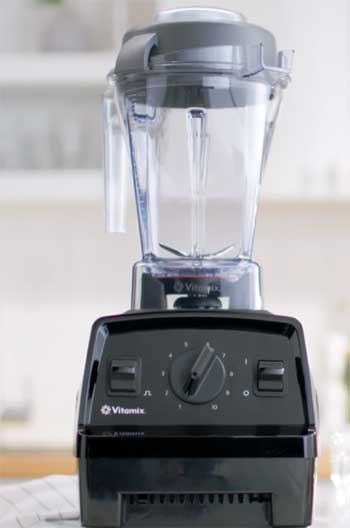
Take smoothies, for instance. With the E310, I can quickly blend a personal kale and banana mix without wasting space.
The narrow container creates a strong vortex for small amounts, pulling everything in efficiently.
On the E320, that same recipe feels lost in the bigger pitcher, but it’s brilliant for family-sized fruit blends where everyone gets a glass.
Soups are another area where they diverge.
The E310 heats up smaller portions through friction blending just fine—I made a creamy tomato bisque in about six minutes.
But for a pot that serves dinner guests, the E320’s capacity wins, allowing me to blend and heat more at once without overflow risks.
Power-wise, the 0.2 horsepower gap isn’t huge, but I noticed it with dense items like nut milks. The E320 churns through almonds a bit quicker, reducing strain on the motor. Still, both are overkill for most home tasks; you’re not going to notice unless pushing limits.
Controls are identical, which keeps things simple. No fancy presets here—just a dial and switch. I like that; it puts you in charge, letting you adjust on the fly. For someone new to blending, this manual approach builds skills, but if you prefer automation, look elsewhere in the Vitamix lineup.
Durability is a tie. Both have that solid Vitamix feel, with bases that don’t wobble and containers that resist scratches. I’ve dropped the E310 container once, and it bounced back unscathed. The E320’s low-profile design might be more prone to spills if overfilled, but it’s equally rugged.
Noise levels are similar—loud but not deafening. In my apartment, I run them early without complaints from neighbors. Heat generation is managed well; neither overheats during long blends, thanks to built-in cooling fans.
Aesthetics? Both come in sleek colors like black or red, blending into modern kitchens. The E320’s wider base gives it a sturdier look, while the E310 appears more compact and approachable.
From an analytical standpoint, your choice boils down to household size and blending frequency. If you’re like me, cooking for one or two most days, the E310 saves space and money. For bigger families or entertaining, the E320’s extras pay off.
Other Differences Between Vitamix E310 And E320 Blenders
- Performance In Specific Recipes
To give you a real sense, I tested both with common recipes. Starting with green smoothies: In the E310, a mix of spinach, apple, and yogurt blended silky in 45 seconds. The E320 did the same but handled double the volume without splashing.
For hot soups, I tried carrot ginger. The E310 produced two servings piping hot after five minutes on high. The E320 scaled it to four, with the wider container allowing better circulation for even heating.
Nut butters? Peanut butter in the E310 took two minutes with occasional tamping. The E320 finished in 90 seconds, thanks to that extra oomph, and the larger size meant more yield.
Frozen desserts like nice cream: Both excel, but the E310’s narrow shape concentrates frozen bananas better for creamier results in small batches. The E320 shines for sharing.
Dips and sauces: Hummus in either is effortless, but the E320’s capacity lets you add more chickpeas at once.
These tests showed me that while capabilities overlap, scale tips the balance.
- Maintenance And Longevity Insights
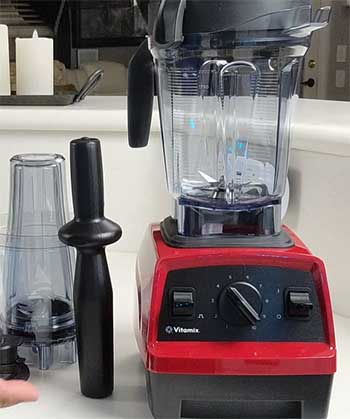
Keeping these blenders running smoothly is straightforward.
Daily cleaning is a breeze—warm water, a drop of dish soap, blend on high, rinse.
I’ve done this hundreds of times without residue buildup.
For deeper cleans, disassemble the container (though not necessary often).
The blades don’t come out, but wiping the base keeps things hygienic.
Longevity comes from proper use: Avoid overfilling, let the motor cool between long blends, and use the tamper for thick mixes. In my experience, following this extends life beyond warranties.
The E310’s 5-year coverage covers defects, while the E320’s 7 years adds confidence for heavy users. Vitamix support is responsive; I once called about a minor issue and got helpful advice quickly.
Analytically, both should last a decade with care, making them investments over cheap alternatives that fail yearly.
- Value for Money Analysis
Breaking down costs, the E310 at $300-350 offers core Vitamix power affordably. Divide by years of use, and it’s pennies per blend.
The E320, at $350-400, justifies the premium with capacity and warranty. If you blend often for groups, the time saved adds up.
Compared to other brands, both outperform in blend quality. A $100 blender might save upfront but lacks durability and finesse.
In my view, if budget’s tight, start with E310. Upgrade later if needs grow.
- Accessories and Compatibility
Both work with Vitamix add-ons like dry grain containers or personal cups. I added a 20-ounce cup adapter to my E310 for on-the-go blends, expanding versatility.
The E320’s low-profile container pairs well with tampers for thick mixes. Compatibility across the line means future-proofing your setup.
- User Scenarios: Which One for You?
Picture this: You’re a busy professional like me, blending solo breakfasts. E310 fits perfectly.
Or you’re a parent prepping family meals—E320 handles the load.
For occasional use, E310 suffices. Daily heavy blending? E320.
Analyze your routines: Batch size, storage, budget. That guides the pick.
Also Read: Differences Between NutriBullet Pro 900 And 1000 Blenders.
Frequently Asked Questions (FAQ)
The Costco E320 has a larger 64-ounce container and 2.2 HP motor with a 7-year warranty, while the E310 offers a 48-ounce container, 2 HP motor, and 5-year warranty.
It depends on needs; the E320 suits larger batches, but higher-end models like Ascent series add presets if you want more features.
Yes, the E320 is often Costco-exclusive with a bigger container, but core blending tech matches standard Vitamix quality.
The Explorian series cuts costs with manual controls, no presets, and shorter warranties compared to advanced lines.
Wrapping It Up
Looking back, I’ve shared my hands-on insights on the E310 and E320 to guide your choice. As someone who’s blended through countless recipes, I appreciate how both deliver that Vitamix magic—powerful, reliable performance that transforms ingredients.
You might lean toward the compact E310 if space and simplicity call to you, or the roomy E320 for those bigger kitchen adventures. Whichever you pick, you’ll wonder how you managed without it. Thanks for reading; I hope this helps you blend happier.