
If you are reading this, you are probably agonizing over which high-performance blender deserves a permanent spot on your counter. I have been there. It is a significant financial commitment, and you want to ensure you aren’t just buying a name, but a tool that changes how you cook.
My goal here is straightforward: I am going to walk you through a detailed, head-to-head comparison of the legendary Vitamix 5200 and the sleek Professional Series 750.
By the end of this breakdown, you will know exactly which machine aligns with your culinary habits and kitchen layout.
| Feature | Vitamix 5200 (Standard) | Vitamix Pro 750 (Heritage) |
| Release Era | 2007 (The Classic) | 2013 (Next Generation) |
| Motor Strength | 2.0 Peak Horsepower | 2.2 Peak Horsepower |
| Container Style | Tall, Narrow 64 oz | Low-Profile, Wide 64 oz |
| Height | 20.5 inches | 17.5 inches |
| Controls | Variable Speed Dial, High/Var Switch | Variable Speed, Pulse, 5 Presets |
| Cooling | Radial cooling fan (efficient at high speeds) | Improved airflow management (quieter) |
| Noise Level | Loud (Industrial hum) | Dampened (Roughly 40% quieter) |
| Blade Diameter | 3 inches | 4 inches |
| Warranty | 7 Years | 7 Years |
| Best For | Small batches, thick blends, silky textures | Storage under cabinets, walk-away blending |
The Legacy Vs. The Luxury
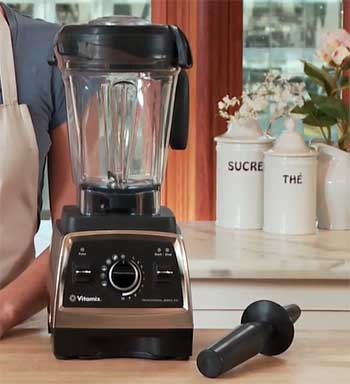
When we talk about these two machines, we are essentially discussing the history of high-performance blending.
The 5200 is the machine that put Vitamix on the map for home cooks.
It is the one you see in commercial kitchens and on the counters of professional chefs who have had the same unit for fifteen years.
It is rugged, mechanical, and unapologetically utilitarian.
The 750, on the other hand, represents the “Next Generation” (G-Series).
It was Vitamix’s answer to the biggest complaints people had about the 5200: the noise and the height.
The 750 feels more like a luxury appliance and less like a piece of industrial machinery. It introduces automation and refinement without sacrificing the raw power the brand is famous for.
Analyzing The Vitamix 5200 Blender
I have a soft spot for the 5200. There is something satisfying about the tactile feedback of the switches. It does not try to be a computer; it tries to be a blender. When you turn this machine on, you feel the torque immediately.
It relies on a high-efficiency radial cooling fan, which means it actually runs cooler the faster you spin it. This is counter-intuitive, but it means you should punish this blender to keep it happy.
Key Features of The Vitamix 5200
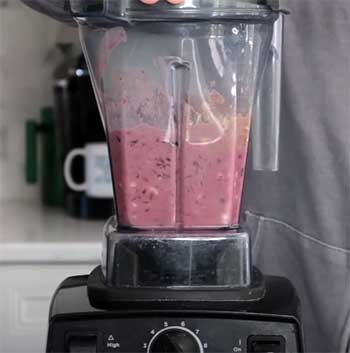
- Variable Speed Control Dial: This is the heart of the machine. The center dial allows you to rotate from speed 1 to 10. This gives you complete manual control over the texture. You can start slow to chop ingredients and ramp up to liquefy them. It feels precise, allowing you to dial in a chunky salsa or a completely smooth bisque.
- The Classic Tall Container: The 64-ounce container is tall and slender. While this makes it hard to store under standard 18-inch kitchen cabinets, the geometry is intentional. The narrow bottom creates a powerful vortex that pulls ingredients down into the blades relentlessly.
- High/Variable Toggle Switch: Unlike newer models that integrate the high speed into the dial, the 5200 has a dedicated switch. To get the maximum horsepower and cooling, you flip this switch to “High.” It bypasses the variable resistor and sends full current to the motor.
Pros of The Vitamix 5200
- Superior for Small Batches: Because the container narrows significantly at the bottom, the blades can engage with very small amounts of food. You can easily make a single-serving smoothie, a small batch of salad dressing, or just a cup of baby food without the ingredients splashing against the walls untouched.
- Better Tamper Accessibility: The tall container combined with the long tamper allows for incredible manipulation of thick blends. When making nut butters or thick frozen desserts, the physics of the tall jar work in your favor, forcing ingredients into the blade with less effort than wider jars.
- Proven Durability Track Record: This model has been around long enough to have a proven history of lasting decades. The lack of electronics or motherboards for presets means there are fewer digital components that could potentially fail over time.
Cons of The Vitamix 5200
- Kitchen Cabinet Incompatibility: At 20.5 inches tall with the container in place, it will not fit under standard American upper cabinets. You either have to store the container next to the base (which takes up more “real estate”) or store it in a pantry, which might discourage you from using it daily.
- Lack of Pulse Feature: There is no dedicated pulse switch. To pulse, you have to flip the on/off switch rapidly. While effective, it feels a bit clunky compared to the responsive pulse button on newer models.
- Thermal Shutoff Risk on Low Speeds: Because the cooling fan is attached to the motor shaft, it spins slower when the motor spins slower. If you blend thick mixtures at low speeds for too long, the machine can overheat and trigger its thermal protection system to shut down.
Analyzing The Vitamix Professional Series 750
Moving to the 750 feels like upgrading from a manual muscle car to a high-end sports sedan with cruise control. It uses the G-Series motor base, which was redesigned for better airflow and sound dampening.
It is heavier, feels more grounded, and introduces convenience features that I find difficult to give up once I got used to them.
Key Features of The Vitamix 750
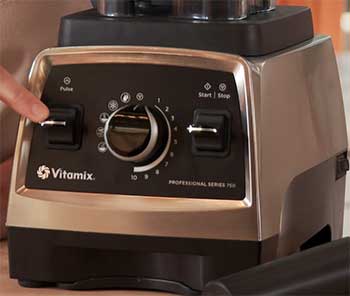
- Five Pre-Programmed Settings: The dial isn’t just for speed anymore; it includes five icons for Smoothies, Frozen Desserts, Hot Soups, Purées, and Self-Cleaning. You load the ingredients, turn the dial to the icon, hit start, and walk away. The machine varies the speed and shuts off automatically when the cycle is done.
- Low-Profile 64-ounce Container: This container holds the same volume as the 5200 but is wider and shorter. It uses a 4-inch blade (compared to the 3-inch blade on the 5200) to reach the wider walls. This design allows the unit to slide easily under almost any kitchen cabinet.
- Dedicated Pulse Switch: The 750 includes a toggle specifically for pulsing. It provides a quick burst of power at whatever speed the dial is set to. This is fantastic for chopping vegetables (like onions or cauliflower) without accidentally turning them into mush.
Pros of The Vitamix 750
- Walk-Away Convenience: The presets change the workflow in the kitchen. If you are making a morning smoothie, you can hit the preset and go pour your coffee or wipe down the counter while it blends. It ensures consistent results every time because the cycle is programmed for the perfect duration.
- Quieter Operation: “Quiet” is relative here—it is still a blender. However, the 750 has suspended motor housing and better airflow management. It dampens the high-pitched whine that the 5200 emits. You can have a conversation in the same room without screaming, which is not really possible with the 5200 on high.
- Easier Scraping and Cleaning: The wider container makes it much easier to get a spatula in and scrape out thick mixtures like hummus or peanut butter. You don’t have to dig deep into a narrow tunnel; everything is more accessible.
Cons of The Vitamix 750
- Difficult with Small Volumes: The wide base is the Achilles heel of the 750. If you try to blend a small amount of liquid or a single garlic clove, the 4-inch blades might just fling the ingredients to the corners where they sit safely away from the cutting zone. You generally need at least 2 cups of ingredients to get a good vortex going.
- Higher Price Point: The 750 is significantly more expensive than the 5200. You are paying for the newer motor design, the presets, and the low-profile jar. For some, the extra cost doesn’t justify the convenience features if the blend quality is similar.
- More Splash with Thin Liquids: Because the container is wider and the blades are longer, the startup torque can be aggressive. If you are blending hot soup and start on a high speed (or the soup preset), the liquid can surge up and hit the lid harder than it would in the tall, narrow container.
The Great Container Debate: Physics In Action
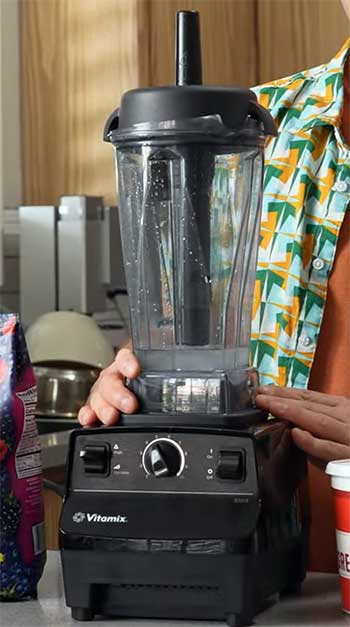
I want to spend a moment focusing specifically on the containers because this is usually the deciding factor for most people.
The debate between the Tall (5200) and the Low-Profile (750) is about physics.
In the 5200’s tall container, gravity does a lot of the work.
The weight of the ingredients pushes everything down into a very small 3-inch area.
This creates a high-pressure zone that pulverizes seeds and skins incredibly well.
This is why many loyalists claim the 5200 makes a “silkier” smoothie.
It handles difficult items like blackberry seeds or kale stems with slightly more finesse because the ingredients have nowhere to hide.
The 750’s wide container relies on speed and the larger 4-inch blade tip speed to do the work. The blade tips are traveling faster (because the radius is larger), which creates immense cutting power.
However, because the bottom is flat and wide, ingredients can sometimes escape the vortex if there isn’t enough liquid to weigh them down. If you are a fan of “nice cream” (frozen banana ice cream) or very thick blends, you will find yourself using the tamper more aggressively with the 750 to push ingredients into the blades, whereas the 5200 often sucks them in naturally.
Motor And Noise: The 2.0 Vs 2.2 Difference
On paper, the difference between 2.0 HP (5200) and 2.2 HP (750) seems negligible. In practice, you won’t notice a difference in power. Both machines can blend a wooden block into sawdust (though I don’t recommend eating it).
They both obliterate ice and frozen fruit effortlessly.
The difference is in the sound. The 5200 has a distinct, high-pitched mechanical whine. It sounds like a jet engine taking off. The 750 has a lower frequency hum. It is more of a rumble than a scream.
If you live in an apartment with thin walls or have a sleeping baby in the next room, the 750 is the safer bet. The improved airflow also means the 750 stays cooler during heavy tasks, like kneading dough for pizza or bread, which can tax the motor significantly.
Frequently Asked Questions (FAQ)
It depends on your needs. The 5200 is better for small batches and absolute smoothness due to the narrow jar. The 750 is better for kitchen storage, noise reduction, and automated convenience.
The E520 is an “Explorian” model, essentially a budget version with a shorter warranty (usually 5 years) and a slightly less premium build quality than the Professional 750. The 750 has better sound dampening and a longer 7-year warranty.
The Vitamix 5200 is widely considered the “best” for pure blending performance and texture, while the A3500 (Ascent series) or Pro 750 are considered the best for features and modern design.
It is considered the best because its narrow container design creates a superior vortex that processes food more efficiently, especially for small amounts, without needing as much tampering as wider models.
Final Thoughts
Choosing between the Vitamix 5200 and the Professional Series 750 comes down to how you plan to use the machine. If you are a culinary purist who makes single-serving smoothies, dressings, and wants the absolute smoothest texture possible, the Vitamix 5200 is your machine. It is a legend for a reason. You sacrifice some counter space and ear comfort, but you gain precision.
However, if you are cooking for a family, value a quieter kitchen, and want a machine that fits neatly under your cabinets, the Vitamix Professional Series 750 is the winner. The presets are not just a gimmick; they are genuine time-savers that allow you to multitask. It is a modern, refined appliance that looks as good as it performs.
Personally, if I had to buy one today, I would lean toward the 750 simply for the storage factor and the noise reduction, but I would miss the small-batch capability of the 5200 every time I tried to make a quick vinaigrette. Whichever you choose, you are getting a machine that will likely outlast your car.