
Here I am, stuck in the classic analysis paralysis of the modern fitness world. I’ve spent weeks bouncing between browser tabs, watching endless review videos, and trying to decide: Tonal or Tempo? It’s the heavyweight championship of smart gyms.
I need more than a spec sheet; I need to know what it feels like to live with one of these. My goal with this article is to finally, for myself and for you, map out the entire user experience—from the resistance itself to the AI staring back at me—to figure out which futuristic gym deserves my money and my wall space.
The At-a-Glance Showdown
Before I get into the weeds, here’s the high-level breakdown of what I’ve found. Think of it as the tale of the tape for these two contenders.
| Feature | Tonal | Tempo |
| The Vibe | The “Iron Man” Gym. Sleek, futuristic, and pure high-tech magic. | The “Boutique” Gym. A beautiful piece of furniture that hides a classic, grit-and-iron workout. |
| Resistance Type | Digital Weight: Electromagnetic motors. Feels like a very smooth, consistent cable machine. | Real Weight: Physical, Olympic-style plates and bars. It’s old-school iron with a high-tech brain. |
| How it “Sees” You | Tracks arm positions and movement data via the smart handles. | 3D Vision: A dedicated 3D sensor (like an Xbox Kinect) scans your entire body’s skeleton. |
| Footprint | Wall-Mounted. It’s a giant, heavy (150lb) screen. Needs professional installation and a 7’x7′ “go-zone.” | Freestanding. A (gorgeous) 6-foot cabinet. Needs about an 8’x8′ space in front to see you. |
| Killer Feature | Smart Modes: Eccentric, Chains, and Spotter modes that you cannot replicate with real weights. | Live Form Feedback: The 3D sensor tells you “Squat lower” or “Keep your back straight” in real time. |
| The “Feel” | Incredibly smooth, constant tension. The 200lb max feels much heavier than 200lbs on a gym machine. | It’s free weights. A 25lb dumbbell feels exactly like a 25lb dumbbell, with all the accompanying instability. |
The Heart of the Matter: Digital Resistance Vs. Physical Weight
This is the single most important difference. It’s not just a feature; it’s the entire philosophy of the workout. When I first started researching, I thought, “Weight is weight, right?” Wrong.
- Tonal’s Digital Sorcery
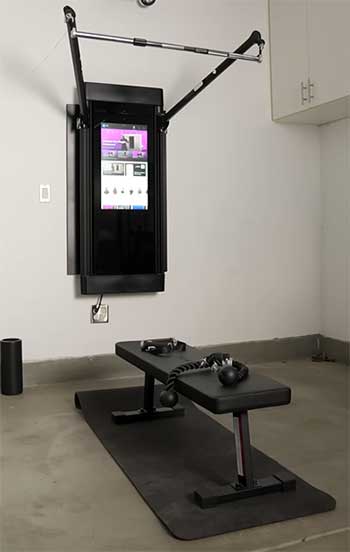
Tonal doesn’t have weights. It has an electromagnetic resistance engine.
When I pull the handle, a motor is providing the exact amount of resistance I asked for, down to a single pound.
My first reaction was skepticism. I’m used to the clank of iron.
But the experience Tonal provides is fundamentally different.
When I do a bicep curl with a dumbbell, the hardest part is the middle of the lift, and it gets easier at the top.
With Tonal, the resistance is 20 pounds at the bottom, 20 pounds in the middle, and 20 pounds at the top.
There is no escaping the tension. It is relentless.
This is where Tonal’s “secret sauce” comes in—the smart modes.
- Eccentric Mode: This is the big one. We’re all stronger on the “negative” (lowering) part of a lift. Tonal knows this, so it can be set to give me, say, 30 pounds on the way up (the concentric curl) and 40 pounds on the way down (the eccentric release). This is a proven muscle-building technique that is almost impossible to do safely on your own.
- Chains Mode: In traditional weightlifting, people hang actual chains from the barbell.2 As they lift, more chain comes off the floor, and the bar gets heavier. Tonal replicates this perfectly. As I press up, the resistance fluidly increases, forcing me to build explosive power.3
- Spotter Mode: This is the feature that gives me the most confidence. Tonal’s sensors can tell when I’m struggling—when my rep speed slows down dramatically.4 Just like a real spotter, it will “del” the weight just enough for me to finish the rep, then automatically turn it back up for the next one.5 I can push to failure on a bench press, alone in my house, without fearing for my life. That is a game-changer.
The 200-pound “limit” (100 pounds per arm) is the most misleading number in fitness. Because of the 1:1 ratio and constant tension, 200 pounds on Tonal feels, to me and most users I’ve read about, like trying to bench 250 or more. It’s not for elite powerlifters, but for 99% of us, it’s more than enough.
- Tempo’s Old-School Soul
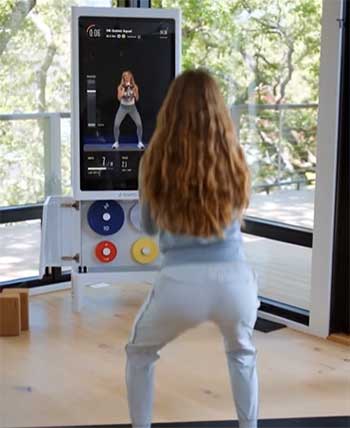
Tempo went the opposite direction.
Their team decided that the feel of free weights—the instability, the balance, the raw physics of it—was non-negotiable.
I respect this. Lifting a real barbell requires dozens of tiny stabilizer muscles to fire in a way that a cable machine (or Tonal) just doesn’t replicate.
When I use Tempo (or, more accurately, when I watch people use it and imagine myself there), I’m loading real 10-pound plates onto a real 7.5-pound dumbbell.
When I go to do a single-arm row, I have to engage my core to keep my torso from twisting. This is functional strength in its purest form.
The “smart” part of Tempo isn’t the weight; it’s the brain. The Tempo Studio has a 3D sensor mounted below that 42-inch screen. This isn’t just a camera; it’s a motion-capture system that builds a 24-point skeleton of my body.
This is where Tempo shines. Halfway through a set of squats, the system might pipe up, “Alex, squat deeper to hit parallel,” or “Keep your chest up.” It tracks my rep count automatically. It even knows (with its proprietary weights) how much I’m lifting and logs it all.
For a beginner, this is invaluable. Bad form is the number one reason people get injured and quit. Tempo acts as a 24/7 personal trainer whose only job is to protect me from my own bad habits.7 Tonal gives feedback, but it’s more about arm position. Tempo is analyzing my entire body, from my knees tracking over my toes to the angle of my spine.8
Also Read: Differences Between Tonal And Mirror Home Gyms.
The Hardware Battle: Wall Hog Vs. Room Hog
This isn’t a small consideration. This is a permanent (or semi-permanent) addition to my home.
- Tonal’s All-in-One Slab
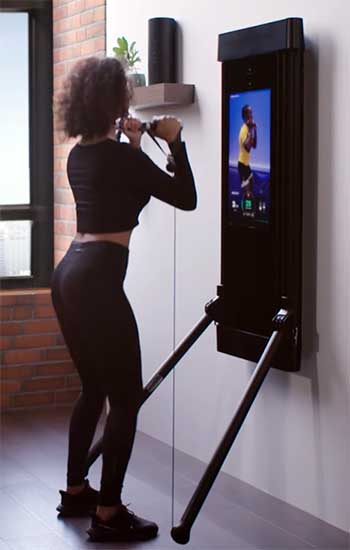
Tonal is beautiful, but it’s demanding.
It’s a 150-pound beast that must be professionally installed into 16-inch or 24-inch studs.
I can’t just buy it and prop it up.
This means I’m committing to this spot on this wall. If I move, I have to pay Tonal to move it for me.
When it’s off, it’s a sleek, dark panel. When it’s on, the 24-inch screen is bright and clear.
The arms fold in neatly, making it surprisingly low-profile. The “gym” disappears.
But the workout space is real. Tonal needs a 7-foot-by-7-foot area.
The arms swivel out wide for flys and up and down for rows or overhead presses. I can’t skimp on this space. I’m literally tethered to the wall by the cables. This makes it feel a bit more contained, for better or worse. I can’t do walking lunges or broad jumps. My workout lives and dies within a 3-foot radius of that wall.
- Tempo’s Statement Piece
The Tempo Studio is a piece of furniture. It’s a 6-foot-tall, 100-pound A-frame cabinet with a stunning 42-inch vertical touchscreen.11 It’s designed to be seen. The weights, bars, and collars all store neatly inside the cabinet (on the Pro version, the squat rack and bench are separate).12 It’s an all-in-one freestanding solution.13
The downside? It’s always there. It takes up a 2-foot-by-1.5-foot rectangle of floor space, but that’s just where it lives. To use it, I need to be 6 to 8 feet away from it so the 3D sensor can see my whole body.
This means the Tempo setup, in practice, takes up more room than Tonal. I need a big, open living room or a dedicated gym space. The upside is that I’m completely untethered. The classes can have me doing dumbbell snatches, burpees, and kettlebell swings, and I have the entire 8-foot-square area to move. It feels more like a real, open-floor studio class.
Tempo also offers the “Tempo Move,” which is a brilliant budget option.14 It’s a tiny cabinet for the weights that uses my own TV (via HDMI) and my iPhone’s LiDAR camera as the 3D sensor.15 It’s a much lower-cost entry, but I’m now responsible for my own screen and phone.
The Class and Content Experience
I’m not just buying hardware; I’m buying into an ecosystem. Both Tonal and Tempo require a monthly subscription ($59.95/mo for Tonal, $39/mo for Tempo) to access the classes and AI features. Without the subscription, both become very expensive, very dumb mirrors.
- Tonal: Polished, Program-Driven, and Strength-Focused
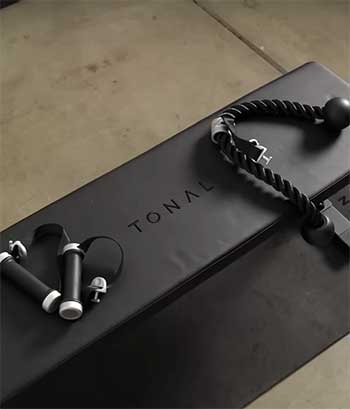
Tonal’s interface feels like the “Netflix” of fitness.
It’s incredibly polished. The content is heavily focused on multi-week programs.
I don’t just pick a “chest day” workout; I join a 4-week “Build Muscle with Coach Paul” program.
Tonal tracks my progress, automatically increases the weight when I get stronger, and guides me day by day.
It’s less about “live” energy and more about methodical, data-driven progress.
They have live classes, but the on-demand library is the core product.
The instructors are motivating, and the production value is sky-high. Because Tonal controls the resistance, the instructors don’t have to say, “Now pick up your medium weights.” They just say, “Get ready,” and Tonal sets the weight for me. It’s a seamless, futuristic experience.
They also have a huge variety of non-strength content, like Pilates, yoga, and kickboxing, all using the digital-arm resistance in creative ways.19
- Tempo: Live Energy, Free-Weight Variety, and Community
Tempo feels more like Peloton. There’s a big emphasis on live classes and the community leaderboard.20 People who love Tempo love the trainers and the feeling of showing up for a 6 PM live class with 200 other people.
The 3D form correction is the star, but the variety of classes is the support system. They have strength training, HIIT, cardio boxing, and mobility. Because I’m using free weights, the workouts feel more athletic and dynamic.
A coach might ask me to do a dumbbell thruster followed by a plank. I can just drop the weights and hit the floor. On Tonal, I’d have to press the button on the handle to turn the weight off, unclip the handle, and then move.
Tempo’s ability to “preview” a class is a feature I desperately want. I can see every single exercise in a workout before I start. If I have a sore knee, I can scan the workout for jumping lunges and pick a different one. This is a small but brilliant user-focused detail.
Also Read: Is Home Fitness Code Treadmill Worth It?
Tonal: The Smartest Strength Machine
The Pros
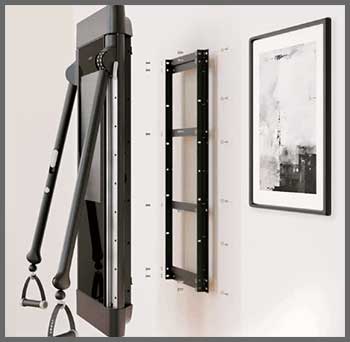
- Space-Saving Design: When it’s off, it’s just a screen on the wall. The arms fold away, and it’s the most “hidden” full gym you can buy.
- The Smart Modes: Eccentric, Chains, and Spotter are revolutionary.21 They are not gimmicks. They are professional-level training techniques that I can now use safely at home.
- Seamless Experience: I never have to change a plate. I never have to re-rack a weight. I just show up, press a button, and lift. The lack of “friction” makes it easier to stay consistent.
- Precise Progression: Tonal knows I lifted 52 pounds for 10 reps last week. This week, it will suggest 54 pounds. This is “progressive overload” made automatic.22
The Cons
- The Installation: I must have it professionally installed. I can’t move it myself. This is a real commitment to a spot on my wall.
- The 200-Pound Ceiling: While it feels like more, it is a hard ceiling. If I am already a high-level lifter benching 300 pounds, Tonal is not for me.
- The “Tethered” Feeling: All my workouts happen within a cable’s length of the wall. This limits dynamic, full-body movements like walking lunges or kettlebell-style swings.
- The Higher Subscription: It’s one of the most expensive subscriptions in the smart-gym space.
Tempo: The Smartest Personal Trainer
The Pros
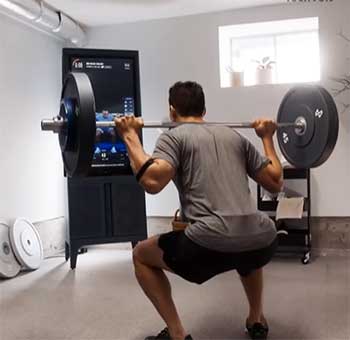
- The Feel of Free Weights: It’s real weight. The balance, instability, and functional strength I get from holding a real dumbbell is, for many, the “right” way to train.
- Superior Form Correction: The 3D Tempo Vision is the best form-feedback system on the market, period. It’s like having a trainer in the room, making it perfect for beginners or anyone nursing an old injury.
- Dynamic Workouts: I am untethered. I can move, jump, and flow. The classes feel more athletic and varied.
- Lower Subscription Cost: That $20/month difference ($240/year) compared to Tonal is not insignificant.
- Aesthetic and Freestanding: It looks like a high-end piece of furniture. I can move it (with a friend) to another room or another house without voiding a warranty.
The Cons
- The Physical Effort: I have to change my own weights. This sounds small, but in a fast-paced HIIT class, fumbling with a weight collar while my heart rate is at 160 is a real pain. It breaks the flow.
- The Space Hog: While the cabinet is compact, the required 8-foot-deep “vision” zone means it effectively dominates a room.
- Weight Recognition Limits: The AI can sometimes get fussy. It only recognizes Tempo’s own weights, and I’ve read user reports of it miscounting reps or struggling in low light.
- It’s Still Just Weights: There’s no eccentric mode. No chains. No magic spotter. It’s the best version of a 1950s workout, but it’s still just a 1950s workout.
Also Read: Is Sunny Health & Fitness Rowing Machine Worth It?
Frequently Asked Questions (FAQ)
Neither is “better”—they are different. Tonal is better for seamless, data-driven strength training with digital weight.25 Tempo is better for users who prefer real free weights and want AI-powered, real-time form correction.26
Yes. He’s not just a spokesperson; he’s an investor and partner.27 He cites the efficiency and the all-in-one nature of Tonal (no re-racking weights) as key reasons he uses it.28
Tempo is its biggest direct competitor in the smart-strength category. Other competitors include Peloton (with its Guide), Lululemon Studio (formerly MIRROR), and other digital resistance machines like Speediance.29
This is a general fitness term, not a Tempo-product feature. It’s a 4-digit code (like 3-0-1-0) that dictates the speed of a lift: 3 seconds to lower the weight (eccentric), 0-second pause at the bottom, 1 second to lift the weight (concentric), and a 0-second pause at the top.
My Conclusion: Who Are You, and Who Am I?
After all this, I’ve realized Tonal and Tempo aren’t really in a direct fight. They’re built for two different people.
Here’s my final word, for me and for you. You should buy Tonal if your primary goal is building pure, unadulterated strength with maximum efficiency. You’re the person who wants the smartest, most futuristic tools available.
You love data, you want to push to failure safely, and you value the idea of a workout so seamless that all you have to do is show up. You want the “Iron Man” suit.
You should buy Tempo if you believe in the fundamentals of free-weight training and your biggest priority is safety and form. You’re the person who wants a trainer more than a machine. You want to learn the why behind a movement.
You love the energy of a live class, and you want a dynamic, athletic workout that has you moving all over the floor. You want the “Boutique Studio” experience.
As for me? I’m still staring at that empty wall. But now, at least I know exactly what I’m choosing between: the future of strength, or the perfection of a classic.