
If you have noticed those tiny, hovering specks around your bananas or wine glass, you need to act immediately before they multiply into a swarm. I have tested numerous solutions, but the Terro Fruit Fly Trap is the one you should buy right now.
It is effective, discreet, and solves the problem at the source without requiring you to play exterminator. Do not waste time with home remedies that just make a mess; grab this trap and reclaim your kitchen.
It is the most reliable solution I have found for ending the infestation quickly.
My Experience With Terro Fruit Fly Trap
It started innocently enough. I bought a bag of organic peaches from the farmer’s market, left them in a bowl on the counter, and forgot about them for two days.
By Wednesday morning, my kitchen had transformed into a landing strip for what felt like hundreds of fruit flies. I tried the classic clapping method, smashing my hands together in mid-air like a maniac, but for every one I squashed, three more seemed to materialize out of thin air.
The frustration was visceral. You pour a cup of coffee, and there is a fly on the rim. You try to cook dinner, and they are investigating your chopped onions. It felt gross, unsanitary, and frankly, embarrassing.
I tried the old “bowl of vinegar with plastic wrap” trick. I poked holes in the wrap with a fork, set it out, and waited. After 24 hours, I had caught maybe two flies, while the rest of the squadron used the plastic wrap as a lounge chair. I needed something stronger, something engineered for the job.
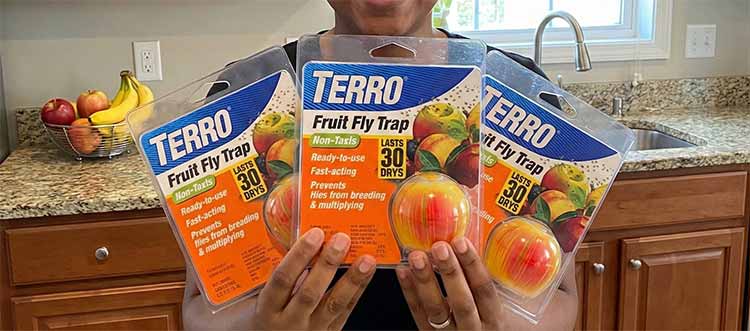
That is when I picked up the Terro Fruit Fly Trap. The packaging looked promising—the apple-shaped design was cute enough to blend in with the fruit bowl, rather than looking like a piece of industrial pest control equipment.
Setting it up was ridiculously simple. I just snapped off the top, poured the liquid bait into the little apple container, and placed it right next to the source of the problem: the fruit bowl.
The first few hours were a test of patience. I kept checking it, expecting instant mass casualties, but these traps rely on attraction.
About four hours in, I noticed the traffic pattern changing. Instead of hovering aimlessly, the flies were congregating around the apple trap. They were drawn to the scent like magnets.
By the next morning, the difference was night and day. The cloud of flies that usually greeted me near the sink was gone. I peered into the little viewing window of the trap and saw a graveyard of fruit flies floating in the liquid.
It was deeply satisfying. Over the next few days, the stragglers were picked off one by one. The trap did not just kill the adults; it broke the breeding cycle. I was not swatting anymore. I was not tossing out fresh produce because I was paranoid about larvae.
I finally had my kitchen back, and the peace of mind was worth every penny.
Why Terro Fruit Fly Trap Actually Works (Pros)
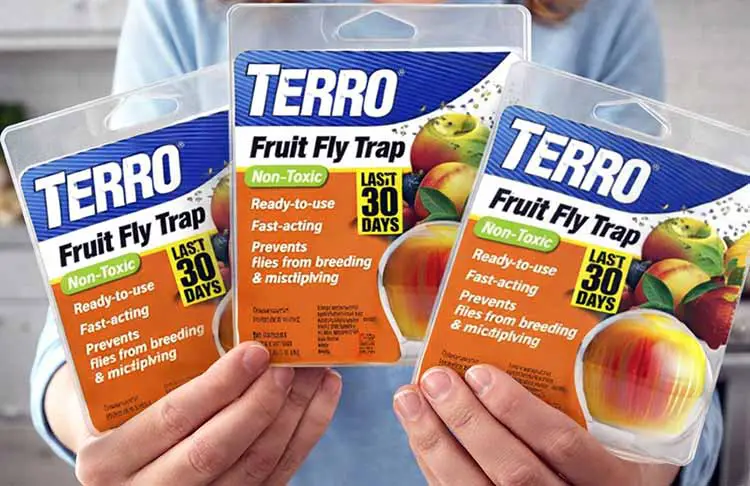
- Targeted Food-Based Lure: The primary strength of the Terro Fruit Fly Trap lies in its targeted formulation. Unlike general insecticides that rely on contact poisons, this trap uses a food-based lure. The liquid bait is specifically designed to mimic the scent of overripe fruit, which is the primary attractant for Drosophila melanogaster. When you set this out, you are essentially offering them a meal they cannot refuse.
- Ingenious Funnel Architecture: The genius is in the design of the trap itself. It utilizes a funnel system that allows easy entry but makes exit nearly impossible. The flies follow the scent down into the trap, but due to their flight patterns and the funnel’s geometry, they cannot navigate their way back out. Eventually, they fall into the liquid and drown.
- Aesthetic Discretion: Another massive pro is the aesthetics. Most pest control products are ugly. Sticky ribbons hanging from the ceiling catch your hair as often as they catch flies, and they look hideous. This trap looks like a small red apple. You can place it on your kitchen island, near your fruit basket, or even on a dining table, and it does not scream “I have a bug infestation.” It blends into the kitchen environment seamlessly.
- Non-Toxic Safety: Safety is also a major factor here. The active ingredients are primarily sodium lauryl sulfate and vinegar. It is non-toxic and safe to use around food preparation areas. You do not have to worry about spraying harsh chemicals near your cutting boards or your toaster. This peace of mind is essential when you are dealing with pests in the very room where you eat and cook.
- Silent Operation: Unlike electric zappers that snap and pop all night, or sprays that leave a chemical haze, this trap is completely silent and odorless from a distance. You set it and forget it. It works passively in the background, 24 hours a day, without drawing attention to itself or disrupting your daily routine.
Also Read: Comparison of Katchy And Zevo Flying Pest Traps.
Optimization Tips For Terro Fruit Fly Trap
Getting the most out of these traps requires a bit of strategy. Do not just throw it on top of the fridge and hope for the best. You need to place the trap where the air currents are low and the fly activity is high.
The best spots are usually right next to your fruit bowl, near the kitchen sink drain (where they often breed), or near the trash can.
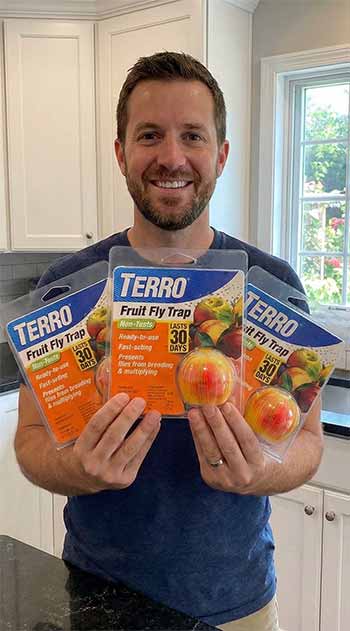
- Placement Strategy: If you have a heavy infestation, one trap might not be enough. I recommend creating a perimeter. Place one trap near the source, like the compost bin, and another on the opposite side of the counter. This ensures that no matter which direction they are flying from, they intercept a scent trail that leads to the trap.
- Eliminating Competing Scents: This is the most critical maintenance tip. The trap works by smell. If you have a rotting banana sitting two feet away, the flies have a choice. You need to remove all competing food sources. Store your fresh fruit in the fridge for a few days until the infestation is cleared. Take out the trash frequently and scrub your drain. If the trap is the only thing that smells like food, the catch rate increases exponentially.
- Monitoring and Refilling: The traps are disposable, but they have a lifespan. The liquid will eventually dry out or become saturated with flies. Typically, one trap lasts about 30 to 45 days. However, in hot, dry weather, the liquid evaporates faster. Keep an eye on the fluid level through the viewing window. If it dries up, the scent is gone, and the trap is useless. While Terro sells these as disposable units, some users extend the life by rinsing out the dead flies and refilling it with a homemade mixture of apple cider vinegar and a drop of dish soap, though the proprietary bait definitely works faster.
- Spill Management: The liquid inside is sticky and red. If you knock it over, it can stain porous surfaces like unsealed granite or wood. I suggest placing a small coaster or a piece of paper towel underneath the trap just in case it gets bumped. It is a small precaution that saves you from scrubbing red dye out of your grout.
Cons of Terro Fruit Fly Trap
- Noticeable Vinegar Scent: It is important to be realistic about the limitations. The smell is noticeable. When you first open the bait bottle, you get a strong whiff of vinegar. It dissipates into the room quickly, but if you are sensitive to smells and you are standing right next to it, you will detect a sour odor. That is the nature of the beast—it has to smell like fermenting fruit to work.
- Delayed Gratification: The time to effectiveness can be a drawback for those expecting instant results. This is not a bug zapper. It does not kill on contact. You have to wait for the flies to find it, enter it, and drown. It is a passive system. If you need the room clear in five minutes for a dinner party, this will not do it alone. You might still need a swatter for the immediate airborne threats while the trap works on the population over time.
- Tipping Hazard: Lastly, the design, while clever, can be prone to tipping if you are clumsy. The apple shape is round, and while it has a flat base, it is lightweight. If you reach for the salt and clip the trap, it will tumble, and the liquid is not sealed inside—it sits in an open cup at the bottom.
- Limited Target Species: This product is hyper-specific. It kills fruit flies, and that is it. If you have drain flies, fungus gnats (from your houseplants), or house flies, this trap will largely ignore them. You need to be 100% sure you are dealing with Drosophila before you buy this, or you will be disappointed.
How Terro Fruit Fly Trap Compares To The Competition?
- Terro Fruit Fly Trap Vs. Zevo Flying Insect Trap
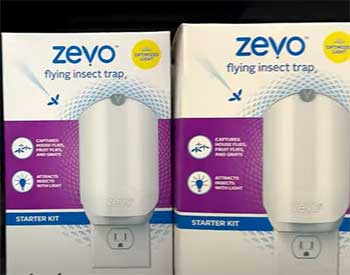
The Zevo trap has gained massive popularity recently, but it operates on a completely different mechanism than the Terro.
Zevo uses blue UV light to attract insects and captures them on a sticky card backing.
In my experience, Zevo is a fantastic generalist tool. It works wonders on house flies, moths, and gnats that are navigating by light.
However, when it comes to fruit flies specifically, Terro wins the battle of biology.
Fruit flies are chemically driven creatures. They are hunting for the scent of fermentation (rotting fruit). If you have a bowl of ripe bananas on your counter and a Zevo light plugged into the wall, the fruit flies will ignore the blue light and swarm the bananas because the scent drive is stronger than the light drive.
Terro exploits this by mimicking that fermentation scent. It pulls them away from your food in a way that light simply cannot. Additionally, Zevo requires an electrical outlet and acts as a permanent nightlight.
If you do not want a blue glow in your kitchen all night, or if your outlets are nowhere near your fruit bowl, Terro’s wireless, passive design is far more convenient.
- Terro Fruit Fly Trap Vs. Sticky Fly Ribbons
We have all seen these—the long, ugly, yellow coils of sticky paper that you hang from the ceiling. Comparing Terro to fly ribbons is like comparing a sniper rifle to a blindfolded person swinging a net. Fly ribbons are passive in the worst way.
They rely largely on luck—an insect has to accidentally fly into them or be vaguely interested in the yellow color. They do not have the potent scent lure that actively draws fruit flies in from across the room.
The “gross factor” is also a huge differentiator here. With a sticky ribbon, your kill is on full display. You have a spiraling graveyard of dead bugs hanging at eye level in your kitchen, which is the quickest way to ruin an appetite.
If you have tall guests, they might even brush their hair against it, which is a disaster. Terro hides the bodies. The flies crawl inside the apple and die out of sight. You only see the carnage if you choose to look through the viewing window.
For a living space like a kitchen or dining room, Terro is vastly superior in terms of aesthetics and hygiene.
- Terro Fruit Fly Trap Vs. Katchy Indoor Insect Trap
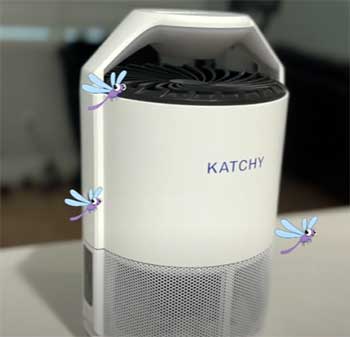
The Katchy trap is a high-tech solution that uses a combination of UV light, a fan, and a sticky board.
It sucks insects in when they get too close. I found the Katchy to be excellent for fungus gnats and mosquitoes—bugs that are weak flyers and drift near lights.
However, for the specific problem of fruit flies, the Katchy is often overkill in price and under-kill in effectiveness.
A Katchy unit costs significantly more than a pack of Terro traps.
It also involves moving parts (the fan) and requires a power source. While the fan is quiet, it is not silent; there is a constant low hum. Terro is completely silent and requires no electricity.
But the biggest difference again comes down to the lure. The Katchy relies on the fly coming to the light, which, as I mentioned with Zevo, is a secondary instinct for fruit flies. Terro uses the primary instinct: smell.
I have seen fruit flies land on the rim of a Katchy trap and fly away because the fan didn’t catch them, but once they enter the Terro trap, they are doomed. If you have a mixed bag of pests—gnats, moths, and flies—Katchy is a great investment.
But if your only enemy is the fruit fly, Terro is the more efficient, cost-effective, and targeted assassin.
Frequently Asked Questions (FAQ)
You will typically see flies gathering around the trap within a few hours, with a significant reduction in the population within 24 to 48 hours.
For kitchen use, the Terro T2500 remains the top choice due to its effective liquid bait, discreet design, and ease of setup compared to sticky tapes or DIY solutions.
The primary active ingredients are sodium lauryl sulfate (a surfactant) and acetic acid (vinegar), combined with water and attractants to mimic rotting fruit.
It is specifically designed for fruit flies (Drosophila). While it might catch the occasional fungus gnat by chance, it is not an effective solution for fungus gnats, which are attracted to soil and decaying plant matter, not vinegar.
Final Thoughts
If you are tired of waving your hands around your face every time you enter the kitchen, you need the Terro Fruit Fly Trap. It turns a frustrating infestation into a manageable problem overnight.
The combination of potent bait and a smart, spill-resistant design makes it the superior choice over messy home remedies. Do not let the flies win. Buy this trap, set it up, and enjoy a fly-free home again.
It is a small investment for a massive upgrade in your kitchen’s hygiene and your own sanity.