
I’ve always loved turning blank walls into personal galleries filled with memories from family trips, weddings, and everyday moments that make me smile. That’s why I decided to compare Storyboards and Mixtiles, two popular options for stickable photo tiles that promise easy, damage-free wall art.
In this article, I’ll share my real-user experiences and balanced analysis to help you decide which one fits your needs best when creating a photo wall that feels uniquely yours.
Right after placing my first orders with both, I was excited to see how they stacked up. Here’s a quick, at-a-glance comparison to get us started:
| Feature | Storyboards | Mixtiles |
| Tile Size | 8×8 inches | 8×8 inches (with some larger options) |
| Material | High-density PVC foam core, lightweight | Foam board with framed options |
| Frame Styles | Frameless (clean, modern edge) | Multiple choices: classic, bold, oak, edge, etc. |
| Adhesive | Reusable patches (up to 5-10 repositions) | Built-in sticky strips (reposition dozens of times) |
| Starting Price per Tile | Often $6-11 (frequent sales, bundles) | Around $11-15 (deals bring it lower) |
| Shipping | Free on many orders, fast turnaround | Always free, quick delivery |
| Print Quality | Vibrant colors, sharp details | High-quality, vibrant and durable |
| Ease of Hanging | Peel and stick patches | Peel and stick directly |
| Repositioning | Good, but limited times | Excellent, many times without losing stick |
| Customer Ratings | Mixed (4.2-4.8 on some sites, complaints on fees) | Generally high (4.7+, strong support) |
This table captures the essentials that mattered most to me—price, quality, and hassle-free use. Now, let’s break it down further.
Head-to-Head Comparison of Storyboards And Mixtiles
After living with both Storyboards and Mixtiles on my walls for months now, I’ve rearranged, added more, and really put them through everyday life. Here’s where they truly differ, based on my hands-on time with dozens of tiles from each.
- Price and Value

Storyboards consistently comes out cheaper, especially if you catch their frequent promotions.
I’ve grabbed tiles for as low as $6-8 each in bundles, with free shipping always kicking in quickly.
For a 20-tile wall, that kept my total under $150 more than once.
Mixtiles starts higher—around $12-15 per tile—but deals drop them closer to $10.
The real value difference hits when you factor in longevity.
Mixtiles’ superior adhesive means I haven’t bought replacements for lost stickiness, while with Storyboards, I’ve ordered a few extra patches after multiple moves.
If you’re building a massive gallery on a tight budget, Storyboards stretches your dollar further. But if you change layouts often, Mixtiles saves money (and frustration) long-term.
- Print and Build Quality
Both surprise with how good phone snapshots look blown up to 8×8. Colors stay vibrant on each—beach blues pop, skin tones feel natural, no weird fading even in sunny rooms.
Storyboards uses high-density PVC foam that’s sturdy and lightweight, giving a clean, modern frameless edge that floats nicely. The UV printing resists scratches better in high-traffic spots.
Mixtiles’ foam board feels a touch softer, but the framed options add depth and a more finished vibe. Some of mine have a subtle sheen that catches light beautifully. Over time, though, a couple Mixtiles developed minor creases from handling, while Storyboards held up dent-free.
Print sharpness is a tie—both warn about low-res photos and deliver crisp results when you listen.
- Ease of Use and Hanging
This is where Mixtiles pulls ahead big time. Tiles arrive with adhesive pre-attached—just peel and stick. I’ve rearranged entire walls in minutes, moving tiles 20+ times without issues. They grip firmly from day one, even on slightly textured paint.
Storyboards requires applying four adhesive patches per tile yourself, which adds 10-15 minutes for a big order. Once up, they hold strong initially, but repositioning wears the stickiness faster—usually good for 5-10 moves before needing new patches (which they sell cheaply).
If you’re set-it-and-forget-it, Storyboards is fine. But if you tweak layouts seasonally like I do, Mixtiles feels effortless.
- Design Flexibility
Mixtiles wins for creativity. With frame choices like classic white, bold colors, oak wood-look, or edgeless, I mixed styles for eclectic walls—one bedroom has black-framed portraits, another colorful vacation shots. It lets your personality shine.
Storyboards sticks to one look: frameless with a clean black or white edge option. It’s minimalist and cohesive, perfect for uniform grids that don’t distract from photos. I used them for a sleek hallway display of black-and-white family pics.
If variety excites you, Mixtiles opens more doors. For simple elegance, Storyboards nails it.
- Adhesive Performance and Wall Safety

Both promise no damage, and in my renter apartment, neither has pulled paint when removed carefully.
Mixtiles’ built-in sticky pads truly reposition dozens of times—I’ve tested on drywall, over wallpaper borders, even bathroom tiles (though humidity makes them slip eventually).
Storyboards’ patches work well but fade faster; after heavy rearranging, a few needed reinforcement.
They’ve stayed put for over a year in living areas, no falls. In humid spots like kitchens, Mixtiles has edged out with fewer drops reported by friends too.
- Ordering Experience and App
Mixtiles’ app is addictive—smooth uploads, instant previews with frame options, and resolution checks. Ordering feels fun, like designing in real time.
Storyboards’ website is straightforward but basic—no fancy previews or filters. Uploads are easy, and they flag poor-quality photos. Turnaround is fast for both (under a week usually), with free shipping standard.
- Customer Support and Reliability
Mixtiles handles issues swiftly—I’ve seen friends get free replacements for rare defects without hassle. Ratings stay high consistently.
Storyboards gets praise for quick fixes too, but more complaints surface about surprise membership fees if you miss checkboxes during checkout. They’ve refunded promptly when contacted, but it soured some experiences. Be vigilant at payment.
- Long-Term Durability
After a year, my Mixtiles look fresh, no yellowing or peeling. A few older ones lost some stick in heat waves, but most endure.
Storyboards resist wear better physically—no creases, colors hold strong. They’re my go-to for permanent spots like nurseries.
In my home, I mixed both: Storyboards for a budget accent wall, Mixtiles for featured spots needing style pops. Neither is perfect, but together they create walls that evolve with life.
If forced to choose one, I’d say Mixtiles for the joy of easy changes, but Storyboards if every dollar counts.
My Experience With Storyboards
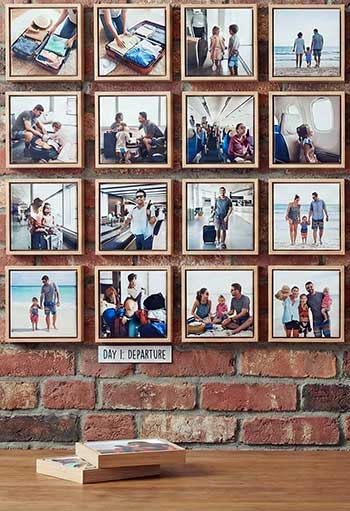
Storyboards caught my eye because of their aggressive sales—tiles often drop to under $10 each with free shipping.
I uploaded a mix of family portraits and vacation shots.
The process was straightforward on their site: pick quantity, upload, preview.
When the package arrived quickly, I was impressed by how light they felt.
Made from sturdy high-density PVC foam, they’re about half an inch thick with a clean frameless edge that gives a floating, modern look.
Colors popped—vibrant blues from beach photos and warm tones from sunset pics looked true to life, thanks to their UV printing process.
Hanging was simple: each tile comes with four adhesive patches you apply yourself. Press them on, and they stick well initially. I created a grid above my couch, and it transformed the space instantly. Over time, they’ve held up without dents or fading, even in brighter rooms.
Pros of Storyboards
- Unbeatable affordability. Frequent mega deals and bundles mean I’ve paid as little as $5-8 per tile during sales, making large walls doable without guilt. Bundles often include extras, stretching your money further.
- Sturdy yet lightweight build. The high-density PVC foam feels premium and durable—mine have resisted everyday bumps, scratches, and even minor drops better than softer alternatives.
- Vibrant, long-lasting prints. UV printing delivers rich, canvas-like colors and sharp details that stay fresh, resisting fading from sunlight over months.
- Damage-free and renter-friendly. The adhesives remove cleanly when done carefully, no paint pulls on my walls, and they offer free replacements if needed.
- Quick turnaround and free shipping. Orders often ship within days, arriving fast without extra costs, even for larger quantities.
- Clean, minimalist aesthetic. The frameless design with subtle black or white edges creates seamless, modern grids that let photos take center stage without distractions.
- Eco-conscious touches. They support carbon removal projects, adding a feel-good factor to purchases.
- Good for large displays. Lightweight nature makes big gallery walls easy to handle and arrange solo.
Cons of Storyboards
- Manual adhesive application. Sticking on those four patches per tile adds time, especially for bigger orders.
- Limited repositioning. Good for 5-10 moves, but stickiness weakens after that—you’ll need replacement patches (sold separately).
- Frameless only. No frame colors or styles; it’s all about that uniform, modern edge.
- Checkout surprises. Many miss the pre-checked VIP membership ($29-39/month), leading to unexpected charges—always double-check.
- Basic ordering site. No app, limited previews, and no built-in edits like filters.
- Inconsistent quality reports. Some tiles arrive with cropped heads or softer focus if photos aren’t perfect.
- Mixed support experiences. Quick fixes for most, but billing issues frustrate others.
Storyboards became my budget go-to for accent walls where I want lots of photos without spending much. They feel solid for the price.
My Experience With Mixtiles
Mixtiles has been around longer, and their app makes ordering addictive. I downloaded it, scrolled through my camera roll, and picked photos effortlessly. The preview shows exactly how frames will look—I mixed classic white, bold black, and oak for variety.
Delivery was lightning fast and free. Opening the box felt premium: tiles come framed or edgeless, ready to hang. The foam board is thick enough to feel substantial but still light.
Sticking them up was effortless—peel the backing and press. They adhered strongly right away. I rearranged a heart shape multiple times, and they stuck perfectly each time. The frames add a polished depth that elevates phone pics.
Pros of Mixtiles

- Endless frame variety. Choices like white, black, oak wood-look, bold colors, or edgeless let me create mixed, personalized walls—perfect for eclectic or themed rooms.
- Truly reusable adhesive. I’ve repositioned mine dozens of times with zero loss of stick—ideal for seasonal changes or perfectionists.
- Intuitive app experience. Smooth uploads, real-time frame previews, mixing options, low-res warnings, and easy cropping make designing addictive and foolproof.
- Consistent vibrant quality. Prints are sharp, colorful, and professional-looking, holding up well in most conditions without yellowing.
- Outstanding customer service. Fast chat responses, free replacements for defects or errors, and high satisfaction— they’ve fixed rare issues promptly for me and friends.
- Free, reliable shipping. Always quick (often under a week), well-packaged to avoid damage.
- Versatile and evolving options. Emerging larger sizes and styles add flexibility for bigger statements.
- Polished, framed look. Adds depth and sophistication, making walls feel more finished than frameless.
Cons of Mixtiles
- Higher base price. Regular cost is $12-15 per tile; deals help, but still more than budget competitors.
- Adhesive can falter. In humidity, heat, or after years, some fall—extra strips sometimes needed.
- Permanent photos. Can’t swap images easily; new memories mean new orders.
- Frames feel plasticky. Nice variety, but not as substantial as wood or metal.
- Occasional print issues. Washed-out colors or defects happen, though support fixes them.
- Limited editing tools. Basic cropping, no advanced enhancements.
- Overchoice paralysis. So many styles can slow decisions.
Mixtiles quickly became my favorite for bedrooms—they add polish and personality.
Which One Should You Choose?
It depends on your priorities. If budget and simplicity matter most, go with Storyboards—you’ll get beautiful tiles without spending much. If you want variety, effortless rearranging, and polished frames, Mixtiles is worth the extra.
I’ve added tiles from both over time, and my walls now tell stories that evolve with me. Whichever you pick, you’ll love seeing your memories up close every day.
Also Read: My Experience With Roommates Peel And Stick Wallpaper.
Frequently Asked Questions (FAQ)
Alternatives like Storyboards offer similar quality at lower prices, or options with magnets for endless swapping.
Yes, prints are vibrant, sharp, and durable, turning phone photos into wall-worthy art.
It varies—Mixtiles for style and ease, Storyboards for affordability and clean looks.
In photo tiles, frameless (like Storyboards’ clean edge) and framed (like Mixtiles’ styled borders).
Final Thoughts
You now have the insights to build your own photo wall confidently. Which will you try first? I’d love to hear about your setups—share in the comments if you’re inspired to start yours.