
I’ve logged more hours on stair-climbing machines than I care to count, switching between the stepmill and the StairMaster (the pedal-style stepper everyone calls by that name) depending on what my body and schedule demanded.
After all that sweat, I realized most folks pick one at random or based on what’s free at the gym, then wonder why their results stall.
My goal here is simple: walk you through exactly how these two machines stack up so you can choose the one that matches your goals, your space, and your current fitness level without wasting months on the wrong fit.
| Feature | Stepmill | StairMaster (Pedal Stepper) |
| Mechanism | Revolving continuous staircase | Independent alternating pedals |
| Footprint & Height | Large, 8-10 ft ceiling required | Compact, fits standard ceilings |
| Step Height | Fixed 7-8 inches | Smaller, variable range |
| Intensity Level | Very high, constant motion required | Moderate to high, user-controlled |
| Typical 30-min Calorie Burn (155 lb person) | 250-400+ | 200-300 |
| Best Suited For | Advanced HIIT, functional strength | Beginners, longer steady sessions |
| Maintenance | Higher (more moving parts) | Lower (simpler design) |
| Approximate Commercial Cost | $4,500-$7,500+ | $2,000-$3,800 |
| Learning Curve | Steeper, demands balance and rhythm | Gentler, quick to master |
Key Differences Between Stepmill And StairMaster
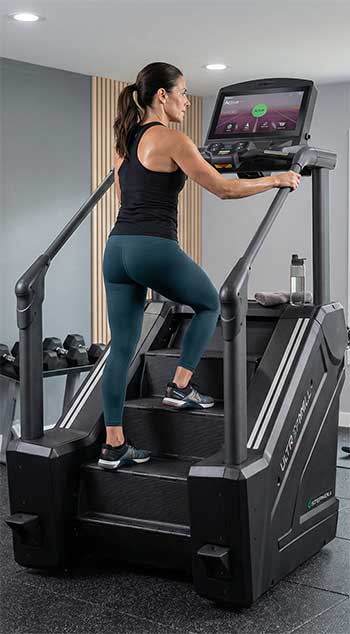
- The mechanism creates completely different movement patterns. On the stepmill the stairs actually rotate downward, so every step requires you to lift your entire foot clear of the previous step and plant it fully on the next one. This full range mimics real-world stair climbing or hiking and forces your hip flexors, glutes, and core to work harder to stabilize. The pedal stepper moves in a shorter, alternating piston-like action where one foot is always pushing down while the other rises. The motion stays more contained, which reduces the need for balance but also limits how much your body has to recruit stabilizing muscles.
- Size and gym placement matter more than you think. Stepmills are tall beasts that eat floor space and demand high ceilings; try fitting one in a basement with 7-foot clearance and you’ll be disappointed. They weigh 300-400 pounds and stay put once installed. The pedal StairMaster slides into tight corners, weighs half as much, and works fine in apartments or small home setups. When I switched gyms last year, the compact stepper let me keep my routine going at home during a renovation, while the stepmill stayed at the big box location.
- Intensity and session length diverge sharply. The stepmill demands constant upward progress; slow down too much and you risk stumbling. Most people last 15-25 intense minutes before legs give out. I hit my highest heart rates here and finish drenched in under half an hour. The pedal version lets you dial intensity and pause if needed, so 40-60 minute sessions feel doable. That makes the stepper better for building aerobic base or active recovery days.
- Calorie burn and afterburn effect differ because of the work required. The stepmill’s continuous full-step motion against gravity lights up more muscle fibers per minute, pushing calorie expenditure higher even at moderate speeds. I track with my watch and consistently see 300-plus calories in 25 minutes when I’m pushing hard. The stepper delivers solid numbers too, but the shorter range of motion means slightly lower total work, so I need longer sessions to match the burn.
- Learning curve and intimidation factor play huge roles for new users. First-timers on the stepmill often grip the rails tightly and look panicked for the first few minutes until rhythm clicks. The stepper feels intuitive right away—step on, choose level, go. I coach friends who freeze at the sight of the revolving steps but hop happily onto the pedals.
- Maintenance and long-term ownership costs add up differently. The stepmill’s chain, motor, and rotating steps need regular checks; gyms budget more for service calls. The pedal machine has fewer parts, so breakdowns happen less often and fixes cost less. If you’re buying for home, that difference can mean hundreds saved over years.
- Functional carryover to daily life favors the stepmill. Hiking steep trails, carrying groceries up stairs, or playing with kids on playground equipment all feel easier after months on the revolving stairs. The pedal version builds leg endurance beautifully but transfers a bit less directly because the motion stays more isolated.
- Noise and gym vibe change based on which machine you choose. Stepmills hum louder with the chain and steps moving; they become conversation starters and status symbols in serious training areas. The quieter stepper blends into the background, letting you focus inward or chat with your neighbor.
- Recovery demands vary. After a hard stepmill session my legs feel worked in a deep, satisfying way that improves my squat strength the next day. The stepper leaves me less sore, so I can train legs more frequently if needed.
- Variety options expand differently. On the stepmill you can sometimes turn sideways or take two steps at once for creative intervals. The stepper offers resistance changes mid-workout and easy speed adjustments, making interval programming simple without changing stance.
Key Features of The Stepmill
- Revolving staircase design with fixed step height around 7-8 inches that forces proper climbing mechanics every single rep. This feature alone makes the workout feel purposeful and translates directly to better real-life stair performance.
- Wide speed range from gentle 24 steps per minute up to sprint-level 162 lets you scale from warm-up to all-out effort. I start slow to activate my glutes, then ramp up for intervals that leave me breathing hard.
- Built-in workout programs including HIIT, fat-burn, and endurance modes take the guesswork out of sessions. The console suggests pace changes automatically, which helped me stay consistent when motivation dipped.
- Heart rate monitoring through hand sensors or chest strap compatibility (on newer models) keeps me in the right zone for fat loss or cardio improvement.
- Large step surface gives stable footing even when sweating, reducing slip risk compared to smaller pedals.
- Safety stop sensors and emergency buttons provide peace of mind during intense efforts.
- Ergonomic handrails positioned for natural arm swing or light support without encouraging bad posture.
- Digital tracking of floors climbed and estimated vertical distance makes progress visible and motivating—I love watching my monthly “summit” total grow.
Also Read: My Experience With OxeFit XS1.
Pros of The Stepmill
- Delivers unmatched functional strength gains because the full climbing motion mirrors everyday movements. After three months of regular use my hiking pace improved noticeably on steep trails, and carrying heavy bags up apartment stairs stopped feeling like punishment.
- Torches serious calories in shorter windows, perfect for busy schedules. When I only have 25 minutes between meetings I hop on the stepmill knowing I’ll get a metabolic boost that keeps burning afterward.
- Builds impressive lower-body power and shape. My glutes and quads look more defined and feel stronger in squats and lunges compared to periods when I only used the stepper.
- Challenges balance and core stability automatically. You can’t zone out completely; your midsection stays engaged to keep you upright, giving bonus abdominal work without extra planks.
- Creates that satisfying “I conquered something tough” feeling after every session. The constant upward battle against the moving steps builds mental toughness I carry into other lifts and life challenges.
- Supports creative interval training like side-stepping or skipping steps for variety that keeps boredom away. I alternate forward climbs with lateral moves and my workouts fly by.
- Encourages upright posture naturally because leaning forward too much throws off your rhythm on the revolving stairs. My back feels better overall since I started prioritizing good form here.
- Attracts serious training energy in the gym. Seeing others grinding on the stepmill motivates me to push harder than when I’m on a quieter machine.
- Improves cardiovascular endurance faster for many users because the intensity spikes heart rate quicker and keeps it elevated.
- Offers clear progress tracking through floors climbed, making goal setting addictive—I set monthly targets and celebrate hitting them.
Cons of the Stepmill
- Takes up significant space and requires high ceilings, which rules it out for many home setups or smaller commercial gyms.
- Feels intimidating at first, especially for beginners or anyone with balance concerns. The moving steps can cause hesitation that slows adoption.
- Higher maintenance needs mean more downtime in busy gyms or bigger repair bills if you own one.
- Shorter comfortable session lengths limit its use for pure endurance building days when you want 45-60 minutes steady.
- Demands more recovery between hard sessions because the intensity taxes legs heavily.
- Noise level from the chain and steps can bother people who prefer quiet workouts.
- Higher price tag puts commercial-quality models out of reach for casual home users.
- Limited accessibility for those with knee issues if form slips, though proper technique keeps impact low.
Key Features of The StairMaster Pedal Stepper
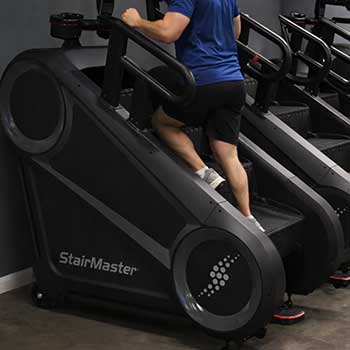
- Independent pedal action with adjustable resistance levels from 1 to 20 or higher lets you fine-tune effort second by second. I drop resistance during recovery intervals and crank it for power bursts.
- Compact frame with lower step-up height makes entry and exit easy even when tired or carrying a water bottle.
- Smooth, quiet operation that won’t disturb others or your own focus during long sessions.
- Quick-start button plus preset programs for weight loss, cardio, or strength let beginners jump in fast.
- Console with large readouts for calories, steps, time, and heart rate keeps data front and center.
- Bottle holders and accessory trays keep your phone and towel within reach without breaking rhythm.
- Lower overall weight and smaller footprint mean easier relocation if you rearrange your home gym.
- Variable stride feel that adapts to different body sizes and preferences better than fixed-step machines.
Pros of the StairMaster Pedal Stepper
- Super approachable for every fitness level, letting newbies build confidence without overwhelm. My mom started here and progressed steadily without feeling scared.
- Fits almost anywhere, making it ideal for apartments, small basements, or crowded gym corners.
- Allows longer, more sustainable sessions that build aerobic capacity without excessive fatigue. I use it for active recovery or when I want volume over intensity.
- Lower cost means you can invest in quality without breaking the bank.
- Gentler learning curve means you focus on effort instead of worrying about coordination.
- Quieter operation supports conversation, podcasts, or reading while training.
- Easier on joints for many users thanks to the controlled, shorter stride.
- Versatile for warm-ups, cool-downs, or pairing with strength circuits.
- Minimal maintenance keeps it running reliably for years with basic care.
- Adjustable resistance gives precise control so every workout matches exactly how you feel that day.
Cons of the StairMaster Pedal Stepper
- Shorter range of motion can feel less engaging after you’ve experienced the full climb of the stepmill.
- Slightly lower calorie burn per minute requires longer sessions to match total expenditure.
- Less functional carryover to real stair climbing or hiking compared to the revolving version.
- Can encourage slight forward lean if you’re not mindful, potentially stressing the lower back over time.
- May not challenge balance or core as intensely, so you might need separate exercises for those areas.
- Less visually impressive in a gym setting, which can reduce that motivational “wow” factor.
What The Stepmill Actually Feels Like In Practice?
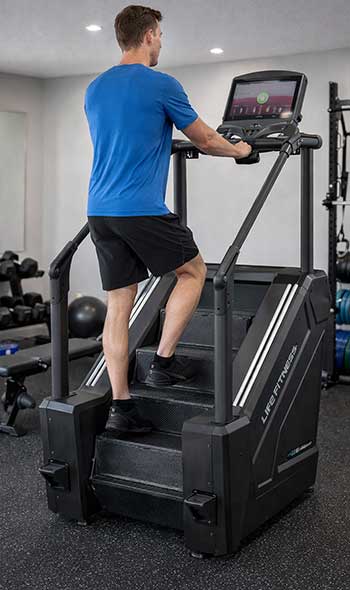
Picture stepping onto a down-moving escalator and fighting to climb up it.
That’s the stepmill.
The steps rotate in a continuous loop, forcing your legs to lift fully with each stride just like real stairs, but without ever reaching a landing.
I remember my first ten-minute session feeling like I had climbed ten flights already—my quads burned, my heart raced, and my core stayed tight the whole time to keep me balanced.
The machine doesn’t let you coast; if you slow down, the steps keep coming and you have to match the pace or step off.
Most models let you adjust speed from around 24 to 162 steps per minute, with preset programs for fat burn, endurance intervals, or quick HIIT blasts. The console tracks steps climbed, estimated floors, heart rate (if you grab the sensors), and calories.
Handrails are there for safety, but using them lightly keeps the workout honest. Because the motion is so close to actual stair climbing, you engage your glutes, hamstrings, quads, calves, and even your core more completely than you expect. I started noticing firmer legs and better posture after just three weeks of consistent use, three times a week.
How The Stairmaster Pedal Stepper Works Day To Day?
The StairMaster pedal version (what most people mean when they say “StairMaster” in casual gym talk) feels more like marching in place with resistance. You stand on two separate pedals that move up and down independently.
Push one down, the other rises, and you control the pace entirely. No endless belt—just smooth hydraulic or magnetic resistance that you dial up or down. Sessions feel less urgent; I can hop on, set level 8, and zone out for 40 minutes while catching up on a podcast.
The range of motion is shorter than the stepmill, so your knees don’t travel as high, which makes it gentler on joints for many people. Consoles are similar—time, calories, steps, heart rate—but the feel is more repetitive and predictable.
I use it when I’m recovering from a tough leg day or want a longer, steady-state burn without feeling destroyed afterward. It still lights up the same lower-body muscles, just with less demand on balance and coordination.
Which Machine Wins For Your Goals?
If you want maximum calorie burn, functional leg power, and don’t mind shorter, tougher sessions, the stepmill becomes your new best friend. When space, budget, or beginner status matter more, the pedal StairMaster delivers reliable results with way less hassle.
Many people, myself included, keep both in rotation—stepmill for strength and metabolism days, stepper for volume and recovery. Test both at your gym for a week each. Pay attention to how your legs feel the next day, how long you can stay on, and whether the workout excites or drains you.
That personal feedback will tell you more than any chart.
Also Read: Comparison of OxeFit XS1 And XP1.
Frequently Asked Questions (FAQ)
No. The stepmill features a revolving staircase for continuous climbing, while the common StairMaster refers to the pedal-based machine with alternating steps.
Yes, they deliver similar cardio and leg benefits, though the motion and intensity feel slightly different—both work well depending on your preference.
It depends on goals. The StairMaster (climber) builds lower-body strength and burns calories efficiently with low impact; the treadmill offers more variety and suits longer runs or walking.
Not exactly. Real stairs provide similar leg work but lack consistent resistance, tracking, and controlled environment the machine offers for steady progress.
Final Thoughts
I’ve come to respect both machines for what they do well, and switching between them keeps my training fresh and my body progressing. You now have the real-user details to make an informed choice.
Pick one, commit for a month, track your energy and measurements, then adjust. Your stronger, fitter self is waiting on whichever steps you choose to climb.