
I’ve spent years chasing better workouts in crowded gyms and cramped home setups, testing every cardio option that promises to torch fat and carve stronger legs.
When it comes to the stepmill versus the stair stepper, I keep coming back to this matchup because both machines deliver serious lower-body action, yet they feel worlds apart in how they push my body.
My main intent here is to share my honest, hands-on experiences so you can see exactly which one aligns with your space, goals, and energy levels without wasting time on trial and error.
| Aspect | Stepmill | Stair Stepper |
| Mechanism | Rotating staircase that continuously descends as you climb | Two independent pedals that alternate up and down with resistance |
| Step Height | Fixed 7-9 inches, full natural climb feel | Variable, usually 4-6 inches smaller range |
| Footprint & Space | Large (60-70 inches long, needs 8-10 ft ceiling) | Compact (40-50 inches long, fits anywhere) |
| Intensity Level | High, forces constant pace and balance | Moderate to high, fully user-controlled |
| Price Range | $4,500 to $7,500+ for solid models | $2,000 to $4,000 |
| Calorie Burn (30 min, avg person) | 300-500 calories | 200-400 calories |
| Muscle Focus | Deep glutes, quads, hamstrings, calves, core for balance | Quads, glutes, hamstrings with less core demand |
| Best For | Advanced endurance, functional strength, max burn | Beginners, home gyms, joint-friendly steady sessions |
| Learning Curve | Steeper, requires rhythm to stay on steps | Easy from day one |
| Maintenance | More involved due to moving belt and motor | Minimal, fewer moving parts |
Key Differences Between The Stepmill And Stair Stepper
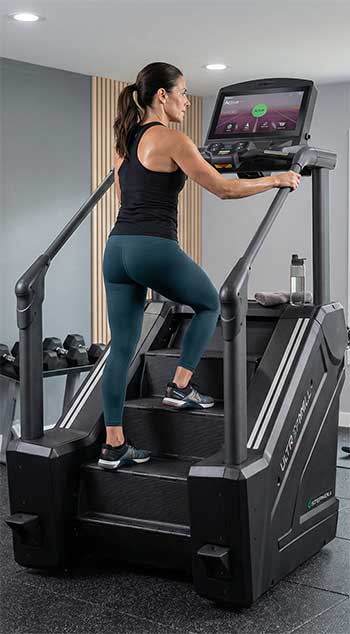
- The stepmill uses an actual chain of connected steps that rotate downward like a mini escalator, so I have to match the speed or risk the platform dropping away, which creates nonstop momentum and forces my entire lower body to stay engaged every single second.
- A stair stepper relies on two separate pedals that push down independently under my feet with built-in resistance, giving me full control over each stride without any moving belt underneath, so I can pause or slow down without feeling pulled.
- Step height stays consistent and generous on the stepmill at around eight inches per step, mimicking real-world staircases I climb at the office or subway, whereas the stair stepper offers a shorter travel distance that feels more like mini steps and lets me adjust resistance instead of height.
- Space requirements hit hard with the stepmill because its tall rotating structure demands room and high ceilings, making it a gym staple but tough for most home setups, while the stair stepper slips into a corner of my living room without issue.
- Intensity builds differently because the stepmill demands I keep climbing against gravity and moving parts, spiking my heart rate quicker and keeping it there, but the stair stepper lets me dial resistance up gradually for longer, steadier efforts that don’t leave me gasping as fast.
- Price tags reflect the engineering, with stepmills costing more due to heavy-duty motors and durable step chains built for heavy traffic, yet stair steppers deliver solid value at half the cost for everyday users who want reliable performance without premium features.
- Balance and core work come naturally on the stepmill since I cannot lean too heavily on the rails without losing rhythm, pulling in my abs and stabilizers, but on the stair stepper I can grip handles more comfortably and shift some load away from my core if I want.
- Direction options open up on many stepmills where I can sidestep or even face backward for variety that hits different angles in my hips and glutes, something the fixed-pedal stair stepper simply cannot match.
- Noise levels stay lower on the stair stepper with its smooth hydraulic or magnetic action, perfect for apartment living, while the stepmill’s rotating belt creates a steady mechanical hum that fills the room.
- Workout duration feels different because the stepmill pushes me toward shorter, more explosive sessions before fatigue sets in, whereas the stair stepper supports 45-minute or longer grinds without the same mental drain.
- Calorie tracking on consoles tends to show higher numbers on the stepmill for the same time because of greater muscle recruitment and vertical lift, though both machines give accurate enough readouts once I input my weight.
- Joint stress remains low on both, but the stepmill’s continuous motion distributes load more evenly across my knees and ankles during full strides, while the stair stepper’s shorter strokes can feel repetitive if I lock into one pace too long.
- User weight capacity runs higher on commercial stepmills, often handling 350 pounds or more with sturdy frames, compared to many stair steppers that top out around 300 pounds for home models.
- Program variety shines on stepmills with built-in interval, fat-burn, and endurance modes that change speed automatically, pushing me through surprises, while stair steppers focus more on manual resistance changes or simple preset levels.
- Recovery feel afterward differs because my legs carry a deeper, functional soreness from the stepmill’s full range that translates to better real-life stair climbing, but the stair stepper leaves me with a lighter, more localized pump that recovers faster for back-to-back days.
Key Features of The Stepmill
- Wide, deep step platforms measuring about 10 by 18 inches give my feet plenty of stable room even when I sweat and move fast, reducing any slip risk during high-speed intervals.
- Adjustable speed settings from 24 up to 162 steps per minute let me start slow for warm-ups then crank it for heart-pounding bursts that leave me drenched.
- Integrated handrails with quick-touch speed and stop controls mean I can adjust intensity mid-stride without reaching for the console, keeping my flow uninterrupted.
- Large LCD or touchscreen displays track steps climbed, distance equivalent, heart rate via grips, and estimated calories in real time so I stay motivated watching numbers climb.
- Built-in workout programs include everything from quick-start manual mode to structured HIIT routines that automatically vary speed to prevent plateaus.
- Low step-up height of around 14 inches to the first platform makes mounting easier than it looks for my 5’10” frame, though taller users appreciate the assist handles.
- Durable rotating belt system with reinforced steps handles thousands of daily users in busy gyms without breaking down quickly when maintained properly.
- Bluetooth connectivity on newer models syncs my workout data straight to fitness apps so I can log progress over weeks and months.
- Multiple handrail positions encourage upright posture or slight forward lean depending on what my back needs that day.
- Quiet yet powerful motor keeps the focus on my breathing instead of machine noise, even at top speeds.
- Safety features like automatic stop if I step off and emergency buttons prevent accidents during intense efforts.
- High weight capacity and heavy frame construction provide rock-solid stability no matter how hard I push.
- Option for side-step or reverse climbing on select models adds fun variety that targets outer glutes and inner thighs differently.
- Ergonomic design with anti-pinch step edges protects my toes and shins during longer sessions.
- Console fans or accessory trays keep water and towels within easy reach so I stay hydrated without breaking rhythm.
Pros of Using the Stepmill
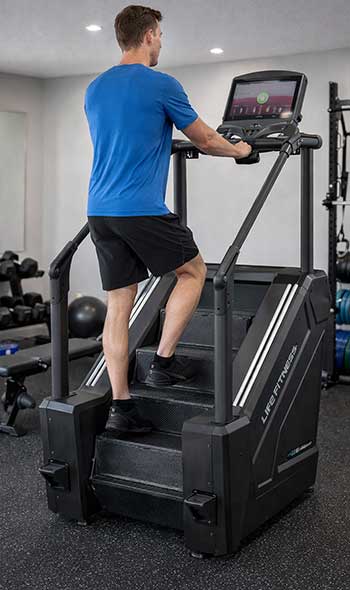
- The full-range climbing motion builds real functional strength that carries over to hiking, running up stadium steps, or chasing kids around the park without feeling winded.
- Higher calorie expenditure in shorter times helps me hit fat-loss targets faster when my schedule stays packed with work and family.
- Constant balance requirement strengthens my core and stabilizer muscles in ways that improve overall posture and reduce lower-back tightness over time.
- Engaging variety from changing speeds and directions keeps boredom away even during 40-minute sessions that used to feel endless on other machines.
- Visible leg sculpting shows up quicker in my quads and glutes because each step demands powerful extension against gravity.
- Mental toughness grows every time I push through the point where the steps feel like they want to win, teaching me persistence I apply to other life challenges.
- Bone density benefits from the weight-bearing vertical load make it a smart choice as I get older and focus on long-term joint health.
- Social gym energy increases because the impressive machine draws curious looks and sparks conversations with fellow climbers.
- Customizable programs challenge advanced athletes with progressive overload that keeps gains coming month after month.
- Low joint impact combined with high effort gives me cardio results without the pounding I feel after treadmill runs.
- Sweat factor stays high, leaving me with that satisfying post-workout glow and endorphin rush every single time.
- Community classes built around stepmills add accountability and fun when I need extra motivation.
Cons of the Stepmill
- Large size and height requirements rule it out for most home gyms unless I have a dedicated basement or garage space.
- Higher price point means I need to save longer or choose commercial gym access instead of owning one.
- Steeper learning curve can feel intimidating at first until I nail the rhythm and stop gripping rails too tightly.
- More frequent professional maintenance adds ongoing costs that smaller home equipment avoids.
- Potential for quick fatigue in beginners who cannot sustain the required pace, leading to shorter effective workouts.
- Louder operation might bother light sleepers if placed near living areas, though not excessively noisy.
Key Features of The Stair Stepper
- Independent pedal action with 10 to 20 levels of magnetic or hydraulic resistance lets me fine-tune effort from light recovery to heavy strength work.
- Compact frame with non-slip pedals and adjustable handlebars fits users of different heights and allows quick setup in small spaces.
- Digital consoles show time, steps per minute, calories, and distance equivalents with simple button navigation that even first-timers master instantly.
- Quiet operation thanks to smooth resistance systems makes it ideal for early morning or late night sessions without disturbing anyone.
- Built-in interval and fat-burn programs automatically adjust resistance to keep my heart rate in target zones.
- Lower step-up height and stable base reduce intimidation for beginners or anyone returning after injury.
- Optional resistance bands or arm poles on some models add upper-body engagement if I want a full-body twist.
- Durable yet lightweight construction around 150-200 pounds means I can reposition it easily when rearranging my home gym.
- Heart rate monitoring through handle grips or chest strap compatibility helps me track zones accurately.
- Safety sensors stop motion if pedals detect uneven pressure, protecting my knees during uneven strides.
- Easy-to-clean surfaces and minimal exposed parts simplify weekly wipe-downs after sweaty workouts.
- Preset goal modes let me target specific calorie burns or time limits without constant adjustments.
- Ergonomic foot platforms with slight angle support natural foot positioning to minimize ankle strain.
- Bluetooth and app integration on premium versions sync data for long-term tracking of progress.
- Foldable or wheeled designs on many home models make storage under beds or in closets straightforward.
Pros of Using the Stair Stepper
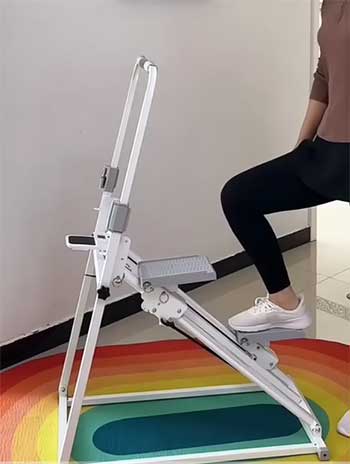
- Compact design slides perfectly into small apartments or spare bedrooms without rearranging furniture.
- Lower entry price lets me invest in quality without breaking the bank or waiting months.
- Beginner-friendly motion builds confidence quickly so I stick with consistent sessions instead of quitting early.
- Adjustable resistance gives precise control for everything from warm-ups to heavy leg days tailored exactly to how I feel.
- Minimal maintenance keeps it running smoothly for years with just occasional lubrication and cleaning.
- Joint-friendly shorter strides suit recovery days or anyone managing knee sensitivity without sacrificing cardio benefits.
- Quiet performance allows workouts while watching shows or listening to podcasts without distraction.
- Versatile for all fitness levels, scaling easily as I progress from casual user to dedicated athlete.
- Easy storage options mean I can tuck it away when not in use and pull it out for quick 20-minute sessions.
- Upper-body add-ons on some models turn it into a near full-body tool when I want variety.
- Fast calorie burn during moderate efforts fits busy schedules better than longer gym commutes.
- Improved balance and coordination develop steadily without the high-stakes feel of faster machines.
Cons of the Stair Stepper
- Smaller range of motion limits total muscle activation compared to full-step machines, so leg development plateaus sooner for advanced users.
- Tendency to lean on handles reduces core work unless I consciously stay upright, which takes practice.
- Less functional carryover to real stairs or hiking because the motion feels more isolated than natural climbing.
- Can become monotonous without changing resistance often, requiring more mental effort to stay engaged.
- Lower peak intensity means longer sessions needed to match calorie burns from more demanding equipment.
- Some models cap at lighter user weights, limiting options for heavier individuals seeking durability.
How The Stepmill Feels During A Typical Session?
When I hop on for 25 minutes, the first two minutes feel manageable as I find my rhythm, but by minute ten my quads and calves start talking back in that good, deep way. I focus on driving through my heels, keeping my chest up, and only lightly touching the rails.
The moving steps create this flowing challenge that keeps my mind occupied counting intervals instead of wandering. Sweat drips steadily, my breathing deepens, and by the end I feel accomplished like I just conquered a flight of endless stairs.
Recovery comes with a satisfying leg pump that lasts hours, reminding me why I keep choosing this machine for my tougher days.
Stair Stepper in Action: What to Expect
On the stair stepper I set resistance to level 12 and settle into 30 minutes while catching up on a podcast. The pedals respond smoothly to each push, letting me control exactly how hard each step feels.
My heart rate climbs steadily without sudden spikes, and I can maintain conversation pace if needed. Legs burn evenly through quads and glutes, but the motion stays contained so I never feel off-balance.
Finishing leaves me energized rather than wiped out, perfect for stacking with weights later or fitting into lunch breaks.
Also Read: Is Ultimate Abs 360 Worth It?
Frequently Asked Questions (FAQ)
Stair steppers deliver excellent cardio and leg toning but fall short of the StairMaster’s intensity and functional strength gains.
The stair stepper edges out for lower-body strength and lower impact, while the treadmill suits running-specific endurance better.
Real stairs offer similar muscle activation but lack the endless, controlled pace and metrics of the StairMaster.
Smaller range limits full muscle work, leaning reduces core engagement, and sessions can feel repetitive without constant adjustments.
Final Thoughts
After testing both machines across different seasons and fitness phases, I have settled into using the stepmill for my high-energy days when I crave that powerful challenge and the stair stepper for steady, sustainable sessions that fit life better.
The choice always comes down to what keeps me consistent and excited to move. You probably already know your schedule and preferences, so picture yourself on each one and trust that feeling. Pick the machine that matches your space and goals, then commit to showing up regularly.
Your legs and lungs will thank you, and soon those stairs in everyday life will feel easier than ever. Start climbing today and watch how quickly your fitness transforms.