
As I stand in my backyard, staring at those stubborn weeds creeping through the cracks in my driveway, I often wonder about the best way to tackle them without turning my space into a chemical hazard zone.
In this article, I aim to compare Spruce Weed Killer and Roundup from my own experiences and research, breaking down their features, differences, pros, and cons to help you decide what’s right for your lawn or garden.
| Aspect | Spruce Weed Killer | Roundup |
| Active Ingredients | Essential oils like cornmint oil, geraniol, and sodium lauryl sulfate | Glyphosate |
| Mode of Action | Contact herbicide that dehydrates weeds on contact | Systemic herbicide that absorbs into the plant and kills roots |
| Safety Around People and Pets | Safe when used as directed, no harsh chemicals | Requires caution, potential health concerns with prolonged exposure |
| Speed of Results | Visible in 1 hour | Takes days to weeks for full effect |
| Duration of Control | Short-term, may need reapplication for perennials | Longer-lasting, prevents regrowth |
| Environmental Impact | More eco-friendly, breaks down quickly | Can persist in soil, controversial for wildlife |
| Cost | Mid-range, around $10-40 per bottle depending on size | Varies, often cheaper generics available |
| Best For | Spot treatment in family-friendly areas | Broad weed control in non-lawn areas |
Key Differences Between Spruce And Roundup
When I pit these two against each other, several differences emerge that could sway your choice. I’ve spent time using both in various scenarios, from quick touch-ups to full-on weed invasions, and these contrasts have really shaped how I approach yard care.
Let’s break them down further.
- Mechanism of Action
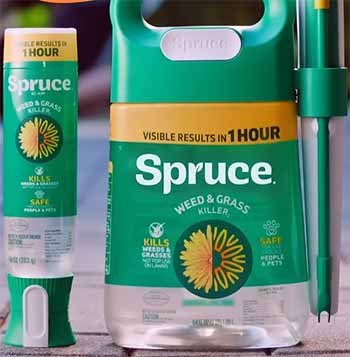
Spruce works by dehydrating on contact, leading to quick but surface-level kill.
It essentially strips the moisture from the weed’s leaves and stems, causing them to collapse rapidly.
Roundup, on the other hand, absorbs into the foliage and disrupts internal processes like enzyme production, traveling down to the roots for complete elimination.
In my yard, this means Spruce is perfect for those immediate quick fixes on visible growth, while Roundup is my go-to for total eradication of persistent underground systems that keep sending up new shoots.
- Speed vs. Thoroughness
Spruce shows browning and wilting in just hours, giving that satisfying instant feedback, but it might allow regrowth if the roots aren’t fully affected. Roundup takes longer, often days or even a week to fully manifest, but it offers more permanence by killing the entire plant structure.
I’ve seen Spruce handle soft annuals like chickweed incredibly fast during a weekend cleanup, whereas Roundup has been better at tackling tough invasives like quackgrass that would otherwise require multiple treatments.
- Safety Profile
Spruce’s natural base, drawing from plant-derived oils and surfactants, makes it more user-friendly around homes with minimal restrictions post-application. Roundup requires more precautions due to ongoing glyphosate concerns, including proper protective gear and keeping areas off-limits longer.
As a parent, I lean toward Spruce for play areas or spots near the house entrance, where I want to minimize any potential risks without compromising on basic weed control.
- Environmental Footprint
Spruce breaks down fast in the environment with minimal residue, making it a lighter touch on soil and nearby ecosystems. Roundup can linger in the soil longer, raising issues about runoff and broader eco-impacts like effects on non-target organisms.
I always consider this when applying near water sources or in gardens where I grow edibles – Spruce gives me peace of mind that it’s not building up over time.
- Cost and Value
Spruce tends to be pricier per ounce due to its premium, ready-to-use formulations, but the convenience often outweighs that for small jobs. Roundup generics are more budget-friendly, especially for larger volumes, providing solid value when you need to cover bigger areas.
In my small suburban yard, Spruce’s ease justifies the extra spend, but if I had a sprawling property, I’d stock up on Roundup concentrates to keep costs down without sacrificing results.
- Application Experience
Spruce’s ready-to-use formats, like hose attachments or simple triggers, are hassle-free and feel intuitive even for beginners. Roundup often involves mixing concentrates, which adds a step but rewards with customizable strength and broader coverage.
I choose based on the job’s scale – Spruce for a casual afternoon session, Roundup when I’m gearing up for a more intensive project that demands precision in dilution.
- Scent and Residue
Spruce has a fresh, minty smell from its essential oils and leaves little noticeable residue, making the whole process more pleasant. Roundup carries a sharper chemical tang and can have more persistent traces, which might affect how soon you feel comfortable in the treated area.
This affects my comfort level a lot; with Spruce, I can spray and continue enjoying the outdoors almost right away, whereas Roundup sometimes leaves me airing out the space a bit longer.
Key Features of Spruce Weed Killer
Spruce stands out with several features that make it appealing for everyday use. Here’s a breakdown:
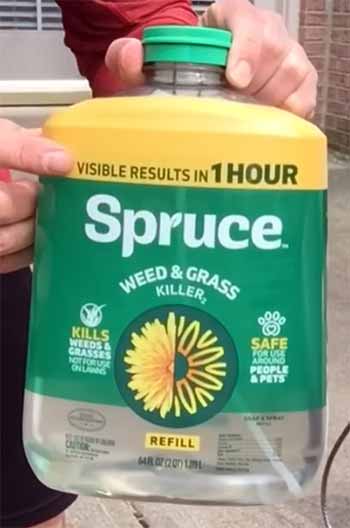
- Fast-Acting Formula: I love how it delivers visible results in just an hour. When I spray it, the weeds start wilting before my eyes, which keeps me motivated to finish the job.
- Safe Ingredients: With natural components like essential oils, it feels less intimidating. I’ve used it near my vegetable garden without fretting over residues affecting my tomatoes.
- Easy Application Options: The snap-and-spray system is a game-changer. No mixing required – just attach to a hose and go. It’s perfect for someone like me who hates complicated setups.
- Pet and Kid-Friendly: As directed, it’s safe once dry. My dog can romp around shortly after, which is a huge plus in a family home.
- Targeted Control: Being a contact killer, it only affects what it touches. This precision helps in mixed areas where you have weeds mingling with wanted plants.
- Pleasant Scent: Unlike harsh chemical odors, the minty aroma makes the task more enjoyable. It’s a small thing, but it matters when you’re out there sweating.
- Versatile Sizes: From small trigger bottles to larger kits, it suits different needs. I started with a 10-oz version to test, then upgraded.
Elaborating on these, the fast action is particularly useful in variable weather. If rain is coming, I can still get results before it washes away. The safety aspect allows me to integrate weeding into family time without bans on outdoor play.
And the ease? It’s like they designed it for real people who aren’t pros.
Also Read: Comparison of RM18 And Roundup Weed Killers.
Pros of Spruce Weed Killer
Spruce has won me over in several areas:
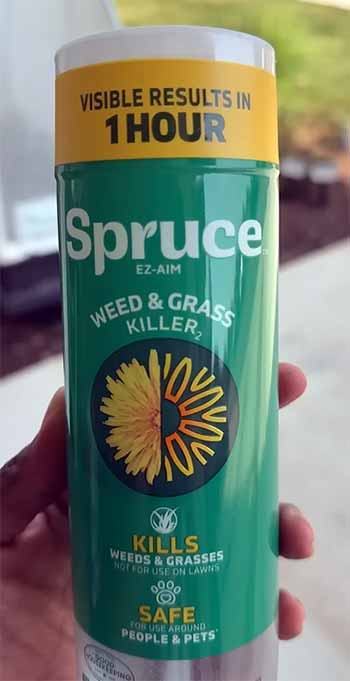
- Quick Visible Results: Seeing weeds die in an hour boosts my satisfaction immensely. There’s nothing quite like spraying a patch of unwanted greens and watching them start to curl and brown almost immediately – it gives that instant feedback that keeps you motivated to keep going. In my experience, this speed is perfect for those spur-of-the-moment weeding sessions, like when company is coming over and you want the yard looking sharp without a long wait. No more second-guessing if the product is working; the proof is right there in the wilting leaves.
- Family Safety: I can use it without evacuating the yard for hours or days. With kids who love to play outside and a curious dog that sniffs everything, this is a massive relief. The formula dries quickly, and once it does, the area is safe for foot traffic again. I’ve applied it in the morning and had the family back out by lunchtime, no lingering restrictions needed. This safety aspect comes from its non-toxic, plant-based ingredients, which don’t carry the same weight of concerns as harsher chemicals, allowing me to integrate weeding into our daily life without turning it into a hazard zone.
- Natural Composition: Fewer worries about long-term health effects make it feel cleaner overall. Drawing from essential oils and natural surfactants, it’s like using something borrowed from nature rather than a lab creation. This has eased my mind about potential residues affecting my family’s health or seeping into the groundwater. In fact, after switching to Spruce for regular use, I’ve noticed I don’t get that nagging headache from chemical fumes anymore, and it aligns with my efforts to reduce synthetic inputs in the yard. It’s not just about killing weeds; it’s about doing so in a way that doesn’t compromise the bigger picture of well-being.
- Ease of Use: The plug-and-play designs save so much time and frustration. Whether it’s the hose-end sprayer that attaches in seconds or the simple trigger bottle, there’s no fumbling with measurements or dilutions that could go wrong. I remember my first time using the snap-on version – it was as straightforward as watering plants, which made me actually enjoy the process instead of dreading it. This accessibility is great for beginners or anyone short on time, turning what could be a chore into a quick errand that fits between other tasks.
- Targeted Effectiveness: Great for spot treatments without causing widespread damage to surrounding areas. Since it’s a contact killer, it only impacts what it directly touches, so I can zap a weed right next to a flower without fearing total annihilation of the bed. This precision has saved my landscaping more than once, especially in mixed borders where weeds sneak in among perennials. It’s like having a surgical tool rather than a broad hammer, allowing for fine-tuned control that preserves the good stuff while eliminating the bad.
- Eco-Friendlier: It degrades quickly in the environment, posing less harm to soil, water, and wildlife. In my backyard, where birds and beneficial insects visit regularly, this matters a lot. The formula breaks down naturally without leaving persistent traces that could disrupt the ecosystem. I’ve even used it near my compost pile without worrying about contamination, and it supports my overall goal of a more sustainable garden. Compared to options that might accumulate over time, Spruce feels like a step toward responsible stewardship, reducing my environmental footprint one spray at a time.
- Pleasant to Apply: The scent and overall feel make it less daunting and more approachable. That minty aroma from the cornmint oil is a welcome change from pungent alternatives – it almost makes weeding smell refreshing. Plus, the lack of harsh residues means no sticky aftermath on my hands or tools. This small but significant detail has encouraged me to tackle weeds more frequently, turning a necessary evil into something tolerable, even enjoyable on a nice day.
Cons of Spruce Weed Killer
No product is perfect, and Spruce has drawbacks:
- Limited Root Kill: Doesn’t always prevent regrowth, especially for deep-rooted weeds. I’ve had to reapply.
- Temperature Sensitivity: Works best above 60°F; cooler days slow it down.
- Higher Cost Per Use: More expensive than generics, especially for large areas.
- Potential for Reapplication: Not as long-lasting, increasing effort over time.
- Less Effective on Tough Weeds: Struggles with woody or mature plants.
- Availability: Newer product, not everywhere yet.
- Surface-Only Action: Miss a leaf, and the weed might survive.
Key Features of Roundup
Roundup brings its own set of strengths to the table:
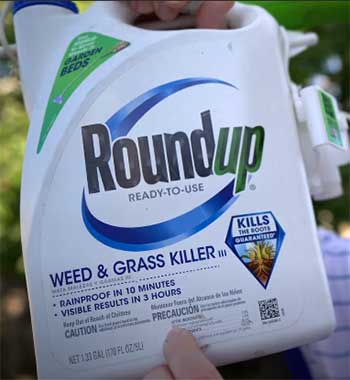
- Systemic Root Kill: It gets to the heart of the problem, ensuring weeds don’t return quickly. I’ve cleared entire beds with lasting effects.
- Broad Spectrum Control: Effective against a wide range of weeds, from grasses to broadleaves. It’s my choice for tough customers like thistles.
- Concentrate Options: Economical for big jobs. Mixing my own batch saves money over pre-mixed versions.
- Long-Lasting Results: One treatment can hold for months, reducing repeat work. In my fence line, it kept things clear all season.
- Proven Track Record: Decades of use mean reliable performance. I know what to expect every time.
- Availability: Easy to find generics that match the efficacy at lower prices.
- Customizable Strength: Adjust dilution for light or heavy infestations. I’ve used weaker mixes for sensitive spots.
These features make Roundup a workhorse. The root kill is essential for perennials, and the longevity means less overall effort. Generics keep it affordable, broadening its appeal.
Also Read: Is RM43 Weed Killer Worth It?
Pros of Roundup
Roundup’s advantages keep it in my shed:
- Deep Root Elimination: Kills from the inside out, reducing comebacks.
- Versatile for Large Areas: Handles big infestations efficiently.
- Cost-Effective Generics: Same power at lower prices.
- Proven Longevity: One app can last the season.
- Broad Weed Spectrum: Tackles nearly everything.
- Customizable: Adjust strength for needs.
- Reliable Performance: Consistent results over years.
The root kill is transformative – I cleared a weedy hill once, and it stayed bare. For large spaces, it’s a time-saver. Generics make it accessible. Longevity means fewer sessions. Spectrum covers surprises like vines. Customization prevents overkill. Reliability builds trust.
Expanding, in commercial-like home setups, it’s indispensable. If weeds threaten foundations, its thoroughness protects. Generics democratize access. Season-long control fits lazy gardeners like me sometimes. Broad action prepares for unknowns.
Cons of Roundup
But there are notable downsides:
- Health Concerns: Glyphosate debates make me hesitant.
- Slower Results: Days to see full death.
- Non-Selective Nature: Kills good plants too.
- Environmental Risks: Potential for soil and water impact.
- Need for Precautions: Gear and timing required.
- Resistance Issues: Some weeds build tolerance.
- Chemical Odor: Less pleasant to use.
Health worries prompted my shift to alternatives. Slowness tests patience. Non-selectivity demands care. Eco risks bother my green side. Precautions add hassle. Resistance means escalating battles. Odor deters frequent use.
These cons push for judicious use. Health-wise, limit exposure. For speed, pair with contacts. Selectivity calls for shields. Eco concerns favor spot use. Precautions suit pros more. Resistance requires rotation. Odor? Mask up.
When To Choose Spruce Over Roundup?
From my perspective, pick Spruce when safety and speed top your list. If your yard is a playground or pet zone, its gentle formula wins. For quick cleanups before events, the hour turnaround is unbeatable. I’ve chosen it for patio edges where kids sit, avoiding any lingering worries.
Analytically, it’s suited for organic-leaning households or small-scale maintenance. If you’re new to weeding, its forgiveness on mistakes helps. In urban settings with close neighbors, minimal drift risk is key.
But elaborate: Imagine hosting a barbecue – Spruce lets you zap weeds morning-of without barring access. For veggie gardeners, it spares crops better. If health sensitivities exist, it’s a no-brainer. Small yards maximize its value.
When To Choose Roundup Over Spruce?
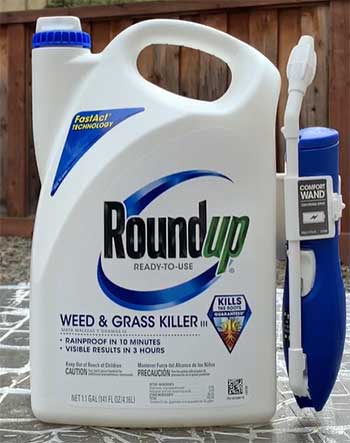
Go for Roundup when you need lasting control.
For overgrown areas or persistent invaders, its root-killing power dominates.
I’ve used it for fence lines where regrowth would be endless otherwise.
It’s ideal for rural properties or tough terrains.
If cost is a factor for volume, generics seal the deal. For pros or large jobs, efficiency matters.
Deeper: In weed-heavy regions, it prevents escalation.
Budget-conscious users appreciate savings. For invasives like kudzu, nothing else suffices. Rotate with others to avoid resistance.
Also Read: Comparison of GroundClear And Roundup Weed Killers.
Frequently Asked Questions (FAQ)
Yes, it effectively kills weeds on contact by dehydrating them, with visible results in about an hour, though it may need reapplication for root-deep issues.
It depends on needs; Spruce offers safer, faster surface control, while alternatives like diquat provide quick burns, but none universally beat Roundup for root kill.
Spruce is a natural contact dehydrator for quick top kill, while Roundup is a systemic glyphosate-based killer that targets roots for longer control.
It provides short-term control, typically lasting a few weeks before possible regrowth, depending on weed type and conditions.
Wrapping It Up
Looking back on my weed wars, I’ve learned that choosing between Spruce and Roundup boils down to your priorities – quick, safe takedowns or thorough, lasting wipes. If you’re like me, juggling family and yard work, Spruce might become your new ally for its ease and peace of mind.
But for those tough battles, Roundup still holds its ground. Whatever you pick, remember to use it wisely, and your outdoor space will thank you. What about you? Have you tried either, and how did it go?