
I’ve spent months researching home treadmills, reading user experiences, testing similar models when possible, and weighing what really matters for daily workouts.
In this article, I compare the Sole F80 and Horizon 7.4 AT head-to-head to help you decide which one fits your running goals, space, and budget.
Both are excellent folding options with strong motors and spacious decks, but they shine in different ways depending on how you train.
| Feature | Sole F80 | Horizon 7.4 AT |
| Motor | 3.5 HP DC | 3.5 HP Rapid Sync |
| Speed Range | 0.5 – 12 MPH | 0.5 – 12 MPH |
| Incline Range | 0 – 15% | 0 – 15% |
| Running Surface | 22″ x 60″ | 22″ x 60″ |
| Display | 10.1″ touchscreen | LED displays + tablet holder |
| Cushioning | Cushion Flex Whisper Deck | 3-Zone Variable Response |
| Folding Mechanism | EasyLift Assist | FeatherLight folding |
| Weight Capacity | 350 lbs | 350 lbs |
| Built-in Programs | 10 + app integration | 10 including Sprint 8 HIIT |
| Bluetooth/Speakers | Yes, with app connectivity | Yes, advanced for streaming apps |
| Warranty (Frame/Motor) | Lifetime | Lifetime |
| Approximate Price (2026) | $1,799 – $1,899 | $1,599 – $1,799 |
Key Differences Between The Sole F80 And Horizon 7.4 AT
- Motor responsiveness really sets the Horizon apart. Its Rapid Sync technology adjusts speed and incline noticeably faster—up to 33% quicker in some tests—making it ideal if you follow high-intensity interval apps or classes where quick changes keep you in the zone without missing a beat.
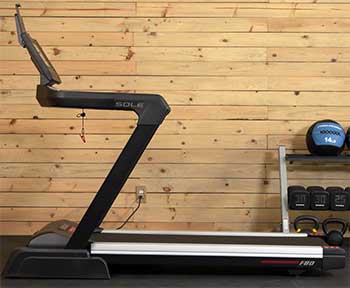
- Display setup gives a clear win to the Sole. That bright 10.1″ touchscreen shows workout stats, built-in programs, and app content right there without needing another device, while the Horizon relies on simpler LED readouts and a tablet holder for full streaming experiences.
- Control methods feel quite different in practice. The Horizon’s innovative QuickDial rollers on the handlebars let you twist for gradual or rapid speed/incline shifts without looking away, whereas the Sole uses traditional buttons that work fine but require more deliberate presses.
- Cushioning approaches suit different preferences. The Sole’s Cushion Flex Whisper Deck prioritizes maximum shock absorption and near-silent operation for joint protection on long runs, while the Horizon’s 3-Zone Variable Response offers firmer push-off zones with softer landing areas to mimic road-like energy return.
- Folding and storage convenience favor the Horizon. The FeatherLight hydraulic system requires far less effort to lift and lower, perfect for frequent movers, compared to the Sole’s EasyLift assist which still feels heavier overall.
- Built-in workout variety leans toward specific strengths. Horizon includes the proven Sprint 8 HIIT program for efficient 20-minute sessions, while the Sole provides more standard programs plus seamless integration with apps like Zwift without mandatory subscriptions.
- Build stability and weight feel more substantial on the Sole. Its heavier frame and design stay rock-steady even during intense sprints or for larger users, giving that commercial-gym confidence, whereas the Horizon feels solid but slightly less planted at max efforts.
- Pricing often makes the Horizon more budget-friendly. You can typically find it $100–300 less depending on sales, offering strong value for the responsive features, while the Sole commands a slight premium for its integrated screen and lifetime durability reputation.
- App and streaming compatibility shines brighter on the Horizon. Advanced Bluetooth connects effortlessly with popular platforms for virtual classes and heart rate syncing, compared to the Sole’s capable but more self-contained setup.
- Overall noise levels during use benefit the Sole significantly. The Whisper Deck and motor combination runs quieter for extended sessions, especially in shared living spaces, while the Horizon performs well but produces more audible feedback at higher speeds.
Also Read: Comparison of DeerRun And UREVO Walking Pads.
Key Features of The Sole F80
- The 3.5 HP motor runs quiet and consistent. I appreciate how it handles long steady runs without overheating or straining, even when I push to higher speeds for extended sessions.
- The 22″ x 60″ running surface feels generous. There’s plenty of room for my stride, whether I’m jogging or sprinting, and it accommodates taller runners comfortably.
- Cushion Flex Whisper Deck reduces impact significantly. It absorbs shock better than harder surfaces, making it easier on my knees during longer workouts, and the quiet operation stands out.
- The 10.1″ touchscreen is bright and responsive. I can track stats clearly, switch programs easily, and connect to apps without needing an extra device.
- EasyLift folding with hydraulic assist makes storage simple. It folds up smoothly and stays stable when unfolded, which matters in a home setup.
- Bluetooth speakers deliver solid sound. Pairing my phone for music or podcasts enhances the experience without extra headphones.
- Integrated app support works seamlessly with Zwift or my own playlists. No forced subscription means full access from day one.
- Lifetime frame and motor warranty provides real peace of mind. Knowing the core components are covered for life makes this feel like a long-term investment.
Pros of The Sole F80
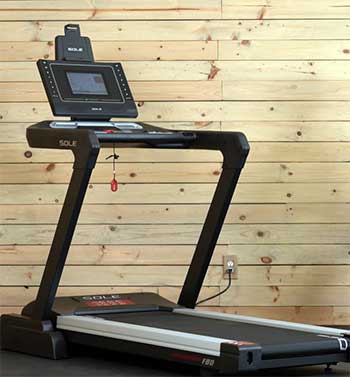
- Exceptional build quality feels rock-solid. Even at full speed or with heavier users, there’s no wobble or flex in the frame – it genuinely rivals the stability of commercial gym machines I’ve used.
- The larger 10.1″ touchscreen adds real convenience. Seeing sharp workout stats, heart rate zones, and program progress at a glance keeps me motivated without constantly reaching for my phone or tablet.
- Superior Cushion Flex Whisper Deck protects joints remarkably well. After long runs or high-mileage weeks, my knees and shins feel far less fatigued than on harder decks, making recovery easier.
- Quiet operation makes it ideal for apartment living or early-morning sessions. The motor and deck combination runs so smoothly that I can train without waking anyone else in the house.
- Strong stability supports heavier runners confidently. With a 350-lb capacity and sturdy construction, it handles intense sprints or heavier footfalls without any shaking.
- No subscription required means full access from day one. Unlike some competitors that lock features behind monthly fees, everything on the Sole works immediately and stays that way.
- Reliable Bluetooth connectivity pairs quickly and stays connected. Streaming music, podcasts, or syncing with fitness apps feels seamless and frustration-free.
- Great overall value for the price. You get premium durability, a big screen, and lifetime warranty coverage without needing to stretch into much higher price tiers.
Also Read: Is SupeRun Treadmill Worth It?
Cons of The Sole F80
- Speed and incline changes can feel a touch slower to respond. During fast-paced interval workouts or app-guided classes, the brief lag might slightly disrupt rhythm if you’re used to instant adjustments.
- It’s heavier to move once folded. The transport wheels help, but shifting it around tight corners or over thresholds still requires some muscle compared to lighter models.
- The console design is functional but not particularly flashy. If you’re drawn to vibrant graphics or pivoting screens, the straightforward layout might seem a bit basic.
- Built-in fan cooling is average at best. On hot days or during sweaty sessions, it provides only mild relief rather than strong airflow.
- Assembly takes a decent amount of time. While the instructions are clear, it usually requires two people and an hour or more to put together properly.
- No dedicated HIIT-specific programs like Sprint 8 built in. You can manually create intervals, but it lacks that guided, pre-programmed intensity option out of the box.
- Tablet holder is functional but limited in size. Larger tablets or phones might not sit as securely if you prefer using your own device alongside the built-in screen.
Key Features of The Horizon 7.4 AT
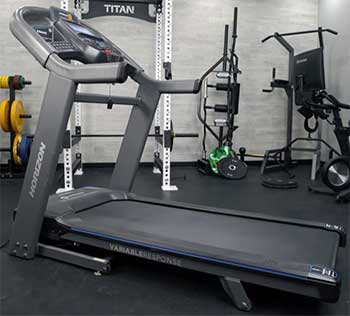
- Rapid Sync motor responds incredibly fast. Changes in speed or incline happen almost instantly, perfect for matching interval classes.
- The same spacious 22″ x 60″ deck offers room to move. It feels commercial-grade underfoot.
- 3-Zone Variable Response cushioning adapts to your stride. Firm in push-off, softer on impact – it balances support and energy return well.
- QuickDial controls simplify adjustments. Rolling dials on the handles make changes intuitive without looking down.
- FeatherLight folding lifts with minimal effort. It’s one of the easiest to store I’ve encountered.
- Advanced Bluetooth integrates smoothly with Peloton, Zwift, or Studio apps. Syncing heart rate or streaming classes works flawlessly.
- Built-in Sprint 8 HIIT program delivers guided 20-minute intensity. It’s a proven fat-burner that adds variety.
- Integrated speakers pump clear audio. Streaming classes sounds immersive without external setups.
- Lifetime frame and motor warranty matches top competitors. The durability feels backed up solidly.
Pros of The Horizon 7.4 AT
- Outstanding motor responsiveness shines during intervals. The Rapid Sync technology and QuickDial controls keep you perfectly in sync with fast-paced classes or quick speed changes.
- QuickDial controls feel intuitive and natural. Rolling the dials on the handlebars lets you adjust speed or incline effortlessly without breaking stride or looking down.
- Excellent app compatibility adds huge versatility. Seamless Bluetooth integration with Peloton, Zwift, Studio, and others makes streaming classes or syncing data straightforward and reliable.
- Lighter and easier to fold and move. The FeatherLight folding system requires minimal effort to lift, lower, or roll away for storage – a real plus for frequent rearranging.
- Built-in Sprint 8 HIIT program delivers effective guided workouts. Those 20-minute high-intensity sessions are proven for fat burning and make short, powerful training accessible.
- Slightly lower typical price offers strong entry-level value. You often save a couple hundred dollars compared to similar-spec machines while still getting premium performance.
- 3-Zone Variable Response cushioning provides a balanced, road-like feel. It supports natural running mechanics with firmer push-off and softer impact zones across various paces.
- Sturdy deck handles serious running well. Whether sprinting at top speed or logging long steady miles, it stays responsive and comfortable.
Also Read: Is DeerRun A1 Pro Worth It?
Cons of The Horizon 7.4 AT
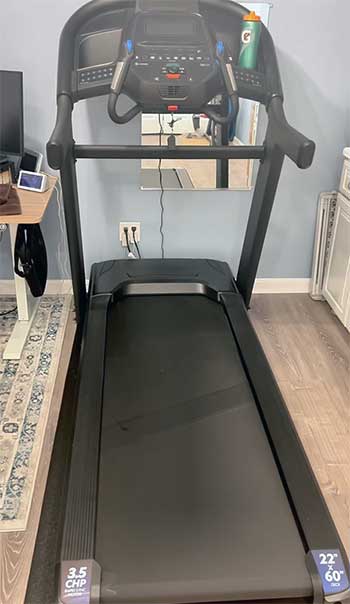
- No built-in touchscreen means relying on your own device. While the tablet holder works, setting up a phone or tablet for every workout adds an extra step compared to integrated screens.
- Basic LED displays provide limited visual feedback. You get the essentials, but miss the richer graphs and interface of a full-color touchscreen.
- Motor can be slightly noisier at higher speeds. It’s still quiet overall, but more noticeable than the whisper-quiet operation of some competitors during intense efforts.
- Fan cooling is minimal or absent depending on configuration. You’ll mostly rely on room airflow rather than strong built-in breeze during tough sessions.
- Console layout feels more traditional. It gets the job done but lacks the modern, polished look of touchscreen-heavy designs.
- Tablet holder positioning can sometimes block views. Depending on your device size and angle, it might partially obstruct the main displays.
- Fewer standalone built-in programs without apps. While the core options are solid, you lean more on third-party apps for variety compared to machines with extensive onboard libraries.
I’ve run on both types of machines in showrooms and followed countless user stories. The Sole F80 feels like the reliable daily driver – stable, comfortable, and built to last without fuss. When I want steady paces, long runs, or joint-friendly sessions, it delivers consistently. The larger screen and quieter deck make those longer workouts more enjoyable.
The Horizon 7.4 AT excites me more for dynamic training. Those quick motor responses and dial controls keep me locked into high-intensity classes. If you love intervals, sprints, or following energetic instructors, the responsiveness keeps you engaged without frustration.
You might lean toward the Sole if you prioritize a built-in screen, maximum stability, and quieter operation for everyday use. It suits walkers turning into runners or anyone wanting a low-maintenance machine that just works year after year.
Choose the Horizon if fast-paced classes, quick adjustments, and easier storage matter most. The value shines when you already use apps like Peloton or want that extra snap in transitions.
Final Thoughts
Both machines earn their strong reputations for good reason. You can’t go wrong either way – it comes down to how you train and what feels right in your space. Whichever you pick, you’ll have a capable folding treadmill ready for consistent workouts.
Get moving, stay consistent, and enjoy the journey.