
If you are tired of sour, uneven coffee brewed from blade-chopped beans, the Shardor Conical Burr Coffee Grinder is the affordable upgrade your morning needs.
It bridges the gap between cheap spice grinders and professional barista gear, offering consistent uniform grounds without the premium price tag.
For anyone brewing French press, drip, or entry-level espresso, this machine immediately improves flavor clarity. You should buy this if you want to taste the actual notes in your beans, not just the roast, without spending hundreds of dollars.
My Morning Routine With Shardor Coffee Grinder
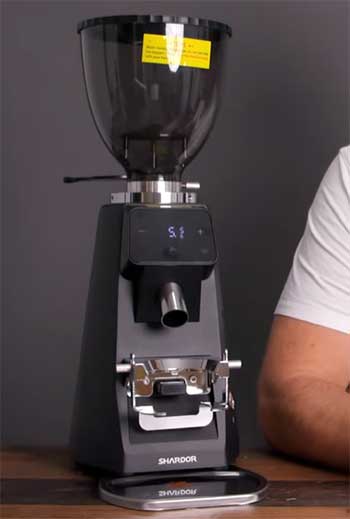
I remember the exact moment I realized my old blade grinder was ruining my coffee.
I was drinking a cup that tasted like ash and lemon juice simultaneously—a sign of uneven extraction caused by boulders and dust in the same brew.
That is when I picked up the Shardor.
Setting it up was intuitive. I poured a fresh bag of medium-roast Ethiopian Yirgacheffe into the hopper.
The smell of the beans was already filling the kitchen, but I was worried about the noise.
Cheap grinders usually sound like a jet engine taking off inside a blender.
When I pressed the button, I was pleasantly surprised. It wasn’t silent—no grinder is—but it was a low, consistent hum rather than a high-pitched scream.
I dialed the setting to a medium-coarse grind for my pour-over. The timer feature was a lifesaver. Instead of holding a button and counting seconds in my head like I did with my old grinder, I set it for 12 seconds and walked away to prep my filter.
The result? The grounds were surprisingly uniform. In the catch cup, I saw distinct, even particles rather than a mix of powder and chunks. When I poured the hot water over them, the “bloom” was perfect—bubbling up evenly, releasing that blueberry aroma I had been missing.
The static was there, sure (more on that later), but the flavor difference was undeniable. The coffee was smooth, the acidity was balanced, and the muddy aftertaste was gone. It felt like I had upgraded my coffee maker, but all I had changed was the grinder.
The Good Stuff About Shardor Coffee Grinder
- Consistent Grind Uniformity
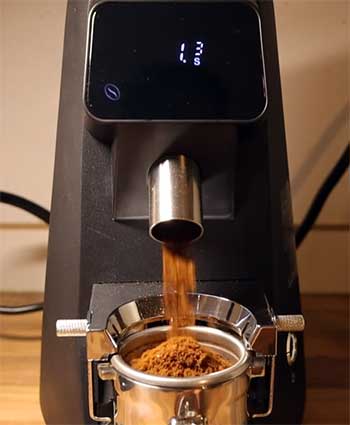
The most critical job of a grinder is to cut beans into identical pieces.
If you have different sizes, the small pieces over-cook (bitter) and the large pieces under-cook (sour).
The Shardor uses stainless steel conical burrs that crush the beans between two abrasive surfaces.
In my testing, the consistency for drip and pour-over was excellent.
You get a distinct uniformity that blade grinders simply cannot achieve physically.
Even when I dialed it down for a mock-espresso shot, the fines were controlled enough to pull a decent shot with a pressurized portafilter.
- Granular Adjustability
You get a lot of play with the settings. Depending on the specific model, you might have anywhere from 18 to 35+ grind settings. This matters because different beans need different treatment. A dark roast is brittle and breaks easily; a light roast is dense and hard.
Being able to click the hopper one notch left or right lets you “dial in” your brew. If your coffee tastes too sharp, you click it finer. If it tastes heavy and bitter, you click it coarser. The tactile feedback of the hopper clicking into place feels satisfying and secure.
- The “Set It and Forget It” Timer
Consistency isn’t just about particle size; it is about dose. Using a kitchen scale is accurate, but at 6:00 AM, I don’t want to weigh beans. The timer on the Shardor allows you to figure out that “14 seconds” equals exactly the amount of coffee you need for your mug.
Once you find that sweet spot, your routine becomes automatic. You wake up, press the button, and by the time you have your mug out, your dosing is done.
Maintenance And Care Tips For Shardor Coffee Grinder
Keeping your Shardor running requires a bit more than just wiping it down, but the payoff is longevity and better-tasting coffee. Oils from coffee beans go rancid over time, and if you don’t clean the burrs, your fresh beans will taste like old, stale oil.
The Weekly Brush Down
The grinder comes with a small stiff-bristled brush. Use it. Once a week, you should twist the hopper off (usually a counter-clockwise motion). This exposes the upper burr. Lift that burr out—it usually has a small handle or plastic grip. Brush the teeth of the upper burr vigorously.
Then, look into the grinder chamber where the lower burr sits. Do not use water here! Water will rust the motor bearing or the steel burrs. Instead, use the brush to dislodge the caked-on coffee dust. Turn the machine upside down over a trash can and give it a gentle tap to dislodge the loose grounds.
Deep Cleaning with Tablets
Once a month, you should use grinder cleaning tablets (like Urnex Grindz). These are food-safe pellets made of grains and cereals. You run them through the grinder just like coffee beans. They absorb the coffee oils and push out the fines stuck deep in the crevices that your brush can’t reach.
- Empty all coffee from the hopper.
- Pour in a capful of tablets.
- Set the grinder to a medium setting.
- Run the grinder until empty.
- Crucial Step: Grind a handful of “sacrificial” coffee beans afterward to purge any tablet residue. You don’t want your morning brew tasting like cereal binder.
The Static Fight
Plastic containers generate static, making coffee grounds cling to the sides. To maintain sanity, wipe the plastic catch cup with a slightly damp cloth before you grind.
The moisture helps dissipate the charge. Alternatively, you can use the “Ross Droplet Technique” (RDT): get a spoon handle wet and stir your whole beans with it right before grinding. That tiny amount of moisture kills the static without damaging the burrs.
Also Read: Is Stumptown Coffee Hair Bender Worth It?
Where Shardor Falls Short?
- The Static Cling Struggle
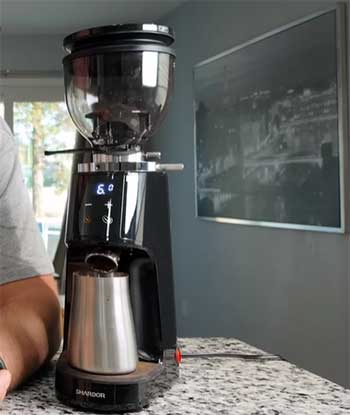
Despite marketing claims about anti-static technology, this machine loves electricity.
Especially in the winter when the air is dry, you will find coffee chaff sticking to the side of the catch cup.
When you pull the container out, a little puff of coffee dust often lands on the counter.
It is not a dealbreaker, but it is an annoyance.
You will need to keep a small towel or brush nearby to keep your countertop tidy.
- Noise Levels
While it is quieter than a blade grinder, it is not a stealth appliance. If you have thin walls or light sleepers in the house, the Shardor will wake them up. It lacks the heavy sound insulation found in premium Italian grinders.
The motor has a bit of a high-pitch whine to it when it is spinning empty, which deepens to a roar once the beans hit the burrs.
- Plastic Build Quality
To keep the price accessible, Shardor uses a lot of plastic. The hopper, the body casing, and the grounds bin are all plastic. While the burrs are metal, the housing doesn’t feel “bomb-proof.” If you drop the catch cup on a tile floor, it might crack.
The adjustment collar also feels a bit light. It doesn’t have the heavy, industrial weight of a machine that costs three times as much, which is a fair trade-off, but one you should be aware of.
- Retention Issues
“Retention” refers to the coffee that stays inside the machine after you finish grinding. The Shardor tends to hold onto about 0.5 to 1 gram of coffee in the chute between the burrs and the exit.
This means if you grind coffee today, the first gram of coffee you get tomorrow morning is actually yesterday’s stale leftovers. To fix this, you have to purge a small amount of beans before catching your actual dose, which wastes a tiny bit of coffee.
Comparing Shardor To The Competition
Shardor vs. Baratza Encore
The Baratza Encore is often cited as the gold standard for entry-level home grinders.
- Build: The Baratza feels heavier and has a reputation for being a tank. Baratza sells every single spare part, meaning you can repair it forever. Shardor is harder to repair if the motor dies.
- Grind Quality: Both use conical burrs. In a blind taste test for drip coffee, the difference is negligible for the average drinker. The Baratza might produce slightly fewer “fines” (dust), but Shardor competes very closely here.
- Price: Shardor is significantly cheaper. You are paying for the Baratza ecosystem and repairability. If budget is your primary constraint, Shardor wins. If longevity and repairability are your goal, Baratza wins.
Shardor vs. Oxo Brew Conical Burr
The Oxo Brew is another direct competitor found in big-box stores.
- Interface: The Oxo has a very clean interface with a large timer dial. Shardor’s interface varies by model but is generally functional.
- Static: Oxo has slightly better static management thanks to a stainless steel catch cup on some models, whereas Shardor relies on plastic.
- Value: Shardor typically undercuts Oxo on price while delivering nearly identical grind performance. The Oxo is more polished in design, but the coffee tastes the same.
Shardor vs. Cuisinart DBM-8
The Cuisinart DBM-8 is arguably the best-selling grinder on the market, but it uses “false burrs” (flat disks with nubs rather than sharp cutting teeth).
- Performance: Shardor destroys the Cuisinart here. The Cuisinart creates a lot of dust and heat, which burns the coffee and makes it bitter. Shardor’s true conical burrs slice the beans rather than smashing them.
- Noise: The Cuisinart is famously loud—scream-at-you loud. Shardor is much quieter.
- Recommendation: Do not buy the Cuisinart just because you recognize the brand name. The Shardor is a superior piece of engineering for the actual coffee brewing process.
Also Read: Is Haden Coffee Maker Worth It?
Frequently Asked Questions (FAQ)
There is no single “best” brand, but for high-end enthusiasts, brands like Mahlkönig, Lagom, and Weber Workshops are top-tier. For home entry-level, Baratza and Fellow are highly rated. Shardor is considered the best “budget-friendly” option that still uses real burrs.
Shardor grinders are manufactured in China, specifically in the Hunan and Guangdong provinces, which are major hubs for appliance manufacturing.
Shardor is a brand owned by “Changsha Shardor Electrical Appliance Technology Co., Ltd.,” a Chinese company specializing in kitchen appliances and coffee peripherals.
Costco removed the large, commercial in-store grinders used by customers after checkout because of misuse. Customers were grinding flavored beans, nuts, and spices, which contaminated the machines and caused allergic reactions for other members, as well as frequent mechanical breakdowns.
Wrapping Up
If you are still using a blade grinder or buying pre-ground bags, the Shardor coffee grinder is the single most impactful upgrade you can make for your kitchen. It isn’t a $2,000 café machine, but it doesn’t try to be. It delivers consistent, fluffy grounds that unlock the real flavor of your roast.
For the price, it punches well above its weight class. Stop settling for mediocre coffee; get the Shardor, buy some fresh beans, and enjoy the morning ritual the way it was meant to be tasted.