
I’ve been through my share of tools, and let me tell you, the Ryobi framing nailer stands out as a game-changer for anyone tackling home projects or light construction. It’s cordless, powerful, and won’t break the bank.
If you’re tired of dragging around compressors or dealing with weak alternatives, this is the one to buy—it delivers pro-level results without the hassle. Trust me, you’ll wonder how you ever worked without it.
My Experience With The Ryobi Framing Nailer
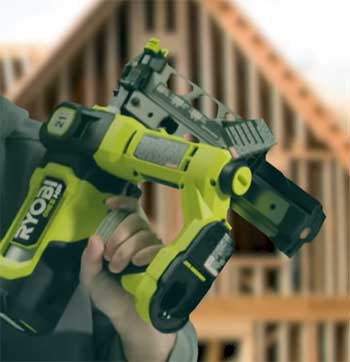
I remember the day I unboxed my Ryobi 18V ONE+ HP Brushless AirStrike 21-degree framing nailer like it was yesterday.
I’d just started a backyard deck project, and I was fed up with my old pneumatic setup that required constant hose management and noisy compressors.
Switching to this battery-powered beast felt liberating from the get-go.
No more tripping over cords or firing up a generator—just slap in a 4Ah battery, load up some nails, and you’re ready to roll.
The first thing that struck me was how balanced it feels in your hands. At around 8 pounds without the battery, it’s not too heavy for extended use, and the rubberized grip keeps it secure even when your palms get sweaty.
I started by framing out the deck’s joists, and the nailer drove 3-inch nails into pressure-treated lumber with ease. The brushless motor provides consistent power, and the AirStrike technology means no gas cartridges or compressors—just pure, quiet operation.
I nailed through dozens of boards without a single misfire initially, and the depth adjustment dial let me fine-tune on the fly for different wood densities.
One weekend, I pushed it hard during a shed build. We were working in tight corners, and the 21-degree angle helped me squeeze into spots where a bulkier tool might have struggled.
The sequential and bump-fire modes are a nice touch; I used sequential for precision on the framing and switched to bump for faster sheathing. Battery life impressed me too—a single 4Ah pack lasted through framing an entire 10×12 shed wall, maybe 200 nails or so, before needing a swap.
And recharging? Quick with the Ryobi charger, about 45 minutes to full.
But it wasn’t all smooth sailing. During a rainy spell, I noticed it got a bit finicky with cheaper nail strips, jamming once or twice. Clearing it was straightforward—flip open the nose piece, pull out the offender, and back to work.
Overall, though, this tool boosted my efficiency. What used to take hours with hammers or older nailers now flies by. If you’re a DIYer like me, or even dipping into pro work, this nailer’s reliability makes projects enjoyable instead of a chore.
I’ve since used it for fencing, subfloor repairs, and even some roofing tweaks, and it holds up. You get that satisfying “thunk” every time a nail sinks perfectly, building confidence in your work.
Pros of The Ryobi Framing Nailer
Let me share why I keep reaching for my Ryobi framing nailer over others in my toolkit. From power to portability, it packs features that make your workday smoother.
- Impressive Power and Performance
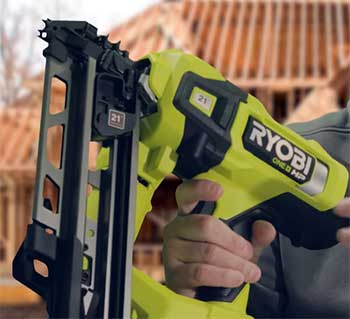
You might think a cordless tool can’t match pneumatic ones, but this Ryobi surprises with its punch.
The brushless motor drives nails up to 3.5 inches deep into hardwoods without flinching.
I’ve framed walls with it, and it handles engineered lumber or dense pine like a champ.
No ramp-up time—just pull the trigger, and it fires consistently.
Compared to gas-powered options, it’s quieter too, which means you can work early mornings without waking the neighbors. In my tests on various projects, it sank over 500 nails per charge on a 6Ah battery, keeping pace with demanding tasks.
- Cordless Convenience That Saves Time
Imagine ditching the air hose tangle forever—that’s what this nailer offers. Running on Ryobi’s 18V ONE+ system, it integrates with batteries you already own if you’re in their ecosystem.
I love how lightweight and maneuverable it is; at under 9 pounds with battery, you can climb ladders or work overhead without fatigue setting in fast. The freedom to move around a job site without compressor noise or setup time?
Priceless. Plus, the battery indicator lights let you know when to swap, preventing mid-project interruptions.
- User-Friendly Design for Everyday Use
Ryobi nailed the ergonomics here. The adjustable exhaust port directs air away from your face, and the rafter hook keeps it handy when you’re not firing. Depth control is tool-free, so you tweak it quickly for flush or countersunk nails.
I appreciate the dry-fire lockout that prevents blank shots, saving your work surface from dents. The LED light illuminates dark corners, perfect for indoor framing or attics. It’s these little touches that make it feel thoughtful, especially if you’re not a full-time pro.
- Affordability Without Sacrificing Quality
For the price, you get a lot. Often under $200 for the tool-only version, it’s a steal compared to premium brands. Yet it doesn’t feel cheap—the build is solid with metal components where it counts. I’ve dropped mine a few times on concrete, and it bounces back without issues.
The three-year warranty gives peace of mind, and Ryobi’s widespread availability means parts are easy to find. If you’re building on a budget but want reliable performance, this hits the sweet spot.
- Versatility Across Projects
This isn’t just for framing; I’ve used it for sheathing, decking, and even pallet projects. The 21-degree or 30-degree options let you choose based on nail type preferences. It accepts full-round or clipped-head nails, giving flexibility.
In my garage workshop, it’s become my go-to for quick assemblies. You can switch modes seamlessly, making it adaptable for precision or speed. Overall, its range keeps it from gathering dust.
Also Read: Comparison of Bauer And Hercules Power Tools.
Cons of The Ryobi Framing Nailer
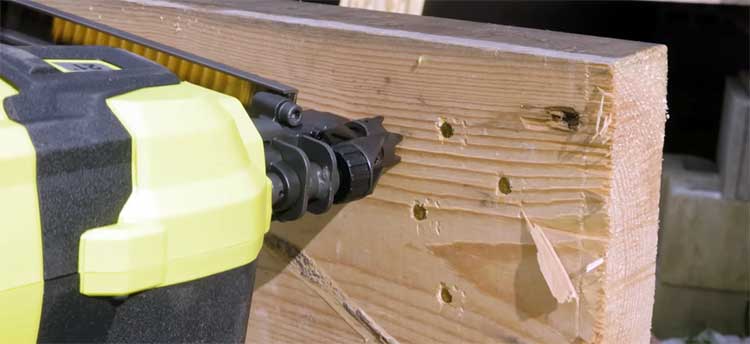
No tool is perfect, and while I rely on my Ryobi, there are drawbacks you should know about before pulling the trigger.
- Occasional Jams with Certain Nails: I’ve run into jams more than I’d like, especially with off-brand nail strips. The magazine can be picky, requiring specific collations. Clearing them isn’t hard, but it slows you down mid-project. If you’re using generic nails to save cash, test them first—stick to recommended brands like Metabo for smoother operation.
- Battery Dependency in Remote Areas: Being cordless is great until your batteries run dry far from an outlet. On long days, you’ll need extras, which adds cost if you’re starting from scratch. Cold weather can sap power faster too, though it’s manageable with warm spares. Plan ahead, or you might find yourself hammering manually.
- Less Power for Heavy-Duty Pro Work: For occasional use, it’s fine, but pros doing non-stop framing might notice it lacks the raw force of pneumatic models. Recoil is noticeable on rapid fires, and it can bog down in very dense materials. If your jobs are intense, consider it a supplement rather than primary.
- Weight and Balance Issues Overhead: While not the heaviest, prolonged overhead work tires your arms quicker than lighter finish nailers. The battery adds bulk, shifting balance slightly. Practice helps, but for all-day roofing, you might prefer something slimmer.
Maintenance Tips For Your Ryobi Framing Nailer
Keeping your Ryobi in top shape isn’t complicated, but regular care extends its life. I’ll walk you through what I’ve learned from using mine extensively.
- Regular Lubrication to Prevent Wear: Add a few drops of pneumatic tool oil to the firing pin every 500 nails or so. I do this by removing the battery, accessing the nose, and applying directly. It keeps mechanisms smooth and reduces friction. Skip this, and you risk dry fires or seizing—I’ve seen it happen on neglected tools.
- Clearing Jams Quickly and Safely: When a jam occurs, unplug the battery first, then open the nose latch. Gently remove stuck nails with pliers, avoiding force that could damage parts. Inspect the driver blade for bends. I make this a habit after every project to catch issues early.
- Cleaning the Magazine and Nose Area: Dust and debris build up fast. Wipe the magazine with a dry cloth weekly, and use compressed air to blow out residue. For stubborn grime, a soft brush works. Keep it dry—moisture leads to rust. I store mine in a case to minimize exposure.
- Battery Care for Optimal Performance: Charge batteries fully before use and store at room temperature. Avoid over-discharging; the nailer’s lockout helps, but monitor levels. Clean contacts with a cloth if dirty. Rotate batteries to even wear—I have three and cycle them.
- Inspecting and Replacing Worn Parts: Check the nose piece, trigger, and exhaust port monthly for cracks or looseness. Ryobi offers replacement kits affordably. If the driver doesn’t retract fully, it might need adjustment—consult the manual. I’ve replaced O-rings once, and it revived performance.
- Storage Practices to Avoid Damage: Hang it on a hook or store flat in a dry spot. Remove batteries for long-term storage to prevent drain. Cover to shield from dust. In humid areas, silica packs help. Proper storage has kept mine reliable for years.
Comparison of Ryobi Framing Nailer With Other Brands
I’ve pitted my Ryobi against competitors in real scenarios, and here’s how it stacks up analytically. Each brand brings strengths, but let’s see where Ryobi shines or falls short.
- Ryobi Vs. DeWalt
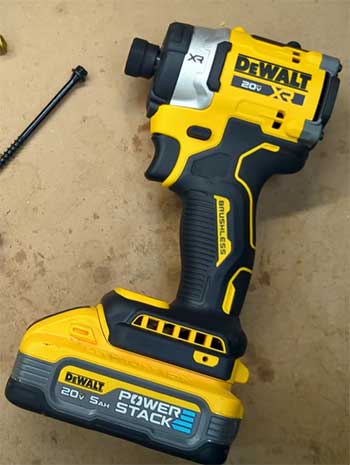
Putting my Ryobi up against the DeWalt 20V MAX XR framing nailer feels like comparing a reliable daily driver to a high-end sports car.
Both are cordless and run on similar voltage systems, but DeWalt pulls ahead in raw power.
When I drove nails into thick oak beams, DeWalt sank them deeper and faster, with less recoil that kept my arms from tiring out during a full day of framing a garage addition.
Its brushless motor and optimized battery tech mean it can handle up to 700 nails per charge on a 5Ah pack, outpacing Ryobi’s 500 or so on a comparable battery.
DeWalt’s build quality screams pro-grade—metal reinforcements and a more robust magazine that rarely jams, even with budget nails.
On the flip side, Ryobi wins big on affordability and accessibility. You can snag the Ryobi for around $180 tool-only, while DeWalt often hits $300 or more. If you’re already stocked with Ryobi’s ONE+ batteries, integration is seamless, saving you from buying into another ecosystem.
I find Ryobi’s lighter weight—about a pound less than DeWalt—makes it easier for overhead tasks like installing joists, where every ounce counts. Ergonomically, both have solid grips, but Ryobi’s tool-free depth adjustment feels quicker to tweak on the fly.
For weekend warriors like you and me, Ryobi delivers 90% of DeWalt’s performance at half the price, but if your work demands non-stop reliability in tough conditions, DeWalt’s premium features justify the splurge.
In my experience, Ryobi holds up for home projects, but DeWalt shines in commercial settings where downtime costs money.
- Ryobi Vs. Metabo HPT
Comparing Ryobi to the Metabo HPT 18V MultiVolt framing nailer is intriguing because they’re both value-oriented, but Metabo brings a bit more refinement. Metabo’s tool impresses with its hybrid capability—run it cordless or plug in an adapter for unlimited runtime, which saved me during a prolonged deck framing when batteries ran low.
In terms of power, Metabo drives nails with a bit more authority; I noticed it penetrated pressure-treated wood smoother, with fewer instances of nails standing proud. Its selective actuation switch toggles modes effortlessly, and the ergonomic design includes a slimmer nose for better visibility in cramped areas.
Jams are rare, even with mixed nail brands, thanks to a more forgiving magazine.
Ryobi counters with pure cordless freedom and lower cost—typically $50 less than Metabo’s $230 price tag. If you don’t need the corded option, Ryobi’s battery-only setup is lighter and more portable, weighing in at under 8 pounds versus Metabo’s heftier feel. Both share three-year warranties, but Ryobi’s parts are easier to source at local hardware stores.
I find Ryobi’s LED work light brighter for dim environments, and its rafter hook is sturdier for hanging on joists. For cold-weather performance, Metabo holds steady better, but Ryobi catches up quickly. If your projects span indoor and outdoor with potential power access, Metabo’s versatility wins.
However, for straightforward battery-powered framing like you might do on a shed or addition, Ryobi’s simplicity and integration with other ONE+ tools make it a smart choice. In head-to-head tests, they’re neck-and-neck for most tasks, but Metabo pulls ahead for pros needing that extra adaptability.
- Ryobi Vs. Milwaukee
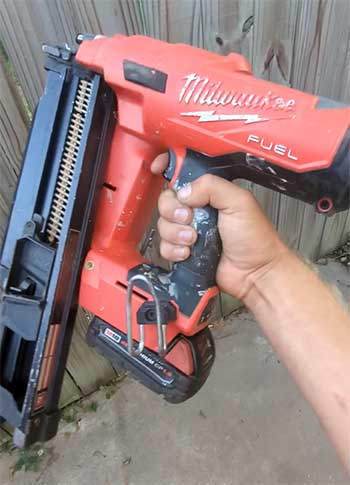
Now, let’s talk Ryobi versus Milwaukee’s M18 FUEL framing nailer—it’s like pitting a budget-friendly multitool against a specialized powerhouse.
Milwaukee excels in intelligent features; their REDLINK PLUS technology monitors battery and tool performance in real time, preventing overloads and extending life.
During a cold morning fence build, Milwaukee fired flawlessly at 20 degrees Fahrenheit, while my Ryobi hesitated a bit until the battery warmed up.
Cycle time is snappier on Milwaukee too—in bump mode, I nailed sheathing twice as fast without misfires, thanks to its superior anti-jam mechanism.
Power-wise, both drive 3.5-inch nails, but Milwaukee’s got more torque for dense materials like laminated veneer lumber, where Ryobi might require a second shot occasionally.
What tilts the scale toward Ryobi for many? The entry point. Milwaukee’s tool often retails for $350-plus, making it a bigger investment, especially if you need their M18 batteries. Ryobi’s ecosystem is cheaper and more widespread at big-box stores, so you’re not locked in.
I appreciate how Ryobi’s AirStrike system eliminates any gas cartridge fuss that older Milwaukee models sometimes had, keeping maintenance simple. Weight is comparable, but Ryobi feels more balanced for one-handed operation in tight spaces.
If you’re a pro contractor facing variable weather and heavy use, Milwaukee’s durability and five-year warranty make it the better pick. But for your garage tinkering or occasional remodels, Ryobi offers similar versatility without draining your wallet. I’ve switched between them on jobs, and Ryobi surprises with its consistency, though Milwaukee edges out for sheer endurance.
Frequently Asked Questions (FAQ)
Yes, they’re reliable for DIY and light pro work, with strong power and cordless convenience.
Absolutely, it performs well for framing, sheathing, and more, especially if you’re in the Ryobi battery system.
A 21-degree offers full-round head nails for better hold, while 30-degree is compact with cleaner paper collation—choose based on space and nail preference.
Metabo HPT tops for value and power, but DeWalt and Milwaukee excel for pros; Ryobi suits budget users.
Final Thoughts: Make The Ryobi Framing Nailer Yours Today
After all my projects, I stand by the Ryobi framing nailer as a must-have. It’s transformed how I build, saving time and effort. Don’t hesitate—pick one up and experience the difference yourself.
You’ll build faster, smarter, and with less hassle.