
If you are hearing that ominous gurgle in your toilet or watching your shower drain slower than a glacier, you need to buy Roebic Main Line Cleaner immediately. It is not just a temporary fix; it is a bacterial overhaul for your entire plumbing ecosystem.
Unlike harsh chemicals that eat your pipes, this product eats the problem. I’ve tested it extensively, and if you want to save thousands on a plumber while sleeping soundly knowing your sewage is actually flowing, this is the bottle you need to grab.
My Experience With The Roebic Main Line Cleaner
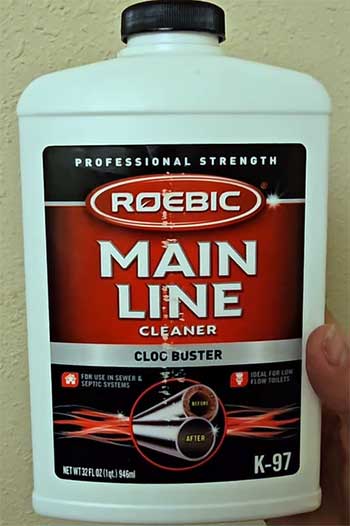
My journey with this product didn’t start out of curiosity; it started out of panic.
I live in a house built in the late 70s, which means my plumbing has seen things—decades of grease, paper, and “flushable” wipes that really shouldn’t have been flushed.
It started on a Tuesday evening.
I flushed the downstairs toilet, and instead of the usual satisfying whoosh, I was greeted by a lazy swirl and a threatening rise in water level.
Then came the sound—a deep, resonant glug-glug-glug from the shower drain nearby.
I grabbed the plunger, but deep down, I knew this wasn’t a simple clog. This was a main line issue.
The main sewer line is the highway for all the waste in your house, and mine was turning into a parking lot.
I frantically searched online, terrified of the potential $5,000 bill for excavating the yard or hydro-jetting the line. That is when I stumbled upon the concept of bacterial cleaners rather than chemical ones.
I ordered the Roebic Main Line Cleaner (K-97) because the analytical side of me appreciated the science. It’s not acid; it’s biology. The bottle arrived, and the instructions were delightfully simple, though they required patience.
I waited until everyone was in bed to ensure no water would run for at least six to eight hours. I poured the thick liquid down the toilet nearest to the main line exit. It didn’t fizz, smoke, or smell like burning chemicals. It just looked like a milky, viscous fluid disappearing into the trap.
The next morning, I was skeptical. I flushed the toilet. It went down, but still a bit sluggish. I reminded myself that bacteria aren’t dynamite; they are a cleanup crew.
They need time to eat. I repeated the application for four consecutive nights, using about a quarter of the bottle each time, as my situation was dire. By the third day, the difference was undeniable. The shower no longer held standing water, and that terrifying gurgle had vanished.
It felt like the house could breathe again. It wasn’t a violent unclogging; it was a gradual restoration of flow. The most impressive part was realizing that this stuff didn’t just push the clog further down; it literally digested the years of sludge narrowing the pipe walls.
Pros of Roebic Main Line Cleaner
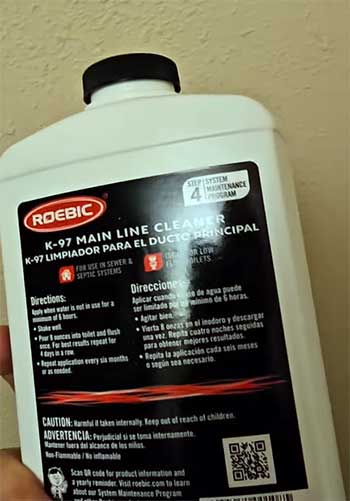
- Biological Targeting of Organic Waste The primary advantage of the Roebic Main Line Cleaner lies in its mode of action. It utilizes a specialized bacterial culture that specifically targets the organic waste found in sewage systems. When we talk about “sludge,” we aren’t just talking about a single blockage. We are talking about layers of grease, soap scum, fats, and biodegradable paper that coat the interior of the pipes like arterial plaque. Roebic attacks this biological matrix. Because it is living bacteria, it clings to the walls of the pipe and multiplies. This means the cleaner continues to work long after you have poured it, constantly eating away at the buildup as long as there is “food” (waste) for it to consume. It metabolizes the waste into water and carbon dioxide, effectively erasing the mass rather than just moving it.
- Absolute Safety for Aging Infrastructure If you have ever used sulfuric acid or lye-based openers, you know the anxiety of splashing that stuff on your skin or inhaling the fumes. Roebic is non-corrosive. You could spill it on your floor, and while it would be messy, it wouldn’t burn a hole through your linoleum. This is incredibly important for those of us with older homes. My cast iron pipes are already prone to rust; pouring acid down them is a recipe for a collapsed line. Roebic is safe for PVC, cast iron, copper, and septic systems. It doesn’t generate heat, so there is no risk of cracking porcelain toilets or melting plastic fittings, which is a genuine risk with thermal chemical reactions in other heavy-duty openers.
- Septic System Enhancement Most chemical drain openers are actually harmful to septic systems because they kill the good bacteria needed to break down solids in the tank. Roebic K-97 does the exact opposite. Because it is comprised of beneficial bacteria, flushing it down your line actually boosts the health of your septic tank. It seamlessly transitions from cleaning your pipes to aiding the digestion process in your tank, potentially extending the time between expensive pump-outs. It turns a cleaning chore into a maintenance benefit for the entire waste system.
- Cost-Effective Compared to Physical Intervention When you look at the price of a bottle, it might seem more expensive than a jug of bleach, but you have to compare it to the alternative: a plumber. A visit from a professional to snake a main line can easily run between $200 and $500, depending on your location and the severity of the clog. Hydro-jetting is even more expensive. For the price of a takeout dinner, Roebic offers a solution that can resolve the issue before it requires professional tools. Even if you use two bottles a year for maintenance, you are spending a fraction of what a single emergency service call would cost.
- Ease of Use and Application There is no mixing, no measuring of dangerous powders, and no need for safety goggles or heavy rubber gloves. The application process is incredibly user-friendly. You simply shake the bottle and pour. The viscous nature of the fluid helps it coat the pipes as it goes down, rather than just washing away instantly like water. This “cling” factor ensures that the bacteria are deposited exactly where they need to be—on the sidewalls of the pipe where the sludge accumulates.
Cons of Roebic Main Line Cleaner
The biggest drawback for most people is the time factor. We live in a world of instant gratification, and when your toilet is overflowing, you want it fixed ten minutes ago. Roebic is not an instant fix. If your line is completely, 100% blocked and water is backing up into your tub, this product might not be your immediate solution.
The bacteria need flow to reach the blockage and oxygen to thrive (in some formulations), and most importantly, they need time to eat. It can take days to see significant results in severe cases.
Another negative is that it cannot dissolve inorganic materials. If your child flushed a toy car, a massive wad of baby wipes, or if tree roots have crushed your line, Roebic won’t help you. It eats organic sewage. It cannot eat plastic or re-fuse broken clay pipes.
Users often leave negative reviews because they expect it to dissolve a plastic comb or clear a root intrusion (though Roebic makes a separate root killer for that).
Tips Roebic Main Line Cleaner For Maximum Efficacy
To get the most out of this product, you have to treat it like a living organism, because that is exactly what it is. You are introducing a colony of bacteria into a hostile environment, and you need to give them a fighting chance to establish themselves.
- Timing Your Application
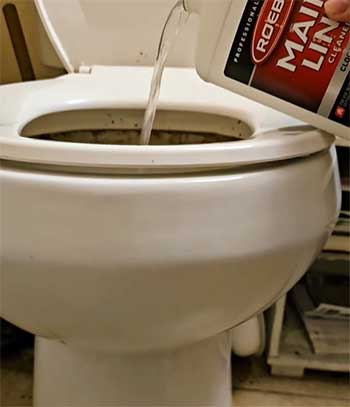
The absolute best time to use this is right before you go to bed or before you leave for work, provided nobody will be home.
You want the system to be “dormant.”
If you pour the cleaner in and then immediately take a shower, you are just washing the bacteria out to the city sewer or your septic tank before they have had a chance to latch onto the sludge in the pipes.
Aim for at least six hours of non-use.
This allows the bacteria to settle out of the water suspension and colonize the waste coating the pipe walls.
- The Loading Dose Strategy
If you suspect you have a heavy buildup or if you have never treated your main line before, do not just follow the maintenance dosage. You need a “shock” dose or a loading dose. I recommend using the product for four consecutive nights.
Use a quart bottle over the course of four applications. This ensures that you are constantly replenishing the bacterial population, overwhelming the sludge with enzymes and hungry microbes.
- Pre-Rushing the Line
Before you apply the product, run hot water down the drain for about a minute. This warms up the pipes. Bacteria are generally more active in warmer environments. Cold winter pipes can slow down their metabolism.
By warming the line, you are creating a more hospitable environment for them to wake up and start eating. However, do not use boiling water, as that could kill the culture. Just hot tap water is sufficient.
- Reduce Chemical Interference
For the few days that you are treating your main line, try to minimize the use of bleach or antibacterial soaps in the house. It is counterintuitive, but if you pour a cup of bleach down the sink an hour after using Roebic, you are effectively nuking the army you just sent in to fight the war.
Let the bacteria work without chemical warfare raining down on them.
- Regular Preventative Schedule
Don’t wait for the gurgle. The smartest way to use this product is as a preventative measure. Once you have cleared the initial slow-down, use it once every three to four months.
A single application quarterly will keep the biofilm from accumulating to the point where it restricts flow. Think of it like getting your teeth cleaned; it prevents the plaque from turning into a cavity that requires a drill.
How Roebic Compares To The Competition?
When you stand in the aisle at the hardware store, you are bombarded with options. Understanding how Roebic stacks up against the big names helps clarify why I prefer the biological approach for main lines.
- Roebic Vs. Drano Max Gel
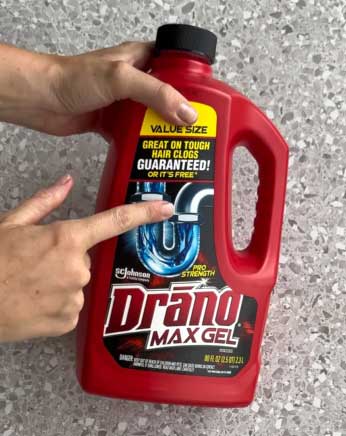
Comparing Roebic to Drano is like comparing a surgeon to a sledgehammer.
Drano uses caustic chemicals like sodium hydroxide (lye) and sodium hypochlorite (bleach).
It works by creating a chemical reaction that generates heat to melt grease and dissolve hair.
Drano is faster. If you have a hair clog in a bathroom sink, Drano will clear it in 15 minutes.
However, for a main line, Drano is risky.
You would need gallons of it to reach the clog, and having that much caustic chemical sitting in your pipes is dangerous for the plumbing integrity.
Furthermore, Drano kills the beneficial bacteria in your septic tank.
Roebic is slower but safer and actually heals the ecosystem of your waste management.
- Roebic Vs. Green Gobbler Main Line Cleaner
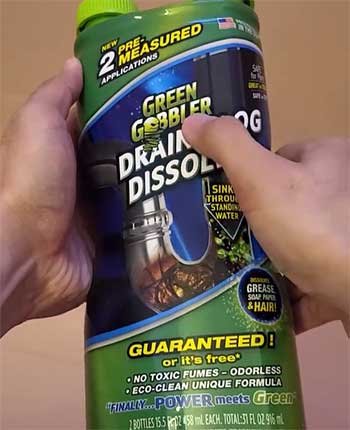
Green Gobbler is the closest direct competitor as they also offer enzyme-based main line cleaners.
Both products are effective and safe for pipes. However, in my analysis, Roebic K-97 often feels more concentrated.
Green Gobbler has excellent marketing and sometimes comes in more convenient dual-chamber packaging, but I have found that Roebic tends to have a more specialized bacterial strain focus.
Roebic has been in the business of septic and bacterial treatments since the 1950s.
They specialize solely in this lane. Green Gobbler is a great product, but Roebic feels like the industrial-grade version of the same technology.
- Roebic Vs. Rid-X
Rid-X is a household name, but it is primarily designed for the septic tank itself, not necessarily the lines leading to it. While Rid-X adds bacteria to break down solids in the tank to prevent pumping as often, it isn’t formulated to cling to the pipe walls and clear the “highway” to the tank.
Roebic Main Line Cleaner is specifically formulated with surfactants and viscous agents that help it coat the pipe. If you use Rid-X, you are treating the destination; if you use Roebic, you are treating the journey.
You can actually use both, but for a clogged or slow main line, Rid-X won’t solve the immediate flow restriction in the pipe.
- Roebic Vs. Mechanical Snakes
A plumber’s snake or auger is a mechanical solution. It physically punches a hole through a clog. This is the only solution for tree roots (unless you use Roebic’s foaming root killer) or solid objects. However, a snake only pokes a hole the size of the snake head.
It leaves the sludge on the walls of the pipe, meaning the clog will likely reform quickly. Roebic removes the sludge entirely. Ideally, if you have a total blockage, you snake it to restore flow, and then you use Roebic to clean out the residue that the snake missed.
They are complementary, but for maintenance and sludge removal, Roebic is superior to just poking a hole in the mess.
Also Read: Is Earth Brite Cleaner Worth It?
Frequently Asked Questions (FAQ)
It uses biodegradable bacteria to digest sludge, grease, paper, and fats that accumulate inside your main sewage pipes, restoring flow without harsh chemicals.
For safety and long-term effectiveness, Roebic K-97 is the top choice for organic buildup. For roots, a foaming root killer is better.
It is highly effective on organic waste and sludge but requires 24 to 48 hours to show significant results; it is not effective on plastic or solid debris.
Yes, provided the blockage is organic (grease, waste, paper) and the bacteria are given enough time (6+ hours) to colonize and break down the material.
Final Thoughts
If you want to protect your home from the nightmare of sewage backup without resorting to dangerous acids, you should buy Roebic Main Line Cleaner. It bridges the gap between professional plumbing services and DIY maintenance.
It is affordable, incredibly safe for all plumbing ages, and environmentally responsible. It turned my panic situation into a manageable maintenance routine. Don’t wait for the water to stop draining completely.
Buy a bottle, treat your pipes, and let the bacteria do the dirty work so you don’t have to.