
I’ve spent years testing smart home security gear, and frankly, the confusion between Ring’s “Pro” models is one of the most common headaches homeowners face. If you are torn between the classic Ring Video Doorbell Pro and the newer, spec-heavy Ring Video Doorbell Pro 2, you are in the right place.
My intent here is simple: I’m going to break down exactly which device offers better value for your specific front porch setup, evaluating them on real-world performance rather than just box specs.
Let’s figure out if the Pro 2’s fancy radar tech is worth your extra cash.
| Feature | Ring Video Doorbell Pro | Ring Video Doorbell Pro 2 |
| Video Resolution | 1080p HD | 1536p HD+ (Head-to-Toe) |
| Field of View | 160° Horizontal, 90° Vertical | 150° Horizontal, 150° Vertical |
| Motion Detection | Advanced Motion Detection (Camera-based) | 3D Motion Detection (Radar-powered) |
| Audio | Two-Way Talk with Noise Cancellation | Two-Way Talk with Audio+ (Enhanced) |
| Night Vision | Standard Color Night Vision | Color Night Vision with Low-Light Sight |
| Connectivity | Dual-Band Wifi (2.4GHz & 5GHz) | Dual-Band Wifi (2.4GHz & 5GHz) |
| Power Source | Hardwired (16-24 VAC) | Hardwired (16-24 VAC) |
| Bird’s Eye View | No | Yes (Aerial map view) |
| Alexa Greetings | Yes (via subscription/update) | Yes (Built-in capability) |
Key Differences Between Ring Doorbell Pro And Pro 2
Here is an in-depth look at what separates these two devices.
- Video Aspect Ratio and The “Head-to-Toe” Perspective
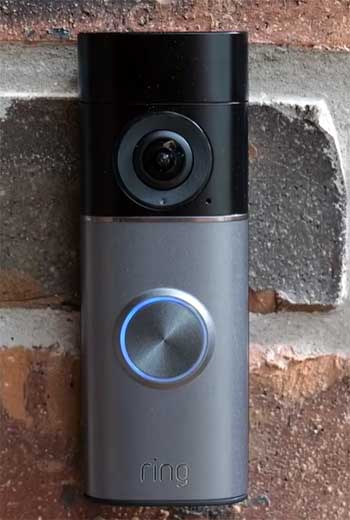
The most immediate and jarring difference you will notice is the shape of the video.
The original Ring Pro sticks to the traditional 16:9 widescreen format, the same shape as your TV or phone screen when held sideways.
For years, we accepted this as the standard. It works great for movies, but I found it frustratingly limited for a front door.
When I had the Pro installed, I constantly felt like I was looking through a letterbox.
I could see the street clearly, and I could see my neighbor’s lawn across the road, but I was blind to the most important three feet of real estate: the floor of my own porch.
The Pro 2 abandons the cinematic look for a 1:1 square aspect ratio, delivering 1536p resolution. This “Head-to-Toe” view is not just marketing jargon; it is a functional overhaul. With the Pro 2, the camera lens captures a much taller vertical slice of the world.
In practical terms, this means when a courier walks up to my door, I don’t just see their torso. I see their face clearly at the top of the frame and, crucially, I see the package they are placing on the mat at the bottom of the frame.
On the original Pro, that package would vanish into the blind spot beneath the camera the moment the driver set it down. I used to have to open the door to confirm a delivery had actually been made. With the Pro 2, I can verify the package condition and placement without ever leaving the couch. That peace of mind alone creates a massive divide between the two models.
- Motion Detection Technology: Pixels vs. Radar
This is the “under the hood” difference that changes how much you trust your security system. The original Ring Pro uses image-based analysis. It watches the pixels in the video feed. If enough pixels change color—say, a shadow moves across the lawn or headlights sweep the driveway—it registers as “motion” and sends you an alert.
While Ring has improved the AI to filter out simple things, I still found the Pro prone to false positives on windy days where tree branches were swaying heavily. It was guessing based on visual noise.
The Pro 2 introduces radar to the equation, and the difference in precision is palpable. It doesn’t just “see” motion; it measures the distance of the object creating that motion. I was able to set a specific boundary—alerts only trigger if an object is within 20 feet of the door.
This means the radar physically ignores the cars driving by at 30 feet or the dog walker on the sidewalk at 25 feet. It creates a virtual fence that pixel-based cameras simply cannot replicate. The result?
When my phone buzzes with a notification from the Pro 2, I pay attention immediately because I know something has physically breached that distance barrier. The “boy who cried wolf” effect is almost entirely gone.
- Audio Architecture and Duplex Capability
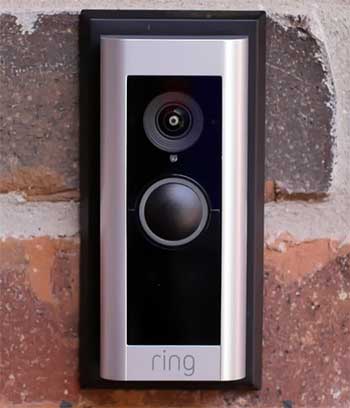
We rarely think about audio until we have to use it, but the difference here is significant during an interaction.
The original Pro uses standard two-way audio.
It works, but it often suffers from what I call the “walkie-talkie effect.”
If I was speaking to a visitor through the app, the speaker on the doorbell would blast my voice, but the microphone would often cut out or dampen the visitor’s reply until I stopped talking.
It was a half-duplex experience that made natural conversation difficult and awkward.
The Pro 2 utilizes “Audio+,” which includes a microphone array designed for full-duplex communication. This means both parties can speak and be heard simultaneously, much like a regular phone call.
In my testing, this was most noticeable when I was trying to give instructions to a delivery driver who was interrupting me to ask a question. On the Pro 2, we could talk over each other without the audio stream garbling or cutting out.
Additionally, the Pro 2 handles wind noise far better. My porch is a wind tunnel in the autumn, and the original Pro often sounded like it was underwater. The Pro 2 manages to isolate the vocal frequencies, making the person at the door intelligible even when the weather is fighting against you.
- Night Vision and Low-Light Sensor Sensitivity
Both cameras claim color night vision, but they achieve it differently. The original Ring Pro relies heavily on its infrared (IR) LEDs once the sun goes down.
The moment the light level drops below a certain threshold, you hear a click, and the image snaps to black and white (or a colorized version of it using software). It’s functional, but faces can often look washed out or ghostly if they get too close to the IR emitter.
The Pro 2 seems to have a larger or more sensitive image sensor that holds onto “true” color much longer into the evening. I noticed that during twilight—that awkward time when it’s not quite dark but not light—the Pro 2 stayed in standard video mode, capturing the actual blue of the sky and the green of the grass, while the Pro had already given up and switched to night mode.
When the Pro 2 finally does switch to night vision, the “Low-Light Sight” capability produces a crisper image with less visual noise (that fuzzy static you see in dark videos). If you have a streetlamp nearby, the Pro 2 might never even need to turn on its IR lights, utilizing the ambient light to give you a surprisingly clear, color-accurate picture all night long.
Key Features of Ring Doorbell Pro And Pro 2
To make this easy to digest, here is a detailed breakdown of the features that define these devices, formatted as requested.
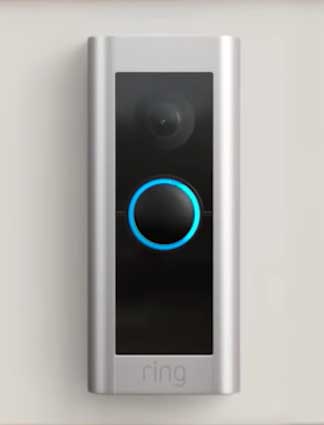
- Head-to-Toe Video (Pro 2 Exclusive) This is the single biggest differentiator. The 1536p resolution combined with the 150-degree vertical field of view creates a square image. I have tested dozens of doorbells, and the frustration of missing a package because it was placed too close to the door is real. The Pro 2 eliminates this blind spot entirely. It allows you to see visitors from their shoes to their hat, providing complete context for who is at your door and what they are carrying.
- 3D Motion Detection (Pro 2 Exclusive) Using radar technology, the Pro 2 adds a layer of distance measuring that camera-based pixel detection simply cannot match. You can customize the motion zones by distance (e.g., 15 feet). This drastically reduces false alerts from cars driving by or neighbors walking across the street. It changes the notification experience from “annoying noise I ignore” to “alert I actually trust.”
- Advanced Motion Detection (Pro & Pro 2) Both cameras allow you to draw custom polygon shapes on the screen to define where you want to monitor motion. If you have a hanging flag or a tree branch that triggers alerts, you can simply draw the zone around it to exclude it. This is a staple feature, but the Pro 2’s radar makes the execution of these zones much more precise.
- Dual-Band Wi-Fi (Pro & Pro 2) Both devices support 2.4 GHz and 5 GHz networks. This is crucial for performance. 2.4 GHz travels through walls better but is often crowded with other devices (microwaves, baby monitors). 5 GHz is faster but has a shorter range. Having the option means you can connect to the less crowded 5 GHz band if your router is close to the door, ensuring the high-resolution video streams smoothly without stuttering or buffering.
- Interchangeable Faceplates (Pro & Pro 2) Aesthetics matter. The black and silver look is standard, but the ability to swap the faceplate to match your door hardware (brass, bronze, white) helps the technology blend into the architecture of your home. It stops the device from looking like a tacked-on gadget and makes it look like a built-in part of the house.
Also Read: Differences Between Ring Chime And Chime Pro.
Pros of The Ring Video Doorbell Pro
The original Ring Pro is still a heavy hitter. Here is why it remains a viable option for many.
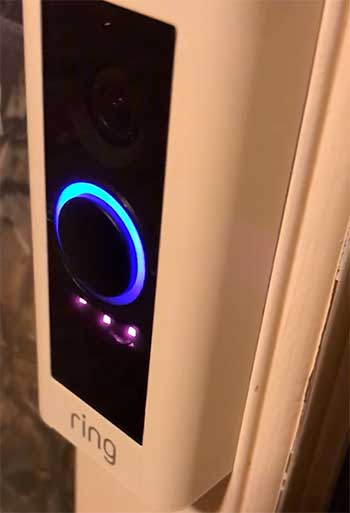
- Cost-Effective Performance The Pro is frequently on sale. You can often find it for significantly less than the Pro 2. If you are on a budget but still want the reliability of a wired connection (no batteries to charge) and reliable motion detection, the Pro offers the best “bang for your buck” in the Ring lineup. It gets the job done without the premium price tag.
- Slim and Stylish Design It fits almost anywhere. Many doorframes, especially on older Victorian or Craftsman homes, have very narrow trim. The Pro is slender enough to mount on these thin frames without needing to drill into the brick or siding next to the door. Its low profile makes it less obtrusive than the bulky battery-powered options.
- Proven Reliability This model has been around for years. The firmware is mature, the bugs have been ironed out, and it is known to be a workhorse. It survives harsh winters and hot summers. I have had a Pro unit survive -10°F temperatures without shutting down, thanks to the constant hardwired power keeping the internals warm.
- Excellent Smart Home Integration As an Amazon-owned company, the Ring Pro integrates seamlessly with Echo devices. You can have your Echo Dot act as a chime, or your Echo Show automatically pull up the video feed when someone presses the button. This ecosystem integration is seamless and requires zero complex setup.
Cons of The Ring Video Doorbell Pro
However, the age of the Pro is starting to show in specific areas.
- Limited Vertical Field of View The 16:9 aspect ratio is outdated for doorbells. It acts like a movie camera, emphasizing the width of your yard rather than the height of your porch. This means you will frequently miss seeing packages left directly on the doormat unless you mount the doorbell abnormally low, which then cuts off people’s faces.
- Wi-Fi Sensitivity In my experience, the older radio chip in the Pro is slightly more sensitive to weak Wi-Fi signals. If your router is far away or there are brick walls in between, the Pro often struggles to maintain a high-quality 1080p stream, leading to pixelated video or delayed notifications.
- Lack of Advanced Detection Features It relies purely on visual changes for motion detection. While the AI is good, it is not infallible. Shadows from clouds, swaying trees, or headlights sweeping across the lawn can still trigger false positives, which can eventually train you to ignore notifications altogether.
Pros of The Ring Video Doorbell Pro 2
The Pro 2 is the powerhouse. Here is where it shines.
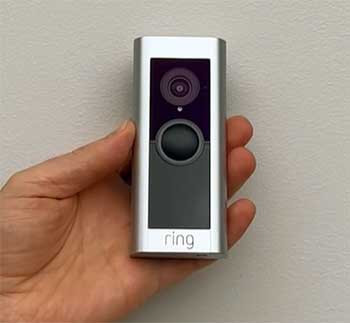
- Superior Video Aspect Ratio I cannot stress this enough: 1536p Head-to-Toe video is superior. The ability to see the entire porch floor and the visitor’s face simultaneously provides total context. You know if they have a dog, you know if they dropped a receipt, you know exactly what is happening at your threshold.
- Radar-Based Precision The 3D Motion Detection is a legitimate technological leap. By using radar to distance-gate alerts, it virtually eliminates false positives from street traffic. This makes the device far less annoying and far more useful as a security tool. You trust the alerts because the radar confirms someone is actually on your property.
- Better Audio Quality The Audio+ feature with the new microphone array makes two-way talk usable. On older models, trying to have a conversation with a delivery driver was often an exercise in frustration due to lag and static. On the Pro 2, the voices are clear, distinct, and natural, allowing for actual communication.
- Enhanced Night Vision The sensors handle low light with much more grace. The transition from day to night is smoother, and the clarity of images in near-pitch-black conditions is noticeably sharper than its predecessor. It captures details like clothing logos or tattoos that the older Pro might blur into a smudge.
Cons of The Ring Video Doorbell Pro 2
It is not perfect. Here are the downsides I found.
- Premium Price Point You are paying for the radar and the resolution. It is one of the most expensive consumer video doorbells on the market. For many users, the extra features—while nice—might not justify the significant price hike over the standard Pro or the wired Ring Video Doorbell Wired.
- Requires High-Quality Power The Pro 2 is power-hungry. It is more sensitive to voltage drops than the older models. If your home’s doorbell transformer is old or borderline (under 16V), the Pro 2 might enter a “boot loop” or fail to ring the mechanical chime. You are much more likely to need to hire an electrician or replace your transformer with the Pro 2.
- Bird’s Eye View can be Gimmicky While the satellite view is technically impressive, on smaller properties or standard suburban lots, it doesn’t add much security value. It looks cool to see the dots moving on a map, but for a 15-foot walkway, the video feed tells you everything you need to know. It feels like a feature designed for large estates that was crammed into a consumer product.
Also Read: Differences Between Eufy S330 And E340 Video Doorbells.
Frequently Asked Questions (FAQ)
Here are the answers to the specific questions you might have, kept brief and direct.
The main differences are the video aspect ratio and motion detection technology. The Pro 2 offers “Head-to-Toe” square video (1536p) and uses radar for 3D motion detection, while the original Pro uses standard widescreen 1080p video and pixel-based motion detection.
For most homeowners with existing doorbell wiring, the Ring Video Doorbell Pro 2 is currently the best version due to its superior resolution, package visibility, and radar accuracy. If you need a battery option, the Ring Battery Doorbell Plus is the top contender.
Yes, the original “Ring Video Doorbell 2” (a battery model) has been discontinued and replaced by newer models like the Ring Video Doorbell 3 and 4. Do not confuse this with the “Pro 2,” which is a current, top-tier wired model.
The “Ring Video Doorbell (2nd Gen)” is the budget entry-level battery model. It is worth buying if you are on a strict budget (often under $100) and cannot hardwire a device, but it lacks the advanced detection, pre-roll, and video quality of the Pro line.
Final Thoughts
Ultimately, your choice comes down to one question: How much does “context” matter to you?
If you simply need a reliable digital peephole to check who is ringing the bell, the Ring Video Doorbell Pro remains a fantastic, budget-friendly workhorse. It covers the basics perfectly. However, if you view your doorbell as a serious security tool, the Ring Video Doorbell Pro 2 is the clear winner.
The “Head-to-Toe” video and radar technology effectively solve the two biggest frustrations of smart doorbells: package blind spots and false alerts. While the price is higher, the ability to see your entire porch and trust your notifications makes the upgrade worth every penny.