
Finding a paint that actually does what it claims—no sanding, no priming, no hassle—feels like chasing a unicorn. But after hearing the buzz about Rethunk Junk by Laura, I finally decided to put it to the test on a tired old dresser that had seen better days.
If you are looking to reclaim your weekend and transform your furniture without the soul-crushing prep work, you absolutely need to buy this paint; it is a total game-changer for DIYers who want professional results without the professional price tag.
My Personal Journey With Rethunk Junk
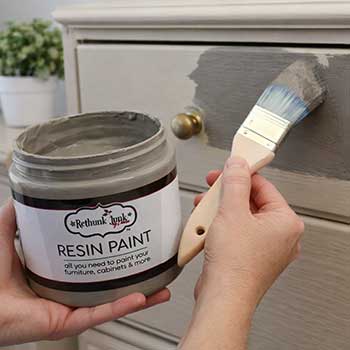
I’ll be honest: I was a skeptic.
I’ve spent enough hours sanding down polyurethane finishes to know that “no prep” is usually a marketing myth.
I picked up a quart of Rethunk Junk in a classic navy shade, eyeing a laminate-topped side table that had been sitting in my garage.
I followed the instructions to the letter, which basically just involved cleaning the surface with their prep spray to get the grime off.
The first thing I noticed was the consistency. It isn’t thick and gloopy like some chalk-style paints, nor is it watery like a cheap latex. It felt substantial on the brush.
As I applied the first coat, I waited for the inevitable “beading” or “slipping” you get when painting over slick surfaces. It didn’t happen. The paint gripped the laminate with surprising tenacity.
By the second coat, the coverage was nearly opaque. What really struck me was the self-leveling quality. I’m not a master painter, and I tend to be a bit heavy-handed, but the brush marks seemed to melt away as it dried.
Within a few hours, I had a piece that looked like it came out of a high-end boutique rather than a suburban garage. The finish felt smooth, almost like a factory spray job, but with the warmth of a hand-applied finish.
I didn’t need a topcoat, which felt like cheating, but the built-in sealer really does its job. It’s been three months of heavy use—keys being tossed on it, coffee mugs resting there—and I haven’t seen a single chip. It turned a project I was dreading into something I actually enjoyed.
The Clear Advantages of Rethunk Junk Paint
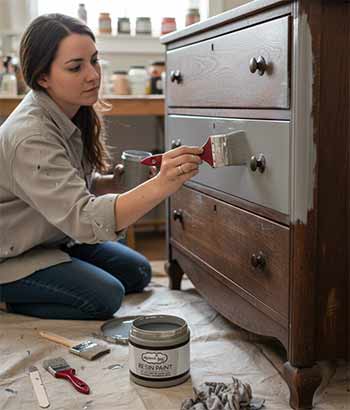
When we talk about the benefits of this system, we have to start with the sheer versatility of the resin-based technology.
Unlike standard latex or acrylics you find at the hardware store, this stuff is formulated to bite into surfaces that usually repel paint.
I’m talking about that slick, “fake” wood furniture or those dated metal filing cabinets.
The resin acts as its own anchor, which is why the “no-prep” claim actually holds water.
For a busy parent or a professional with a side hustle, being able to jump straight into the creative part of a project without hours of dusty manual labor is a massive win.
- The Revolutionary Lack of Sanding and Priming: The biggest barrier to entry for any furniture project is the prep. Traditionally, you have to scuff-sand the surface to create “tooth” and then apply a primer to ensure the color sticks and doesn’t bleed. This paint skips those hurdles entirely. The chemical composition is designed to adhere to finished wood, laminate, and even glass. This doesn’t just save you physical energy; it saves you from the mess of sawdust coating every surface in your home. You can literally paint in your living room while watching a movie.
- Self-Leveling Magic for a Professional Finish: One of the most frustrating parts of DIY painting is seeing brush strokes once the piece dries. This formula features incredible self-leveling properties. As the paint settles, it flattens out, minimizing those annoying ridges. It gives you a finish that looks like it was done with a high-end HVLP sprayer even if you just used a standard synthetic brush. This is particularly helpful for beginners who might not have a steady hand or the perfect technique yet.
- Built-in Sealer and Unmatched Durability: Most furniture paints require a secondary step, like applying wax or a polyurethane topcoat. This is often the hardest part to get right without streaks. Rethunk Junk has the sealer built right in. Once it cures, it forms a hard, moisture-resistant shell. This makes it a prime candidate for kitchen cabinets or bathroom vanities where spills and steam are a daily occurrence. It’s also low-VOC and eco-friendly, so you don’t have to deal with that overwhelming “paint smell” for days on end.
Potential Drawbacks of Rethunk Junk Paint
Every product has its limits, and while I’m a fan, I want to make sure you know exactly what you’re getting into before you crack open a quart. It is not a magical fix for every single situation, and there are some specific scenarios where you might need to adjust your approach to ensure you don’t end up with a peeling mess.
- The Necessity of a Squeaky Clean Surface: While you don’t have to sand, you absolutely cannot skip the cleaning phase. This is where most people fail. If there is a hint of furniture polish, wax, or even oils from your skin on the piece, the paint will sit on top of that residue instead of bonding to the furniture. You have to use a dedicated degreaser or their proprietary prep spray. If you try to paint over a greasy kitchen cabinet without a thorough scrub, you will see the paint “fish-eye” or pull away from the surface almost immediately.
- Color Consistency and Pigment Loading: Because these are handcrafted paints, you might notice slight variations between batches. If you are doing a massive project like an entire kitchen, it is a smart move to “box” your paint—which just means mixing all your quarts into one larger container to ensure the color is perfectly uniform across all your cabinets. Also, some of the very light whites and creams might require an extra coat compared to the darker jewel tones. It isn’t a “one-coat wonder” in every single color, and you should manage your expectations regarding coverage on high-contrast color changes.
- The Curing Time vs. Drying Time Trap: This is the most common pitfall for DIYers. The paint feels dry to the touch very quickly, often within thirty minutes. However, “dry” is not the same as “cured.” A resin-based paint takes about a week to fully reach its maximum hardness. If you place a heavy television or a stack of books on a dresser the day after you paint it, the finish might still be soft enough to dent or stick to the object. You have to be gentle with your pieces for the first few days to ensure the long-term integrity of the finish.
How To Maintain Your Finished Pieces With Rethunk Junk Paint?
You’ve put in the work, and your furniture looks incredible. Now the goal is to keep it that way for the next decade. Maintenance isn’t difficult, but it does require a different mindset than you might have for factory-finished pieces or raw wood.
- Daily Cleaning and Dusting Procedures: For the most part, you can treat your painted furniture just like any other piece in your home. A soft microfiber cloth is your best friend. It picks up dust without scratching the resin film. For general cleaning, stick to a damp cloth. You don’t need to use those oily furniture polishes or lemon-scented sprays you find at the grocery store. In fact, those can actually leave a film on your beautiful new finish that attracts more dust over time.
- Dealing with Spills and Stubborn Grime: Life happens, and eventually, someone is going to spill coffee or drop a greasy snack on your table. When this happens, stay away from abrasive pads or “magic” melamine sponges. Those sponges are essentially super-fine sandpaper and will buff away the satin sheen of your paint, leaving a dull spot. Instead, use a drop of mild dish soap on a soft cloth. Wipe the area gently and dry it immediately. The resin is water-resistant, but you should never let water sit in a puddle on the surface for an extended period.
- Long-Term Care and Easy Touch-Ups: One of the best features of this paint is how well it handles touch-ups. If you move house and accidentally ding a corner of your dresser, you don’t have to repaint the whole thing. Since the paint levels so well, you can just take a tiny artist brush, dab a bit of the original color into the scratch, and let it dry. It blends in almost seamlessly. Unlike wax finishes, which can get “clogged” with dust and need to be stripped and reapplied every few years, this resin finish stays consistent and durable for the long haul without any extra elbow grease from you.
Comparing The Results To Chalk Style Brands
Traditional chalk paint is the most common comparison, but the experience is quite different. Chalk paint is very porous and thick. It requires a topcoat—usually wax or poly—to be functional.
Without it, the paint will absorb oils from your skin and look dingy within weeks. Rethunk Junk eliminates that extra step. While chalk paint offers a very specific “shabby chic” distressed look easily, Rethunk Junk is better suited for a clean, modern, or satin finish that feels more permanent and professional.
- Differences From Standard Mineral Paints
Mineral paints are often touted as the “all-in-one” solution similar to this brand. However, I’ve found that many mineral paints can be quite thin, requiring three or four coats for dark colors. The pigment load in Rethunk Junk feels denser.
You get better “hide” with fewer passes of the brush. Also, some mineral paints can dry almost too fast, leading to “dragging” if you try to go back over a spot you just painted. This formula has a slightly longer open time, which is much more forgiving for beginners.
- Contrast With High End Acrylic Enamels
If you go to a dedicated paint store, they might point you toward expensive acrylic enamels for cabinets. Those paints are fantastic, but they almost always require a dedicated primer and significant sanding. They are designed for professional sprayers.
If you are a DIYer with a brush and a roller, the enamel can be tricky to apply without sags or drips. Rethunk Junk bridges the gap by giving you that enamel-like durability but with the ease of application that a hobbyist needs.
Also Read: Comparison of Farrell-Calhoun And Sherwin-Williams Paint.
Frequently Asked Questions (FAQ)
Yes, it is highly durable, requires minimal prep, and provides a professional, smooth finish that doesn’t require a separate topcoat for most projects.
It is a water-based, eco-friendly resin paint that combines the pigment, binder, and sealer into a single formula.
It typically dries to the touch in about 30 minutes to an hour, but you should wait 2 to 4 hours between coats.
She primarily uses her own Magnolia Home line, which includes a variety of cabinet-specific interior paints and finishes.
Final Thoughts
Ultimately, the best tool is the one that actually helps you finish the job. Rethunk Junk removes the barriers that stop most people from starting a furniture flip.
Because it’s so easy to use and holds up so well against daily wear and tear, you should buy this paint if you want to fall in love with your home again. It’s an investment in your space that pays off every time you look at your “new” furniture.