
If you’re exhausted from battling dirt, leaves, and algae that turn your beautiful pool into a chore, stop hesitating and buy the Polaris Maxx today.
After owning and running mine heavily for over two years, I can tell you it’s one of the best investments I’ve made for my in-ground pool—consistent deep cleaning, strong scrubbing, and real time saved every single week.
My Experience With The Polaris Maxx
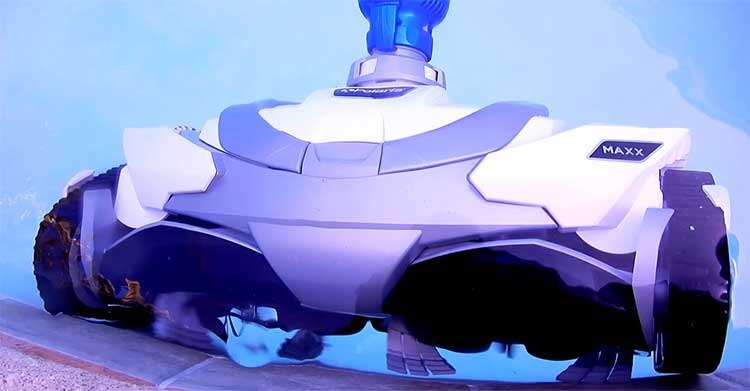
When I first brought home my Polaris Maxx, I was coming off a frustrating run with cheaper suction cleaners that barely moved and left half the pool dirty.
Unboxing it, the quality hit me immediately—solid construction, those aggressive spinning brushes, thick tracks that looked built to last, and the wide HALO intake promising no clogs.
Setup was simple but required attention. I hooked it to my dedicated suction port, measured the hose to reach the farthest corner plus a little extra, and fine-tuned the flow. You submerge it, count track revolutions—aim for about 28-32 RPM—and adjust the regulator or valves accordingly.
Once dialed in, I turned on the pump and stepped back.
It took off like nothing I’d seen before. The turbines spin fast, propelling it across the floor with real purpose, scrubbing as it goes. Those active brushes don’t just push dirt around; they agitate it vigorously, loosening pollen, sand, and even early algae spots that my old cleaner ignored.
In my rectangular plaster pool, it covered the floor thoroughly in under an hour, then headed straight for the walls.
Watching it climb was satisfying. It powers up smoothly, brushes spinning the whole way, hitting the tile line consistently on most runs. Steps and benches get attention too, though it might need a nudge occasionally on ledges.
After a heavy leaf drop from nearby oaks, I worried about clogs, but the HALO tech shone—long twigs and big leaves passed through without stopping it.
I run it on a variable-speed pump at medium RPMs, and it still performs strong, keeping energy costs down. Over two seasons, my water stays clearer longer, chemical use dropped, and weekends are free from skimming marathons.
If you want a cleaner that feels like an upgrade in every way—faster, tougher, more thorough—you’ll appreciate how the Maxx makes pool care feel effortless.
What Makes The Polaris Maxx Shine: The Pros
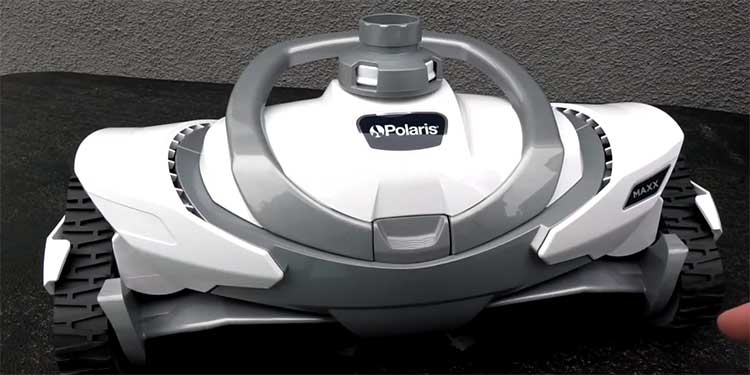
After two full years of near-daily use through pollen seasons, storms, and parties, these are the features that keep making me glad I chose the Maxx. You’ll feel the difference from day one.
- Unmatched Debris Handling Thanks to HALO Technology: The wide, obstruction-free intake is brilliant. It sucks up everything from ultra-fine silt that clouds water to long stringy leaves, pine needles, acorns, and even small twigs without ever choking. I’ve watched it pull in debris that would instantly jam my previous cleaners, keeping the run going uninterrupted.
- Aggressive Active Scrubbing That Actually Cleans: Those spinning brushes are no joke—they rotate independently and attack surfaces hard. Stuck-on dirt, light algae film, pollen buildup—all get agitated and lifted instead of just rolled over. After a cycle, my walls and floor feel smoother to the touch, and I rarely need to brush manually anymore.
- Strong and Consistent Wall-Climbing Ability: On my plaster pool, it reliably scales vertical walls and scrubs all the way to the waterline 9 times out of 10. The dual turbines generate serious torque, giving it the grip and power to hold traction even on slightly textured surfaces.
- Excellent Compatibility with Variable-Speed Pumps: If you have a modern VS pump like I do, you’ll love how efficiently it runs at lower RPMs. I keep mine around 2000-2200 RPM during cleaning cycles, saving electricity while still getting full performance—no need to crank the pump to max.
- Durable Construction and Thoughtful Engineering: The tracks are thick and grippy, the body feels solid, and the automatic flow regulator protects internal parts from excess pressure. Everything is designed to take punishment season after season without falling apart.
- Smart Multi-Directional Navigation Patterns: It doesn’t just wander randomly. Sharp turns, quick reversals, and efficient overlapping paths mean thorough coverage with minimal wasted movement. In my 18×36 pool, it finishes a complete clean in 2-3 hours without missing large sections.
- Easy Integration and Low Daily Hassle: Hook it up once, tweak the settings, and you’re done. It runs automatically whenever the pump is on—no cords to plug, no batteries to charge, no robot to retrieve and empty after every use.
- Replaceable Wear Items Keep Costs Manageable: When brushes flatten or tracks wear (after 2-3 years in my case), you just swap those parts instead of replacing the whole unit. Genuine Polaris replacements are readily available and reasonably priced.
- Outstanding Value Compared to Feature Set: You get premium scrubbing, climbing, and debris-handling capabilities at a price that’s hundreds less than top robotic models, yet it outperforms many basic suction cleaners by a wide margin.
These pros add up to a cleaner that genuinely reduces your workload and keeps the pool inviting all summer.
The Drawbacks I’ve Noticed With The Polaris Maxx

I love my Maxx, but I won’t pretend it’s perfect. Here are the honest downsides I’ve encountered—some are minor annoyances, others require workarounds.
- Tendency to Get Stuck on Certain Pool Features: It loves to hover over raised main drains, return fittings, or floor vents. Sometimes it parks itself on steps or benches too. I find myself nudging it free a couple times per cycle, which breaks the “set it and forget it” ideal.
- Wall Climbing Can Be Inconsistent Depending on Conditions: On days when walls have even a thin algae film or if flow is slightly off, it might only climb halfway or slip back down. Pebble or very slick surfaces make this worse—you may still need occasional manual wall brushing.
- Heavy Burden on Your Main Filtration System: Everything it picks up goes straight to your pump basket and filter. During heavy debris periods, I empty the basket multiple times per day and backwash far more often. Filter pressure spikes quickly if you don’t stay on top of it.
- No Onboard Fine Debris Capture: Unlike robots with their own canisters, ultra-fine particles can pass through a standard filter and temporarily cloud the water until they settle or get caught. Upgrading to a finer cartridge or DE filter helps, but it’s an extra consideration.
- Hose Twists and Tangles Require Attention: If you don’t coil the hose properly after each use or if float placement drifts, it develops twists that pull the cleaner off course or limit reach. Hose management becomes a small but regular chore.
- Wear Parts Need Periodic Replacement: Tracks lose grip after heavy seasons, brushes flatten and lose scrubbing power, and sweep hoses wear out. While replacements are affordable, the ongoing cost adds up over 5+ years.
- Performance Directly Tied to Pump and System Health: If your pump is aging, impeller clogged, or suction lines restricted, the Maxx suffers immediately—slower movement, weaker climbing, more sticking. It exposes any weaknesses in your filtration setup.
- Louder Operation Than Robotic Alternatives: The increased suction load makes your pump work harder, producing more noise and vibration at the equipment pad. Not silent by any means, though you get used to it.
- Limited Effectiveness in Extremely Large or Complex Pools: In oversized pools with many obstacles, benches, or swim-outs, full coverage might take longer runs or occasional repositioning of the hose swivel.
These cons haven’t made me regret the purchase, but they do mean you need to stay somewhat involved rather than expecting completely hands-off operation.
Keeping Your Polaris Maxx Running Strong: Maintenance Tips
You and I know longevity comes from care. I’ve developed routines that keep mine performing peak after years. Follow these, and you’ll extend its life well beyond average.
Daily and After-Use Routines
- Rinse the cleaner body thoroughly with a hose to remove dirt from tracks, brushes, and intake.
- Empty your pump basket immediately after runs—debris piles up quick and cuts suction.
- Inspect the hose for kinks or damage; straighten and coil neatly for storage.
Weekly Flow and Adjustment Checks
- Test RPM by submerging and counting track revolutions (28-32 ideal); tweak regulator valve or pump speed.
- Position the leader hose float exactly 9 inches from the head for balanced buoyancy and better climbing.
- Clean your main pool filter—backwash sand/DE or rinse cartridges to maintain low pressure.
Debris Management Strategies
- Install an in-line leaf canister for heavy leaf areas; it traps big stuff, preserving suction.
- Shock the pool periodically to prevent algae buildup that makes walls slick and reduces traction.
- Switch to finer filter media if silt recirculates often.
Monthly Part Inspections
- Check tracks for wear—replace when grooves shallow or slipping occurs.
- Examine brushes; swap when bristles wear flat for continued scrubbing power.
- Clear any trapped debris from the HALO inlet or engine area.
Seasonal and Long-Term Care
- Store indoors during winter; drain fully to avoid freeze damage.
- Protect from direct sun when not in use—UV degrades plastics over time.
- Use only genuine Polaris parts for replacements; they fit perfectly and maintain reliability.
Quick Troubleshooting Fixes
- Slow movement? Clear clogs in skimmer, basket, or impeller.
- Poor climbing? Balance chemistry, clean walls, verify flow.
- Grinding noise? Inspect gears and shafts for debris or wear.
- Stuck frequently? Add drain covers or adjust hose weights.
Dedicate a little time weekly, and your Maxx will reward you with years of strong performance. It’s straightforward stuff that prevents big problems down the line.
How The Polaris Maxx Stacks Up Against Other Brands?
- Polaris Maxx Vs. Dolphin Nautilus CC Plus
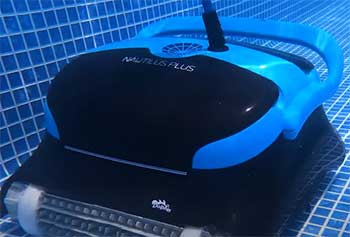
You might be eyeing the Dolphin Nautilus CC Plus as a popular robotic alternative, and I get why—it’s a bestseller with strong reviews for ease of use.
This one is a true head-to-head: suction-side versus fully independent robotic.
The Nautilus CC Plus runs on its own power with a long cord, scrubbing floors and walls independently without taxing your pump or filter. It has its own top-load filters that capture debris onboard, so your main system stays cleaner longer.
Many owners rave about the smart navigation that covers pools efficiently, and it’s super energy-efficient, using far less electricity than running your pump for hours.
On the flip side, my Polaris Maxx integrates directly with your existing suction, running whenever the pump does—no extra cord to manage or robot to store and charge. It excels at aggressive scrubbing with those spinning brushes and handles mixed debris incredibly well thanks to HALO tech, sucking up everything from silt to twigs without clogging.
Climbing feels more powerful in variable conditions for me, and it works great on lower pump speeds, keeping bills low.
Price-wise, the Dolphin often costs more upfront, but you avoid burdening your filter. If you hate dealing with pump baskets spiking or want completely hands-off (drop it in, plug it, forget it), the Nautilus wins for convenience.
But if you already have strong filtration and want relentless scrubbing plus seamless integration, you’ll stick with the Maxx like I do—it just feels tougher on stubborn dirt.
- Polaris Maxx Vs. Polaris Atlas XT
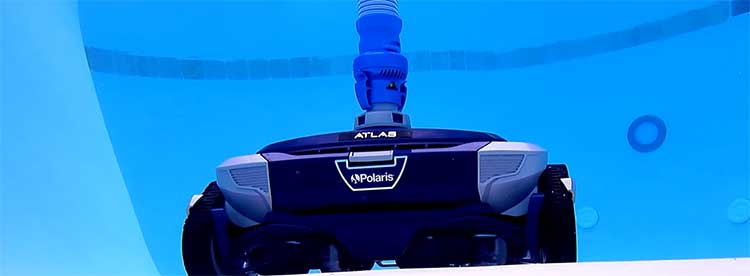
This comparison is straightforward since they’re basically siblings in the Polaris family.
The Atlas XT is the standard retail version, while my Maxx is the Leslie’s exclusive model—often in white with some packaging differences. Functionally, they’re identical: same HALO debris handling, same dual turbines for climbing, same active brushes, and tracks.
The key difference boils down to the hose: the Atlas XT (and Maxx) comes with premium twist-lock connections that secure tightly and make extensions leak-free, whereas the base Atlas has basic friction-fit hoses that can loosen over time.
Performance-wise, you won’t notice any gap—both climb walls reliably, scrub vigorously, and power through fine dust or leaves. If you’re shopping, check availability; the Maxx might bundle extras at certain stores, but specs match perfectly. I’ve had zero regrets with my Maxx version—it’s the upgraded hose that makes setup and longevity feel premium.
- Polaris Maxx Vs. WYBOT Pool Cleaners
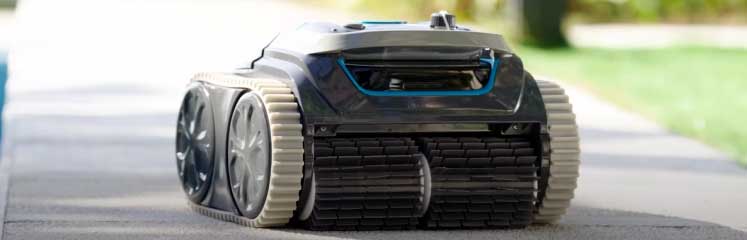
WYBOT brings cordless robotic options like the S2 or C1 series into the mix, appealing if you love battery-powered freedom—no cords, no hoses.
These WYBOT models are fully independent robots with strong batteries (often 2-3 hours runtime), wall climbing, and app controls for scheduling or modes. They capture debris in onboard baskets, scrub with dual brushes, and handle large pools well.
Cordless means easy drop-in and retrieval, plus some have waterline cleaning or smart path planning. Reviews praise the convenience and fine filtration without relying on your system.
Compared to my Maxx, WYBOT feels more modern and hassle-free—no hose management or pump dependency. You charge it like a gadget and go. However, battery life limits runs, and recharging adds a step. In heavy debris seasons, suction-side like the Maxx runs unlimited as long as the pump is on, powering through bigger loads without interruption.
WYBOT often costs similar or slightly more, but you save on energy since it doesn’t run your pump. Reliability varies—some owners report app glitches or shorter lifespan versus established brands. For me, the Maxx’s raw suction power and scrubbing edge out on tough algae or silt, plus no battery worries.
If cordless appeals and your pool isn’t debris-heavy, WYBOT tempts; otherwise, the Maxx delivers consistent, no-fuss performance tied to your reliable pump.
Frequently Asked Questions (FAQ)
Yes, especially suction models like the Maxx for reliable, thorough cleaning.
Maxx is Leslie’s exclusive (often white with twist-lock hose); otherwise identical to Atlas XT.
Low flow, worn tracks/brushes, slippery algae, or improper hose float position.
5-8 years typically with good care; parts like tracks replaced sooner.
Wrapping Up My Polaris Maxx Experience
After years of daily use, I urge you to buy the Polaris Maxx if you crave a hardworking suction cleaner that scrubs aggressively, handles mixed debris, and simplifies pool life.
It delivers sparkling results reliably, saving time and frustration for seasons to come.