
If you are looking to secure your home against one of the most common and expensive threats—water damage—you should buy the Phyn Plus.
I strongly recommend purchasing it directly from their official site to ensure you receive the latest hardware revision and direct support, or via Amazon if you value their rapid shipping and return policies. This is not a purchase to delay; water damage does not wait for a convenient time.
By installing this device, you are effectively buying a proactive security guard for your plumbing system, transforming your pipes from a hidden liability into a monitored asset.
My Experience Living With Phyn Plus
I will be honest with you: I never spent much time thinking about my plumbing. It was just there, behind the walls, doing its job.
That complacency ended the morning I walked into my hallway and stepped into a cold, wet puddle.
It was a pinhole leak in a copper pipe, barely noticeable until it had already soaked the drywall and ruined the hardwood flooring.
The repair bill was nauseating.
That financial sting was the immediate motivation I needed to find a solution that would let me see what was happening inside my pipes before water destroyed my home again.
The installation process was the first hurdle. Unlike the cheap puck sensors you can toss under a sink, the Phyn Plus is a serious piece of infrastructure. It requires cutting into the main water line where it enters the house.
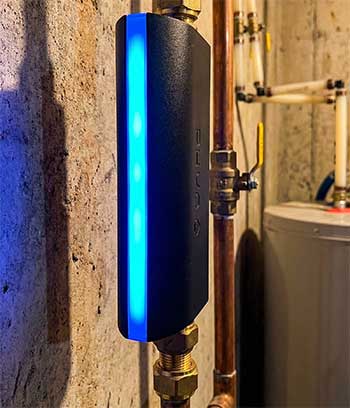
I am handy, but I am not “cut the main water line” handy, so I hired a professional plumber. Watching him install it, I was struck by the build quality of the unit. It is heavy, solid, and looks like a piece of high-end audio equipment rather than a plumbing fixture.
The LED light bar on the side gives it a futuristic pulse, a visual signal that it is alive and watching.
Living with the device for the first few months was a mix of fascination and mild irritation. The system enters a training phase where it learns your home’s specific water signature. It was genuinely impressive to watch the app try to categorize my usage.
I would take a shower, and the app would log it. I would water the garden, and it would register the gallons used. However, there were moments of friction. Early on, I washed my car, and the sustained high flow triggered the auto-shutoff.
Suddenly, the hose went dead. While annoying in the moment, it was also a powerful demonstration that the valve actually worked.
The defining moment for me happened about six months into ownership. I was at a family dinner, forty minutes away from home, when my phone buzzed with a critical alert: “Abnormal water usage detected.
Water shut off.” My heart raced. I checked the app and saw a spike in flow that didn’t match any normal pattern. When I got home, I found that an old utility sink supply line in the basement had burst. Because the Phyn Plus had intervened, there was only a small puddle on the concrete floor.
Without the device, water would have run at full pressure for hours, flooding the finished basement and costing me tens of thousands of dollars. That one event justified the cost of the device for the rest of my life.
The Advantages of Smart Water Monitoring With Phyn Plus
- Ultrasonic Wave Precision
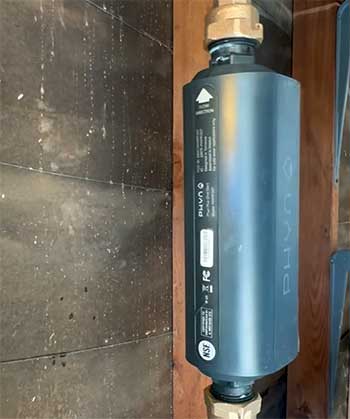
The technology inside this unit is what sets it apart from almost everything else on the market.
Most water meters use a mechanical turbine—a little fan that spins when water flows past it.
The problem with turbines is that they have moving parts that wear out, and they struggle to detect very slow leaks.
Phyn Plus uses ultrasonic waves. It shoots sound waves through the water 240 times per second.
By measuring the time it takes for the sound to travel upstream versus downstream, it calculates the flow rate with incredible precision.
This lack of moving parts means the device is incredibly durable. It is not going to get jammed by a small piece of grit or wear down over years of use. More importantly, this ultrasonic sensitivity allows it to detect the acoustic signature of different fixtures.
It can tell the difference between the sharp pressure wave of a toilet valve closing and the chaotic flow of a burst pipe. This is not just measuring volume; it is listening to the physics of your plumbing system.
- The Nightly Plumbing Health Check
One of my favorite features is something you will likely never see happen because it takes place while you sleep. Every night, typically around 3:00 AM, the Phyn Plus closes its main valve to seal off your home’s plumbing system from the city supply.
Once the system is closed, it monitors the pressure inside your pipes for a few minutes.
If your plumbing is completely watertight, that pressure should remain constant. If there is even a tiny pinhole leak, a dripping faucet, or a running toilet flapper, the pressure will slowly drop. The device detects this microscopic drop and alerts you the next morning.
This is brilliant because it catches the leaks that are too small to trigger a flow alert—the “silent killers” that slowly rot your floor joists or cause mold growth behind walls over months.
- Automated Shutoff Capability
The ultimate purpose of this device is not just to inform you of a disaster, but to stop it. The built-in shutoff valve is the feature that lets you sleep at night. If the algorithms detect a catastrophic flow—like a frozen pipe bursting or a water heater failing—it physically closes the valve, cutting off the water supply to the entire house.
Having the ability to control this valve remotely is also a massive benefit. If you are on vacation and realize you forgot to turn the water off, you can do it from your phone on the beach.
Or, if a neighbor calls to say they see water coming out of your front door, you can stop the damage instantly without waiting for a locksmith or the fire department to break down your door.
- Water Usage Insights and Granularity
Beyond safety, the device offers a window into your consumption habits that is genuinely eye-opening. The app breaks down your water usage by category: shower, toilet, irrigation, washing machine, etc. This granularity allows you to spot inefficiencies that you would otherwise miss.
For example, you might realize that your irrigation system is using three times as much water as you thought, or that an old toilet is using five gallons per flush instead of two. This data empowers you to make changes that save money on your monthly utility bills. It turns water from a fixed cost into a manageable variable.
Areas of Phyn Plus That Could Be Improved
- The High Cost of Entry
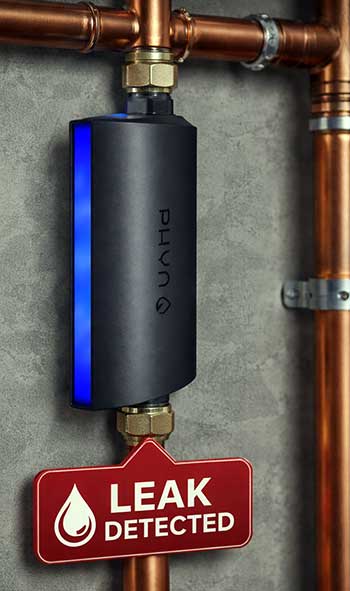
There is no getting around the fact that the Phyn Plus is an expensive piece of hardware.
When you compare it to a standard water shutoff valve, the price difference is staggering.
You are paying for the R&D, the ultrasonic sensors, and the software ecosystem.
For many homeowners, dropping several hundred dollars on a plumbing device feels like a luxury rather than a necessity.
The cost is further compounded by the installation.
Unless you are comfortable cutting main water lines and soldering copper, you have to hire a plumber. In some areas, this can double the initial investment.
While I believe the device pays for itself the moment it stops a leak, the upfront barrier to entry is high compared to passive leak detectors.
- Installation Complexity
This is not a “plug and play” device in the traditional sense. It requires a specific physical environment to work correctly. You need a section of pipe with enough clearance to fit the unit, and you need a standard 110v power outlet nearby.
In many older homes, the main water line enters in a dark corner of the basement or a crawlspace where there is no electrical outlet.
If you don’t have power near your water main, you have to hire an electrician in addition to a plumber. This adds another layer of logistical complexity and cost. Furthermore, the unit is physically large.
If your pipes are clustered tightly together or located in a tight access panel, you might not have the physical room to install it without significantly re-routing your plumbing.
- False Positives
Artificial intelligence is smart, but it is not psychic. When you first install the Phyn Plus, it has to learn what “normal” looks like for your household. During this learning period, you will likely experience false alarms.
You might be filling a large pasta pot and the device might send you a warning.
I found the most frustration came from outdoor water usage. Filling a kiddie pool or washing the siding of the house often looks like a burst pipe to the algorithm because it is a high-volume, continuous flow. You have to be diligent about checking the app and tagging these events so the system learns. If you ignore the app, the system won’t get smarter, and you will keep getting false alerts.
Maintenance & Optimization Tips For Phyn Plus
- Cleaning the Y-Strainer
The Phyn Plus relies on a clear path for the water to measure flow accurately. To protect the ultrasonic sensors from rocks, sediment, and municipal debris, the installation usually includes a Y-strainer just upstream of the unit.
This is a simple mesh filter, but it plays a critical role.
You should make a habit of checking this strainer every six to twelve months, depending on your water quality. If you live in an area with hard water or frequent city pipe maintenance, you might need to do it more often.
To clean it, you simply shut off the water, unscrew the cap on the strainer, pull out the mesh screen, and rinse it under a sink to remove any grit. A clogged strainer can reduce water pressure in your house and cause the Phyn to give erratic readings.
- Exercising the Mechanical Valve
While the ultrasonic sensors have no moving parts, the shutoff valve itself is mechanical. Like any valve, if it sits in the same position for years, it can seize up due to mineral deposits or corrosion. The Phyn Plus runs its own checks, but I recommend manually closing and opening the valve via the app once a quarter.
This “exercises” the motor and the valve seal, ensuring that everything is moving freely. It also gives you peace of mind to see the water actually stop when you hit the button. Listen to the sound of the motor; it should be a smooth whirring noise, not a grinding or struggling sound.
- Refining the Fixture Identification
To get the most out of the data, you need to be an active participant in the “labelling” process. In the app, you will see a list of water events. Sometimes, the device will list an event as “Unknown Flow.” It is worth taking five minutes once a week to go through these.
If you know you took a shower at 7:00 AM, and the app lists an unknown event at that time, tap on it and label it “Shower.” This feedback loop helps the algorithm tighten its accuracy. Over time, the system becomes incredibly good at guessing, but it needs that initial human guidance to separate the signal from the noise.
- Ensuring Connectivity
The device needs a Wi-Fi connection to send alerts to your phone and to process data in the cloud. Since water mains are often in basements or utility closets, these areas are notoriously bad for Wi-Fi signals. If your Phyn Plus is constantly dropping offline, it cannot warn you effectively.
I found that installing a simple Wi-Fi range extender in the garage near the unit made a huge difference. You should periodically check the signal strength in the device settings in the app. If the signal is weak (usually shown in decibels, or dBm), you risk missing a critical alert. A smart device is only as smart as its connection to you.
Comparing Phyn Plus With The Market Leaders
- Phyn Plus Vs. Flo by Moen
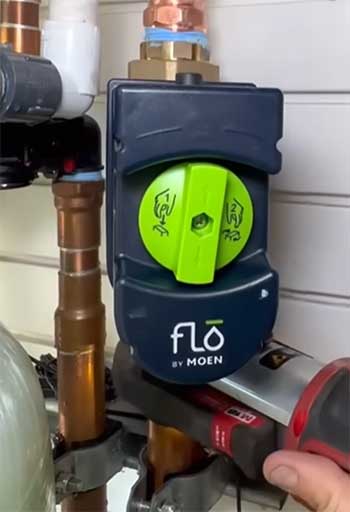
The comparison between Phyn and Flo by Moen usually comes down to the sensing technology and the subscription model.
Phyn uses ultrasonic waves, while Flo by Moen uses a mechanical turbine.
I prefer the ultrasonic approach because it feels more robust and less prone to mechanical failure over decades.
Phyn also has the ability to detect ice crystal formation, which is a unique preventative feature for freezing pipes that Flo handles differently.
In terms of cost, Phyn typically includes all its data and features in the upfront purchase price.
Flo by Moen has historically locked some of its deeper data insights and insurance verification letters behind a monthly subscription service.
If you are the type of person who hates monthly fees, Phyn is often the more attractive option, even if the hardware cost is slightly higher initially.
- Phyn Plus Vs. StreamLabs
StreamLabs offers a different approach with a “clamp-on” monitor. This device straps to the outside of your pipe, meaning you don’t have to cut any plumbing to install it. This is a massive advantage for ease of installation.
However, because it is listening through the pipe wall rather than touching the water directly, it is generally less accurate than the Phyn Plus.
More importantly, the standard StreamLabs monitor cannot shut off the water. It can only alert you. While they do offer a control valve now, the integrated nature of the Phyn Plus—where the sensor and the shutoff are one cohesive unit—feels more professional and secure.
Phyn offers a complete solution, whereas the clamp-on options feel more like a retrofit.
- Phyn Plus Vs. Generic Leak Sensors
There are dozens of cheap Wi-Fi leak sensors on the market that you place on the floor. Comparing Phyn to these is like comparing a comprehensive security system to a simple doorbell. The floor sensors are passive; they only tell you about a leak after the water has already escaped the pipe and is ruining your floor.
Phyn Plus is proactive. It detects the leak inside the pipe, often before it bursts, or immediately as it starts. Crucially, Phyn can stop the leak. A floor sensor can scream at you, but it cannot turn the valve. If you are not home, a floor sensor is useless at preventing damage. Phyn acts on your behalf to save your home.
Also Read: Comparison of Delta Nicoli And Trinsic Faucets.
Frequently Asked Questions (FAQ)
Yes, the cost is significantly lower than the deductible for a major water damage claim, making it a sound financial investment for homeowners.
Phyn is often considered superior for detecting very low-flow leaks due to its ultrasonic technology, which is more sensitive than Moen’s mechanical turbine.
It is incredibly accurate, capable of detecting leaks as small as a pinhole by analyzing pressure and flow 240 times per second.
It installs on your main water line, using ultrasonic waves to measure flow and pressure, and automatically shuts the valve if abnormal usage is detected.
Final Thoughts
The Phyn Plus is an essential upgrade for any modern home. It shifts the paradigm of plumbing from reactive repair to proactive monitoring. While the installation requires effort and the price is not insignificant, the ability to automatically stop a catastrophic flood offers a peace of mind that is unmatched.
If you want to protect your biggest asset with the most advanced technology available, you should buy this device today.