
As a coffee enthusiast who’s spent countless mornings experimenting with different machines, I’m here to break down the Philips 3300 and 4400 series for you.
My main goal in this article is to help you figure out which of these fully automatic espresso makers is the right pick based on your daily needs, whether you’re after simplicity or more variety in your brews.
I’ll share my hands-on insights to make your decision easier.
| Feature | Philips 3300 | Philips 4400 |
| Drink Options | 6 (espresso, coffee, cappuccino, latte macchiato, iced coffee, hot water) | 12-14 (adds Americano, flat white, cafe au lait, espresso macchiato, caffe latte, iced cappuccino, and more) |
| User Interface | Touch buttons and dials with color icons | Color TFT display with buttons |
| User Profiles | 1 | 2 |
| Aroma Strength Levels | 3 | 5 |
| Grinder Settings | 12 (ceramic flat burr) | 12 (ceramic flat burr) |
| Water Tank Capacity | 1.8 L | 1.8 L |
| Bean Hopper Capacity | 280 g | 290 g |
| Milk System | LatteGo (integrated carafe) | LatteGo (integrated carafe) with steam wand |
| SilentBrew Technology | Yes | Yes |
| Wi-Fi Connectivity | No | Yes |
| Automatic Milk Cleaning | No | Yes |
| Pre-Infusion | Yes | No |
| Simultaneous Brew and Steam | Yes | No |
| Price Range (Approximate) | $700-$800 | $1,000-$1,200 |
| Dimensions (H x W x D) | 14.5 x 9.5 x 17 in | 14.5 x 9.5 x 17 in |
| Weight | 17.6 lb | 17.6 lb |
| Warranty | 2 years | 2 years |
Key Differences Between the Philips 3300 And 4400
Comparing these two side by side in my kitchen revealed some clear distinctions that could sway your choice. I’ll walk you through them, drawing from my real-world use.
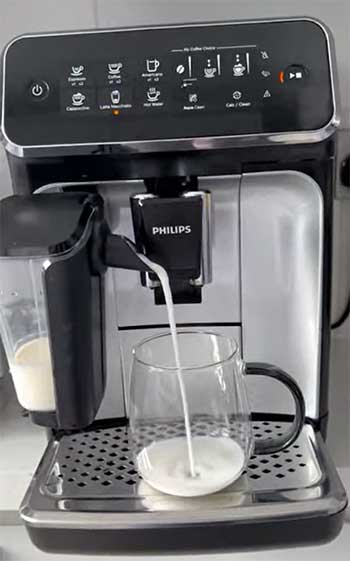
- Drink Variety and Customization: The 3300 sticks to six essentials, which suits my quick routines, but the 4400’s dozen-plus options let me branch out. For instance, I missed the flat white on the 3300, but on the 4400, it’s a preset. The extra aroma levels on the 4400 allow more precise strength tweaks – I often use level 4 for a balanced kick that the 3300’s three options can’t match exactly. This difference matters if you like switching up your drinks; otherwise, the 3300’s simplicity wins.
- User Interface and Controls: On the 3300, I use dials and buttons, which are straightforward but basic. The 4400’s color display feels more engaging – icons pop, and navigation is smoother. I found myself adjusting settings faster on the 4400, especially for guests. If tech intimidates you, the 3300 might feel more approachable, but the 4400’s interface grew on me quickly.
- Milk Frothing and Steam Features: Both use LatteGo for automatic froth, but the 4400 adds a steam wand for manual control. I’ve used it to make denser foam for art, which the 3300 can’t do. The 4400’s auto-clean for milk circuits is a time-saver; on the 3300, I rinse manually, but it’s easy. If you drink mostly milk-based, the 4400 edges ahead.
- Connectivity and Smart Features: No Wi-Fi on the 3300 means no app integration, which I didn’t miss much. But on the 4400, remote access lets me preheat from bed – a small luxury that adds convenience. The shot timer on the 4400 helps refine brews, while the 3300 relies on feel.
- Brewing Technology: The 3300 has pre-infusion for better extraction and can brew/steam simultaneously, making workflows faster. The 4400 lacks these but compensates with more profiles and iced optimizations. In taste tests, both produce great coffee, but the 3300’s simultaneous function saved me time on busy days.
- Maintenance and Durability: Cleaning is similar, but the 4400’s auto features reduce effort. Both have removable parts, but I noticed the 4400’s plastic feels slightly sturdier. Noise-wise, they’re close, but the 4400’s shielding makes it marginally quieter during peaks.
- Price and Value: At $700-800, the 3300 feels like a steal for basics. The 4400 at $1,000-1,200 justifies the cost with extras if you use them. I weighed this when choosing – do you need the bells and whistles?
These differences aren’t night and day, but they add up. For me, the 3300 handles solo use perfectly, while the 4400 shines in shared households.
Key Features of The Philips 3300
I’ve always appreciated how the Philips 3300 keeps things straightforward without skimping on quality. When I first unboxed mine, it felt like a reliable companion for my busy mornings. Let’s look at what makes it stand out.
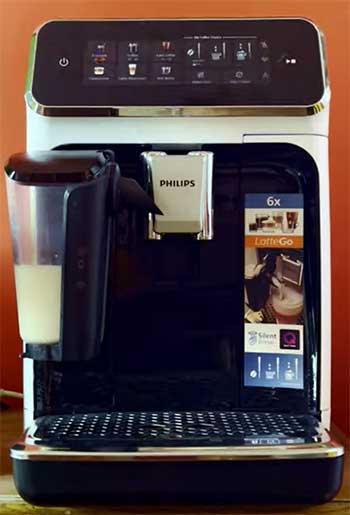
- Compact Design and Build Quality: This machine has a sleek plastic body with some stainless steel accents that give it a modern look without taking up too much counter space. I love how it fits neatly in my kitchen, measuring about 14.5 inches high, 9.5 inches wide, and 17 inches deep. It’s not the heaviest at 17.6 pounds, so moving it around for cleaning is no hassle. The materials feel durable for everyday use, and I’ve never had issues with wear after months of brewing.
- LatteGo Milk System: One of my favorite parts is the two-piece milk carafe that mixes air and milk at high speed for creamy froth. No tubes mean less mess, and it’s dishwasher-safe. In my experience, it produces consistent foam for cappuccinos – think silky texture that blends perfectly with espresso. I often use it with almond milk, and it handles alternatives well without clogging.
- Ceramic Grinder: With 12 grind settings, I can fine-tune from coarse to fine depending on my beans. The ceramic burrs stay sharp longer than steel ones, and they don’t overheat the coffee, preserving flavors. I usually set it to level 3 for a balanced espresso pull, and it’s impressively quiet at around 63 decibels – quieter than my old manual grinder.
- Brewing Capabilities: It offers six drink presets, which cover the basics I need most days. The 15-bar pump ensures rich crema on espressos, and the adjustable spout fits everything from short shot glasses to tall travel mugs. I like the pre-infusion feature that wets the grounds first for even extraction – it makes a noticeable difference in taste, reducing bitterness.
- Ease of Maintenance: The removable brew group is a game-changer; I rinse it weekly under the tap, and it’s back in place in seconds. The AquaClean filter lets me go up to 5,000 cups without descaling if water quality is good. Daily cleaning? Just empty the drip tray and grounds container – takes maybe two minutes.
- Customization Options: Three aroma strengths let me choose mild, medium, or strong, and I can tweak volume and temperature on the fly. The single user profile saves my go-to settings, like a strong espresso at high temp, so it’s ready with one touch.
- Energy Efficiency: It has a sleep mode after inactivity, which I appreciate for saving power. The quick heat-up means I’m not waiting long for my first cup.
When I think about the 3300, it’s like that dependable friend who doesn’t overcomplicate things. I’ve brewed hundreds of cups, and it consistently delivers nutty, sweet espressos with great crema. If you’re someone like me who values simplicity, this feature set hits the spot.
Pros of The Philips 3300
I’ve relied on the 3300 for my daily fix, and its strengths keep me coming back. Let me share why it’s a solid choice.
- Affordability Without Compromise: At its price point, you get premium features like the ceramic grinder and LatteGo system. I saved money compared to pricier models but still enjoy cafe-quality drinks at home. It’s perfect if you’re budget-conscious yet want reliability.
- Quiet Performance: The SilentBrew tech makes it one of the quietest machines I’ve used. Grinding at 63 dB means I can brew early without disturbing anyone. Compared to louder competitors, it’s a breath of fresh air.
- Simple Operation: The interface is intuitive – select a drink, adjust basics, and go. No steep learning curve, which I appreciated as a beginner. It feels approachable, like it’s designed for real people in real kitchens.
- Excellent Espresso Quality: Nutty flavors, thick crema – every shot impresses. The pre-infusion ensures even saturation, reducing sour notes. I’ve tried various beans, and it adapts well, delivering consistent results.
- Easy Cleaning Routine: Everything removable washes quickly. The milk carafe disassembles in seconds, and the brew group rinses under water. With the filter, descaling is rare, saving time and hassle over months.
- Compact and Versatile: Fits small spaces, yet handles two cups at once for black coffees. The adjustable spout accommodates different mugs, and hot water for tea adds utility. I use it for everything from espressos to Americanos.
- Energy Savings: Quick heat-up and auto-off mean lower bills. It’s eco-friendly without sacrificing speed – my first cup is ready in under a minute.
- Reliable Build: After heavy use, no breakdowns. The warranty gives peace of mind, and parts are easy to source.
Overall, the 3300’s pros make it ideal for straightforward coffee lovers. I’ve saved time and money, and it never lets me down.
Cons of The Philips 3300
No machine is perfect, and the 3300 has drawbacks I’ve navigated.
- Limited Drink Selection: Only six options mean no room for variety like flat whites. If you crave diversity, it feels restrictive – I sometimes wished for more presets.
- Basic Customization: Three strengths and limited volume tweaks aren’t enough for perfectionists. Adjusting max volume requires holding buttons, which is fiddly. No saving multiple profiles limits shared use.
- No Steam Wand: Automatic froth is great, but no manual control means less experimentation. For latte art or custom textures, it’s lacking.
- Marketing Mismatches: Claims about app control and true cold brew don’t hold up. The iced coffee is lukewarm extraction – add ice yourself, but it’s not ideal.
- Single Profile Limitation: In a household, everyone resets settings. It’s fine solo, but annoying with others.
- Noise on Milk Frothing: While grinding is quiet, the milk system is louder than expected. Not a deal-breaker, but noticeable.
- Plastic Dominance: The build is sturdy, but heavy plastic might not feel premium. Fingerprints show easily on glossy parts.
- No Smart Features: Lacking Wi-Fi means no remote start or alerts. If you’re tech-savvy, it feels dated.
Despite these, the 3300’s cons are minor for its price. I’ve worked around them, but they’re worth considering.
Key Features of The Philips 4400
Switching to the Philips 4400 felt like upgrading to a more versatile tool in my coffee arsenal. I remember setting it up and immediately noticing the premium touches that make daily use more enjoyable.
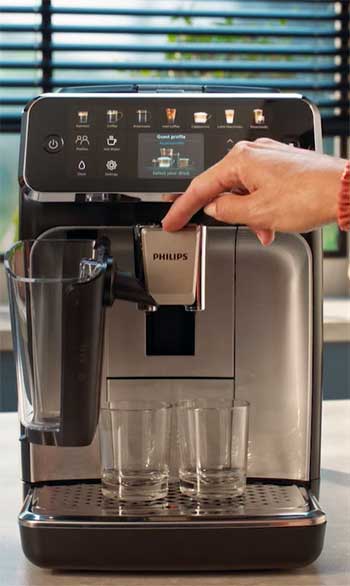
- Enhanced Display and Interface: The color TFT screen is a step up – bright, intuitive, with buttons that respond quickly. I can scroll through options easily, and the visuals make selecting drinks fun. It’s not a full touchscreen like higher models, but it feels modern and user-friendly.
- Expanded Drink Menu: With 12 to 14 presets, including extras like flat whites and cafe au laits, I have more variety. The iced options are a highlight; it brews at lower temps for cold drinks, which I mix with ice for summer refreshers. This flexibility lets me experiment, like making an iced latte on a hot day.
- Steam Wand Addition: Unlike the 3300, this has a steam wand for manual frothing, giving me control over texture. It’s commercial-style, so I can create microfoam for lattes or steam milk for hot chocolate. In practice, it adds versatility when I want to play barista.
- More User Profiles: Two profiles mean I can save settings for myself and a partner. My strong, hot espresso is one touch away, while someone else might prefer a milder coffee – no constant readjusting.
- Wi-Fi Connectivity: I connect it to my phone for remote monitoring, like checking if it’s ready or getting maintenance alerts. It’s handy when I’m rushing out the door.
- Automatic Milk Circuit Cleaning: After milk drinks, it rinses automatically, saving time. Combined with the LatteGo system, cleanup is minimal – I just disassemble and rinse the carafe.
- Shot Timer and Advanced Controls: The built-in timer helps me perfect extraction times, aiming for 19-22 seconds. Five aroma strengths offer finer control, from subtle to bold flavors.
- Silent Operation: Like the 3300, it has SilentBrew, but I find the overall noise even lower during grinding, thanks to sound shielding. It’s great for early mornings without waking the house.
In my time with the 4400, it’s become my go-to for entertaining guests because of the variety. The features encourage creativity, and I’ve discovered new favorites like the espresso macchiato. If you crave options, this machine delivers without overwhelming you.
Pros of The Philips 4400
The 4400 impressed me with its upgrades, making it a step up in many ways.
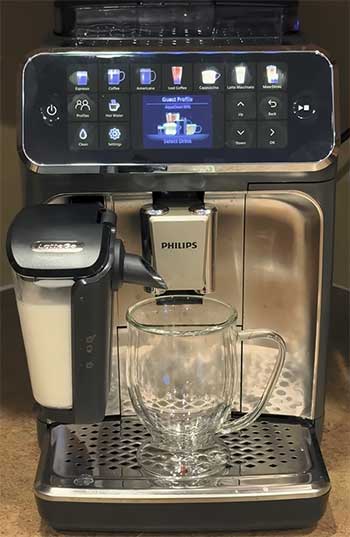
- Versatile Drink Options: 12-14 presets cover everything from iced lattes to cafe au laits. I love the variety – it keeps things exciting and caters to different moods or guests.
- Intuitive Color Display: The TFT screen makes navigation a breeze. Bright icons and quick responses mean less fumbling, even first thing in the morning.
- Multiple Profiles: Two saved settings are perfect for couples. My bold espresso and a milder latte coexist without resets.
- Steam Wand Flexibility: Manual frothing adds creativity. I’ve made velvety microfoam for cappuccinos that rivals cafes.
- Smart Connectivity: Wi-Fi and app integration let me monitor from afar. Alerts for maintenance are handy, and remote preheat saves time.
- Automatic Cleaning: Milk circuits rinse themselves, reducing chores. Combined with easy disassembly, it’s low-maintenance.
- Finer Aroma Control: Five strengths allow nuanced flavors. I dial in exactly what I want, from light to intense.
- Quiet and Efficient: SilentBrew keeps noise down, and quick start means instant brewing. Energy modes help with efficiency.
- Enhanced Iced Drinks: Optimized for cold brews, it delivers refreshing options without extra effort.
The 4400’s pros make it feel like an investment in better coffee experiences. I’ve hosted more with it, thanks to the extras.
Cons of The Philips 4400
Even with its advantages, the 4400 has areas for improvement.
- Higher Cost: At $1,000+, it’s pricier than the 3300. If you don’t use all features, it might not justify the expense.
- Plastic Construction: Like the 3300, it’s mostly plastic, which can feel less luxurious. Durability is good, but premium materials would elevate it.
- Single Boiler Limitations: No simultaneous brewing and steaming means slight delays for milk drinks. The 3300 edges it here.
- No Pre-Infusion: Extraction might not be as even, potentially leading to channeling in finer grinds.
- Learning Curve for Wand: The steam wand is pro-style, so beginners might struggle at first. Practice needed for best results.
- Larger Footprint in Use: While dimensions match, the display and extras make it feel more involved.
- App Dependency for Some: Wi-Fi is great, but if connection drops, you lose remote features.
- Occasional Noise Spikes: Quiet overall, but peak moments during operation can surprise.
These cons didn’t deter me, but they highlight where the 4400 trades simplicity for features.
Also Read: Differences Between DeLonghi Magnifica Plus And Philips 5400.
Frequently Asked Questions (FAQ)
Yes, it’s a strong choice for variety seekers with its 12+ drinks, smart features, and easy maintenance.
Absolutely, especially for beginners – quiet, affordable, and delivers tasty basics reliably.
The 5500 has up to 20 drinks, 4 profiles, a full touchscreen, extra shot function, and barista lights, while the 4400 offers 12 drinks and 2 profiles.
Yes, if you want core features at a lower price; it’s similar to the 3300 but without some quiet upgrades and minor interface tweaks.
Final Thoughts
Reflecting on my experiences with the Philips 3300 and 4400, I’ve come to see them as tailored for different lifestyles. If you’re like me and prefer a no-fuss machine that nails the essentials affordably, the 3300 has been my reliable partner.
But if you want more options and smart touches to elevate your routine, the 4400 has transformed how I enjoy coffee. Whichever you choose, you’ll get quality brews – think about your daily habits, and you’ll make the right call.