
You need to stop guessing with your health and just buy this product. If you are exhausted by smart scales that hide your own data behind a monthly paywall or confuse you with a clutter of useless numbers, the Oxiline Scale X Pro is the answer.
It is accurate, beautiful, and refreshingly subscription-free. Whether you are a fitness fanatic tracking muscle mass or just someone wanting to keep an eye on your weight without a monthly fee, this scale delivers.
Honestly, for the price and the “no hidden costs” approach, it is the best smart scale investment you can make right now.
My Experience With The Oxiline Scale X Pro
I remember the specific Tuesday morning my old bathroom scale finally betrayed me.
It was a basic digital slab I had bought at a pharmacy years ago, and on three consecutive weigh-ins, it gave me three different numbers, swinging wildly by four pounds.
I wasn’t just looking for a number anymore; I wanted context.
I wanted to know if that extra weight was holiday indulgence or muscle from my new gym routine.
That frustration is what led me to pick up the Oxiline Scale X Pro.
The unboxing experience felt surprisingly premium, which matters when you are spending money on what is essentially a bathroom appliance. You expect medical devices to be sterile and boring, packaged in cheap cardboard, but Oxiline packages this thing like a high-end tablet.
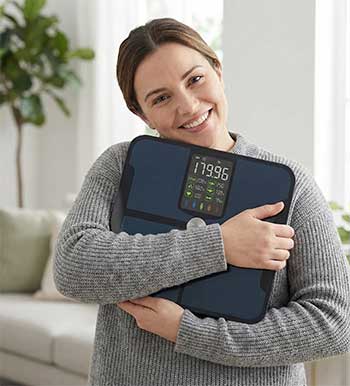
Pulling it out of the box, the first thing that struck me was the build quality. The tempered glass feels thick and substantial, not fragile like some of the cheaper options I have tested in the past.
It has a reassuring weight to it that screams durability, which gave me confidence that it wouldn’t shatter if I accidentally kicked it in the dark.
Setting it up was the moment I was most anxious about. I have had “smart” devices that required an engineering degree to pair, but this was seamless.
I popped in the AAA batteries—I actually prefer these over built-in rechargeables because when a lithium battery dies in five years, the device is trash, but AAAs are forever—downloaded the Oxiline Health app, and stood on the scale. The “Echo™” sensors woke up instantly.
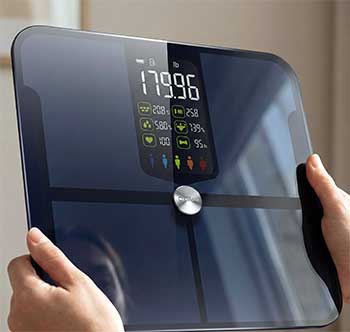
The display is the real showstopper here. Most scales have those dim, calculator-style LCD screens that you have to squint to see in the early morning light. The Scale X Pro features a bright, vibrant color VA display.
It doesn’t just flash your weight; it cycles through your heart rate, body fat, and muscle mass right there on the screen. I didn’t even have to open my phone to get the gist of my health that morning.
Living with it for the past few weeks has been a major shift for my routine. I keep it in the bathroom, and because it looks so sleek—almost like a piece of modern decor with its rounded edges and glossy finish—I don’t feel the need to hide it under the vanity.
The most impressive part has been the consistency. I tested it by stepping on and off five times in a row, and the weight reading didn’t budge by a single decimal point. That level of precision is rare in consumer-grade scales.
One specific morning stands out: I had a heavy salt day prior, and I woke up feeling bloated. My old scale would have just told me I gained two pounds, sending me into a panic. The Scale X Pro showed my weight was up, but it also showed my body water percentage had spiked.
I wasn’t gaining fat; I was retaining water. Seeing that distinction on the screen immediately calmed me down. That is the value of this device—it gives you the “why” behind the number. It is not just a scale; it is a daily reality check that feels incredibly supportive rather than judgmental.
The Pros of Owning The Scale X Pro
When you look at the current market of smart body composition analyzers, the Oxiline Scale X Pro separates itself from the pack for several distinct reasons. It manages to balance medical-grade aspirations with consumer-friendly usability in a way that feels respectful of the user.
- Freedom from Subscriptions
This is, without a doubt, the single most important reason to buy this scale.
The health tech industry has become infested with subscription models.
Competitors like Hume or even some premium Fitbit and Oura products are increasingly moving toward a model where your hardware is just a gateway to a monthly fee.
If you stop paying, you lose access to your trends, your history, or your “advanced” insights.
Oxiline bucks this trend completely.
When you buy the Scale X Pro, you own your data. You get full access to the Oxiline Health App, all your historical trends, and every single metric without paying a cent more.
In an era where everything requires a monthly tithe, this is a massive breath of fresh air. You are not renting the functionality of your hardware; you own it outright. Over the course of three or four years, this saves you hundreds of dollars compared to a subscription-based competitor.
- The Color VA Display Technology
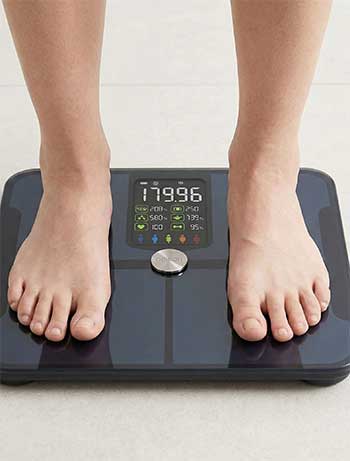
I cannot overstate how much of a difference the display makes to the daily user experience. Standard LED displays are functional but limited. The 5-inch Color VA display on the X Pro is crisp, informative, and actually useful. It uses color-coding to give you instant feedback.
For example, it can highlight if a metric is in a “healthy” or “warning” zone using color cues (green, yellow, red). This means you can use the scale effectively even if your phone is not in your hand. You get a snapshot of your health—Heart Rate, BMI, Body Fat—while you are standing there.
It feels futuristic and adds a layer of engagement that boring monochrome screens lack. It transforms the act of weighing yourself from a chore into a status check.
- Echo™ Sensor Accuracy
Accuracy is the only thing that matters in the end, and Oxiline uses what they call “Echo™ Technology.” This involves four high-precision sensors that seem to auto-calibrate effectively.
In my testing, the repeatability was excellent.
Many scales struggle with “memory effect,” where they just show you the last reading if the new one is close enough, tricking you into thinking they are precise.
The X Pro seems sensitive enough to detect small changes—even a 0.2 lb difference—which is crucial for people who are tracking micro-cycles in their cutting or bulking phases. The confidence that the number you see is the real number is worth the price of admission alone.
- Comprehensive Metric Tracking
The scale does not just guess your weight; it tracks roughly 12 to 16 essential metrics. Beyond the standard Weight and BMI, you get Visceral Fat (the dangerous fat around your organs), Muscle Mass, Bone Mass, Body Water, and even Protein Mass.
For anyone interested in optimizing their health, these metrics are gold. Knowing your Visceral Fat level, for instance, is arguably more important for long-term heart health than knowing your total weight.
If you are lifting weights, watching your weight stay the same while your Muscle Mass goes up and Body Fat goes down is the best motivation you can get. The scale visualizes this recomp effect perfectly.
- Seamless App Integration
The Oxiline Health App is robust and plays nice with the wider health ecosystem. It syncs with Apple Health and Google Fit. This is non-negotiable for me because I want all my health data—from my watch, my nutrition tracker, and my scale—to live in one central hub.
The sync happens in the background via Bluetooth (and the app handles the handshake very well), so you do not have to manually push data. The app interface itself is clean, intuitive, and devoid of the clutter and ads that plague the cheaper “budget” scale apps.
Care Tips For Oxiline Scale X Pro
Keeping a high-precision instrument like the Scale X Pro functioning correctly requires a bit more than just dusting it off occasionally.
Because it uses Bioelectrical Impedance Analysis (BIA), the surface conductivity is key to getting accurate body fat and muscle readings. If you mistreat the surface or the sensors, you essentially turn this smart scale into a dumb scale.
- Maintaining Sensor Conductivity
The top surface of the scale is tempered glass with integrated electrode areas. These electrodes send tiny, imperceptible electrical signals through your feet to measure body composition. The most critical part of maintenance is keeping this glass pristine.
Over time, hairspray residue, body lotion, dust, and general bathroom humidity can create a microscopic film over the glass. This film acts as an insulator, blocking the weak electrical signal. To clean it, you should use a soft microfiber cloth slightly dampened with plain water.
You must avoid using harsh chemicals like Windex, bleach, or ammonia-based cleaners. These chemicals can degrade the conductive coating on the glass, permanently damaging the sensors. You should also ensure the scale is completely dry before stepping on it, not just for safety, but because water droplets can interfere with the impedance signal.
- Battery Hygiene and Power Management
Since the Scale X Pro typically uses AAA batteries, you need to be mindful of leakage.
We often forget about bathroom electronics for months at a time, but bathrooms are humid environments that accelerate battery corrosion.
If you plan on going on a vacation for more than a couple of weeks, you should make it a habit to pop the battery cover and remove the batteries.
Battery acid leakage is the number one killer of bathroom scales.
Furthermore, do not wait until the screen goes dead to change them. As alkaline batteries drop in voltage, they can sometimes cause the electronics to behave erratically before they fail completely.
If you notice the Bluetooth syncing becoming sluggish, the screen flickering, or the measurements taking longer than usual to lock in, swap the batteries immediately. This ensures your data remains consistent.
- Calibration and Positioning
While the scale has auto-calibration features, it helps to force a manual check every now and then, especially if you move it to clean the floor. The load cells in the feet of the scale are sensitive to angle and pressure.
If you move the scale, place it back down on a hard, flat surface. You can force a recalibration by pressing on the center of the scale with one foot until the screen lights up, and then stepping off. Let the display return to “0.0” before weighing yourself.
This resets the tare weight of the device itself. You must strictly avoid using this scale on a carpet, rug, or even a soft linoleum floor. The feet of the scale need rigid resistance to measure pressure accurately.
Carpet absorbs that pressure, and you will weigh significantly less than you actually do. Always find a spot with tile, wood, or concrete.
- Proper Storage Habits
You should always store the scale flat on the floor. It might be tempting to save space in a small bathroom by propping it up vertically against a wall or sliding it on its side between the toilet and the vanity.
However, storing a load-cell scale on its side for long periods can throw off the zero-point calibration. Gravity pulls on the internal mechanisms differently when it is vertical, potentially causing the sensor to drift.
If you absolutely must store it vertically due to space constraints, be sure to run the manual calibration step mentioned above every single time you set it down for a weigh-in.
The Cons: Where Improvements Are Needed
No product is perfect, and despite my high praise, there are areas where the Scale X Pro shows its limitations. Being aware of these will help you decide if it is the right fit for your lifestyle.
- The Limitation of Bluetooth Connectivity
The Scale X Pro relies heavily on Bluetooth to get data to your phone. This is a step down from some top-tier models that utilize Wi-Fi. With a Wi-Fi scale, you step on, the data flies to the cloud, and you don’t need your phone anywhere near you.
With the Scale X Pro, the data transfer is dependent on your phone being within range and the Bluetooth connection being active. While the scale can buffer data and sync it later, this “sync later” feature can sometimes be finicky.
If you are the type of person who weighs themselves without their phone in the bathroom, you might find that you have to manually open the app later to initiate the data pull. It adds a small friction point to what should be a seamless process.
- Lower Body Bias in Measurement
This is a standard floor scale, meaning the BIA signal travels up one leg and down the other. It measures your lower body directly and uses algorithms to estimate your upper body composition. For the vast majority of people, this is perfectly fine and provides a great trendline.
However, if you have a very uneven body distribution—for example, a bodybuilder with a massive upper body and smaller legs, or someone with significant upper body edema—the readings might skew slightly. It cannot “see” your torso or arms directly.
A scale with a handlebar is required for that level of specificity, but those are often twice the price.
- The “Athlete Mode” Confusion
Like many smart scales, the algorithm relies on you telling it who you are. There is a setting in the app called “Athlete Mode.” If you have high muscle mass and low body fat, but you forget to toggle this on, the scale will likely get confused.
It might categorize your dense muscle weight as fat, giving you a shocking and inaccurate body fat percentage. Conversely, if you are not an athlete but turn this mode on, it will underestimate your body fat. It is not a defect, but it is a setting you must be aware of and manage correctly to get the most out of the device.
How Oxiline Scale X Pro Compares To The Competition?
When you are looking at the price point of the Oxiline Scale X Pro, you are in a competitive bracket. Here is how it stacks up against the other major players in the game.
- Oxiline Scale X Pro Vs. Oxiline Scale MD Pro
This is the classic case of sibling rivalry.
You are essentially choosing between a highly capable standard smart scale and a full-blown medical composition analyzer.
The primary difference here is the hardware itself.
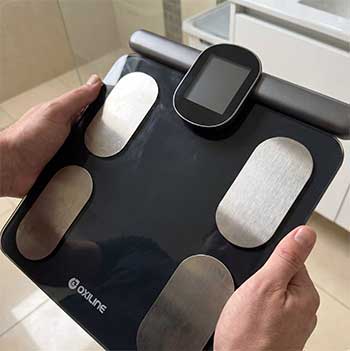
The Scale MD Pro comes equipped with a retractable handlebar that houses four additional sensors.
This allows it to perform an 8-point segment analysis, meaning it sends electrical signals through both your feet and your hands.
If you are just tracking general weight loss or fitness trends, the Scale X Pro is the smarter financial choice. It uses 4-point sensing through your feet, which is accurate enough for 95% of the population.
However, the MD Pro justifies its higher price tag if you have a specific need for upper-body data. For instance, if you are recovering from a shoulder injury and want to track muscle atrophy in just your left arm, or if you carry a significant amount of weight in your torso that leg-based scales often miss, the MD Pro is the superior tool.
For everyone else, the Scale X Pro offers the same premium build quality and display without the extra bulk of the handle. You get the same core software experience and subscription-free data with the X Pro, making it the better value buy for the general user.
- Oxiline Scale X Pro Vs. Garmin Index S2 Smart Scale
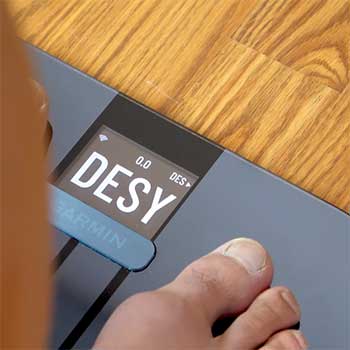
The comparison with Garmin is less about the hardware and more about the ecosystem you currently live in.
The Garmin Index S2 is a beautiful piece of kit, especially with its high-resolution color screen that rivals the Oxiline, but it is built specifically for the Garmin disciple.
If you already wear a Forerunner watch and track your rides on a Garmin Edge, the Index S2 is a no-brainer because it feeds data directly into the Garmin Connect universe via Wi-Fi.
However, if you are not locked into that specific ecosystem, the Oxiline Scale X Pro is the more versatile and affordable option. The Garmin scale commands a significant price premium, often costing nearly double what you would pay for the Oxiline.
For that extra money, you aren’t necessarily getting better accuracy; you are paying for the Wi-Fi convenience and the brand name. The Oxiline Scale X Pro connects via Bluetooth, which is slightly less convenient than Garmin’s “step on and go” Wi-Fi syncing, but it plays nicely with both Apple Health and Google Fit.
If you want a scale that isn’t jealous of other platforms and leaves more money in your pocket, the Oxiline wins. The Garmin is excellent, but it feels overpriced unless you are already fully committed to their app.
- Oxiline Scale X Pro Vs. Eufy P2 Pro
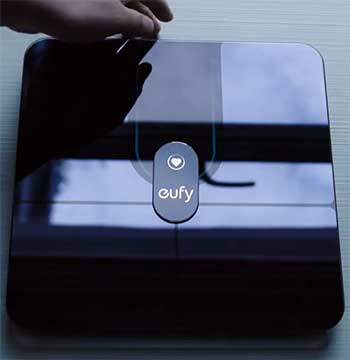
Eufy has made a name for itself by dominating the budget-friendly space, and the P2 Pro is arguably the best “bang for your buck” scale on the market.
It offers Wi-Fi connectivity and a comprehensive app for a price that is often lower than the Oxiline Scale X Pro.
On paper, Eufy seems to have the edge on features per dollar.
The difference becomes apparent the moment you take them out of the box.
The Eufy P2 Pro feels like a consumer gadget. It is lightweight, uses more plastic, and the visual design is functional but generic. The Oxiline Scale X Pro feels like a piece of medical equipment.
The tempered glass is thicker, the base is heavier, and the “Echo” sensors tend to provide more consistent readings on repeated weigh-ins. While Eufy uses a standard ITO (Indium Tin Oxide) coating for its sensors, Oxiline’s implementation feels more robust against drift over time. Additionally, the display on the Oxiline is far superior.
The Eufy P2 Pro uses a simpler LED matrix that is fine for seeing your weight but lacks the rich, color-coded data visualization you get right on the deck of the Scale X Pro. If you want a scale that feels premium and offers a superior on-device viewing experience, you pay the extra for the Oxiline.
If your budget is tight and you just want the data on your phone, Eufy is a respectable runner-up.
Frequently Asked Questions (FAQ)
No. The Oxiline Scale X Pro and its companion app are completely free to use after the initial hardware purchase. There are no monthly fees to access your data or historical trends.
For value, Oxiline is better because it does not require a subscription. For absolute medical specificity regarding upper-body composition, Hume is superior due to the handlebar sensors, but it comes with higher long-term costs.
In the consumer floor-scale category, the Oxiline Scale X Pro is among the most accurate due to its 4-sensor Echo™ technology. However, “handlebar” scales are generally more accurate for total body composition than any floor-only scale.
Yes. Oxiline is a US-based company known for medical devices like blood pressure monitors and pulse oximeters. They carry FDA clearances on many medical products, which lends significant credibility to their consumer fitness scales.
Wrapping Up
The Oxiline Scale X Pro represents the perfect middle ground in the modern health tech market. It avoids the trap of predatory subscriptions while offering premium build quality and a display that is genuinely useful.
It might lack Wi-Fi, but the Bluetooth reliability, app integration, and stunning color screen make up for it. If you want to take control of your health metrics without renting your own data, this is the scale to buy.